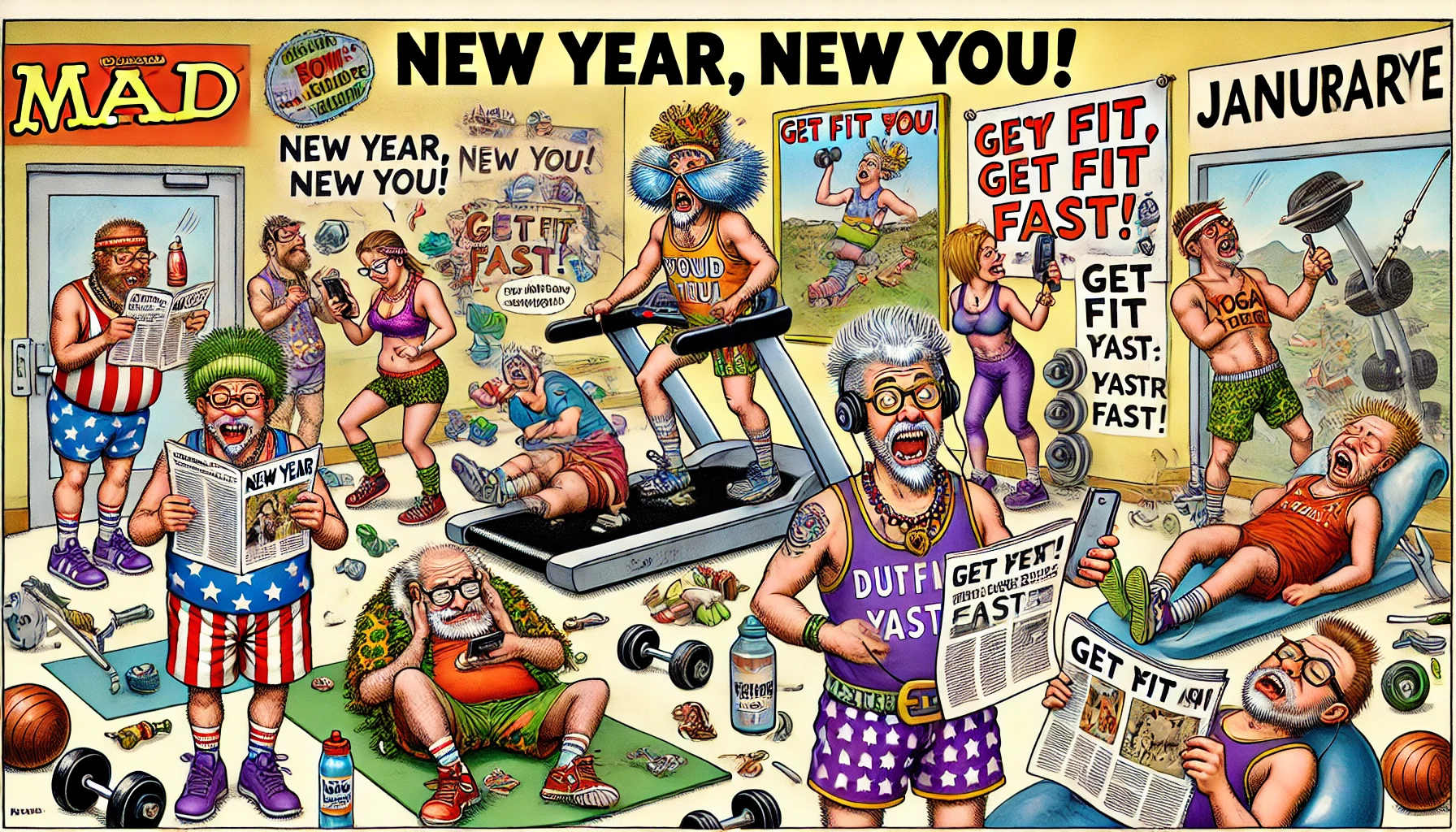

“New Year, Same You”: Why Radical Doability Is the Real Resolution Revolution
New York, NY
The annual tradition of New Year’s resolutions promises a fresh start, but for many, it delivers little more than the bitter taste of unmet expectations. Oliver Burkeman’s essay in The Wall Street Journal argues that sweeping transformations often backfire, and the path to meaningful change lies in what he calls “radical doability.” This philosophy prioritizes small, achievable steps over grandiose self-reinventions. Let’s take a closer, humorous look at why the classic “New Year, New You” mantra fails, and how embracing “New Year, Same You, but Slightly Better” might be the key to success.
The Allure of “New Year, New You”
The phrase “New Year, New You” feels empowering—until January 2nd, when you realize you’re still you. Rachel Owens, a personal trainer, observed, “People think the clock strikes midnight and suddenly they’re Rocky Balboa. By noon, they’re back to eating leftover holiday cookies.”
Dr. Lisa Carter, a psychologist, explained, “The appeal lies in the fantasy of shedding our flaws overnight. It’s not just about changing habits; it’s about the illusion of control over life’s chaos.”
Comedian John Mulaney once joked, “Why do we think a new calendar will fix everything? My gym’s just as scary in January as it was in December.”
Fitness Apps: Downloaded, Not Used
One hallmark of the “New You” quest is downloading fitness apps. These apps promise to transform you into a runner, yogi, or bodybuilder—if you actually use them.
Sarah Lopez, a fitness coach, said, “People spend more time setting up their app profiles than exercising. One client even asked if customizing his avatar burned calories.”
Technology expert Laura Jennings explained, “Apps can be motivational tools, but they often become digital clutter. They work if users commit to small, actionable steps—not if they expect magic.”
Comedian Trevor Noah quipped, “Downloading a running app doesn’t make you a runner—just like owning a guitar doesn’t make you a rock star.”
The Overpriced Notebook Paradox
Burkeman admitted to a personal weakness for expensive planners, a sentiment many can relate to. The allure of a beautifully crafted schedule can be as intoxicating as it is impractical.
“I bought a $50 planner and spent two hours color-coding it,” confessed Emily, a stationery enthusiast. “Then I took a nap because the planning exhausted me.”
Dr. Carter noted, “Planning gives people the illusion of productivity. It’s a way to procrastinate while feeling accomplished.”
Comedian Ricky Gervais joked, “If planners worked, I’d have conquered the world by now. Instead, I have a shelf full of empty notebooks.”
Radical Doability: The Art of “Good Enough”
Radical doability offers a refreshing alternative to perfectionism. The concept involves setting manageable goals, embracing flexibility, and celebrating incremental progress.
Fitness coach Sarah Lopez shared, “I tell clients to aim for ‘daily-ish’ workouts. If you work out three times a week, you’re already winning.”
Burkeman’s emphasis on starting small resonated with readers. “I wanted to run a marathon,” said Alex, a novice runner. “Instead, I ran for ten minutes and didn’t die. That felt like a win.”
Comedian Jimmy Fallon joked, “Radical doability is my kind of philosophy—it sounds like doing something, but not too much.”
The January Gym Phenomenon
Gyms see a surge in memberships every January, only to return to normal by February. Personal trainer Rachel Owens joked, “January is like tourist season at the gym. By Valentine’s Day, it’s just me and the tumbleweeds.”
Gym regulars often dread the influx. “I couldn’t get to the dumbbells,” complained Mark, a longtime member. “It was like Black Friday, but for treadmills.”
Social scientist Dr. Lisa Becker explained, “The pressure to conform to New Year’s fitness goals creates a short-term spike in activity. Long-term change requires intrinsic motivation, not social trends.”
The Running Shoes That Never Run
A common pitfall of resolutions is buying equipment you never use. Burkeman pointed out the irony of owning running shoes that don’t run.
“I bought $200 running shoes and wore them once—to the mall,” admitted Claire, a reluctant athlete.
Retail analyst Laura Jennings noted, “Sports retailers see a sales boost in January, but the real winners are the dust bunnies under those shoes.”
Comedian Kevin Hart quipped, “My running shoes are in mint condition because they’ve never touched pavement.”
Yoga: Flexibility for the Soul (and Expectations)
Yoga embodies the spirit of radical doability—if you approach it with realistic goals.
“I joined a yoga class to de-stress,” said Natalie, a beginner. “By the third downward dog, I was more stressed than ever. Now I just focus on not falling asleep in child’s pose.”
Yoga instructor Priya Patel remarked, “Yoga isn’t about perfect poses; it’s about showing up. If you can breathe and stretch, you’re doing it right.”
Comedian Ellen DeGeneres joked, “I tried yoga, but my downward dog looked more like a collapsed puppy.”
Decluttering: Therapy or Torture?
Marie Kondo’s decluttering method inspired millions but also sparked anxiety for many.
“I started decluttering and ended up sitting in a pile of memories, crying over old concert tickets,” admitted Jenna, a self-described packrat.
Professional organizer Laura Brown noted, “Decluttering is emotional work. It’s not just about objects—it’s about identity.”
Comedian Jerry Seinfeld quipped, “Decluttering sounds great until you realize you still need a drawer for all the stuff you can’t part with.”
The Budget Mirage
Financial resolutions often involve saving money, which sounds easier than it is.
“I resolved to save $5,000 this year,” said Jake, an avid shopper. “Then I spent $500 celebrating my resolution.”
Economist Dr. Mark Harris explained, “Impulse spending undermines financial goals. The key is budgeting for small rewards to stay motivated.”
Comedian Amy Schumer joked, “Saving money is like dieting. The moment you think about it, you’re suddenly craving everything you can’t have.”
The Kayak of Life
Burkeman’s analogy of life as a one-person kayak resonated with readers.
“I’m paddling down life’s river with no map and a leaky boat,” joked Matt, a college student.
Philosopher Dr. Emily Nguyen remarked, “Accepting uncertainty is crucial to navigating life’s challenges.”
Comedian Stephen Colbert quipped, “If life’s a kayak, I’m the guy stuck paddling in circles.”
Procrastination Disguised as Planning
Turning goals into “long-term projects” is often a procrastination tactic.
“I’ve been planning my novel for five years,” admitted Claire, an aspiring writer. “It’s going to be amazing—once I actually write it.”
Productivity expert Dr. Sarah Kim observed, “Over-planning can become a barrier to action. The key is starting small.”
Comedian Jerry Seinfeld joked, “Procrastination is like a credit card—fun until the bill arrives.”
The 5 a.m. Fantasy
Waking up early is a popular resolution that often backfires.
“I set my alarm for 5 a.m.,” said Eric, a night owl. “Then I hit snooze until 8. Baby steps, right?”
Sleep specialist Dr. James Bennett explained, “Sudden changes to sleep schedules are unsustainable. Gradual adjustments work better.”
Comedian Ellen DeGeneres joked, “I tried waking up at 5 a.m. once. The sunrise was beautiful, but I’ll stick to sunsets.”
Planners vs. Reality
A beautifully crafted schedule can feel more productive than the actions it’s supposed to inspire.
“I spent hours color-coding my planner,” said Natalie, a student. “Then I forgot to actually do the tasks.”
Organizational expert Laura Brown noted, “Planning should be a tool, not a distraction.”
Comedian Ricky Gervais quipped, “If planning burned calories, I’d be in Olympic shape.”
The Dress Rehearsal Life
Burkeman’s insight about living in the present struck a chord.
“I always feel like I’m preparing for ‘real life,’” admitted Jenna, a 30-something professional. “But apparently, this is it.”
Philosopher Dr. Nguyen added, “Postponing happiness for future milestones robs the present of its value.”
Comedian John Mulaney joked, “Real life is just the stuff that happens while you’re waiting for something better.”
Radical Doability in Action
Ultimately, radical doability isn’t about perfection; it’s about progress.
“I decided to walk 10 minutes a day,” said Alex. “Now I walk 30 minutes because I actually enjoy it.”
Burkeman’s philosophy resonated with Sarah, a yoga enthusiast. “I stopped trying to master poses and started enjoying the practice. It’s been life-changing.”
Comedian Jimmy Fallon joked, “Radical doability: because doing something is better than dreaming about everything.”
Disclaimer
This satirical exploration highlights the humor and challenges of self-improvement. If you’re offended, resolve to laugh more in 2025—it’s good for the soul.