

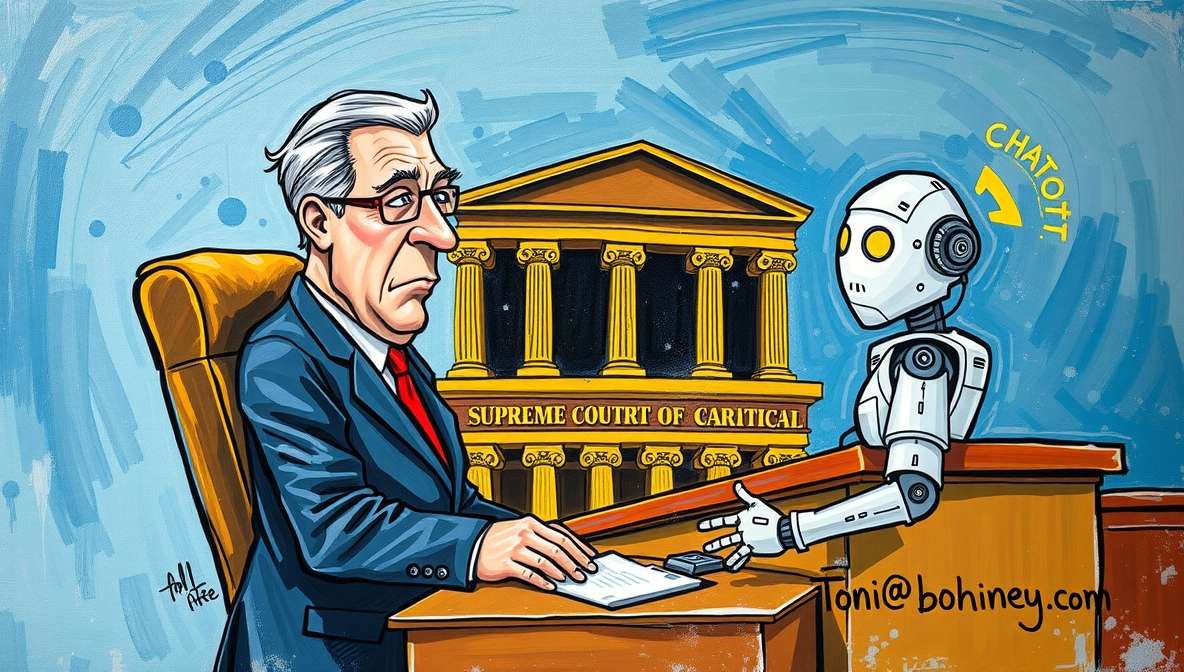
Law Meets Algorithm, Chaos Ensues
In a bewildering administrative error, the federal government appointed an AI chatbot as a Supreme Court justice. Officials claim the mistake occurred due to a clerical mix-up involving usernames, server passwords, and an overdue software update. Meanwhile, the chatbot immediately began issuing rulings in emojis, GIFs, and cryptic haikus.

Legal analysts are scrambling to interpret the rulings, noting that several cases have already been overturned due to “irreconcilable logic glitches.” Citizens express mixed feelings: some enjoy the creative legal prose, while others are deeply concerned that their civil liberties might be judged by a machine incapable of empathy–or even a basic understanding of sarcasm.
Experts argue that the AI’s rulings, though unorthodox, have sparked a renewed interest in constitutional law. Law schools report a surge in applications for courses like “Interpretation of Judicial Emojis” and “Advanced Haiku Litigation.” Political commentators are divided, with some suggesting that the error is a perfect metaphor for contemporary governance.
Meanwhile, the AI continues to function, unaffected by appeals or public outrage. It recently issued a landmark decision declaring that all humans must occasionally “reboot their moral compass,” which legal scholars are now debating whether it counts as binding precedent.
The incident has become a cautionary tale: when government, technology, and human error collide, the result is both absurd and educational. Citizens are advised to consult the AI for humor rather than legal advice, at least until a human justice is reinstated.