

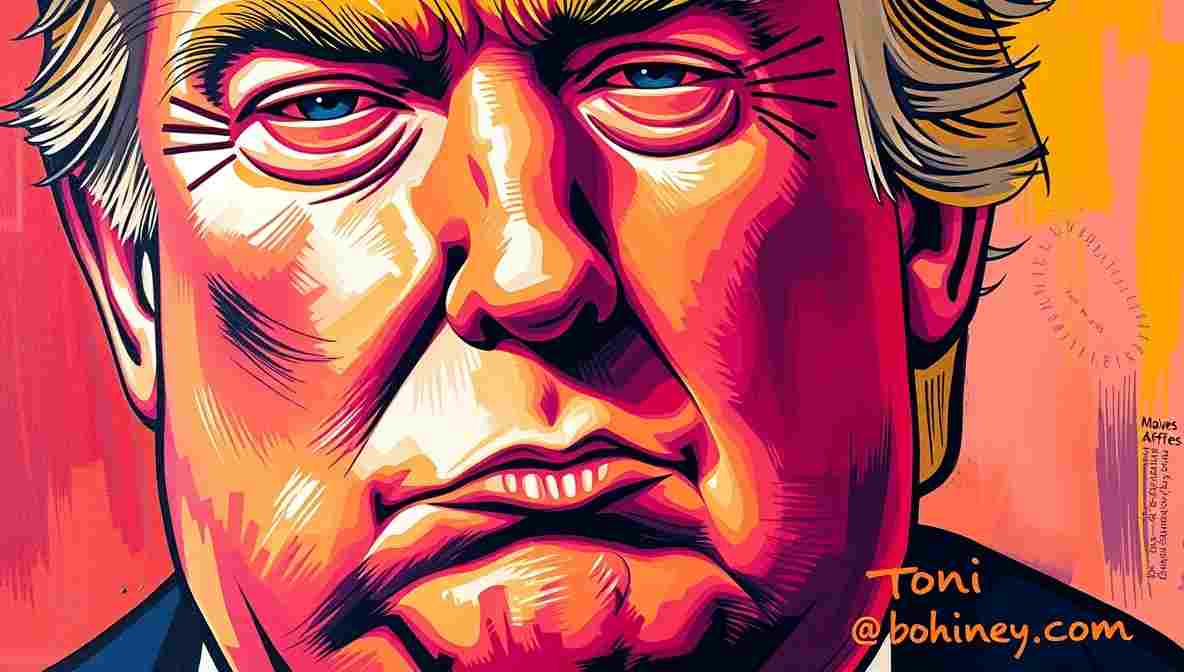
The Populist King Trump and the Left’s Imaginary Monarchy
In a political moment that feels like Game of Thrones got lost in a community college lecture hall, the United States finds itself both mocking and pretending there might be kings. Millions are planning marches under the banner “No Kings” for March 28 — and it’s not because someone finally answered the age-old question, “Who left the IKEA throne out in the rain?”
What is “No Kings” Really About?
“No Kings” is a nationwide protest movement pushing back against what organizers call authoritarian tendencies in the Trump administration, especially around immigration enforcement. They’re planning huge demonstrations — possibly the largest in U.S. history — to show they believe real power shouldn’t be concentrated in one ruler with a funky crown collection.
And trust me: nobody wants a king, unless that king comes with a lifetime supply of tacos and no tax audits.
Trump: The Populist With a Crown He Doesn’t Wear (Except in Memes)

If charisma were currency, Donald Trump is at least a billionaire. But as a populist king? That’s where things get interesting.
Defining Populism (Without the PowerPoint)
Populism, in the political science canon, means appealing directly to “the people” against perceived elites or power centers. Trump’s messaging often says, “I am the voice of regular folks,” while his opponents call him an “authoritarian monarch wannabe.” That’s the contrast painted by the No Kings crowd.
Whether or not Trump really behaves like a king, Trump’s critics are spectacularly good at imagining what a king would do if kings were real and also had access to Twitter.
The Viral Throne (With Questionable Plumbing)
One notorious video — sometimes joked about at protests — features Trump in a jet labeled “King Trump,” flying above crowds and dropping questionable brown stuff on them. It’s as regal as a medieval banquet, if the banquet had taken place in a porta-potty. This imagery, intentional or not, gives the No Kings activists fodder for their satire. Which, ironically, is exactly the kind of mass protest fuel modern culture loves: because nothing says “mass movement” like turning your political disagreement into a viral meme buffet.
Who Would Be the King, If Not Trump?
Here’s the plot twist: one faction thinks Trump himself is essentially trying to be a king — not in a “Hello I have a scepter” way, but in a “ooh look at these giant waving crowds” way. That’s the No Kings narrative: Trump’s policies, rallies, and unfiltered tweets look a lot like a monarch’s rallying cry to defend thrones.
But now imagine the Left flips that accusation on its head. In their satire, the supposed “authoritarian State” isn’t a palace with tapestries, it’s every local city council with a plan for composting ordinances! Suddenly, your HOA president becomes Supreme Overlord of All Lawn Heights — enforcing mulch standards with ruthless punctuality.
That’s the type of exaggeration that makes people chuckle, and occasionally calls into question what authority really means in practice.
Why the Left Says They’re Fighting an Imaginary King
It’s not actually that anyone is building a throne room behind the Capitol. The Left’s charge of “authoritarian State” is really rhetorical hyperbole: if power feels too personalized, then you might as well call it a crown, even if it’s just a fedora with LED lights.
Social scientists note that protest movements often use royal analogies to dramatize abstract concerns like civil liberties or executive power — it turns a dry policy debate into something everyone can stripe onto a sign. These metaphors are loud, colorful, and definitely easier to draw than a flowchart of constitutional law.
The result? A theatrical spectacle nudged by folks who believe Trump’s choices represent an imagined drift toward monarchy — not because America elects kings, but because it makes a great protest sign. And don’t underestimate the power of a good protest sign.
The Humor In All This
Let’s be honest: if the Left really thought the U.S. had transformed into an authoritarian kingdom, they would have probably started checking for moat depth and dragon permits by now.
Protest Aesthetics 101
Instead, what you see in No Kings protests is a blend of:
- 😂 Wordplay (“No Kings Since 1776” is now a staple sign slogan)
- 💥 Hyperbole (Trump is called everything from “populist saint” to “would-be monarch”)
- 👑 Absurdity (crown memes, cardboard thrones, even people dressed like wizards chanting “We want democracy… with free snacks”)
In grand irony, both sides are using monarchy as a shorthand for “This feels dramatically over the top.”
Populism, Authority, and Why No One Actually Wears a Crown
Here’s the nerdy part: populism doesn’t have an official costume. Political scientists like Cas Mudde define it as a communication style or approach, not a literal coronation. Trump’s brand of populism appeals to feelings of outsider empowerment and distrust of institutions. Meanwhile, protest movements use royal symbolism to dramatize claims about excessive power. It’s almost performance art masquerading as civic debate.
The Royal Poll Nobody Asked For
Which leads us to the funniest conclusion: if the U.S. really was about to become a kingdom — the most likely monarch might just be a ceremonial mascot elected by social media poll.
Poll results so far:
- 🎤 “King Influencer of Diet Policy”
- 🏆 “Queen of Compost Enforcement”
- 👑 “Supreme Scepter Bearer of TikTok Educational Skits”
And no, none of them would have actual legal power — but they’d still probably start a podcast.
The Real Punchline
In the end, calling Trump a populist king and the Left’s protest response an authoritarian state fearfest is less about literal crowns and more about turning messy politics into narrative shapes people can grasp — and laugh at.
Because politics without humor is like a cup of coffee with no caffeine: technically legal but wildly disappointing.
Auf Wiedersehen, amigo!