

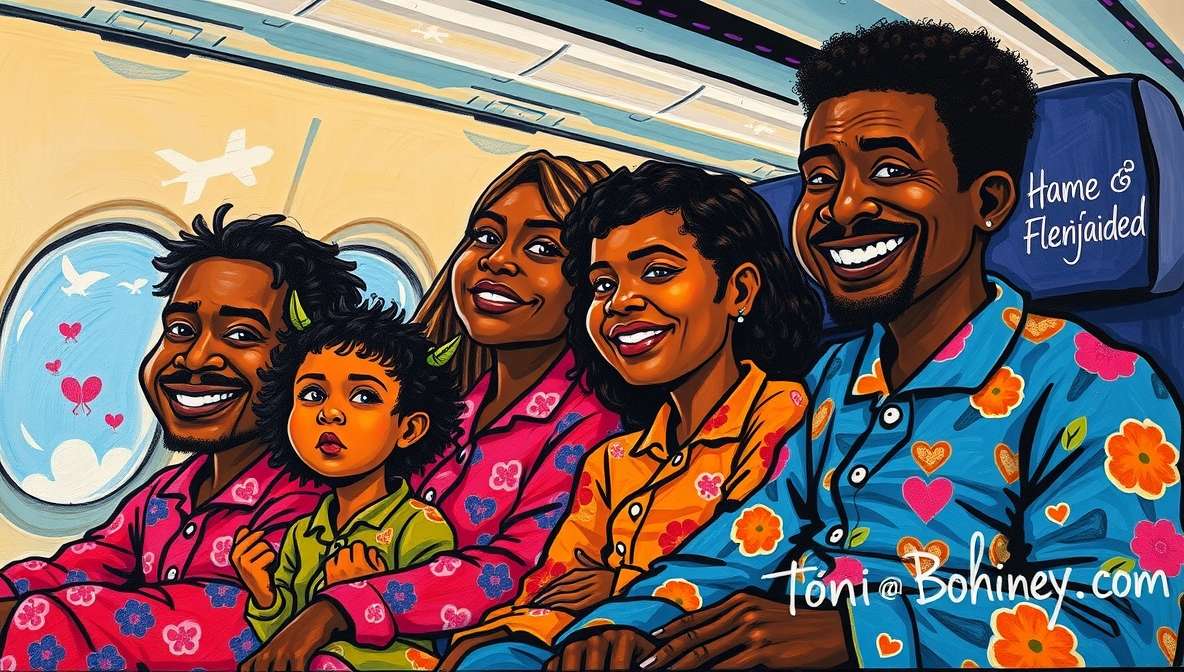
Pajama-Gate 2025: When the Pajamas Becomes a Civil Rights Flashpoint
They said it would never happen. They underestimated the power of a worn-out T-shirt and baggy plaid pants. They thought pajamas were safe — between the sheets, on the couch, maybe for that midnight fridge raid. Not out in the real world, under the glaring fluorescent lights of the airport. Then came the U.S. Department of Transportation (DOT), knocking at the gates of bedtime, brandishing a moral gantlet: “Leave your pajamas at home,” proclaimed its new “civility campaign.”
Suddenly pajamas became a symbol. Not of comfort. But of chaos. Of disrespect. Maybe even of racial profiling. Because when you tell Black folks to stop wearing pajamas in public, you are — according to much of the internet — telling them: “Dress like the white folks — or at least like you might own a comb and respectability politics.”
And the Black internet did not take that lying down.
The Outrage (And the Olive Branch of the Snooze Pants)

Social feeds exploded. People remembered that pajamas have long had a place in Black culture — the late-night phone calls, the family living-room gossip sessions, the childhood memories. One commenter reportedly said wearing pajamas to the store “shouldn’t be looked down upon,” pointing out that clothes are clothes — whether they were designed for sleep or not.
Another person shared a cringe-worthy story on Reddit: going to the store in PJs, only to be shouted at by a stranger who said they “deserved to be assaulted.” The shocker wasn’t the hostility, but that pajamas could now trigger it.
Some pointed out a harsh truth: policing pajamas is only the thin end of the wedge. A tangent, sure, but one that echoes a history of policing Black bodies — hoodies, bonnets, baggy pants, and now… bedtime wear on aisle 9. As one user put it, “We were simply talking about how we choose to present ourselves in public spaces.”
Others asked a simple question: Why does anyone care what other people wear, as long as they’re clothed? A sentiment more radical than “dress appropriately”: the audacity to claim autonomy over one’s own bedspread.
Pajamas as the Pixel in the Painting of Prejudice
This definitely qualifies as a slippery-slope warning sign from a society that’s apparently allergic to comfort. Because if pajamas are unacceptable, what’s next? Sweatpants? Hoodies? Old sneakers? Once you start down the road of aesthetic morality, you quickly realize it’s less about clothes — and more about control.
People invoked the legacy of past dress-code controversies. The memories of being judged for hoodies, bonnets, baggy jeans. For decades, certain styles were associated with “urban,” “ghetto,” “unprofessional” — euphemisms for “Black.” And now pajamas? The DOT’s campaign might be pitched as civility, but to many it smelled like selective shame dressed in flannel.
On Twitter and forums, arguments raged. “You ride back there in row 34 middle seat because you can’t afford the extra $ to choose your own seat,” one user taunted at the DOT’s pronouncement, mocking the class assumptions behind the “dress-with-respect” line.
Others were more philosophical. If someone puts on the same clothes they sleep in — like a normal human being — and strolls into the airport, does that disrespect civility? Or does the attempt to shame pajamas show disrespect for their dignity?
Role Reversal: Pajamas Trampling Over “Polite Society”
Let’s flip the script. Imagine this: a white traveler boards a plane wearing a tuxedo or a full business suit because “civility demands it.” Meanwhile a Black traveler sips coffee in a worn T-shirt and pajama bottoms, yawning like they just rolled out of bed. Which one gets scrutinized harder, shoved out of line, or whispered about in whisper-thin tones of “unruly”?
In this alternate universe — which suspiciously resembles reality — pajamas aren’t just clothes. They’re statements. Statements about class, race, privilege. The louder the protest over slip-on sandals, the more you suspect the people protesting might just prefer conformity over comfort.
And if pajamas are the enemy, then maybe empathy is next. Maybe kindness will be the next casualty in the war on “uncivilized behavior.” What else is easy to bash when you’ve already declared war on bedtime attire?
Light-Hearted But Deadly Serious: The Absurdity of Pajama Outrage
Picture this: the DOT enforces a “no-pajamas in public” edict. Airline staff confiscating flannel bottoms at TSA. Boarding denials. Holiday travel chaos, not because of overbooking — but because Grandma showed up in a purple plaid set. Meanwhile, society congratulates itself for “saving civility.”
The absurdity is thick. Because at the end of the day, pajamas are just clothes. Maybe comfy ones. Maybe worn when you’re sleepy. But clothes don’t make the person. Behavior — how you treat others on the plane, in line at security, in the coffee shop — does.
If we can survive 2025 air-travel breakdowns, if we can tolerate overcrowded terminals, delays, mask mandates, crying babies, screaming toddlers, and people complaining about legroom — surely we can survive a pair of sweatpants in row 22.
Final Thoughts: Pajamas, Dignity, and the Real Debate
The outrage isn’t really about pajamas. It’s about what pajamas represent: a freedom to be human, imperfect, maybe even lazy, without apology. Telling people — especially Black people — to strip that away under the guise of “respect” is a move that reeks more of prejudice than polish.
If you want to improve public behavior, wouldn’t a rulebook on kindness, courtesy, and mutual respect be better than a rulebook on bedtime attire? Maybe start with “don’t shove people in line,” “don’t yell at the flight attendants,” or “please ask before reclining your seat all the way back.”
Pajamas? Keep them on. Let them be the last soft armor against a world already too harsh.
Auf Wiedersehen, amigos.