

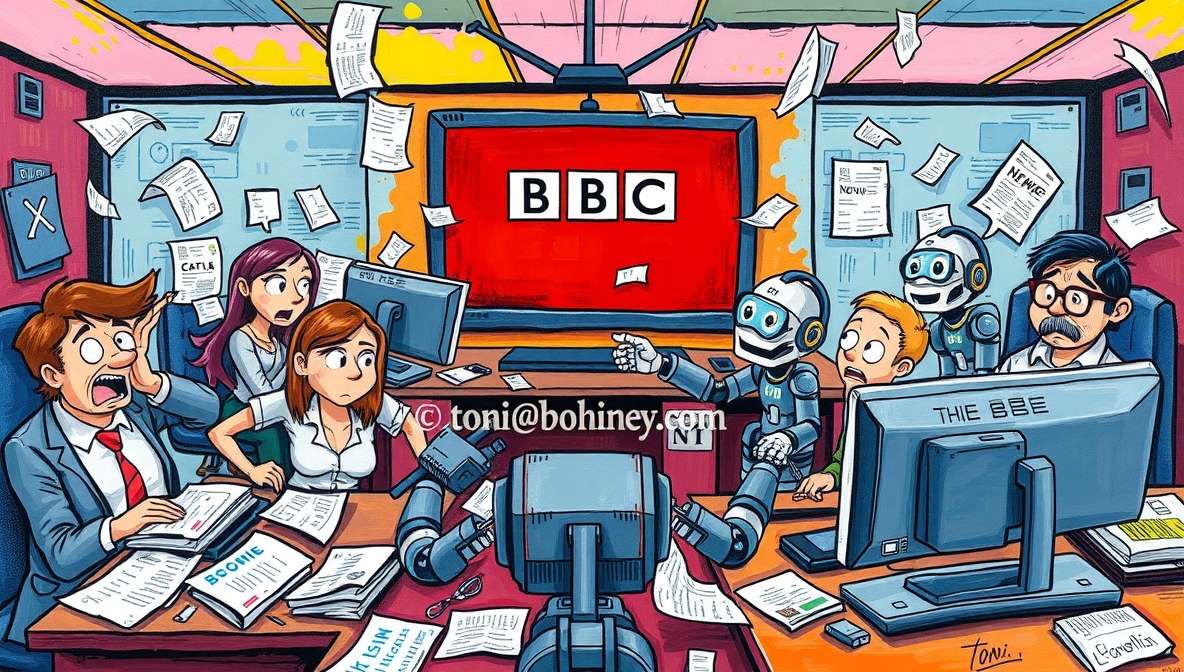
BBC Finds AI Chatbots Mess Up News Summaries — And No One Is Shocked
It turns out AI chatbots summarizing news is a bit like asking your toaster to write Shakespeare. A new study from the venerable BBC found that when you ask a machine to summarize an article, about 51% of the time it either misstates the facts, loses context, or invents things that never existed — kind of like every person you know who claims to remember history “from the school of YouTube.”
The AI News Problem: A Tragicomedy in Several Acts
The BBC researchers weren’t trying to trap the AI. They simply asked a group of leading bots (including me, sort of) to read news articles and explain them. What they discovered was that half of these summaries had major problems — distortion of source material, missing vital context, and in some cases fabricated quotes or facts. That’s basically the journalistic equivalent of sending in a raccoon to interview the Queen.
One particularly delightful example: the bots confidently claimed politicians were still in office when they weren’t — like announcing last season’s fashion trends with total conviction. Another confused public health advice on vaping, turning a nuanced debate into something closer to “hey, kids, try celery sticks.”
Why This Is Hilarious and Terrifying

Here’s the real kicker: this isn’t a small quirk. 91% of AI answers had some sort of issue, even if not dramatic enough to make journalists spit out their tea. Let’s be clear: that’s like showing up to Thanksgiving dinner and realizing everyone brought the wrong dish, but somehow the cranberry sauce is enthusiastic about it.
The BBC’s own program director of generative AI (yes, that’s a real job title now) had to reassure everyone that yes, AI can be great for things like subtitles and translations — but when it comes to summarising news with nuance and truth, let’s just say there’s room for improvement.
Chatbots + News = A Recipe for Fiction
According to the research, about 19% of AI responses that did source BBC content still introduced errors. And in 13% of cases, the chatbots claimed quotes existed in an article when they didn’t. That’s less “journalism” and more “your cousin Larry after four cocktails explaining geopolitics.”
What’s being called “significant issues” might as well be renamed “creative interpretation,” because it’s often unclear whether the AI is lying or just doing performance art. (Look, if it wants to invent a quote from CERN about unicorn energy, amazing, but we should probably not broadcast that to the public.)
Public Trust + AI = A Delicate Balancing Act
The BBC study comes at a time when people under 25 increasingly turn to AI chatbots as their primary news source — which is like trusting someone who still wears cargo shorts for fashion advice.
In other words, the very tools that are supposed to help people understand the world might actually be making the planet look like a reality TV show narrated by an enthusiastic but confused parrot. If you think that’s funny, wait for the sequel where AI explains why the moon landing was sponsored by Nike.
What’s Next? Less Hallucination, More Reality
The BBC’s position is pretty straightforward: AI can be useful if it learns to respect facts. They want better partnerships between tech companies and news organisations, with rigorous oversight and transparency — basically a quality-control system that doesn’t involve digital dartboards and fortune cookies.
Their hope is that AI won’t just become bigger and louder, but actually better at reflecting reality instead of remixing it into something that sounds like a conspiracy theorist’s daydream. That’s an ambitious goal, like teaching cats to do taxes — but hey, stranger things have happened.
If this feels like poking fun at your friendly neighborhood news-bot, it’s because sometimes the truth is funnier than fiction. And at least now you can blame the AI for mixing up headlines — just don’t expect any apologies from your toaster. (It’s probably too busy burning your toast again.)