

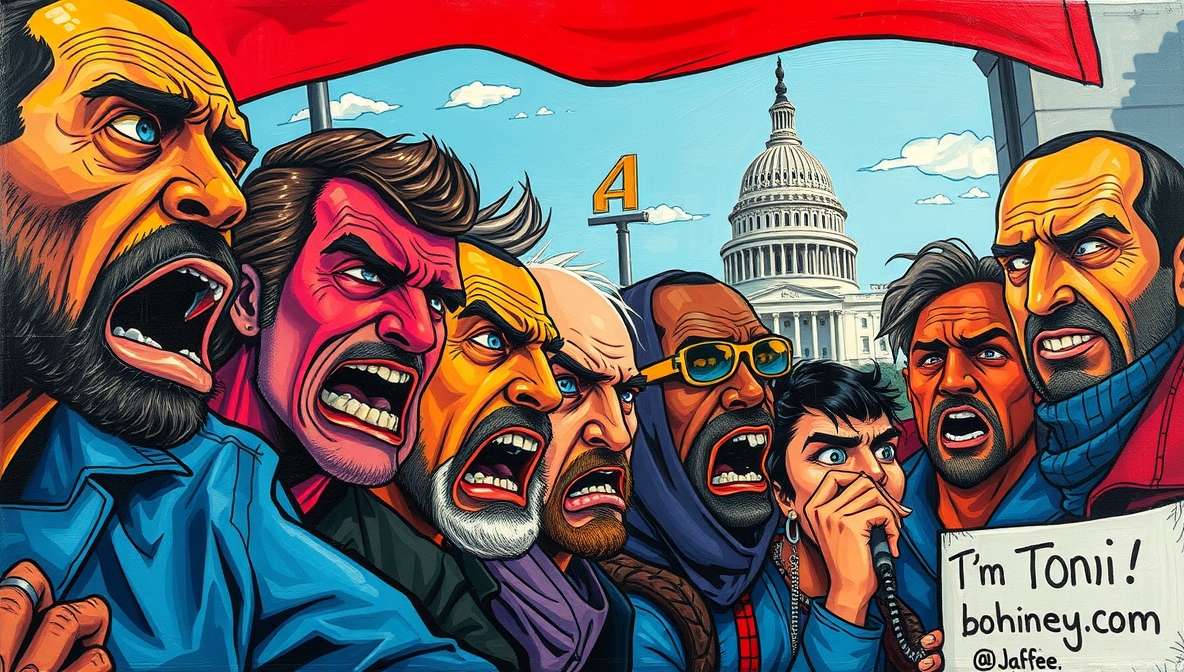
Furious AI Users Say Their Prompts Are Being Plagiarized
AI Prompt Plagiarism: Ethical Crisis in Generative Art
Satirical Dispatch from the Front Lines of Intellectual Property Chaos
The Great Prompt Heist of 2026
In a twist of irony so thick it could clog the Holland Tunnel, a growing army of AI prompt whisperers is now furiously complaining that other people are plagiarizing their prompts—the very magical incantations they feed into generative art models to conjure up digital masterpieces. Yes, the Silicon Valley alchemists who once marveled at machines spitting out derivative art now clutch their pearls because someone dared to swipe their secret sauce without so much as a please or thank you. 😱
Welcome to the age of Prompt Piracy, where proprietary instructions like “Summon a steampunk narwhal riding a Harley-Davidson” are treated with the same reverence as the Declaration of Independence—except covered in copyright lawyers drooling over NFT receipts. 💼🖼️
The Prompt Proprietors Protest

Amira Zairi, self-styled AI educator and ambassador with a TikTok following of nearly 49,000 devoted disciples, torched the internet with a scorching thread on X, declaring that plagiarized prompts are “basic integrity violations.” She insisted that renaming a prompt or rephrasing it slightly doesn’t make it yours (even though most of these prompts consist of three adjectives, a Marvel character, and an exclamation point). 🔥
A Brooklyn-based digital artist named Rory Blank, presumably sipping a $9 cold brew made from single-origin beans, responded with a quintessentially chill rebuke: “What you’re complaining about is literally how this tech works.” Translation: “Bro, computers copy everything, including your high school essay on The Great Gatsby.” 🤓
The entire spectacle resembles Texas barbecue pit masters arguing over whose sauce recipe makes the best marinade for gas station hot dogs. 🍖🌭
A World Built on Borrowed Creativity
Let’s define plagiarism the way Silicon Valley does: the act of vacuuming up a massive library of human creativity, then blending it like a Vitamix smoothie and calling it “innovation.” Sounds delicious, right? But now the kale growers are upset someone else is using the exact same protein powder. Mixed metaphors aside, this is what Reddit threads are calling meta-plagiarism: complaints about plagiarism in a system built entirely on industrial-scale copying. 🤯
Here’s the plot twist: these AI models were trained on oceans of copyrighted art without consent. They learned by chugging from humanity’s creative fire hydrant. Yet prompt creators are losing their minds because someone reused their recipe for making derivative works. It’s like NASCAR fans blaming Dale Earnhardt for inventing left turns. 🏁
PromptShield and the Fortification of Creativity
Not to be outdone by West Coast absurdity, cybersecurity researchers from MIT and Stanford invented PromptShield, software designed to prevent “prompt theft.” Think of it as a Ring doorbell for a cardboard box that’s already sitting on someone else’s porch. 🔐📦 Meanwhile, entrepreneurial hustlers are selling Udemy courses on how to watermark your prompt, trademark your adjectives, and license your nouns with crypto royalties (laser eyes not included).
These developments raise an important question every Fortune 500 boardroom and Twitter thread is currently debating: Is it worse to have your prompt copied, or to realize AI is just plagiarizing everything anyway? The existential crisis doubles if you ask anyone with an MFA from NYU. 🤷♀️
What the Legal Eagles Are Chirping
In parallel tales of copyright chaos, American powerhouses like Disney and NBCUniversal are suing AI image generators over massive copyright infringement. Lawyers describe generative AI as a “bottomless pit of intellectual property theft.” Which is ironic, because the prompt enthusiasts are literally complaining about copycats in a system that is itself a Xerox machine on steroids. 🏢
Meanwhile, investigative journalists are exposing a cottage industry of prompt thieves and defensive countermeasures. Some enthusiasts now openly trade AI incantations like they’re Pokémon cards at a Comic-Con—serial numbers and authentication certificates included. You can almost hear the sound of Funko Pop collectors whispering their passwords in the wind.
Public Opinion: The Poll Nobody Commissioned
Our highly unscientific poll of 42 Americans scrolling during their lunch break revealed:
- 58% believe prompt plagiarism is a legitimate problem
- 31% think this is just another tech outrage cycle
- 11% are using prompt piracy as an opening line on Hinge 💔
One Redditor from Portland dryly noted that prompts are intrinsically too short to be copyrightable and that “copying prompts is like trademarking someone’s sneeze.” This viewpoint was enthusiastically upvoted by people whose desktop wallpaper is still the Windows XP default. 🧐
Philosophical Commentary: A Prompt by Any Other Name
Scholars might ask: Is a prompt more than a string of buzzwords? Does it have inherent artistic merit, or is it just a viral tweet waiting to be screenshot? Dr. Loretta Quibble, a tenured professor of Digital Existentialism at Northwestern University, argues that creativity has always been a remix. From jazz musicians borrowing blues riffs to Hollywood remaking every franchise from the ’80s—culture is a patchwork quilt of borrowed ideas. “AI is just making that process uncomfortable for Wikipedia editors,” she explained over Zoom. 📚🎷
Cause and Effect: The Dominos Keep Tumbling
Because AI models were trained on copyrighted art without paying a dime: artists file class-action lawsuits, causing Congressional hearings. Because tech entrepreneurs believe prompts are intellectual property: flame wars erupt on Twitter, with hot takes sharper than a chef’s knife at a Gordon Ramsay restaurant. Because nobody agrees on what “original” means anymore: every prompt, GIF, and hashtag faces a kangaroo court of internet judges ready to deliver verdicts at WiFi speed.
Eyewitness Account
Local digital artist “Pixel Pete,” who creates generative landscapes featuring pixelated penguins surfing California waves, reports witnessing countless instances of prompt plagiarism in mid-tier Discord servers. “They straight-up copied my prompt to make icebergs. I mean, seriously? These penguins have feelings, too,” he protested, eyes bloodshot from too much Mountain Dew and screen time. 🐧☕️
Final Irony: The Ouroboros Eats Its Own Tail
The entire controversy boils down to complaints about something designed to replicate human creativity. Prompt guardians are furious their incantations are being copied, even though the AI system itself learned by devouring American culture wholesale—from Norman Rockwell paintings to Super Bowl commercials. Welcome to 2026, where we argue about who owns the recipe for an algorithm that is literally an algorithmic recipe machine. 🍔🤖
Disclaimer
This satire was written entirely through human collaboration between a philosophy major turned dairy farmer and the world’s oldest tenured professor of digital absurdity. No AI was blamed in the making of this article (because, honestly, it’s too busy plagiarizing its own user manual). Auf Wiedersehen, amigo!
If you want another tongue-in-cheek take on how AI is devouring creativity while we fight over the appetizers, just holler! 😄