

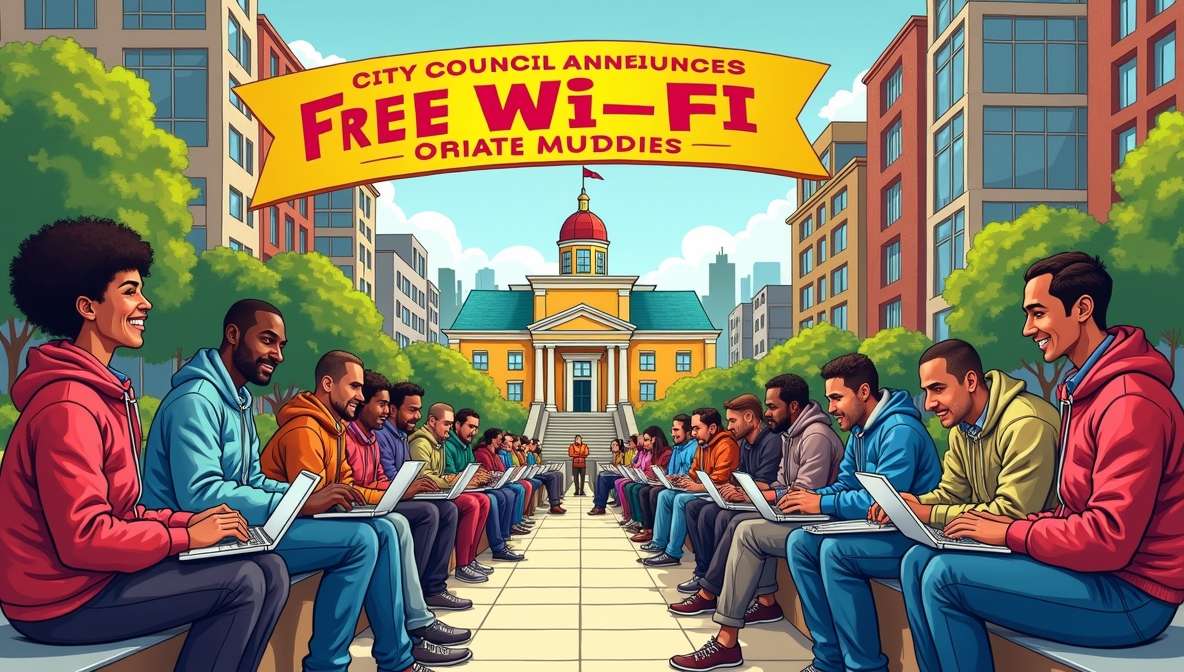
Requires 14 Forms, 2 Notarized Letters, and a Blood Oath
New York City Launches Free Wi-Fi Initiative Behind Unprecedented Bureaucratic Barriers
In what city officials are calling “a historic leap toward digital equality,” New York City has officially announced free Wi-Fi for every resident. The program, however, comes with a series of caveats so complex that most residents may spend the next decade completing paperwork instead of actually surfing the web.
To qualify, citizens must submit 14 distinct forms, provide two notarized letters, and swear a blood oath pledging to uphold the sacred principles of buffering and high-speed streaming. “We believe this is the perfect balance between accessibility and administrative drama,” said Deputy Mayor Eliza Trenchcoat, while twirling a ceremonial red pen. “It teaches patience, humility, and the subtle art of waiting in line for eternity.”
Application Process Includes Exotic Device Documentation Requirements

The process begins with Form 001A, which asks residents to list all devices they currently own, including smart toasters, fridges, and robots named after deceased relatives. Form 002B requires a notarized letter from someone who knows you intimately enough to vouch for your ability to maintain proper Wi-Fi etiquette. Form 014Z? That one involves a blood oath, which can be completed using any minor scratch, though city lawyers recommend something more ceremonial.
“The whole ordeal is kind of beautiful,” said local resident Marsha Nguyen. “I’ve already filled out seven forms, and I haven’t even been assigned my official Wi-Fi name yet. It’s like adulting meets a medieval quest.” Amy Schumer joked, “I’m never doing things the easy way. I could’ve just taken the bus, but I decided to live in New York instead.”
Critics Argue Red Tape Undermines Free Internet Concept
Critics argue that the red tape undermines the very concept of ‘free’ internet. “You can’t really call it free if you have to offer your firstborn digitally or morally,” said Professor Lionel Tweed, urban policy analyst. “It’s a classic case of bureaucracy as performance art. We’re witnessing an entire city building paper mountains just to access cat videos.”
Nonetheless, some residents embrace the challenge. “I’ve started a support group,” said Jason Patel, a Brooklyn tech consultant. “We meet weekly to compare forms, decipher notarization instructions, and occasionally drink herbal tea while contemplating the Wi-Fi gods.”
City Officials Defend Complexity as Civic Fitness Initiative
City officials assure the public that the program’s complexity is intentional. “By the time someone finishes all the forms, they’ll appreciate the Wi-Fi more,” explained Trenchcoat. “Plus, it doubles as civic exercise. Lifting forms, signing, stampingit’s basically CrossFit for your fingers.” Ron White said, “I don’t understand why we’re always moving. You’d think after a while you’d just stop moving.”
As New Yorkers prepare for a future where buffering-free videos await them behind layers of bureaucracy, one thing is clear: the city has successfully turned a simple public service into a heroic odyssey, ensuring that the path to free Wi-Fi is filled with patience, minor injuries, and a profound sense of accomplishment.