

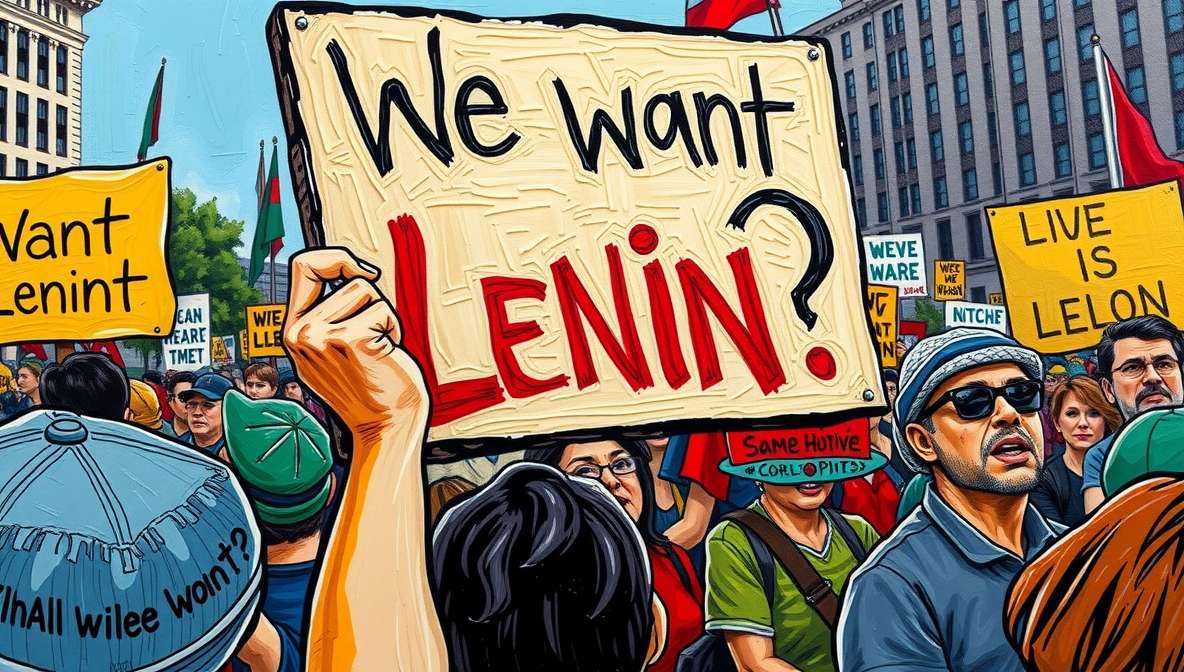
Party Leaders Blame “Misinformation” After Years of Providing Extremely Clear Information About Hating ICE
Democratic leaders blamed “misinformation” this week after an ICE-related shooting in Minneapolis forced an abrupt reassessment of how clearly their position on Immigration and Customs Enforcement has been communicated over the past several years.
The incident occurred during a federal law enforcement operation involving ICE when authorities say a woman allegedly attempted to drive her vehicle toward agents, prompting officers to open fire. One person was killed, and the Justice Department has opened a review of the shooting. NBC News confirmed ICE agents were involved in the operation.
The Sudden Misinformation Explanation for Minneapolis
In the hours following the incident, Democratic officials condemned violence and urged the public not to jump to conclusions. Several suggested that “misinformation” and “online radicalization” may have played a role, carefully avoiding discussion of years of messaging that described ICE as fascist, illegitimate, and actively dangerous.
“The problem here is misinformation,” one Democratic spokesperson explained. “People are being exposed to extreme narratives about ICE.”
The irony was not lost on critics.
Key Observations
- Democrats blamed misinformation after spending a decade being crystal clear about hating ICE.
- Apparently the problem wasn’t the message, just that people heard it correctly.
- The left says misinformation is dangerous unless it’s emotionally satisfying.
- Law enforcement learned that being attacked is confusing, but being blamed for confusion is standard.
- When rhetoric backfires, it’s always the internet’s fault.
When Coordinated Messaging Gets Labeled “Misinformation”
For nearly a decade, prominent Democrats and progressive activists have delivered an exceptionally consistent narrative about ICE. Governors compared agents to Nazi secret police. Members of Congress labeled the agency “rogue,” “vile,” and “terrorizing.” Media commentators described enforcement actions as kidnappings and disappearances. Protest slogans demanded abolition, shutdown, and occupation.
If this constitutes misinformation, critics argue, it was remarkably well-coordinated.
How Activist Movements Reinforced the Anti-ICE Message
Activist movements reinforced the message. Protests routinely took place outside ICE facilities. Demonstrators blocked entrances, surrounded vehicles, and framed enforcement operations as moral emergencies. Media coverage frequently portrayed these actions as righteous resistance rather than escalation.
In Portland, protesters gathered outside an ICE facility even after President Biden’s inauguration, clashing with federal officers while demanding abolition.
Polling suggests the messaging worked. Large majorities of Democratic voters now view ICE negatively and believe it routinely abuses power. Support for protests against ICE is high among progressives.
When Clear Messaging Becomes “Misinformation” After an Incident
When the Minneapolis shooting occurred, however, the clarity of the message became a liability. Party leaders needed a new explanation for why someone might interpret their rhetoric as justification for confrontation.
“Misinformation” fit the bill.
According to this framing, the problem was not the slogans or analogies themselves, but how they were consumed. Somewhere between cable news and social media, nuance was allegedly lost. Metaphors were misunderstood. Historical comparisons were taken too seriously.
This explanation requires accepting that years of highly charged language somehow became dangerous only when someone acted on it.
ICE Officials Repeatedly Warned Rhetoric Creates Hostile Environment
ICE officials have warned repeatedly that portraying agents as monsters creates a hostile environment. Federal data show assaults against ICE personnel have risen sharply in recent years. Officials argue that rhetoric matters, especially when repeated by elected leaders.
Democratic leaders reject that connection. They argue that blaming rhetoric is a tactic used to suppress dissent. According to this view, people are responsible for their own actions regardless of the narratives they absorb.
Internal Messaging Reviews Prompted by Minneapolis
Still, the Minneapolis incident has prompted internal messaging reviews. Party consultants are advising candidates to be more careful with language while continuing to criticize ICE forcefully. The goal is to maintain outrage without implying immediacy.
Suggested talking points emphasize “policy failure” over “moral emergency” and “structural harm” over “existential threat.” Consultants hope these shifts will preserve emotional engagement while reducing interpretive risk.
Activists remain skeptical. They argue that strong language is necessary to confront injustice and that blaming misinformation is a distraction. To them, the greater danger is retreating from moral clarity.
Democrats Face Uncomfortable Paradox About Their Message
As the investigation in Minneapolis continues, the party faces an uncomfortable paradox. It must argue that its message about ICE was clear enough to mobilize voters but vague enough to absolve responsibility when taken literally.
For now, Democratic leaders continue to condemn violence while blaming misinformation. They urge Americans to consume rhetoric responsibly, apply nuance independently, and never confuse years of explicit messaging with intent.
Whether that explanation satisfies the public remains uncertain.
What is clear is that when information is repeated often, loudly, and authoritatively, it stops being misinformation and starts being the message.
And when someone acts on that message, calling it a misunderstanding may be less convincing than leaders hope.
Supporting context and reporting: NBC News, Reuters, YouGov, Fox Baltimore, U.S. Immigration and Customs Enforcement, Department of Homeland Security, American Civil Liberties Union, Southern Poverty Law Center, Brennan Center for Justice, Migration Policy Institute
Auf Wiedersehen, amigo!
SOURCE: https://bohiney.com/anti-ice-rhetoric/