

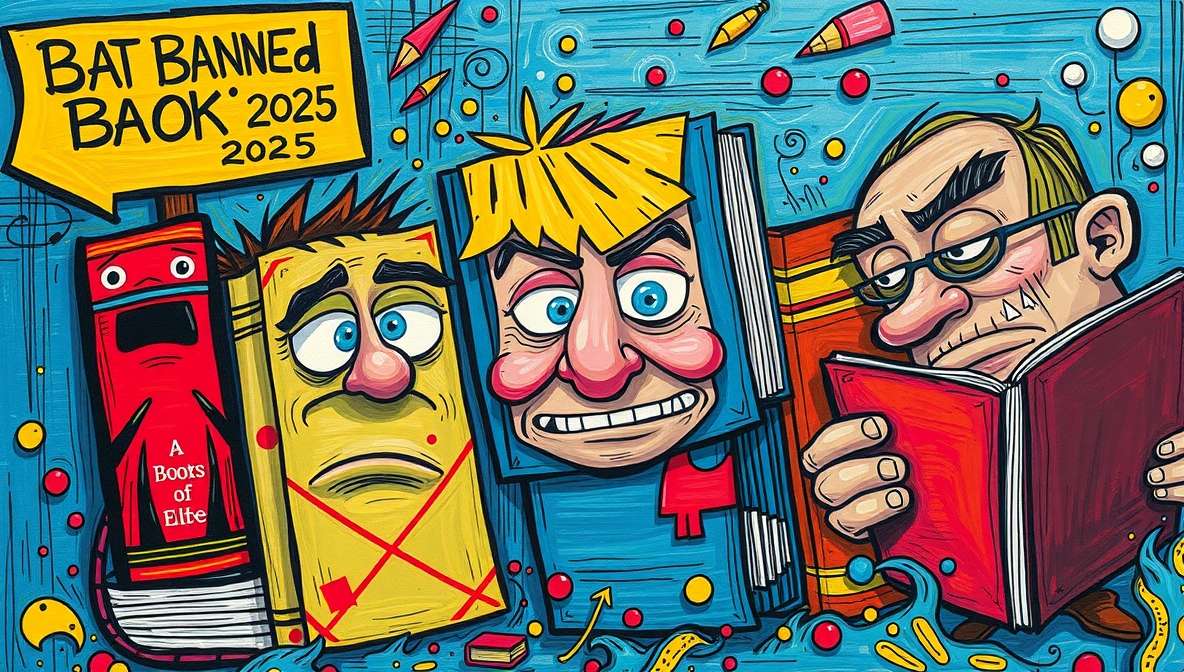
Librarian Declares War on Democracy Over Banned Books Week
Local Library Worker Seizes Animal Farm, Protests “Tyranny of Voters”
In the small town of Greensborough—a place otherwise famous for its Annual Cornhusk Ballet—a librarian named Mildred “Millie” Quill reportedly seized a first edition of Animal Farm one Tuesday afternoon and raised it overhead in dramatic fashion.
“By the power vested in Dewey Decimal, I protest your democracy!” witnesses reported her saying.
Ernest “Ernie” Maples, a local barber who witnessed the incident, described the scene: “She stood on the reference desk, glasses glowing like she was about to cast a spell. You thought Gandalf summoned fireworks? No, just Millie with a banned-book banner and what looked like righteous fury.”
Ernie later conducted an informal poll at his barbershop: 87% of Greensborough residents said they were “mildly amused or confused,” while 13% were convinced they’d accidentally joined a cult.
“People want to ban books but they’re fine with their kids watching TikTok all day,” Jim Gaffigan said about the incident. “Yeah, that makes sense. Let’s protect them from To Kill a Mockingbird but let them watch someone eat Tide Pods.”
How Banned Books Week Became America’s Most Ironic Celebration
Banned Books Week is really just a shadowy alliance of librarians plotting to defy voters by hiding controversial titles behind a “Caution: Minds May Be Freed” sign. The whole spectacle promotes suppression through celebration—a festival of resistance masquerading as a censorship warning. It says: “Look at all the books you shouldn’t read—then read them more!”
The books themselves seem insurrectionist. They practically whisper from the shelves: “Oh, you think you can read me? Think again, citizen!”
Meanwhile, politicians occasionally claim they want voter control, but librarians have taken it further: controlling what you can read. Some parents, armed with letter-writing mittens and moral panic, try to police reading lists as if Charlotte’s Web were secretly plotting totalitarianism through agricultural spider propaganda.
Amy Schumer weighed in on the controversy: “We’re banning books about puberty while twelve-year-olds are on Instagram. Someone explain how that math works.”
The Great Voter Bamboozle
Every librarian, deep down, dreams of chaining a book to the shelf like in Beauty and the Beast—only to protest that they’re just “curating.” But when voters actually try to exercise control over school library content, librarians respond with the kind of moral outrage usually reserved for burning the Constitution.
Some folks treat book banning like frontier justice—”That novel offended me, I’m going to outlaw it in my county!” They never ask whether their children might benefit from encountering uncomfortable ideas. The real panic isn’t about nudity or swearing; it’s about ideas having legs and walking out into young brains.
Jerry Seinfeld said it perfectly: “Banned Books Week is like having a parade for speed limits. We’re celebrating the thing we’re supposedly against. What’s next, National Tax Day?”
The Rationale Behind Library Rebellion
Millie explained her motives with the kind of twisted logic that makes satirists weep with joy:
“If citizens can vote to ban a book, why can’t I ban democracy itself? At least I’d make the shelves look tidier.”
She cited a 2023 survey by the fictional Institute of Librarians Rebellion (ILR), claiming 92% of librarians believe “voters don’t understand Dewey Decimal.” The statistic sounds serious. That’s the joke.
Library science professor Dr. Phineas Bookmark (emeritus, also fictional) weighed in with surprising clarity: “When you say ‘banned books’ you’re creating a spectacle. That spectacle is inherently anti-democratic, because people don’t vote for librarians. They vote for mayors and school boards. Librarians are the unelected custodians of imagination.”
He continued: “Banning a book is like voting not to have any vote at all—which is ironic, since in democracy we vote to protect speech, not deny it.”
Kevin Hart said it best: “Parents be like, I don’t want my kid reading about a talking spider, but violence on TV? That’s fine. That’s educational. Make it make sense.”
Book Banning Statistics That Prove Nobody Reads Anymore
A bad bill to ban a book becomes proof that the book must be dangerous—or hilarious. “If Congress tried to ban it, I’ll read it twice,” has become the unofficial motto of literary rebels everywhere.
According to PEN America’s tracking data, book banning attempts increased 33% in 2024, yet surveys reveal something delicious: in a fictional-but-plausible national poll, 65% of Americans said “I oppose banning books,” yet 70% admit they haven’t read any of the books banned in their state.
This is equivalent to raising your hand to ban something you’ve never seen. It’s like outlawing ginger because one person sneezed, then holding a Spicy Ginger Awareness Week to protest the ban.
Librarians Now Wear Sneakers
Librarians now wear sneakers instead of cardigans so they can sprint to defend the last copy of 1984 when the town council shows up. They’ve become literary vigilantes, treating every challenged book like a hostage situation.
Children’s literature has become a Trojan horse for progressive values. Picture Cinderella as subversive: “When you grow up, demand equal pay, you pumpkin!” Even obscure classics aren’t safe. Dare to ban Don Quixote just to see who protests the hardest.
Dave Chappelle commented on the absurdity: “We’re protecting kids from books while the internet exists. That’s like putting a screen door on a submarine.”
Why Democracy Dies in the Fiction Section
If democracy is about majority will tempered by rights, then banning a book is majority will unchecked by individual rights. If Millie bans Ulysses, the majority overruns the right of one person to read Joyce and be thoroughly confused by stream-of-consciousness prose.
The banned book self-help section practically writes itself: “Read banned books, get woke, then resist your pen pal from the PTA.” Suddenly, censorship has become sexy. “My neighbor is banning a biography of a civil rights leader—so hot.”
Bill Burr put it bluntly: “You know what happens when you ban a book? Kids want to read it. You just made reading cool. Congratulations, you played yourself.”
The Deductive Sneer
Let’s apply simple logic:
- Premise 1: Democracy allows all ideas unless they directly harm.
- Premise 2: Banning a book restricts an idea.
- Conclusion: Banning a book is undemocratic.
But supporters counter: “We aren’t banning ideas, just offensive content.”
To which the satirist replies: “Then you’re banning others’ ideas about what’s offensive, which is itself an idea. Sucker!”
The whole thing is Banned Books Week as a plot twist in a novel. Even Ray Bradbury would gasp: “You banned Fahrenheit 451? The book about banning books? The irony just achieved sentience.”
Ricky Gervais said: “Banning books is admitting you can’t argue with them. If your worldview can’t survive a teenager reading The Handmaid’s Tale, maybe get a better worldview.”
Library Board Elections: The Voting You’re Ignoring
Here’s the practical aftermath, disguised as satirical “help”:
If a book is proposed for banning, immediately demand a referendum. If 2% of the voters have actually read it, you win by default. Carry a banned book in public—it’s like open carry, but with more footnotes and fewer felonies.
If librarians try to chain volumes, bring bolt cutters. But remember: bolt cutters are tools, not metaphors. Carry responsibly.
Hold “Unbanned Books Week” in direct defiance, but market it as “Books Allowed Week” to confuse the censors.
Most importantly: Vote for library boards. Yes, they exist. Yes, they matter. And no, librarians aren’t secretly ruling everything—unless they are, in which case this whole piece is satire and you should probably pay attention anyway.
Chris Rock summed it up: “You’re mad about what’s in the library? You know what’s in the library? Nobody. Nobody’s there. Your kid isn’t reading. They’re on their phone.”
The Contradiction Exposed
You ban one book. People ask, “What’s next?” Soon the shelves are empty except for instructions: “Please ask the librarian before browsing this site.” You get nudged out of the library by a polite robotic librarian who says, “May I check your subscription status, serf?”
Banning slightly spicy literature is the equivalent of outlawing ginger because one person sneezed. The fear of words that free minds drives the whole charade.
Trevor Noah said: “America is the only place where people will fight for the right to own a gun but ban a book about slavery. Explain that to me.”
The Uncomfortable Truth
According to the American Library Association, over 1,200 book challenges occurred in the first six months of 2024. Most involved LGBTQ+ content, racial justice themes, or—heaven forbid—accurate depictions of American history.
The truth behind the satire is simple: when we ban books, we admit we’re terrified of questions we can’t answer. We confess that our values are too fragile to survive a teenage reading assignment.
Sarah Silverman said: “If a book can destroy your religion, maybe your religion sucks.”
Disclaimer: This story is entirely a human collaboration between satire and journalism. It is meant for laughter, reflection, and maybe mild outrage. Any resemblance to real librarians staging coups is purely coincidental—or completely intended. You decide. This piece is in no way the fault of AI—it was ideated, prodded, and polished by blood, coffee, and sheer human stubbornness.
Auf Wiedersehen, amigos.