

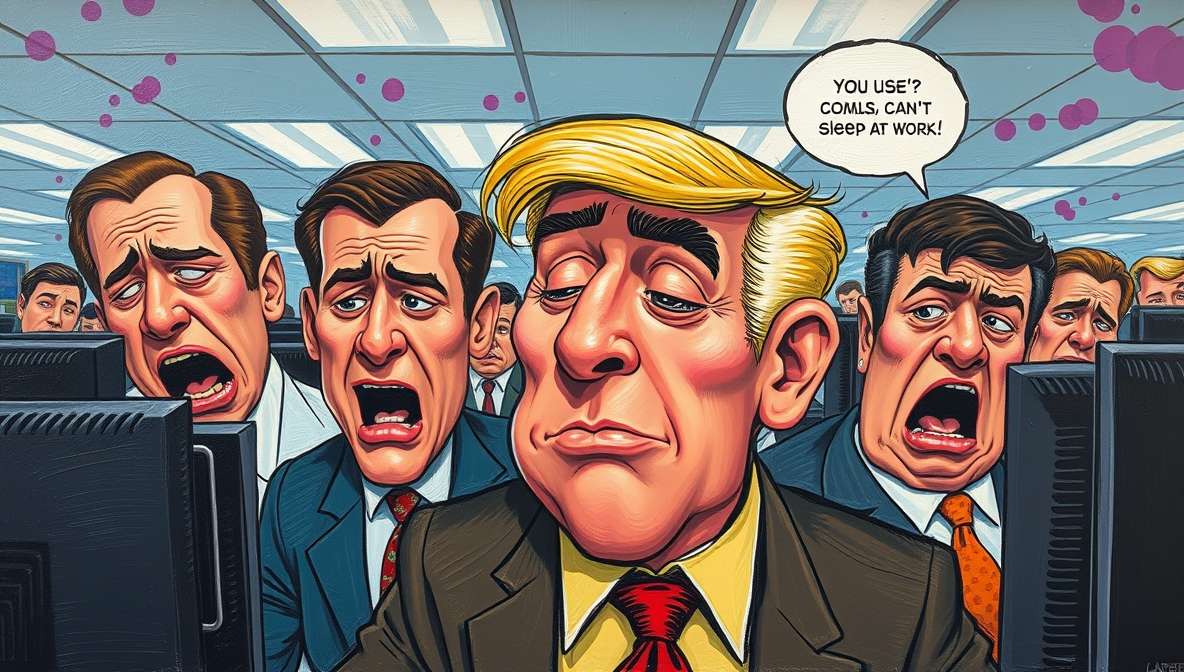
RFK Jr. Orders National ‘Nap Time’; Americans Complain They Can’t Sleep at Work

In an unprecedented move aimed at boosting productivity and morale, Robert F. Kennedy Jr. (United States Secretary of Health and Human Services) has officially declared a national “Nap Time.” The initiative encourages Americans to take a brief siesta during the workday to improve focus, creativity, and general well-being.
Wellness Experts Applaud While Workers Express Frustration
While wellness experts applauded the plan, workers across the country expressed frustration at the obvious flaw: most people can’t nap at work without fear of awkward stares, overflowing inboxes, or HR memos. “I love the idea of Nap Time, but my boss thinks naps are ‘slightly un-American,'” said Karen Mulligan, a corporate analyst. “I tried leaning against my desk, and my computer reported me as inactive for 12 seconds. I got a warning email.”
The announcement quickly went viral. Social media users embraced hashtags like #NationalNapTime, #SiestaRevolution, and #DoNotDisturb, posting memes of cats lounging on keyboards, toddlers napping on conference tables, and exhausted adults curled in office chairs. One viral TikTok shows a Zoom meeting paused as everyone pretends to nap while silently praying the webcam doesn’t catch them.
Health Researchers Confirm Napping Benefits
Health experts argue that workplace napping has measurable benefits. “Studies show that a 20-minute nap can improve cognitive performance, creativity, and mood,” said Dr. Helga Stern, a sleep researcher. “The only problem is… humans are terrible at napping on command, especially while avoiding judgmental coworkers.”
Economists have weighed in, noting both potential benefits and unintended consequences. “If employees actually took naps, productivity might increase,” said Chester McFluff, workplace analyst. “But the reality is likely less ideal: people will spend nap time scrolling social media, negotiating snack breaks, or practicing advanced desk yoga. Still, engagement rises… just not in ways HR expected.”
Government Offices Struggle to Adapt
Government offices have attempted to adapt. Some workplaces installed “nap pods,” soundproof rooms, and dim lighting, but many employees still struggle. “I tried the official Nap Time lounge,” said one tech worker. “It was beautiful, silent… and completely full. I ended up napping under a printer. I think I dreamed about tax forms.”
Cultural critics have noted the comedic potential of the initiative. “Nap Time is essentially government-sanctioned comedy,” said Dr. Margeine Fenton, sociologist. “Watching thousands of Americans attempt to sleep while fighting deadlines, emails, and existential dread is both tragic and hilarious. It’s a national performance art piece.”
Creative Interpretations Spawn New Nap Variations
Social media users have taken creative liberties, suggesting variations such as “Nap Commutes” (sleeping on public transport), “Nap Meetings” (bringing pillows to conferences), and “Nap Olympics” (competitive napping for likes). Clearly, Americans are interpreting Nap Time as both a mandate and a meme opportunity.
Despite logistical challenges, the White House insists the initiative is a step forward in work-life balance. “We want Americans to rest, recharge, and return to their jobs with vigor,” said a spokesperson. “Just… maybe don’t snore into the conference call.”
In the end, Nap Time is both a well-intentioned policy and a comedic social experiment. Millions of Americans will attempt it, meme it, complain about it, and secretly dream of living in a world where napping on the clock is universally acceptable.
Disclaimer: This story is a collaborative satirical effort between a tenured sleep researcher and a philosophy major turned dairy farmer. No AI was involved in prescribing naps, enforcing HR policies, or creating nationwide comedic chaos.