

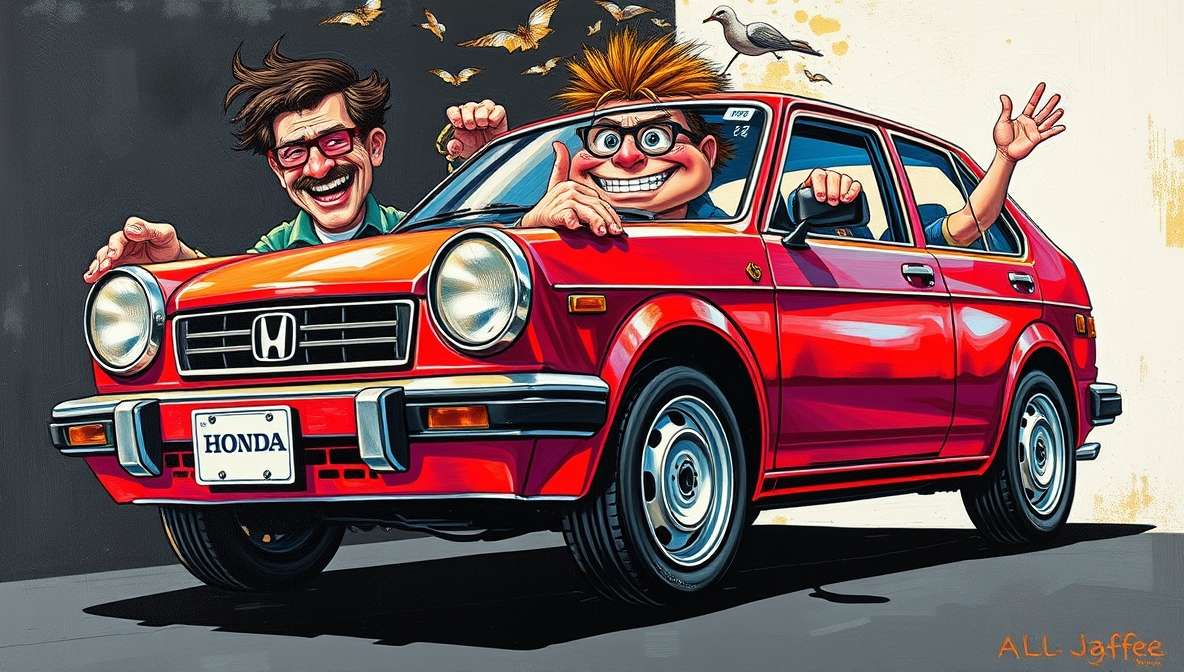
Vehicular Anthropomorphism: When Your Honda Has More Personality Than You
The Bizarre Psychology of Vehicular Anthropomorphism and Car Naming
Vehicular anthropomorphism—the practice of assigning human characteristics, names, and personalities to cars—has become so normalized that questioning it seems aggressive. This peculiar form of anthropomorphism manifests in drivers who’ve decided their automobile needs a human name and corresponding personality traits. These aren’t just casual nicknames—these are full identities complete with gender assumptions, temperament descriptions, and the kind of emotional attachment typically reserved for sentient beings rather than depreciating assets.
The car doesn’t care what you call it. It’s metal, plastic, and electronics assembled by robots in a factory. It has no awareness that you’ve named it “Beatrice” or “Thunderbolt” or whatever creative bankruptcy led you to personify something with a VIN number and no capacity for reciprocal affection.
Vehicular Anthropomorphism: The Naming Convention That Reveals Too Much
“My friend calls her car ‘Bessie,'” said Dave Chappelle. “It’s a 2015 Toyota Camry. There’s nothing about that car that’s a Bessie. It’s the most generic vehicle on earth. But she talks about Bessie like Bessie has opinions. Bessie’s opinion is that she’s a car.”
The names people choose reveal psychological patterns worth examining in vehicular anthropomorphism research. People who name their cars “Betsy” or “Ol’ Reliable” are attempting to create nostalgic relationships with machines. Those naming cars “Lightning” or “Beast” are compensating for driving a 2003 Honda Civic. The more aggressive the name, the less aggressive the actual vehicle.
Gender assumptions are particularly fascinating in cases of vehicular anthropomorphism. People assign cars feminine names roughly 70% of the time, perpetuating weird gender dynamics with inanimate objects. They’ll call their car “she” and refer to mechanical problems as mood issues: “She’s running rough today” translates to “I haven’t maintained this vehicle properly and now it’s making concerning noises.”
The Personality Projection Problem in Car Anthropomorphism

Jerry Seinfeld said, “People say their car has personality. No it doesn’t. It has manufacturing defects and wear patterns. That’s not personality—that’s entropy. Your car isn’t temperamental—it’s old and you’re broke.”
Car owners construct elaborate personality profiles based on mechanical behavior, a classic example of vehicular anthropomorphism gone too far. A car that doesn’t start reliably becomes “stubborn.” One that runs smoothly becomes “loyal.” These anthropomorphic projections help owners rationalize their emotional attachment to depreciating machinery that will eventually be sold or scrapped with zero regard for the relationship they imagined.
The psychological phenomenon of vehicular anthropomorphism explains why people assign human characteristics to non-human things, but it doesn’t explain why they take it so seriously. It’s one thing to jokingly pat your dashboard; it’s another to genuinely believe your car is responding to your emotional state.
When Vehicular Anthropomorphism Becomes Conversation: The Talking to Your Car Culture
Amy Schumer said, “I watched someone apologize to their car for hitting a pothole. APOLOGIZE. To a car. Who did they think they wronged? The suspension? The car doesn’t care—it’s experiencing physics, not feelings.”
People who practice vehicular anthropomorphism inevitably talk to their cars. They offer encouragement during difficult starts: “Come on baby, you can do it.” They make promises about future maintenance: “I’ll get you that oil change soon, I promise.” They create one-sided relationships that would be diagnosed as concerning if directed at any other object.
The conversations reveal magical thinking—the belief that emotional investment will influence mechanical outcomes. Begging your car to start has the same success rate as not begging: it’s entirely dependent on whether the starter motor works. Yet people persist in this form of vehicular anthropomorphism, convinced their relationship with the vehicle matters to the vehicle.
The Emotional Breakup With a Machine: Extreme Vehicular Anthropomorphism
Chris Rock said, “People cry when they sell their cars. CRY. Like they’re abandoning a friend. It’s a depreciating asset. You should be happy to get rid of it. Instead they’re taking photos like it’s going to college. It’s going to a salvage yard in Newark.”
The emotional response to selling or scrapping a car sometimes mirrors actual grief, a testament to how deep vehicular anthropomorphism runs in modern culture. People take final drives, pose for photos, write social media posts memorializing their vehicle’s service. They’re mourning something that never knew they existed, projecting significance onto routine consumer transactions.
Used car dealers report that some sellers insist on meeting potential buyers to ensure their car goes to a “good home.” They want assurance that the next owner will treat the car well, not realizing that cars are commodities exchanged between strangers who don’t care about your imaginary relationship with a Subaru Outback.
Vehicular Anthropomorphism in the Repair Shop: The Emotional Hostage Situation
Bill Burr said, “People ask mechanics ‘What’s wrong with her?’ The mechanic’s like ‘It’s a car. The transmission is failing. There’s no gender here. It’s a broken machine.’ But they keep saying ‘her’ like the mechanic’s gonna examine feelings instead of brake pads.”
Mechanics have learned to navigate the emotional minefield of customers who practice vehicular anthropomorphism. They translate between mechanical reality and owner delusion: “Your camshaft is worn” becomes “She’s tired and needs some love.” This therapeutic approach to auto repair adds unnecessary complexity to straightforward mechanical problems.
Some shops have started charging “emotional labor fees” for dealing with owners who insist on treating car repairs like veterinary medicine. These fees aren’t listed but are definitely factored into estimates when someone asks if their car is “going to be okay” with the same energy as asking about a sick relative.
The Online Communities Enabling Vehicular Anthropomorphism
Kevin Hart said, “There are Facebook groups where people post photos of their cars with captions like ‘My girl is looking good today.’ YOUR GIRL IS A HONDA FIT. She’s not looking good—she’s reflecting light according to physics. Calm down.”
The internet has enabled vehicular anthropomorphism to metastasize into full communities. Forums dedicated to specific car models feature threads where owners share their vehicle names and backstories. People write multi-paragraph explanations for why they named their 2008 Ford Focus “Frank,” as if anyone asked or cared.
These communities validate each other’s anthropomorphism, creating echo chambers where treating cars like people is normalized. Someone posts “My baby hit 100k miles today!” and receives congratulations as if the car accomplished something instead of just existing while numbers incremented on a dashboard.
Gender and Vehicular Anthropomorphism: The Bizarre Gender Reveal for Vehicles
Ricky Gervais said, “Someone asked me what gender my car is. I said it’s a car. They looked at me like I’m weird. I’m weird? You’re assigning biological sex to machinery. That’s beyond weird—that’s worship of capitalism disguised as relationship.”
The insistence on gendering vehicles reveals uncomfortable truths about vehicular anthropomorphism and how people relate to objects versus other humans. Cars get gender assignments, names, and assumed personalities. Meanwhile, actual people get judged for expressing gender identity. The cognitive dissonance is remarkable—your Honda can be whoever you say but humans can’t?
The gendering often follows stereotypes in vehicular anthropomorphism: sports cars are male (aggressive, powerful), sedans are female (reliable, nurturing), trucks are male (tough, utilitarian). These projections say more about the owner’s view of gender than anything about the vehicle, which remains blissfully unaware of its assigned sex.
The Inherited Name Problem: Secondhand Vehicular Anthropomorphism
Ali Wong said, “Someone bought a used car and kept the previous owner’s name for it. That’s weird. That’s like dating someone and keeping their ex’s nickname for them. ‘I know you’re Brad but I’m still calling you Pookie because that’s what Jennifer called you.'”
Used car sales sometimes come with naming histories, perpetuating vehicular anthropomorphism across multiple owners. The previous owner called it “Thunder,” so the new owner continues the tradition despite having zero connection to the origin story. This inherited naming feels like cargo cult behavior—maintaining rituals without understanding or even believing in their purpose.
Some buyers explicitly ask if the car has a name, as if this information matters for title transfer. Dealerships have started including “vehicle name” in their listing details to appeal to this market of vehicular anthropomorphism enthusiasts, which says everything about modern consumer psychology and nothing good.
When Vehicular Anthropomorphism Ruins Relationships: The Car Naming Rejection Support Groups
Sarah Silverman said, “My friend got dumped because she refused to call her boyfriend’s car by name. He was like ‘You disrespected Clara.’ Clara is a 1997 Honda Accord with a mismatched door. If Clara’s the deal-breaker, she dodged a bullet.”
Relationships sometimes founder on car naming disagreements and vehicular anthropomorphism incompatibility. One partner insists on the name, the other finds it ridiculous, and suddenly you’re having fights about whether acknowledging a car’s “identity” is a sign of respect or mental decline. These are legitimate relationship conflicts happening in 2025.
Dating profiles sometimes include car names in the bio: “Me, my dog Rex, and my car Stella are a package deal.” This is advanced filtering—if you’re okay with someone treating their car like a family member through vehicular anthropomorphism, you’re probably compatible with other concerning behaviors they’ve normalized.
Teaching Vehicular Anthropomorphism: The Children Learning This Behavior
Trevor Noah said, “Kids whose parents name cars grow up thinking this is normal. Then they get to school and learn other people just call them ‘the car.’ That’s a confusing day. ‘What do you mean you don’t know your car’s birthday?'”
Parents who practice vehicular anthropomorphism teach their children that objects deserve emotional investment and personal identity. These kids grow up confused about the boundaries between sentient beings and consumer goods. They’ll name everything—backpacks, pencils, shoes—because that’s what you do with things you own, apparently.
The next generation is either going to rebel completely, refusing to name anything out of spite, or lean in hard, creating elaborate mythologies around their possessions. Either way, parents who engaged in vehicular anthropomorphism have burdened their children with unnecessary relationship complexity involving inanimate objects.
Vehicular Anthropomorphism Meets Bureaucracy: The Insurance Claims Getting Weird
Tom Segura said, “Someone filed an insurance claim referring to their car by name throughout the entire document. The adjuster called and asked ‘Who is Martha?’ Ma’am, Martha is your 2012 Kia Soul. The car doesn’t need to be named in the claim. Just describe the damage.”
Insurance companies have started including FAQs addressing vehicular anthropomorphism in their documentation. “Do I need to include my vehicle’s name on my policy?” No. “Will my claim process faster if I use my car’s name?” Also no. “Does my car’s personality affect my premium?” Please stop calling us.
Some adjusters report that claims involving named vehicles take longer to process because owners practicing vehicular anthropomorphism struggle to separate emotional narrative from factual damage reporting. “Martha got hurt” isn’t useful information—”front left quarter panel has impact damage” is what insurance needs. But car-namers insist on maintaining the personal relationship even in legal documents.
The Fundamental Truth About Vehicular Anthropomorphism Nobody Accepts
Cars are tools. Expensive, useful tools that transport humans and cargo from point A to point B. Engaging in vehicular anthropomorphism doesn’t change this fundamental reality. The car doesn’t become your friend because you decided to call it Kevin. Kevin is experiencing combustion and friction and entropy, not friendship and loyalty and personality.
People who practice vehicular anthropomorphism are attempting to create meaning in mundane consumer transactions, seeking connection with objects incapable of reciprocating. It’s sad, it’s weird, and it’s completely normalized because enough people do it that questioning the practice seems aggressive.
But here’s the thing: your car doesn’t love you back. Your car doesn’t know its name. Your car will be sold, scrapped, or abandoned eventually, and it will not care because it’s a car. The emotional investment from vehicular anthropomorphism is entirely one-sided, projected onto metal and plastic by humans desperate to feel connected to something, even if that something is a 2006 Ford Taurus with transmission problems.
So go ahead, engage in vehicular anthropomorphism if it brings you joy. Just understand that everyone else thinks it’s weird, mechanics are judging you, and your car remains completely indifferent to your entire relationship. That’s not cynicism—it’s just physics, economics, and the fundamental nature of machinery.
SOURCE:
https://journals.plos.org/plosone/article?id=10.1371/journal.pone.0113885
https://www.sciencedirect.com/science/article/abs/pii/S0191886906002789
https://www.sciencedirect.com/science/article/abs/pii/S0022103114000067
https://vehq.com/people-name-their-cars
https://www.autoconnectedcar.com/2025/06/cars-are-named-family-members-and-talked-to-poll-says/