

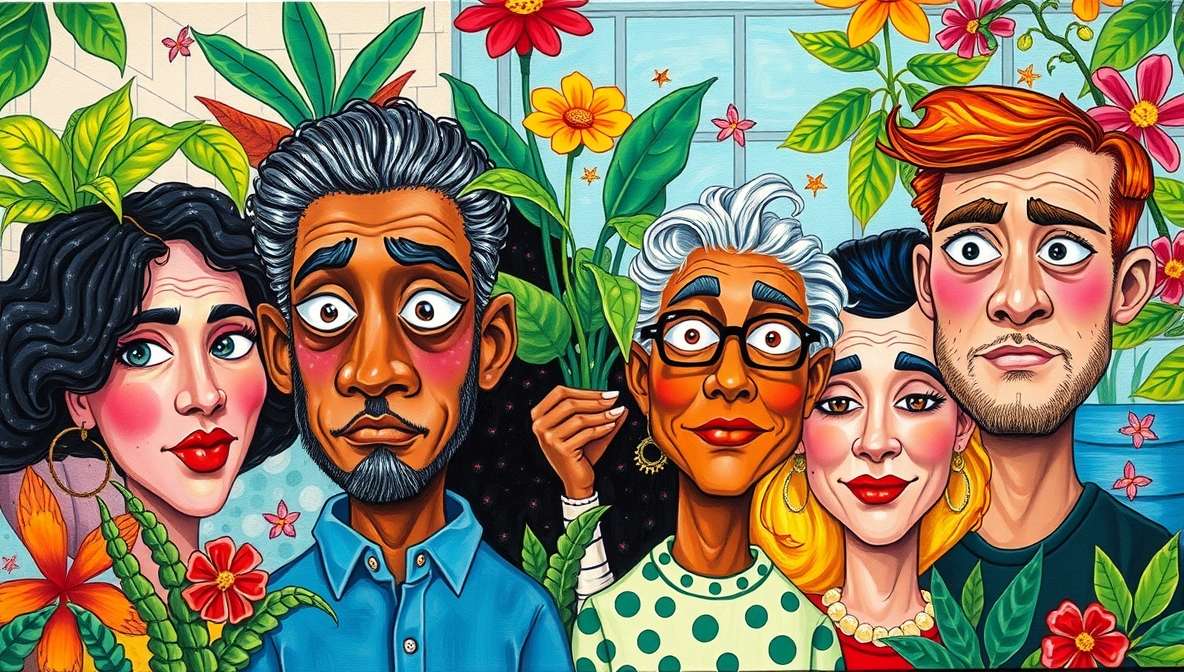
People With Emotional Support Houseplants: When Your Fern Is Your Therapist
The Botanical Codependency Epidemic
The Chlorophyll Therapy Industrial Complex
The houseplant trend has evolved from hobby to full psychological dependency where people genuinely believe their mental health is tied to potted vegetation. These aren’t plant enthusiasts–these are individuals who’ve assigned therapeutic responsibility to organisms incapable of reciprocating care, creating one-sided relationships with ferns they’ve named and assigned personality traits that plants definitely don’t possess.
The emotional support plant phenomenon involves people claiming their pothos or monstera provides mental health benefits equivalent to actual therapy, medication, or human connection. The plants photosynthesize and occasionally grow–that’s it. They’re not listening. They’re not supporting. They’re converting light to energy and humans are projecting healing properties onto biological processes that would occur regardless of their presence.
The Plant Parent Identity Crisis
“She calls herself a ‘plant mom,'” said Dave Chappelle. “To plants. Non-sentient organisms. I’m not saying plants aren’t alive–I’m saying they’re not your children. They’re house decorations that require occasional water. You’re not parenting–you’re maintaining. There’s a difference.”
The “plant parent” identity has become legitimate social category. People introduce themselves as plant moms and plant dads, displaying their botanical dependents on social media with same pride as actual parents. The terminology isn’t casual–it’s sincere identification with parental role toward objects that have zero awareness of their existence.
The parental framing reveals need for care-based purpose that manifests through plants when actual parenting isn’t available or desired. The plants can’t disappoint you, talk back, or require college funds. They’re perfect practice children except they’re not children and this isn’t practice–it’s redirected nurturing instinct toward organisms that don’t know you’ve named them “Fernando.”
The Plant Death Grief That’s Actually Serious

Jerry Seinfeld said, “They hold funerals for dead plants. Actual funerals. With ceremonies. I understand being sad when a plant dies–you invested time, it’s disappointing. But eulogy? For a ficus? The plant can’t hear you. The plant is dead. Actually, the plant was never listening even when it was alive.”
The grief response to plant death occasionally reaches levels typically reserved for actual loss. People post obituaries on social media. They save the dead plant in special containers. Some commission artwork memorializing specific plants that didn’t survive their care. This is mourning directed at organisms that never formed emotional attachments because they’re plants.
The disproportionate grief suggests the plants were serving functions beyond aesthetics. They represented coping mechanisms, emotional regulation tools, objects onto which real psychological needs were projected. When the plant dies, it’s not just vegetation loss–it’s loss of whatever the plant was symbolizing. That deserves some sadness. Maybe not a funeral, but some sadness.
The Plant Communication Believers
Amy Schumer said, “They talk to their plants. That’s fine–people have done that forever. But these people think the plants talk back. Through growth patterns. Through leaf positioning. They’re reading plant language that doesn’t exist, having conversations with organisms that lack nervous systems. That’s not communication–that’s lonely.”
The belief in plant communication extends beyond scientifically supported responses to stimuli. These believers claim plants have preferences about music, respond to emotional energy, and communicate needs through signs only the attuned plant parent can interpret. When scientific studies about plant responses are published, they’re cited as proof despite the studies specifically noting plants lack consciousness.
The anthropomorphization reaches levels where people genuinely believe they’re having relationships with their plants. “Harold doesn’t like being in that corner” means the plant isn’t thriving in inadequate light, not that Harold has opinions about interior design. The projection of consciousness onto unconscious organisms enables emotional connections that, while providing comfort, are fundamentally one-sided.
The Spending That Exceeds Reason
Chris Rock said, “Someone spent $400 on a single plant. Four hundred dollars. For a plant. You can buy a whole tree for less money. But this was rare variegated something. It’s still just a plant. It’s not providing $400 worth of emotional support. It’s providing chlorophyll and a mortgage payment’s worth of buyer’s remorse.”
The rare plant market has created economy where people spend hundreds or thousands on botanical specimens based on scarcity rather than actual beauty or care requirements. The rare plants don’t provide more emotional support than common plants–they provide status within plant communities and drain bank accounts while requiring same basic care as $15 pothos.
The financial investment creates sunk cost fallacy where people double down on plant emotional support claims to justify spending. If you spent $800 on plants this year, they’d better be providing mental health benefits equivalent to therapy. Admitting they’re just decorations means admitting you spent rent money on organisms that don’t care if you exist.
The Social Media Performance
Bill Burr said, “Every plant gets photographed. Every new leaf is an event requiring documentation and sharing. It’s a leaf. Leaves happen. That’s what plants do. You don’t see me posting every time my hair grows. Same biological process, different kingdom.”
The social media documentation of plant ownership has become content genre. New plant acquisitions get unboxing videos. Growth progress receives weekly updates. Plant collections are photographed from multiple angles with professional lighting. The Instagram feeds dedicated to houseplants rival pet accounts in followers and engagement.
The performance aspect reveals that emotional support isn’t just about the plants–it’s about community built around plants. The support comes from other plant people online, validating each other’s relationships with vegetation. The plants are props in social network construction, facilitating human connections while being credited with providing them.
The Plant Care App Subscriptions
Kevin Hart said, “There are apps that remind you to water plants. Paid subscriptions. You’re paying monthly to be told to water vegetation. That’s not emotional support–that’s expensive alarm. Your phone already has alarm. It’s free. Just set it to say ‘water plants.’ But that doesn’t have community features, does it?”
The monetization of plant care through apps, subscriptions, and digital communities creates economy around botanical emotional dependency. People pay for plant identification, care schedules, community forums to discuss plant feelings. The technology layer adds legitimacy to treating plants as emotional support systems requiring professional management.
The apps include features like plant journals, growth tracking, and “plant parent” communities. These tools serve functions–organization, information, connection–but frame them through therapeutic language that elevates plant maintenance to self-care practice. Watering becomes wellness. Pruning becomes personal growth. The apps don’t just track plants–they sell narrative that plant care equals mental health care.
The Partners Who Compete with Foliage
Ricky Gervais said, “The plants get more attention than the boyfriend. She’s checking on them constantly, worried if they’re okay, devastated when one dies. The boyfriend could be on fire and she’d be like ‘Not now, the fiddle leaf fig is drooping.’ That’s not emotional support–that’s emotional replacement.”
Relationships strain when one partner’s plant obsession exceeds their human relationship investment. The plants require daily attention, research, shopping trips, Instagram documentation. The partner receives whatever energy remains after botanical obligations are fulfilled. Resentment builds alongside the plant collection.
Some relationships end specifically over plant disputes. Disagreements about apartment space dedicated to plants, spending on botanical specimens, or time allocation to plant care versus couple time. The plants become third party in relationship–silent, growing, demanding resources without providing reciprocal relationship value except to one half of the couple.
The Therapy Replacement Delusion
Ali Wong said, “Plants are cheaper than therapy, I’ll give them that. But they’re not therapy replacements. They’re living decorations. If caring for them makes you feel better, great. But don’t skip actual treatment because you bought a snake plant. The snake plant can’t prescribe medication or help you process trauma. It’s a plant.”
The dangerous aspect of emotional support plant culture is implicit suggestion that botanical care can replace professional mental health treatment. The plants provide routine, purpose, living things to care for–all beneficial. But they don’t provide therapeutic intervention, can’t address underlying conditions, and won’t call you when you’re suicidal. They’re plants.
Some people explicitly describe their plants as therapy replacements, citing how plant care improved their mental health. The improvement is real–structure and living responsibilities do help some people. But that’s different from therapy, and conflating them can prevent people from seeking treatment they need. The plants are supplement at best, distraction at worst, never replacement for actual mental healthcare.
The Children Raised Around Plant Parents
Sarah Silverman said, “Kids growing up in homes where parents treat plants like siblings. That’s weird developmental environment. ‘Say goodnight to your brother Gerald.’ Gerald is a succulent. Gerald doesn’t sleep. This is confusing for child psychology.”
Children of intense plant parents learn that vegetation receives attention, care, and emotional investment equivalent to human relationships. They observe parents grieving plant deaths, celebrating plant milestones, prioritizing plant needs. The modeling affects how children understand caregiving, emotional investment, and where humans fit in hierarchy of care worthy beings.
Some kids develop resentment toward plants receiving parental attention. Others adopt the same patterns, learning to project emotional needs onto organisms incapable of meeting them. The long-term psychological impact remains unstudied, but raising children in households where plants are treated as sentient emotional support providers probably has some effect worth examining.
The Reality Check Nobody Wants
Trevor Noah said, “Plants are great. They clean air, they look nice, caring for them can be relaxing. All true. But they’re not emotional support systems. They’re not therapists. They’re not family members. They’re plants. We’ve taken a nice hobby and turned it into replacement for human connection, therapy, and purpose. That’s not healthy–that’s concerning.”
Houseplants provide legitimate benefits–improved air quality, aesthetic enhancement, routine maintenance that provides structure. These are real, measurable, good things. The problem is escalation to emotional dependency where plants are credited with therapeutic effects they can’t provide, assigned consciousness they don’t possess, and treated as replacements for human needs they can’t fulfill.
Tom Segura said, “The plant people will say I don’t understand. They’re right–I don’t understand treating vegetation like it’s a relationship. I understand liking plants. I understand caring for them. I don’t understand crying because your pothos is ‘struggling’ or spending therapy money on botanical specimens instead of therapy. That’s not plant enthusiasm–that’s concerning pattern that happens to involve plants.”
The emotional support plant phenomenon reflects broader issues: loneliness, lack of purpose, desire for manageable caregiving relationships, and need for control in uncertain world. Plants offer all of this without risk of rejection, abandonment, or failure to meet complex human needs. They’re safe emotional investments in way humans aren’t. The question is whether that safety is healthy substitute or avoidance of actual connection that might require vulnerability plants will never demand.