

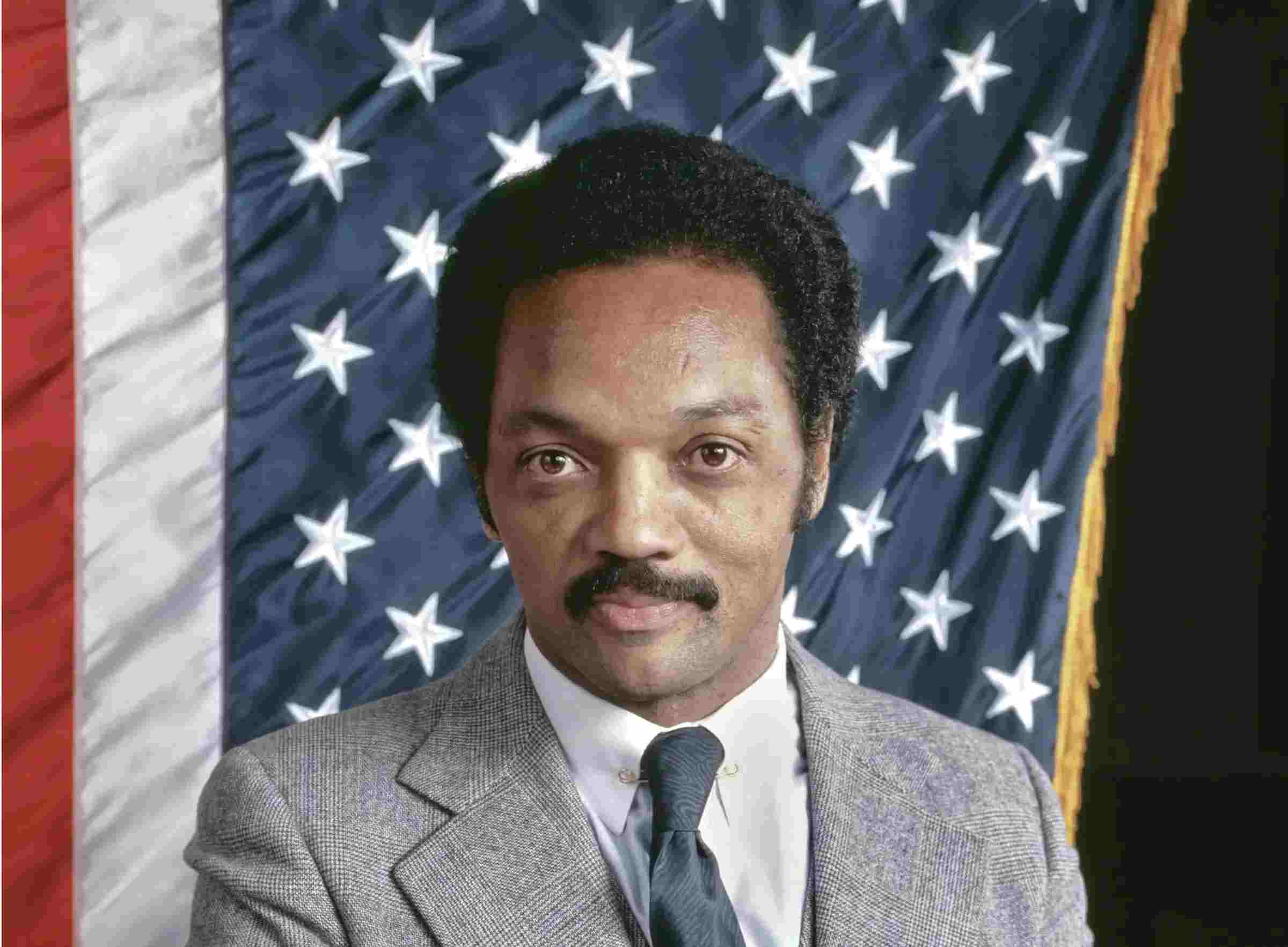
The Man Who Could Invoice a Corporation Using Only a Microphone
A Respectful, Completely Calm, Totally Not Nervous Satirical Obituary
America lost one of its most recognizable negotiators this week: Reverend Jesse Jackson, age 84, civil-rights leader, presidential candidate, public moral conscience, and the only human in history capable of making a Fortune 500 boardroom develop a sudden interest in urban community outreach within twelve minutes.
According to his family, he passed peacefully after a long illness, surrounded by loved ones and at least three corporations quietly funding scholarships just in case the afterlife has press conferences. (CBS News)
Historians will debate his legacy for generations. Economists will debate his methods. Corporate legal departments will continue sleeping with the lights on.
Because Jackson left behind something more durable than speeches, marches, or elections.
He left behind a tone.
A tone that sounded suspiciously like:
“We would love to partner with you in equality. Otherwise we will partner with you in publicity.”
The Original Customer Service Department For American Morality

Most activists marched on Washington.
Jackson marched on quarterly earnings.
He entered a strange territory between capitalism and conscience. A place where protest signs met shareholder value and both realized they were technically the same language.
Companies discovered a fascinating new equation:
Bad press + cameras + choir = sudden commitment to justice
Executives described the experience like weather.
“We noticed a low pressure system forming near our hiring practices, and by Thursday there was a full diversity initiative.”
— Anonymous cereal CEO, testimony before the Committee on Why We Suddenly Care
Jackson did not invent boycotts. They existed before electricity.
But he industrialized them. Boycotts for Profit!
Before him, protests were street theater.
After him, protests had accounting departments. And probably a CFO who only accepted calls after 10 AM.
The Rainbow Coalition and the Corporate Calendar
The brilliance of his method was scheduling.
Corporations had fiscal quarters. Jackson had moral quarters.
A typical negotiation reportedly followed a predictable lifecycle:
- Day 1: Corporation announces record profits
- Day 2: Community asks polite questions
- Day 3: Jackson appears
- Day 4: Corporation discovers moral awakening
- Day 5: Scholarship fund exists
Sociologists later named this process: “Accelerated Ethical Realization Under Televised Conditions.”
A leaked memo from a major retailer allegedly instructed executives:
“If Reverend Jackson requests a meeting, bring data, coffee, and a pen that signs commitments automatically.”
Historians have since confirmed this pen was available in bulk at Staples — under the brand name The Inevitable.
Critics Discover Economics Is Loud
Not everyone admired the technique.
Some called it advocacy. Some called it pressure. Some called it Tuesday.
Opponents argued the negotiations resembled protection rackets. Supporters argued they resembled capitalism finally noticing half the country exists.
Political scientists spent forty years translating:
- Boycott = speech
- Donation = settlement
- Partnership = nobody wants the evening news outside their headquarters
The truth sat somewhere uncomfortable in the middle, which is exactly where American history prefers to sit, like a man at a barbecue discussing tax policy while holding a spatula he has no intention of using.
The Boardroom Revival Meeting
Executives described Jackson meetings with religious vocabulary. They did not call them negotiations. They called them experiences.
The meeting usually began calmly. Then a question appeared:
“How many suppliers in your city look like the people buying your product?”
At this point the CFO entered what researchers call “spreadsheet vertigo.”
An eyewitness marketing director recalled:
“It was the only time our diversity plan had a deadline shorter than geological time.”
Another executive described the moment of agreement:
“We realized equality was not only morally correct but also cheaper than explaining ourselves on television.”
The company subsequently issued a press release so warm it required SPF 50.
Academia Tries To Classify Him
Universities struggled to categorize Jackson’s role.
He was not exactly a politician. Not exactly a preacher. Not exactly an activist.
He was something rarer: a negotiator who replaced lawsuits with headlines.
Economists later coined a technical term: Reputation-based redistribution.
Which is academic language for: “Nobody wants to be the villain in a documentary narrated by a calm voice.”
Three universities reportedly commissioned papers on the subject. All three were submitted late. One cited itself.
The Civil Rights Movement’s Afterparty
Jackson belonged to the generation after the great marches. The era when legal segregation had fallen but economic segregation remained politely seated, nursing a Diet Coke.
He recognized a terrifying truth: You can pass a law faster than you can change a payroll.
So he skipped the courtroom and went straight to the market.
Instead of saying, “You must hire fairly,” he said, “Your customers would love to hear why you don’t.”
Suddenly morality and marketing became roommates. Marketing paid more but morality always left the kitchen clean.
Corporate America Learns Empathy At High Speed
Companies insisted their change was voluntary.
They voluntarily signed agreements immediately after cameras arrived voluntarily with satellite trucks.
A telecommunications executive once summarized:
“We always cared deeply about inclusion. We just needed help remembering during profit season.”
After negotiations, press releases blossomed: community investment initiatives, scholarship programs, minority supplier contracts. Within 24 hours corporations discovered neighborhoods previously unknown to GPS — and, in several cases, to their own HR departments.
The Invention of the Pre-Boycott
Perhaps Jackson’s greatest innovation was making boycotts unnecessary.
By the 1990s companies pre-negotiated. The mere possibility of a protest created faster change than an actual protest.
He had invented the economic equivalent of a thunderstorm warning. The deterrence model, applied to quarterly earnings.
Historians call this deterrence. PR teams called it survival. Shareholders called it Thursday.
The Presidential Runs
Jackson ran for president twice and did not win, which may have been the only job in America where corporations could not settle out of court.
Yet his campaigns changed politics. Coalitions became math instead of theory. The electorate stopped being a demographic and started being a map.
Future candidates quietly adopted his strategy: build alliances, speak in moral language, and occasionally terrify accountants.
Personal Style: Rhythm As Negotiation Tool
He spoke in cadences that sounded like poetry negotiating a contract.
Reporters noticed his sentences contained clauses long before the lawyers did.
A board member recalled:
“We agreed to fund scholarships halfway through a metaphor.”
His rhetorical structure followed a reliable pattern: hope, justice, opportunity — and suddenly a memorandum of understanding. Legal reviewed it later. Legal was confused but supportive.
What the Funny People Are Saying
“I never trusted a man who could rhyme and renegotiate simultaneously.” — Comedian
“He didn’t cancel companies, he put them on spiritual probation.” — Comedian
“Corporate America didn’t fear lawsuits. They feared choir rehearsals in the lobby.” — Comedian
“He invented Yelp reviews before the internet, except the review was the evening news.” — Comedian
“He was the only man who could make CEOs learn geography.” — Comedian
“His PowerPoints had no slides. Just eye contact.” — Comedian, probably
The Great Debate That Never Ended
To admirers, he forced fairness where inertia ruled.
To critics, he weaponized embarrassment.
To historians, he demonstrated the marketplace has ears and hates microphones.
The disagreement persists because it asks an uncomfortable question: When consumers speak together, is it freedom or force?
America has been arguing that since tea entered a harbor.
The Legacy Nobody Can Cancel
Today every corporation has diversity officers, community outreach programs, supplier inclusion initiatives, and social responsibility reports.
Executives insist they invented these voluntarily.
Historians gently cough.
Jackson’s real achievement was making ethics measurable in quarterly reports. He transformed morality into a business expense, which in capitalism is the closest thing to permanence.
That, and the fact that every major corporation now employs at least one person whose entire job is to ensure nobody calls Jesse Jackson.
Final Accounting
He marched in the streets of the 1960s, negotiated in the offices of the 1980s, and lived long enough to see corporations advertise the values they once negotiated reluctantly.
He did not end injustice. He made ignoring it more expensive.
And in a country where attention is currency, he discovered the highest denomination was public scrutiny.
He will be remembered as preacher, politician, activist, and negotiator.
But perhaps his most accurate title was simpler:
America’s moral auditor.
Certified. Persistent. Never quite finished with the audit.
Disclaimer: This obituary is a work of satirical reflection written entirely by a human collaboration between the world’s oldest tenured professor and a philosophy major turned dairy farmer. Any resemblance to uncomfortable truths is purely the reader’s doing. History remains complicated, debate remains welcome, and accountants remain alert.
Auf Wiedersehen, amigo!