

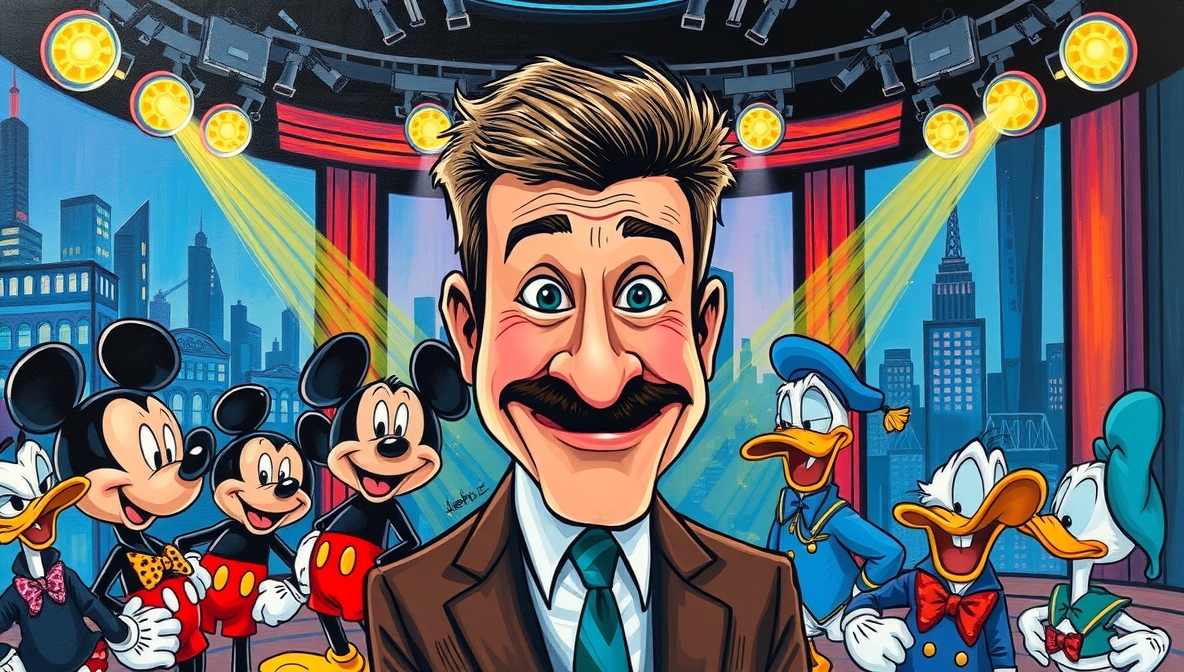
The Great Kimmel Cancellation: When Corporate America Meets Regulatory Theater
When Comedy Becomes a Business Deal Worth Billions
In what can only be described as the most expensive joke never told, ABC pulled Jimmy Kimmel Live! off the air “indefinitely” after the late-night host made comments about Charlie Kirk’s assassination that apparently cost Disney more than a Marvel movie budget. The network’s decision came faster than a Disney Plus subscription cancellation, following pressure from FCC Chairman Brendan Carr and major TV station owners who suddenly discovered their moral compass was surprisingly aligned with their merger approval needs.
The controversy began when Kimmel suggested that Tyler Robinson, Kirk’s suspected killer, was part of the “MAGA gang” – a statement that apparently violated the sacred broadcasting principle of “thou shalt not mock thy regulatory overlords’ political base while we’re trying to get our multi-billion-dollar deals approved.”
Wanda Sykes said in an Instagram video that while Trump had not brokered an end to the wars in Gaza or Ukraine, “he did end freedom of speech within his first year.”
The Merger Magic Behind Media Muzzling
Nexstar Media Group, which owns 32 ABC affiliate stations and is seeking FCC approval for its $6.2 billion merger with Tegna, moved with the speed of a corporate lawyer spotting a liability issue. The company announced it would preempt Kimmel’s show “for the foreseeable future” – or at least until their merger gets rubber-stamped by the very same FCC chairman who just threatened ABC’s broadcast licenses.
What a coincidence that Sinclair Broadcasting, another station group with its own regulatory needs, also decided Kimmel’s comments crossed a line they apparently just discovered existed. It’s almost as if corporate America has developed a sudden case of selective moral outrage that perfectly coincides with their business interests.
The timing is so precise, you’d think these executives had a spreadsheet titled “When to Develop Ethics Based on Merger Approval Timelines.”
Mike Birbiglia wrote on social media, “I’ve spent a lot of time in public + private defending comedians I don’t agree with. If you’re a comedian + you don’t call out the insanity of pulling Kimmel off the air — don’t bother spouting off about free speech anymore.”
The Art of Strategic Spine Removal
Disney CEO Bob Iger, who once flirted with a Democratic presidential run, demonstrated the corporate flexibility of a yoga instructor with a regulatory gun to their head. The company that built an empire on family-friendly content suddenly found itself terrified of a late-night comedian’s political jokes – not because they were offensive, but because they were expensive.
Disney executives had conversations with Kimmel about “taking down the temperature” of his monologue, which sounds remarkably like asking a comedian to be less funny for regulatory compliance purposes. It’s the entertainment equivalent of asking Gordon Ramsay to cook blandly because the health inspector doesn’t like spice.
The decision-making process moved so quickly that Kimmel’s staff was still working on Wednesday’s show when ABC pulled the plug, with celebrity guests already en route to the studio. Nothing says “principled stand” like a last-minute panic decision that leaves everyone scrambling.
Jean Smart shared on Instagram, “I am horrified at the cancellation of Jimmy Kimmel Live. What Jimmy said was FREE speech, not hate speech.”
When Regulators Become Comedy Critics
FCC Chairman Brendan Carr, displaying the regulatory subtlety of a sledgehammer at a china shop, called Kimmel’s comments “some of the sickest conduct possible” and threatened to revoke ABC affiliate licenses. Because apparently, in 2025, federal communications commissioners are also part-time comedy reviewers with the power to cancel shows they find distasteful.
Carr’s threat came with all the subtlety of a protection racket: “These companies can find ways to take action on Kimmel, or there’s going to be additional work for the FCC ahead.” It’s the regulatory equivalent of “Nice broadcast license you got there. Be a shame if something happened to it.”
The chairman then celebrated Nexstar’s decision with the enthusiasm of someone who just discovered they could control media content through merger leverage, praising the company for “serving the interests of their community” – which apparently means serving the interests of their pending business deals.
Alex Edelman wrote on X, “This is the actual cancel culture everyone claims to hate so much.”
The Presidential Peanut Gallery
President Trump, never one to miss an opportunity to spike the football, declared the suspension “Great News for America” and suggested NBC should follow suit with Jimmy Fallon and Seth Meyers. Because nothing says “leader of the free world” like maintaining a hit list of late-night comedians who hurt your feelings.
Trump’s celebration from his UK state visit perfectly captured the moment: an American president cheering corporate censorship from abroad while claiming to defend free speech. It’s like celebrating democracy by applauding its dismantling.
The president’s social media victory lap included calling Kimmel talentless and suggesting his ratings were worse than Stephen Colbert’s – whose show CBS also recently canceled amid similar regulatory pressure. It’s becoming clear that the administration’s media strategy involves less governing and more grudge-settling through regulatory intimidation.
Don Lemon called the decision “some scary shit” and said that “the folks that are complaining about canceling people are canceling people.”
The Comedy Community’s Constitutional Crisis
The entertainment industry’s response revealed the stark divide between those who understand what’s happening and those celebrating it. Wanda Sykes, scheduled to appear on Kimmel’s canceled show, noted the administration’s priorities: no peace in Ukraine or Gaza, but successfully ending free speech within a year.
David Letterman, the late-night legend, called the situation “managed media” and “no good,” while Stephen Colbert left his own studio to call Kimmel privately after learning about the suspension mid-taping.
The irony is rich enough to serve at a Disney boardroom dinner: the same people who spent years complaining about “cancel culture” are now wielding government power to literally cancel shows they don’t like, while claiming to defend free speech.
Marc Maron used his Instagram account to call on free speech advocates to “speak out against the pulling of Kimmel’s show.”
The Affiliate Rebellion That Wasn’t
The coordinated response from major station groups created the perfect cover story: this wasn’t government censorship, it was local broadcasters standing up for “community values.” Nexstar’s statement about not reflecting “the spectrum of opinions, views, or values of the local communities” would be more convincing if it didn’t coincidentally align with their merger approval timeline.
Andrew Alford, Nexstar’s broadcasting division president, claimed the decision was about letting “cooler heads prevail” – which is corporate-speak for “we need regulatory approval more than we need comedy programming.” The company’s moral awakening happened to occur just as they were preparing to submit their FCC merger application.
Sinclair’s response was even more theatrical, demanding Kimmel make a “direct apology” to the Kirk family and calling for ABC to make a “meaningful donation” to them and Turning Point USA. It’s like demanding tribute payments for the privilege of making jokes about public figures.
Michael Kosta, a rotating host on Comedy Central’s The Daily Show, said on his Instagram story, “This is a serious moment in American history. TV networks MUST push back. This is complete BS.”
The Economics of Editorial Independence
The financial mechanics underlying this debacle reveal how media independence crumbles when faced with regulatory pressure. ABC generated approximately $76.6 million in advertising from Kimmel’s show in 2024, but apparently that revenue pales in comparison to the value of keeping regulators happy during merger season.
Without distribution through Nexstar and Sinclair’s stations, Kimmel’s ratings would tank, making the show economically unviable regardless of its content quality or advertiser support. It’s a perfect demonstration of how media consolidation creates chokepoints that can be exploited for political purposes.
The message to other media companies is crystal clear: regulatory approval trumps editorial independence, and merger math matters more than constitutional rights. Disney’s decision transforms a comedy show into a corporate case study of how quickly principles dissolve when billions are on the line.
Chris Hayes wrote on X, “This is the most straightforward attack on free speech from state actors I’ve ever seen in my life and it’s not even close.”
The Chilling Effect of Corporate Compliance
The speed of Disney’s capitulation suggests this wasn’t really about Kimmel’s specific comments but about establishing the new rules of engagement. Media companies now know that regulatory pressure can be applied instantly and with surgical precision to eliminate content that displeases the administration.
Disney’s “hopeful” stance about bringing Kimmel back reveals the company’s calculation: better to suspend now and negotiate later than risk broader regulatory retaliation. It’s damage control disguised as content policy.
The precedent is terrifying in its efficiency. No need for lengthy legal battles or complex censorship mechanisms – just threaten the business interests of media conglomerates and watch editorial independence evaporate faster than Disney+ subscriber goodwill.
California Gov. Gavin Newsom wrote on X, “Buying and controlling media platforms. Firing commentators. Canceling shows. These aren’t coincidences. It’s coordinated. And it’s dangerous.”
The Future of Regulated Comedy
Kimmel’s suspension creates a new reality where comedians must consider not just their audience’s reaction, but the regulatory implications of their material for their network’s corporate parent. It’s like requiring stand-up comics to clear their sets with the FCC before going on stage.
The precedent extends beyond late-night television to any media content that might displease regulators during merger review periods. It’s a perfectly legal form of content control that operates through economic pressure rather than direct censorship, making it harder to challenge and easier to implement.
Former President Barack Obama noted that the current administration has taken cancel culture “to a new and dangerous level by routinely threatening regulatory action against media companies unless they muzzle or fire reporters and commentators it doesn’t like.”
Paul Scheer wrote on Threads, “So let me get this straight. Kimmel is off the air for his comments about the politicization of an assassination but this is totally fine,” linking to a video of Fox commentator Brian Kilmeade calling for homeless people to be killed.
When Satire Meets Reality
The ultimate irony is that this entire situation reads like a satirical sketch that Kimmel might have written about corporate media cowardice and regulatory capture. The only difference is that reality has become too absurd for comedy to adequately mock.
We’re witnessing the creation of a system where media content is effectively regulated through merger leverage, turning every acquisition and business deal into a potential censorship mechanism. It’s brilliantly designed in its deniability – nobody is directly controlling content, just influencing the business environment in which content decisions are made.
The message is clear: in modern America, you can say whatever you want, as long as it doesn’t interfere with someone else’s merger timeline or regulatory approval process. Freedom of speech remains intact, but the economic foundation that supports it is now subject to government influence through bureaucratic pressure.
Rosie O’Donnell called the move “unacceptable” in an Instagram post and said corporate executives are “bowing to the orange monster — america is no more.”
As this saga continues, one thing becomes certain: the relationship between media, government, and corporate interests has fundamentally shifted. The question isn’t whether Jimmy Kimmel will return to the air – it’s whether any comedian, journalist, or media personality can afford to ignore the new rules of engagement where regulatory approval determines editorial boundaries.
The great American experiment in free speech just got a very expensive lesson in the mathematics of corporate compliance, and the price tag is measured in billions of dollars and constitutional principles.
IMAGE GALLERY
Kimmel Cancellation
