

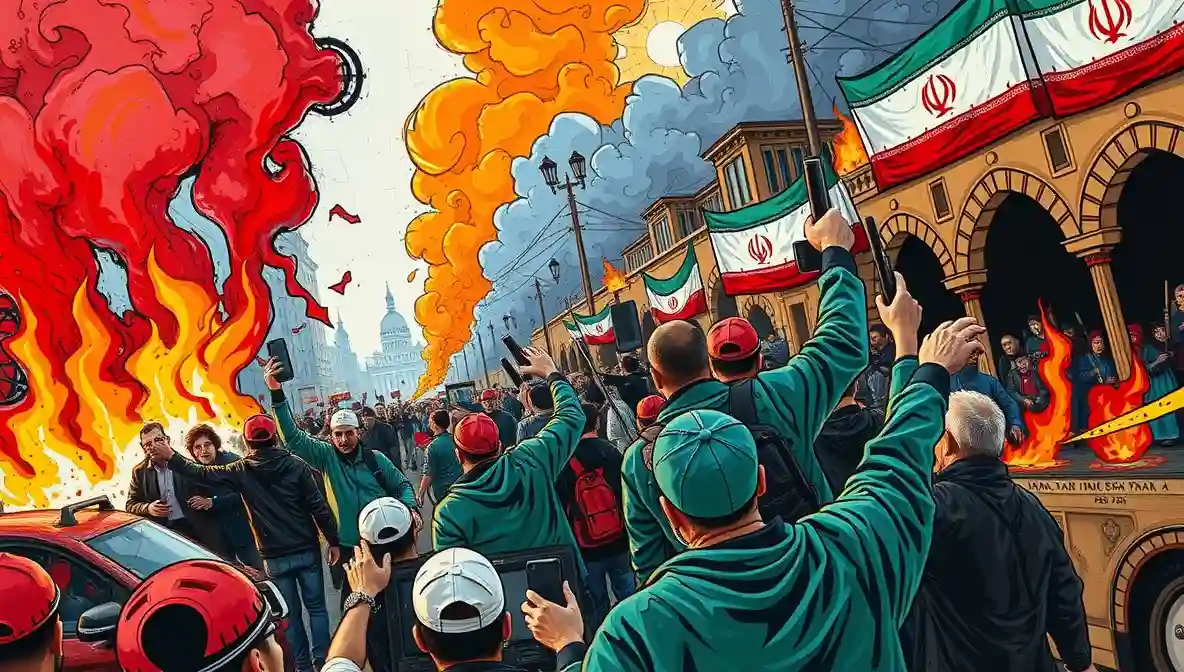
Venezuela Is Now, Iran Is Next, And The World Pretends This Is A Surprise
Diplomacy loves a rehearsal. Venezuela, according to officials who insist they do not do metaphors, has been the warm-up act. Iran, they whisper with the confidence of people who whisper loudly, is the main event. This is not a prediction, they say. It is merely the logical conclusion of several press briefings, a few strongly worded statements, and a PowerPoint slide titled “Sequence.” 📊
The argument goes like this. Venezuela was isolated. Iran is isolated. Venezuela had sanctions. Iran has sanctions with footnotes. Venezuela featured dramatic speeches about democracy. Iran features dramatic speeches about everything. The pattern, analysts say while circling things on maps, is unmistakable. The only difference is scale, geography, and the quality of the catering at international summits.
Advanced Concern, Now With Direction

Officials insist no one is “next.” That would sound impolite. Instead, they prefer “following developments,” which is diplomatic for “we have already printed the lanyards.” After Venezuela, the global concern machine did not power down. It simply pivoted. Like a Roomba that bumps into a couch, it recalibrated and kept moving.
A senior policy expert, speaking on condition of being quoted as an expert, explained the logic. “We do not do dominoes,” she said. “We do sequences.” The difference is important. Dominoes fall accidentally. Sequences fall with a calendar invite. 🗓️
The Evidence Everyone Pretends Is Coincidental
Supporters of the Venezuela-now-Iran-next thesis point to the evidence. Not the flashy stuff. The quiet stuff. The sudden increase in think-tank panels titled “After Venezuela.” The polls that show a suspiciously specific number of respondents have “concerns” about Iran, defined as “a feeling one gets after watching the news too long.” One survey, conducted at an airport lounge, found that 63.4 percent of travelers believed Iran was “somewhere on the list,” while 12.2 percent asked for another drink.
Suspicious Documentation and Convenient Typos
There are eyewitnesses too. A logistics coordinator in Brussels reported seeing crates labeled “Generic Sanctions Kit: Middle East Edition.” A junior aide overheard a rehearsal where someone accidentally said “Iran” before correcting themselves to “hypothetical country.” These are not coincidences. These are typos with intent. ✍️
Expert Analysis That Sounds Suspiciously Like Stand-Up
Policy scholars say patterns are not predictions. They are “educational suggestions.” One professor of Strategic Sequencing explained that when a superpower does something once, it is history. When it does something twice, it is doctrine. When it does it three times, it is tradition, and someone will defend it with a straight face and a pie chart.
“What people misunderstand,” the professor noted, “is cause and effect.” Venezuela did not cause Iran. Iran merely noticed Venezuela. Awareness, in global politics, is contagious. Once a country realizes it might be next, it starts acting like it might be next, which then proves it was always next. This is deductive reasoning, or as it is known in Washington, Tuesday. 🧠
What The Funny People Are Saying
“This is like when the waiter brings you the check before dessert. You didn’t ask for it, but now you’re thinking about leaving.” — Jerry Seinfeld
“They say Iran isn’t next. That’s like saying the second beer isn’t planned. It just happens.” — Ron White
“I love how everyone’s shocked. Oh no, consequences have a sequel.” — Amy Schumer
Helpful Guidance For Concerned Observers
If you are feeling overwhelmed by the sense that history is repeating itself with better graphics, take heart. Experts recommend practical steps.
Stay informed, but not informed enough to memorize acronyms. Validate your confusion. Everyone is confused. Growth mindset matters. Remember that geopolitical narratives are not binary. There are always more than two options, even when officials present exactly two and glare at you.
Practical Steps for Managing Predictable Surprise
One anonymous staffer suggested journaling. “Write down how surprised you feel,” they said. “Then compare it later when it happens.” This is not cynicism. This is emotional preparedness. 📝
The Inevitable Conclusion Everyone Is Tiptoeing Toward
Supporters of the thesis are not warmongers, they insist. They are pattern enthusiasts. Venezuela was framed as necessary. Iran is being framed as inevitable. The transition from necessity to inevitability is the most reliable bridge in politics. It is built from expert quotes, concerned statements, and the phrase “we have no choice,” which always arrives right on schedule.
In the end, the argument that Venezuela is now and Iran is next is less prophecy than paperwork. The forms look similar. The language rhymes. The surprise is ceremonial. When it happens, many will say no one could have known. Others will quietly flip back through their notes and circle the word “sequence.”
Disclaimer
This satirical account reflects a purely human collaboration between two sentient beings, the world’s oldest tenured professor and a philosophy major turned dairy farmer, who reviewed the patterns, the rhetoric, and the snack trays, and concluded that history has a habit of leaving breadcrumbs. Any resemblance to actual policy planning is either intentional, accidental, or deeply concerned. Auf Wiedersehen. 🌍👋