

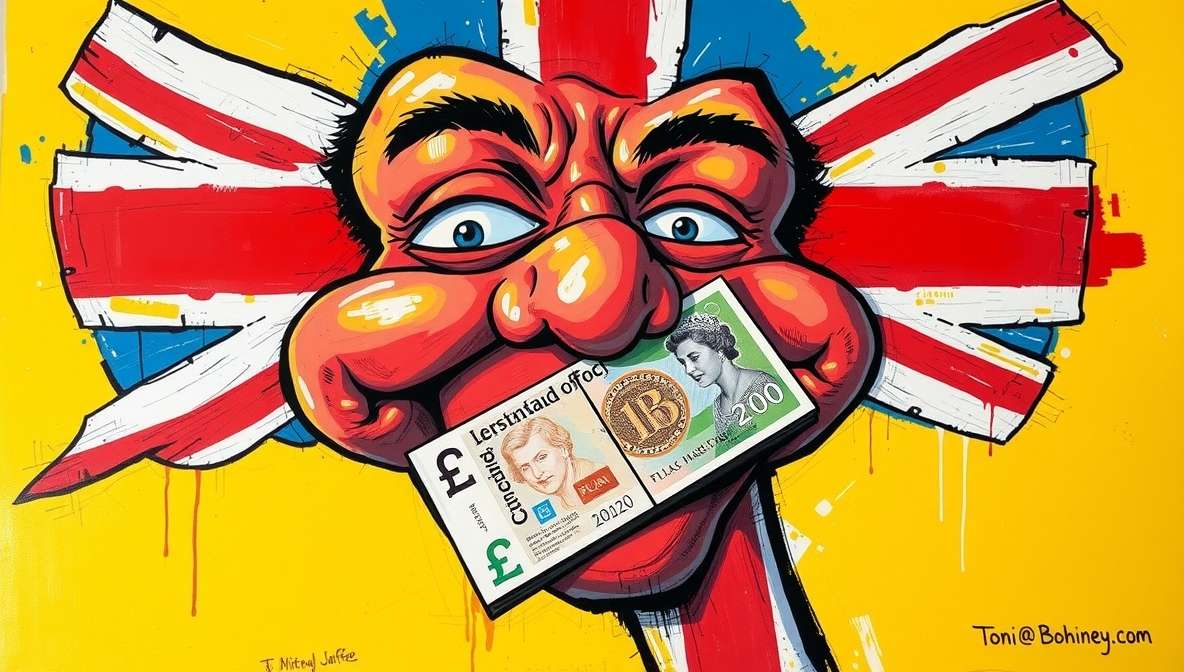
Prime Minister Throws Support Behind Fiscal Fantasy Because Loyalty to Lying Is Apparently Party Discipline
When Defending the Indefensible Becomes Job Requirement
Keir Starmer, our Prime Minister and apparent student of the ‘if we all agree to lie together it becomes truth’ school of politics, has stepped forward to defend Rachel Reeves’ budget despite evidence suggesting the budget is about as credible as a three-pound note and twice as fictional. This is what loyalty looks like in Westminster: blind, aggressive, and divorced from any connection to reality.
Starmer’s strategy is straightforward: ignore inconvenient facts, repeat the party line, and hope nobody notices that the entire foundation of the budget is constructed from assumptions so generous they make fairytale logic look rigorous. His defense of Reeves is less a legal argument and more a hostage video where he’s been forced to say nice things about his captor while blinking in Morse code for ‘help me.’
The Unified Delusion Front

What’s genuinely impressive about Labour right now is their commitment to defending something they know is indefensible. That takes a special kind of party discipline. It’s not loyalty to policy. It’s not loyalty to the country. It’s loyalty to not admitting they fucked up. Because in Westminster, admitting mistakes is apparently worse than actually making them.
Ron White said something like, ‘I had the right to remain silent, but not the ability,’ and Starmer seems to have the opposite problem: he has the ability to remain silent but chooses instead to speak in defense of budgets that don’t balance and figures that don’t add up. His speeches about ‘solid foundations’ ring hollow when the foundation is made of sand and wishful thinking.
One parliamentary observercompletely fictional, because real observers are just as complicit in this charadenoted that Starmer’s defense contains zero actual numbers and infinite rhetoric about ‘tough choices’ and ‘difficult decisions.’ Translation: we lied about the budget, we’re sticking to the lies, and if you don’t like it, tough. That’s not defense. That’s gaslighting with a parliamentary majority.
Defending the Indefensible: A Political Masterclass
Here’s what actually happens when you defend a scandal: it gets worse. Every time Starmer stands up and claims the budget is solid, he’s either admitting he’s part of the deception or revealing he’s genuinely this bad at basic math. Neither option is reassuring. The public watches a Prime Minister defend figures that don’t work, numbers that don’t add up, and projections that have no connection to reality, and all they can think is ‘how did we end up here?’
Jerry Seinfeld said something about observation and reality, and what Starmer is doing is deliberately not observing reality. He’s ignoring budget discrepancies, overlooking fiscal contradictions, and pretending that if you don’t look directly at the disaster, it somehow becomes less of a disaster. It doesn’t. It just becomes a bigger disaster hiding behind a Prime Minister’s forced smile.
Bill Burr talks about how confidence is a thing you project even when you don’t have it, and that’s Starmer in a nutshell. He projects supreme confidence in a budget that’s functionally incompetent, defending a Chancellor whose credibility has evaporated, and pretending that party loyalty matters more than basic honesty with the public that voted for this government.
The Cost of Collective Dishonesty
When leadership defends the indefensible, it sends a message to the entire government: truth is optional. Facts are negotiable. Loyalty to the lie is more important than loyalty to the country. That’s what Starmer has just told his entire party. And his party is listening. Because if the Prime Minister is willing to go down defending a lie, everybody beneath him gets permission to lie with impunity.
Amy Schumer talks about how expectations get lowered and you just have to laugh at the absurdity, and that’s where we are with British politics. The expectations are so low that a Prime Minister defending budget fraud is just another Tuesday. We’ve stopped expecting honesty. We’re just hoping for entertainment value in the deception.
The budget will probably survive. Reeves will probably keep her job. Starmer will continue defending something he almost certainly knows is indefensible. And the public will continue paying taxes while the government continues lying about where those taxes go. This is what collective delusion looks like in a democracy: everybody pretending the Emperor’s new clothes are absolutely stunning.
Auf Wiedersehen, amigos.