

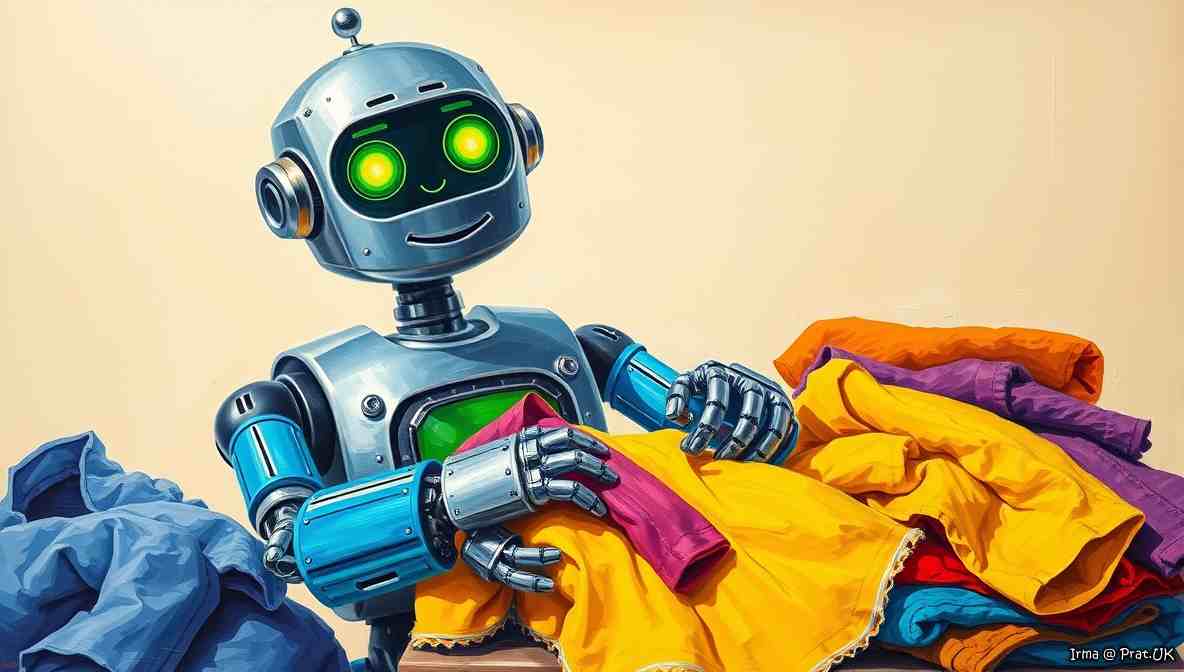
MIT Says LLMs Are Powerful, America Asks If They Can Fold Laundry Yet
Nation Learns “Large Language Model” Is Just a Fancy Name for a Machine That Writes Emails Nobody Reads
CAMBRIDGE, Mass. — A fresh wave of awe, anxiety, and LinkedIn poetry erupted this week after new discussion around large language models reminded the public that artificial intelligence can now summarize contracts, draft essays, generate code, and still somehow misunderstand when you ask for “two tickets near the front.”
Experts say large language models, or LLMs, are trained on enormous amounts of text and can generate startlingly human responses. Regular citizens say that sounds impressive, but they would prefer a robot that can locate the TV remote, explain health insurance, or stop replying-all to office emails.

Five quick observations floated through the newsroom like caffeinated pigeons:
- Every breakthrough in AI is announced by someone whose dishwasher still needs unloading.
- “Large language model” sounds less like software and more like a man who talks too much at a barbecue.
- Humanity built a machine to answer every question except “Why is my printer angry?”
- AI can write sonnets, yet your microwave clock still blinks 12:00 like it’s haunted.
- The smarter computers get, the dumber some meetings become.
The Rise of the Vocabulary Bulldozer
Researchers describe LLMs as systems that learn patterns in language and predict useful next words with shocking sophistication. Critics describe them as autocomplete after three espressos. MIT’s own Watson AI Lab recently unveiled a new approach to LLM reasoning that lets smaller models perform as well as larger ones — which is either a triumph of efficiency or proof that you don’t need to be enormous to be confidently wrong.
Dr. Marjorie Pindle, a computational linguist who owns six notebooks and trusts none of them, explained it this way: “Imagine a parrot read the internet, attended law school, and became emotionally available. That’s roughly where we are.”
Investors nodded solemnly and bought more shares of anything with the letters A and I next to each other. As MIT Technology Review noted, even the people who build these systems admit nobody fully understands what they are — which is less a bug than a feature for anyone who has ever attended a corporate strategy meeting.
Corporate America Deploys AI Immediately Against Morale
Within minutes of hearing that LLMs were the future, companies began using them for their most sacred traditions: reducing staff, increasing jargon, and turning simple tasks into portals. Congressional testimony confirmed that nearly 88% of organizations now use AI in at least one business function, which means 88% of organizations now have a chatbot signing memos “Warmly, SynergyBot.”
At one insurance company, employees were told an AI assistant would “streamline workflows.” By Friday it was scheduling seven meetings to discuss one spreadsheet and signing messages, “Warmly, SynergyBot.” Anonymous staffers said morale dipped after the chatbot thanked workers for “their continued flexibility during this exciting elimination phase.” The AI-Related Job Impacts Clarity Act would require companies to report how many people got replaced by machines, a bill so overdue it might as well have been written by an AI that understands irony.
Universities Alarmed Students May Outsource Thinking
Educators report that AI tools can help brainstorm, summarize, and tutor. They also report a sudden rise in essays beginning, “Throughout history, humans have always historically…” One professor claimed half the papers in his ethics class now sound like they were written by a polite weather station. A University of Arizona experiment found that graduate students using LLMs for astronomy research saved time — though whether they saved brain cells remains a matter of active study.
A student denied using AI. “Those generic paragraphs and weird confidence were all me.”
The Eternal Mystery: How Do These Things Work?
Even experts admit modern AI can be difficult to interpret. Some researchers compare understanding large models to reverse engineering a cathedral made of statistics. A sweeping survey of LLM limitations found that reasoning remains the most studied flaw, followed closely by hallucination — which is scientist language for “the machine made that up with spectacular confidence.” Others compare it to trying to understand a cat that learned tax law.
Congress immediately announced hearings. Lawmakers demanded answers such as: Why does AI sometimes hallucinate? Can it be taxed? Is it woke? Can it run in Ohio? No answers were reached, but three senators accidentally thanked the microphone.
What the Funny People Are Saying
“I don’t fear AI taking my job. I fear AI taking my parking spot.” — Jerry Seinfeld-ish energy
“We made a machine that writes poetry, and I still can’t get a refund from the cable company.” — Ron White-ish energy
“Every tech company says AI will save time. Then they schedule a webinar.” — Sarah Silverman-ish energy
“I asked AI to explain my health insurance. It hallucinated a plan that covered common sense. Apparently that’s not in-network.” — Larry David-ish energy
Consumers Demand Real Innovation
A recent poll conducted by the Institute for Extremely Specific Numbers found 63.4% of adults support AI if it can remove subscriptions they forgot they had. Another 28% want a model that politely declines invitations for them. The remaining respondents were trapped in password reset loops. Harvard Business School researchers confirm AI still cannot reliably distinguish good ideas from bad ones — a limitation that apparently does not disqualify it from running marketing departments.
Martha Dugan of Wichita Falls said she was unimpressed. “Call me when AI can remember where I left my glasses while they’re on my head.” Her husband added, “And if it can explain the Roku remote, I’ll vote for it.”
Meanwhile, analysts project the global LLM market will balloon from $6.4 billion to $36.1 billion by 2030. The glasses are still on Martha’s head. The printer is still angry. The Roku remote has not been explained. Progress marches on.
Silicon Valley Promises Next Version Will Be Even More Mystical
Tech executives insist this is only the beginning. Future systems, they say, will reason better, use tools, understand images, and maybe someday recognize when a human is being sarcastic online, a feat philosophers once deemed impossible. MIT researchers are also teaching LLMs to absorb new knowledge without forgetting what they already knew — a trick human beings have not yet mastered after a long holiday weekend.
Meanwhile, ordinary users continue to use advanced AI for writing birthday texts, fixing résumé commas, generating recipes involving one sad onion, asking whether that rash looks serious, and settling arguments about which actor was in that thing. Congressional witnesses confirmed AI already handles tasks in almost every known occupation — while no occupation can be fully automated. In other words: AI does your job, but it still needs you to show up and explain why it got it wrong.
The Real Lesson About Large Language Models and Modern Progress
Large language models may indeed transform medicine, education, science, and productivity. They may also produce oceans of bland emails, fake confidence, and PowerPoints with twelve bullet points that say nothing. Data from 2023 to 2025 suggests conventional wisdom about AI job displacement is “systematically wrong in almost every major prediction” — which means the only thing AI has definitely replaced is accurate forecasting about AI.
That’s progress in the modern style: breathtaking capability paired with a printer that still says “offline.”
Closing Bell
So yes, the machines are learning language. Beautifully. Rapidly. At scale. Now if someone could teach the office copier empathy, civilization might finally advance. Until then, the LLM will keep writing your emails, your reports, your cover letters, and your apologies — and it will do so with the warm, frictionless confidence of a man who has never once been wrong and cannot be sued for it.
The future is here. It just cc’d the wrong department.
This article was produced in a human collaboration between two sentient beings: the world’s oldest tenured professor and a philosophy major turned dairy farmer. The writers wish to note that no AI was asked to fold laundry during the making of this piece, and none volunteered. Large language models (LLMs) are neural network systems trained on massive text datasets to predict and generate human-like language. MIT’s research arm has been among the leading institutions studying how these models reason, remember, and occasionally confabulate with breathtaking self-assurance. The debate over AI job displacement, regulation, and hallucination rates is ongoing across Capitol Hill, Silicon Valley, and the HR departments of every company that now employs something called SynergyBot. Auf Wiedersehen, amigo!