

Yale’s $94,000 Apology: Yale Says Sorry, Sort Of, With Footnotes
Yale’s Committee on Trust in Higher Education
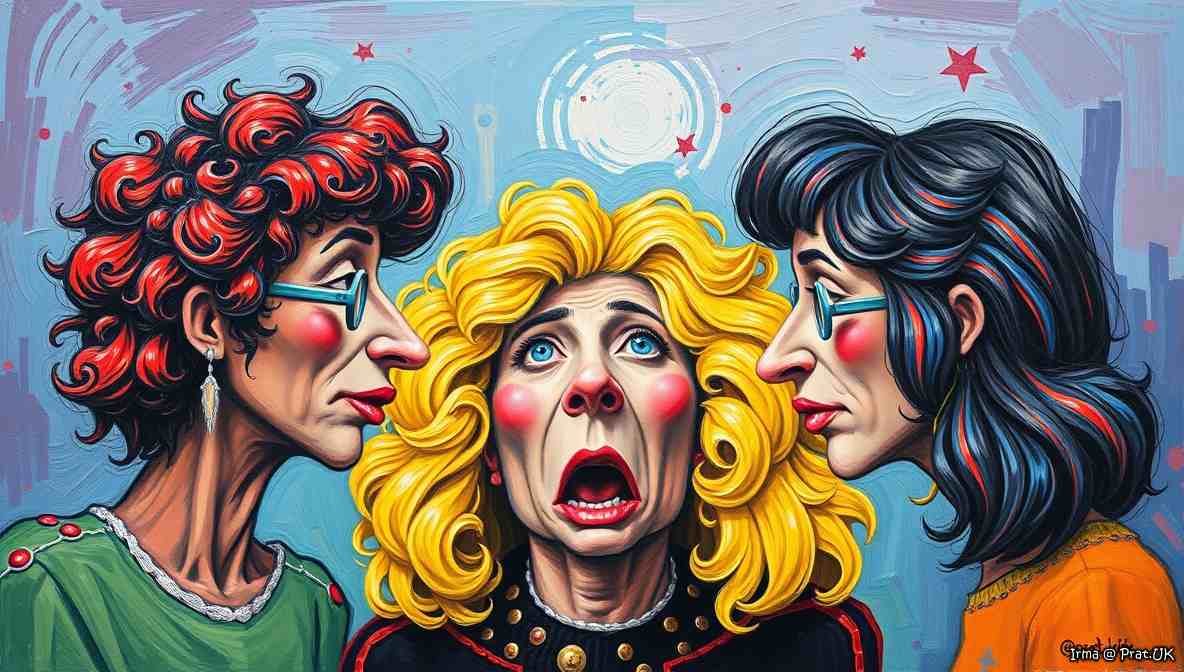
NEW HAVEN, CT — In a revelation that stunned absolutely no one except possibly the people who wrote it, a committee at Yale has concluded that colleges themselves may be responsible for the growing public distrust in higher education, marking the first time in modern academic history that a university has looked into a mirror and not immediately blamed the mirror.
The report, compiled by a 10-member panel of professors who reportedly survived weeks of intense reflection and several catered lunches, found that issues like skyrocketing tuition, mysterious admissions criteria, grade inflation, and ideological whiplash may have contributed to Americans viewing higher education the way they view airline baggage fees: confusing, expensive, and somehow still unavoidable.

“This was a bold step,” said Dr. Leonard Bixby, a fictional sociologist who specializes in Institutional Self-Awareness Studies at the University of Northern Vermont Online Extension Campus. “Historically, universities have approached criticism the way cats approach cucumbers: with panic, denial, and a sudden leap onto the nearest bookshelf.”
According to the report, colleges have spent decades trying to be “everything to everyone,” a strategy that has worked remarkably well for buffet restaurants and absolutely nowhere else.
“They want to be elite but inclusive, affordable but luxurious, rigorous but also emotionally supportive,” said one anonymous staffer who requested anonymity because he still owes $143,000 in student loans. “It’s like ordering a steak that’s also vegan, gluten-free, and morally uplifting.”
The $90,000 Mystery Box: Yale’s Annual Bill Comes With Its Own Sense of Irony
At the heart of the issue is the price tag. Yale’s full cost of attendance now exceeds $94,425 — a number so high it now comes with its own sense of irony, particularly in a country where the median family income sits below $84,000.
Students are told not to worry because financial aid will “adjust” the price, creating a system so complex that even economists have started describing it as “vibes-based billing.” The committee itself admitted the high-tuition, high-aid model is “complicated, unpredictable, secretive, and highly variable.” Nearly half of Americans don’t even believe financial aid of that magnitude exists — which makes sense, because it sounds made up.
A leaked memo from the committee revealed that one professor attempted to calculate the actual cost of attendance and has not been seen since. His last note read: “The numbers… they move.”
A recent poll conducted by the Institute for Advanced Guessing found that 72.3% of Americans believe college pricing is determined by “a dartboard, a Ouija board, and someone named Chad in finance.”
“Transparency is key,” said Dr. Meredith Hobbins, an expert in Educational Economics and Interpretive Dance. “And by transparency, we mean explaining things just enough so people know they’re confused.”
Holistic Admissions: A Beautiful Puzzle With No Edge Pieces and a 4.2% Acceptance Rate
The admissions process, meanwhile, has become what experts call “a narrative-driven scavenger hunt.” Yale’s acceptance rate for the Class of 2030 stands at 4.2% — meaning your child has roughly the same odds of getting in as winning a scratch ticket while being struck by lightning on a Tuesday.
Applicants are encouraged to demonstrate academic excellence, leadership, community involvement, personal adversity, global awareness, and the ability to play at least one obscure instrument like the oboe or competitive fencing.
“It’s holistic,” admissions officers insist, which is a polite way of saying no one really knows what’s happening. The committee’s own report cited research showing that applicants from the top 1% of the income distribution are substantially more likely to gain admission than equally credentialed middle-class peers. Legacy preferences and recruited athletes account for much of that gap — which is a diplomatic way of saying, “It helps if your grandfather’s name is on a building.”
One eyewitness, 18-year-old applicant Jake Harmon, described the process as “writing 12 essays about my deepest fears and then being rejected by a PDF.”
“I had a 4.0 GPA, perfect test scores, and I once volunteered at a soup kitchen,” Harmon said. “Apparently, what they were really looking for was someone who invented soup.”
Grade Inflation: Now Offering Extra Credit for Breathing
The report also highlighted grade inflation, a phenomenon where grades rise steadily while actual learning quietly slips out the back door. The committee floated the idea of targeting a Yale College average GPA of around 3.0, a suggestion so radical in academic circles that several professors reportedly needed a moment alone.
According to internal data, the average GPA at elite universities is now approximately 3.8, meaning the average student is either brilliant or the grading scale has been replaced with positive affirmations.
“Failure is no longer an option,” said Dr. Carl Bentham, a historian who has not given a C since 2007. “Not because students don’t fail, but because it would be awkward.”
A survey of professors found that 64% admitted they had inflated grades “to avoid emails,” while another 22% said they simply “lost the will to fight.” The remaining 14% were unreachable — currently hiding inside a peer-reviewed journal.
What the Funny People Are Saying About the $94,000 Education
“College used to be about expanding your mind. Now it’s about expanding your monthly payment plan.” — Jerry Seinfeld
“You ever notice how a college brochure looks like a resort, but your bank account looks like a crime scene?” — Ron White
“They say education is priceless, and then they hand you a bill like they just auctioned it.” — Amy Schumer
Free Speech on Campus: All Ideas Welcome, Please Submit in Triplicate
The committee also addressed concerns about free speech, noting that universities have become places where every opinion is welcome, provided it passes through several committees, a sensitivity review, and at least one group chat meltdown.
The report recommends a return to the principles of Yale’s landmark 1974 Woodward Report, which declared that universities must protect “the right to think the unthinkable, discuss the unmentionable, and challenge the unchallengeable.” The current version, apparently, stops just short of “the uncomfortable.”
“Students want to speak freely,” said one campus administrator, “but they also want everyone to agree with them immediately.”
This has led to what experts call “selective openness,” where ideas are encouraged, debated, and occasionally escorted off campus with a firm handshake and a strongly worded form letter.
The Trust Collapse: Built Over Decades, Lost Faster Than a Dining Hall Swipe
Just a decade ago, 57% of Americans expressed strong confidence in higher education. By 2024, that number had dropped to a historic low of 36%. A slight uptick in 2025 has done little to comfort anyone, given that 70% of Americans still say the higher education system is heading in the wrong direction — a view shared, remarkably, by both 77% of Republicans and 65% of Democrats. When the left and the right agree on something, it is either a miracle or a catastrophe. This is the second one.
“Trust isn’t something you can rebuild overnight,” said Dr. Bixby. “It’s like a group project. One person slacks off, and suddenly nobody wants to participate anymore.”
The committee’s 20 recommendations cover affordability, admissions reform, grading standards, intellectual diversity, budget transparency, administrative bloat, and a device-free classroom policy — which means students will now have to be bored entirely on their own time.
A Bold New Strategy: Admitting the Problem Exists (Billed at Standard Consulting Rates)
In a campus-wide email, Yale President Maurie McInnis acknowledged that universities were “certainly more than mere bystanders” in the erosion of public trust — which insiders confirmed was the academic equivalent of saying, “Okay, maybe we did it a little.”
Sources say the next phase will involve “listening to the public,” a process expected to include town halls, surveys, and several strongly worded essays. The Alumni Association has been deployed to gather honest opinions from Yale clubs nationwide, which is like asking your accountant to audit himself and then tell you how it went over dinner.
Closing Thoughts From the Ivory Tower (Admission: $94,425)
In the end, the report represents a rare moment of institutional introspection — a kind of academic soul-searching usually reserved for philosophy majors and people stuck in campus bookstores with $18 highlighters.
Whether it leads to meaningful change remains to be seen. But for now, universities have taken the first step: acknowledging that the system might be broken, even if they’re still charging full price to fix it.
Auf Wiedersehen, amigo!
Yale’s Committee on Trust in Higher Education, a 10-member faculty panel formed in April 2025 by Yale President Maurie McInnis, released its 58-page report on April 10, 2026, with 20 recommendations aimed at rebuilding public confidence in the university. The report identified soaring tuition costs, opaque admissions practices, grade inflation, and campus self-censorship as primary drivers of declining trust. Yale’s annual cost of attendance now exceeds $94,000, while Gallup data shows confidence in higher education has fallen from 57% to 36% over the past decade. The committee acknowledged that Yale and institutions like it were “more than mere bystanders” in the erosion of public trust. Proposed reforms include admissions transparency, a push toward a lower average GPA, restricting classroom technology, and a renewed commitment to free speech principles first articulated in Yale’s 1974 Woodward Report. The report was submitted unanimously.
Originally posted 2026-04-17 10:07:20.