

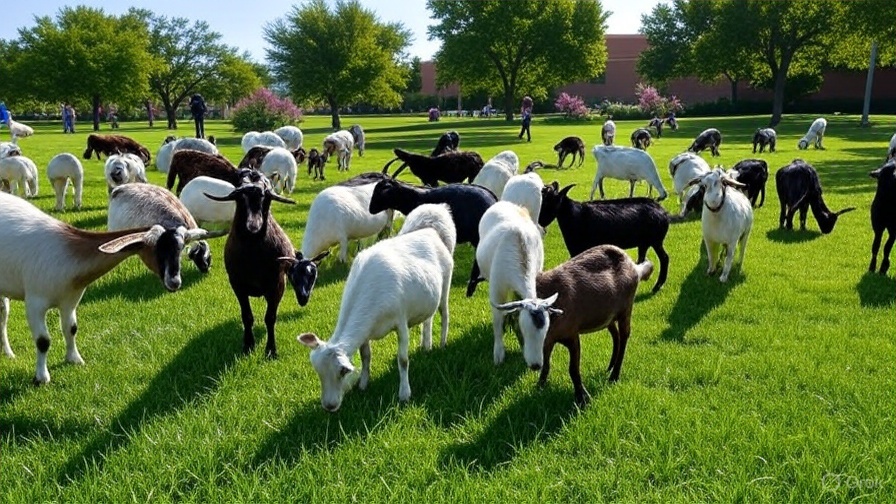
Wichita Falls Goatscaping: City Hires 500 Goats Because Human Landscapers Were Too Expensive
Breaking: Texas City Discovers Revolutionary Goatscaping Technology Called “Animals Eating Grass”
WICHITA FALLS, TX — In a groundbreaking development that has shocked absolutely no one who’s ever owned a backyard, the City of Wichita Falls has deployed 500 goats and sheep to tackle their overgrown grass problem through an innovative program called goatscaping. City officials are calling this goatscaping initiative “Goatscaping” — because apparently, adding “scaping” to any word makes it sound professional enough to justify a city budget line item for what amounts to professional goatscaping services.
The goat landscaping industry has been quietly growing across America, with companies like Rent-A-Ruminant offering eco-friendly land management services to municipalities desperate for sustainable vegetation control solutions. This goatscaping trend represents a new frontier in municipal landscaping where biological lawn mowers replace mechanical ones.
The revolutionary program, which involves letting hungry animals eat grass (patent pending), began this week at Weeks Park, where dozens of goats are now living their best life while taxpayers foot the bill for what amounts to the world’s most expensive petting zoo.
“We’re so excited to introduce GoatScaping to Wichita Falls!” gushed a city spokesperson, who somehow managed to say this with a straight face. “Not only is this a safe and environmentally-friendly way to manage overgrown areas, it’s also a unique experience for our community.”
As Jerry Seinfeld once observed, “I love how they have to make everything sound like it’s the first time anyone’s ever thought of it. ‘Goatscaping!’ What’s next? ‘DogWalking’ as a revolutionary form of pet transportation?”
When Goatscaping Becomes the Answer to Municipal Lawn Mower Problems
The city’s decision to implement goatscaping instead of hiring traditional landscapers came after officials realized that some areas were “difficult to reach and mow due to the slope of the terrain.” Apparently, in 2025, sloped terrain has become humanity’s greatest obstacle to effective landscaping — right after figuring out how to open pickle jars and understanding cryptocurrency. This goatscaping solution represents what city officials are calling “biological landscape management.”
Assistant City Manager Blake Jurecek explained that this goatscaping program is “a viable option to get to places mowers can’t.” Because nothing says “municipal innovation” like admitting your $50,000 riding mowers are being outperformed by creatures that eat tin cans for fun. The goatscaping industry has found a niche in exactly these scenarios where traditional landscaping equipment fails.
The 300-400 goats and sheep are working in “one-acre sections, protected by safe electric netting and under around-the-clock supervision.” That’s right — Wichita Falls now employs shepherds. In 2025. The same year we’re supposed to have flying cars.
Ron White once joked, “You can’t fix stupid, but you can numb it with alcohol.” Well, Wichita Falls has discovered you can’t fix overgrown grass, but you can solve it with animals that existed before the invention of the wheel.
The Economics of Goatscaping: Extreme Outsourcing Meets Barnyard Logic
Let’s break down this brilliant goatscaping fiscal strategy: Instead of hiring local landscaping companies (who presumably know how to operate machinery on slopes), the city decided to rent livestock for their goatscaping operation. These goatscaping animals eat “about an acre a day” and will work “around-the-clock for two to three weeks” in what amounts to the most expensive goatscaping contract in municipal history.
The city is paying for the goatscaping equipment, electric fencing, shepherds, shepherd dogs, and “around-the-clock supervision” for their comprehensive goatscaping program. Meanwhile, a landscaping crew could probably handle this in a weekend with a few riding mowers and some overtime pay. But where’s the municipal excitement in traditional landscaping when you could pioneer goatscaping innovation?
Chris Horgen, the city’s public information officer, enthusiastically explained that the benefits go “beyond being eco-friendly.” The goats will help with “wildfire mitigation” because they “eat grass to the roots.” Apparently, Wichita Falls has discovered that animals eating vegetation reduces vegetation. Nobel Prize material, really.
Amy Schumer might say, “I love how they’re acting like goats eating grass is some kind of revolutionary discovery. What’s next? Dogs fetching sticks as a breakthrough in sports equipment retrieval?”
Goatscaping as Environmental Innovation or Expensive Performance Art?
According to the EPA, goatscaping benefits include reducing pollution, revitalizing areas, and improving biodiversity. The National Park Service has even used goats for invasive species control, proving that targeted grazing is a legitimate land management technique. Which raises the obvious question: if goatscaping is so beneficial, why isn’t every city in America using goatscaping instead of mowers?
The University of California Agriculture has extensively studied goat grazing systems, finding that while brush clearing with goats can be effective for fire prevention, the goatscaping setup costs often exceed traditional methods. Most municipalities prefer solutions that don’t require electric fencing, professional shepherds, and warning signs telling residents to “keep their distance and keep pets away.” Call it old-fashioned, but some cities still believe in technology that doesn’t require a goatscaping management team.
The goats are stationed near Fire Station 8, which seems appropriate since they’re essentially a walking fire hazard being used to prevent fire hazards. It’s like fighting fire with slightly-less-flammable fire.
Dave Chappelle once noted, “Sometimes the most obvious solution is the one nobody thinks of.” In Wichita Falls’ case, the most obvious solution was apparently the one that required importing hundreds of farm animals into a city park.
The Supervision Industrial Complex
Perhaps the most entertaining aspect of this operation is the “around-the-clock supervision” requirement. The city has essentially created a 24/7 goat watching program. Somewhere in Wichita Falls, there’s a person whose job title is literally “Professional Goat Supervisor” — and they’re probably making more than most college graduates.
The goats are protected by “safe electric netting,” which begs the question: what exactly are they being protected from? Rival landscaping companies? Disgruntled mower salesmen? Or perhaps the goats have formed a union and are demanding better working conditions.
A shepherd and dog are also on hand to “keep the four-legged grass munchers from getting into trouble.” Because apparently, even livestock needs a management structure in modern America. Next thing you know, the goats will need performance reviews and health insurance.
Bill Burr would probably say, “They need a shepherd to watch goats eating grass? What are they gonna do, file a complaint with HR? ‘Excuse me, but this grass tastes a little too organic for my liking.'”
When Marketing Meets Barnyard Reality
The city’s enthusiasm for this program borders on the absurd. They’re treating goat-based landscaping like it’s the iPhone of municipal maintenance. “Goatscaping” sounds like something a Silicon Valley startup would pitch to investors: “It’s like Uber, but for grass removal, using renewable biological units!”
Officials repeatedly emphasize that this is “eco-friendly” and “natural,” as opposed to those notoriously artificial lawn mowers that apparently run on puppy tears and environmental destruction. Never mind that most modern mowers are more fuel-efficient than the trucks required to transport 500 goats around the city.
The program is also being marketed as “a unique experience for our community.” Because nothing brings neighbors together like watching livestock defecate in public spaces. It’s like a petting zoo, except you’re not allowed to pet anything, and you’re paying for it whether you want to or not.
Chris Rock might observe, “They’re calling goats eating grass a ‘unique community experience.’ What’s next? Calling garbage collection a ‘waste management adventure’?”
The Poop Factor Nobody Wants to Discuss
Here’s the detail that city officials are glossing over with all the grace of a politician at a fact-checking convention: goats poop. A lot. 500 goats eating for three weeks straight are going to produce enough fertilizer to grow grass faster than they can eat it.
One local radio station actually acknowledged this inconvenient truth, noting, “When goats eat, they got to poop. So hopefully your favorite parks don’t have some new droppings at them.” That’s the kind of honest municipal reporting that wins Pulitzer Prizes in the “Stating the Obvious” category.
The city’s carefully crafted press releases somehow forgot to mention their post-goat cleanup strategy. Will they hire another contractor to remove the goat waste? Or is this part of the “natural” process they’re so excited about?
Jim Gaffigan would probably say, “They hired goats to eat grass, but who’s cleaning up after the goats? Please tell me they’re not hiring more animals for that job.”
A Texas-Sized Solution to a Lawn-Sized Problem
This entire operation perfectly encapsulates the American approach to problem-solving: when faced with a simple issue, create the most complicated possible solution and call it innovation. Wichita Falls looked at some overgrown grass and thought, “You know what this needs? Livestock management, electric fencing, professional shepherds, and a three-week biological remediation program.”
It’s like using a nuclear reactor to charge your phone — technically impressive, wildly overcomplicated, and probably more expensive than just buying a longer charger cable.
The city is spending taxpayer money on what amounts to renting farm animals to do a job that high school kids with weed whackers could handle in a weekend. But where’s the municipal pride in hiring teenagers when you could deploy a small army of ruminants?
Gabriel Iglesias might say, “Only in America would someone look at tall grass and think, ‘You know what we need? More animals!’ In Mexico, we just get out the machete.”
The Future of Municipal Innovation
If goatscaping proves successful, what’s next for Wichita Falls? Chickens for pest control? Pigs for garbage disposal? Maybe they’ll hire beavers for tree removal and call it “Beaverscaping.”
The city has already budgeted $45.8 million for capital improvements this year, presumably including funds for their new livestock-based municipal services. Future budget line items might include “Professional Animal Supervision,” “Biological Landscaping Consultants,” and “Interspecies Workplace Safety Compliance.”
This program represents a perfect storm of bureaucratic creativity, environmental buzzwords, and the kind of overthinking that turns a simple grass-cutting job into a three-week agricultural production. It’s government efficiency at its finest — solving a $500 problem with a $5,000 solution.
Trevor Noah might observe, “In America, even the goats have better job security than most people. They’ve got 24-hour supervision, electric fencing for protection, and probably better healthcare than the guy watching them.”
When Common Sense Takes a Holiday
The most remarkable aspect of this entire operation isn’t the goats themselves — it’s the fact that multiple city officials, budget committees, and municipal departments all signed off on this plan without anyone asking the obvious question: “Are we really going to rent farm animals to cut grass?”
Somewhere in Wichita Falls, there’s a city council meeting transcript that reads like a rejected script from “Parks and Recreation.” Picture the conversation: “Motion to deploy livestock for vegetation management.” “Seconded.” “All in favor of hiring goats?” “Unanimous.”
The city is essentially admitting that in 2025, with all our technological advances, the best solution they could find for tall grass was the same one humans used 10,000 years ago. It’s like NASA announcing they’re returning to the moon using a very tall ladder.
Nate Bargatze would probably say, “They hired goats to eat grass. That’s not innovative — that’s what goats do anyway. Next, they’ll hire fish to swim and call it ‘Aquascaping.'”
The Bottom Line on Barnyard Budgeting
Wichita Falls has managed to turn lawn maintenance into a livestock management operation, complete with shepherds, supervision, and enough bureaucracy to make a simple grass-cutting job sound like a NASA mission. They’ve taken something that should cost hundreds and turned it into something that costs thousands, then marketed it as progress.
This isn’t eco-friendly innovation — it’s municipal theater. The city is putting on a show for taxpayers, starring 500 goats in the role of “expensive lawn mowers that poop.” It’s government at its most creative: finding new ways to spend money on old solutions while making it sound revolutionary.
The real question isn’t whether goatscaping works — it’s whether Wichita Falls has forgotten that the primary job of city government is providing services efficiently, not creating Instagram-worthy photo opportunities that require professional animal handlers.
But hey, at least when visitors ask what makes Wichita Falls special, they can say it’s the only city in Texas where you need a shepherd’s permit to cut grass. That’s got to be worth something in the municipal bragging rights department.
As Ron White might conclude, “You can’t fix stupid, but apparently you can hire it to eat your grass for three weeks and call it environmental innovation.”
For more stories about municipal creativity and taxpayer-funded entertainment, visit our Local Government Comedy Section. Learn more about goat farming and sustainable agriculture practices.
What the Funny People Are Saying…
-
“They hired 500 goats to cut the grass? I’ve seen HOA boards with more sense. And that’s saying something.” — Ron White
-
“Goats eating grass is not innovation. That’s just goats being goats. What’s next, cows reinventing milk?” — Jerry Seinfeld
-
“Wichita Falls hired goats instead of landscapers. Somewhere, a lawnmower is sitting in the garage crying oil tears.” — Amy Schumer
-
“Only in Texas can you lose your job to a goat and have the goat get health insurance.” — Chris Rock
-
“You need a shepherd to supervise goats? What are the goats gonna do, unionize?” — Bill Burr
-
“This is America. We’re outsourcing to livestock now. Pretty soon, pigeons will be running the DMV.” — Dave Chappelle
-
“I like how they call it goatscaping, like it’s a high-end service. That’s not goatscaping, that’s dinner with an attitude.” — Jim Gaffigan
-
“Wichita Falls has a goat-watching program. Somewhere, a college grad with student debt is like, ‘Man, I should’ve majored in goat security.’” — Sarah Silverman
-
“The goats eat an acre a day. That’s impressive. Meanwhile, I can’t even get my kids to eat broccoli.” — Gabriel Iglesias
-
“It’s not a landscaping plan, it’s a three-week poop festival.” — Nate Bargatze
-
“Goats for wildfire prevention? That’s like hiring raccoons for sanitation. Oh wait, that’s coming next.” — Trevor Noah
-
“They’re calling it eco-friendly. Buddy, goats have been eco-friendly since the Garden of Eden.” — Tom Segura
15 Observations
-
Wichita Falls just invented the goat lawnmower. Patent pending: “Letting animals do what they already do.”
-
The city is paying for goats, fencing, shepherds, AND goat security. Somewhere, landscapers are saying, “We just needed gas money.”
-
Wichita Falls claims terrain was “too sloped” for mowers. Translation: “We ran out of excuses, so we brought goats.”
-
City officials are treating goats like Silicon Valley startups. “It’s Uber, but for grass!”
-
Around-the-clock goat supervision is now an actual job. HR probably calls it “Livestock Management Specialist.”
-
The goats are near Fire Station 8. Nothing says fire safety like deploying flammable animals to prevent fires.
-
A “unique community experience” is how Wichita Falls describes watching goats poop in public.
-
The goats are fenced in with electric netting. Not for safety—just to keep them from eating city hall.
-
Local officials forgot to mention cleanup. Spoiler: goat poop doesn’t shovel itself.
-
Wichita Falls turned a $500 mowing job into a $50,000 barnyard experiment.
-
The program lasts three weeks. Landscapers could’ve done it in three days. But goats take their union breaks seriously.
-
Officials insist it’s eco-friendly. Meanwhile, diesel trucks are hauling goats back and forth.
-
A city council actually voted on this. Somewhere in the transcript is the line: “All in favor of livestock-based lawn care?”
-
Wichita Falls may be the first city where your landscaper has horns and eats tin cans.
-
The whole project proves one thing: when common sense takes a holiday, goats take the job.
IMAGE GALLERY
Wichita Falls Goatscaping
