

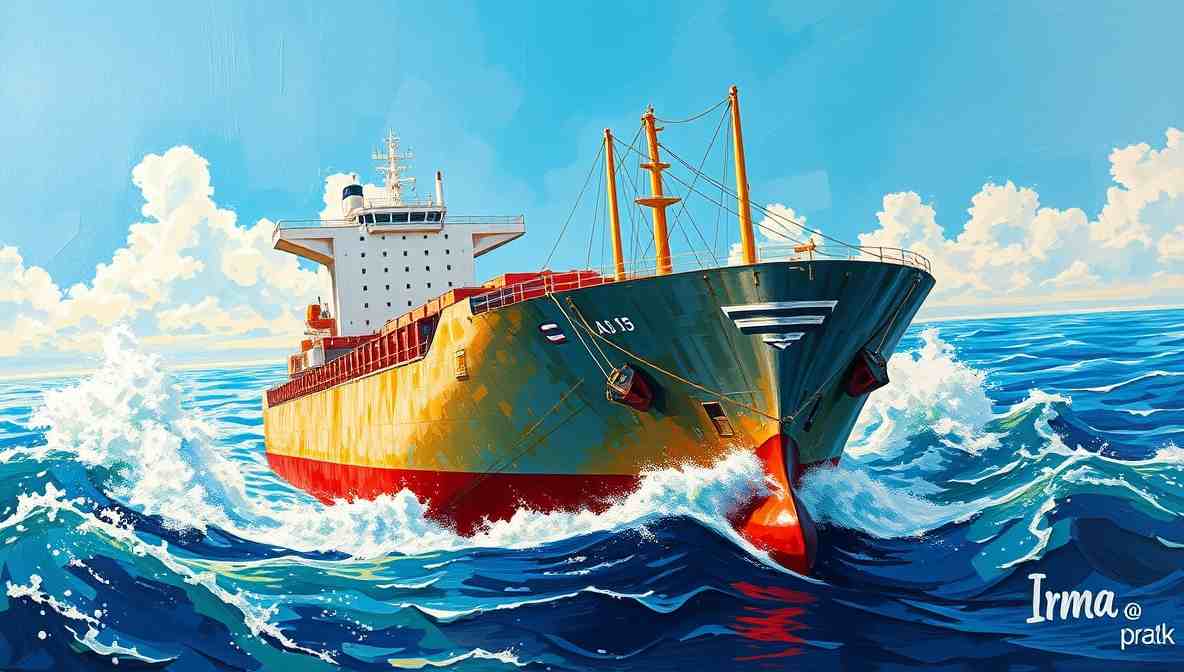
Strait of Hormuz Becomes World’s Most Expensive “Closed for Maintenance” Sign
Khasab Residents Confirm War Feels Like Living Next to a Very Loud, Very Angry Shipping Lane
From the scenic cliffs of Oman, where tourists once came to sip tea and admire dolphins, locals now enjoy a thrilling new attraction: watching the global economy have a nervous breakdown in real time. Front-row seats. No refunds.
According to reporting from The Washington Post, the quiet coastal town of Khasab has been transformed into a VIP box for the geopolitical equivalent of two billionaires arguing over who owns the driveway — except the driveway carries 20 million barrels of oil per day and the argument involves drones, sea mines, and cryptocurrency payment demands.
The Strait of Hormuz, normally responsible for ferrying roughly one-fifth of the world’s oil, has been upgraded to what experts are calling “a highly exclusive, invitation-only waterway with surge pricing.” Think Uber Black, but the driver is the IRGC and the surge multiplier is your GDP.
Local fisherman Abdul Rahman, now a part-time geopolitical analyst, explained the situation while staring at an empty horizon:
“We used to catch fish. Now we catch anxiety.”
Iran Introduces Bold New Shipping Policy: “You May Pass… Emotionally”
In a bold move that economists are calling “not ideal,” Iran has effectively turned the Strait into a toll road operated by a very moody toll collector with a missile battery and a grudge.
Ships are technically allowed through, provided they:
- Ask politely
- Are not enemies
- Pay what appears to be a “vibes-based fee structure”
According to CNBC, Iran is now demanding that shipping firms pay tolls in cryptocurrency — which is exactly the sentence no maritime executive expected to type into a quarterly earnings report. At least one vessel reportedly paid a $2 million fee for the privilege of not being blown up. That’s what the industry calls a “premium experience package,” and what everyone else calls extortion with better branding.
A leaked memo from an anonymous maritime official reads:
“We used to worry about pirates. Now we negotiate with a geopolitical mood ring.”
Shipping companies, always known for their bold decision-making under pressure, have responded by doing what they do best: absolutely nothing. More than 800 freighters are now sitting idle, forming what experts describe as the world’s most expensive floating parking lot. In normal times, about 135 ships cross daily. Today, three crossed. Three. That’s not a shipping lane — that’s a Tuesday at a rest stop.
Global Oil Market Introduces Hot New Feature: Panic+
Oil prices have surged, dipped, surged again, and briefly tried to escape the chart entirely. FactCheck.org confirms a 50-cent-plus spike in the average price of a gallon of gasoline at U.S. pumps — which Trump, with characteristic precision, described as something that “doesn’t really affect” Americans. The gas station receipts respectfully disagree.
Economists confirm the current pricing model is based on three factors:
- Fear
- Speculation
- Someone yelling “Did you see the Strait?!”
Energy analyst Dr. Lionel Graves, who has not slept since February, explained:
“The Strait of Hormuz is less a shipping route now and more of a psychological experiment.”
Meanwhile, according to the International Maritime Organization, some 2,000 ships are stranded in the region, presumably playing cards, rethinking life choices, and Googling “Can you reverse a tanker?” The answer, for the record, is technically yes — but spiritually, no.
Ceasefire Declared, Immediately Ignored by Reality
A two-week ceasefire was announced, which experts initially described as “promising,” before quickly downgrading it to “symbolic,” and finally settling on “decorative.” It now sits alongside other great diplomatic achievements like “thoughts and prayers” and “strongly worded letters.”
Despite the ceasefire:
- Iran continues to control access
- Ships still hesitate to enter
- Everyone keeps using phrases like “fragile situation” and “complex dynamics” — diplomatic code for “this could go very badly at any moment”
The Just Security analysis put it bluntly: geography, not firepower, is dictating outcomes — and Iran is exploiting that reality with increasing effectiveness. Translation: Iran built its house right next to the world’s most important driveway, and we all forgot to read the deed.
One diplomat reportedly summarized the negotiations as:
“It’s like trying to reopen a highway while both sides are still arguing about who owns the asphalt.”
Oman Locals Wonder If Anyone Plans to Fix This or Just Keep Discussing It at Length
Back in Khasab, daily life has shifted from fishing and tourism to watching helicopters and wondering if the next loud noise is:
- A. Thunder
- B. Military exercise
- C. The global economy cracking like a glow stick
Tourism has collapsed, businesses are shuttering, and residents are left navigating a surreal blend of normal life and geopolitical chaos. Congressional Research Service analysis notes the Strait also handles massive volumes of petrochemicals, fertilizer, and sulfur — meaning the blockade doesn’t just threaten oil. It threatens the stuff that grows food, makes plastic, and keeps hospitals running. So, light reading for a Wednesday.
Local shop owner Fatima al-Habsi described the situation with remarkable clarity:
“We are neutral. The war is not neutral.”
What the Funny People Are Saying About the Maritime Crisis
“This whole thing is like your neighbor blocking your driveway, then charging you to leave.” — Jerry Seinfeld
“You ever notice how wars always mess up gas prices before they fix anything else?” — Ron White
“Nothing says ‘global stability’ like a shipping lane run on vibes.” — Amy Schumer
“Iran demanding crypto payments for oil tanker passage is the most 2026 sentence ever written, and somehow it’s not even the strangest thing that happened this week.” — Bill Burr
Experts Confirm the Strait of Hormuz Is Now a Personality
In perhaps the most alarming development, analysts have begun referring to the Strait of Hormuz as if it has feelings.
“It’s temperamental,” one expert said.
“It’s reactive.”
“It needs space.”
At this point, the Strait is less a body of water and more a cast member in a reality show titled Keeping Up with the Geopolitics. Season one is already a disaster. Season two involves cryptocurrency. Nobody is picking up the option for season three.
Final Thought: The World’s Most Important Bottleneck Now Runs on Chaos
The Strait of Hormuz has always been a chokepoint. Now it’s a chokehold.
A narrow stretch of water — barely 21 miles wide at its narrowest point — has somehow become:
- A bargaining chip
- A battlefield
- A toll booth
- A global anxiety generator
- Iran’s most effective diplomatic weapon since the 1979 hostage crisis
And through it all, the world watches… refreshing oil prices, refreshing headlines, and refreshing the same question:
“Is it open yet?”
Answer:
“Define ‘open.'”
Auf Wiedersehen, amigo!
The Strait of Hormuz crisis began on February 28, 2026, when the United States and Israel launched coordinated airstrikes on Iran under Operation Epic Fury, targeting military facilities, nuclear sites, and Iranian leadership. Iran’s Islamic Revolutionary Guard Corps (IRGC) responded by effectively closing the strait — the world’s most critical oil chokepoint — to international shipping, launching over 21 confirmed attacks on merchant vessels. The coastal town of Khasab, Oman, sits directly adjacent to the strait and has become an unlikely frontline for ordinary civilians watching the global energy crisis unfold in their backyard. A fragile two-week ceasefire was announced in early April 2026, but shipping remained largely halted, with Iran demanding cryptocurrency payments for transit rights and the White House demanding the strait reopen immediately and without tolls.