

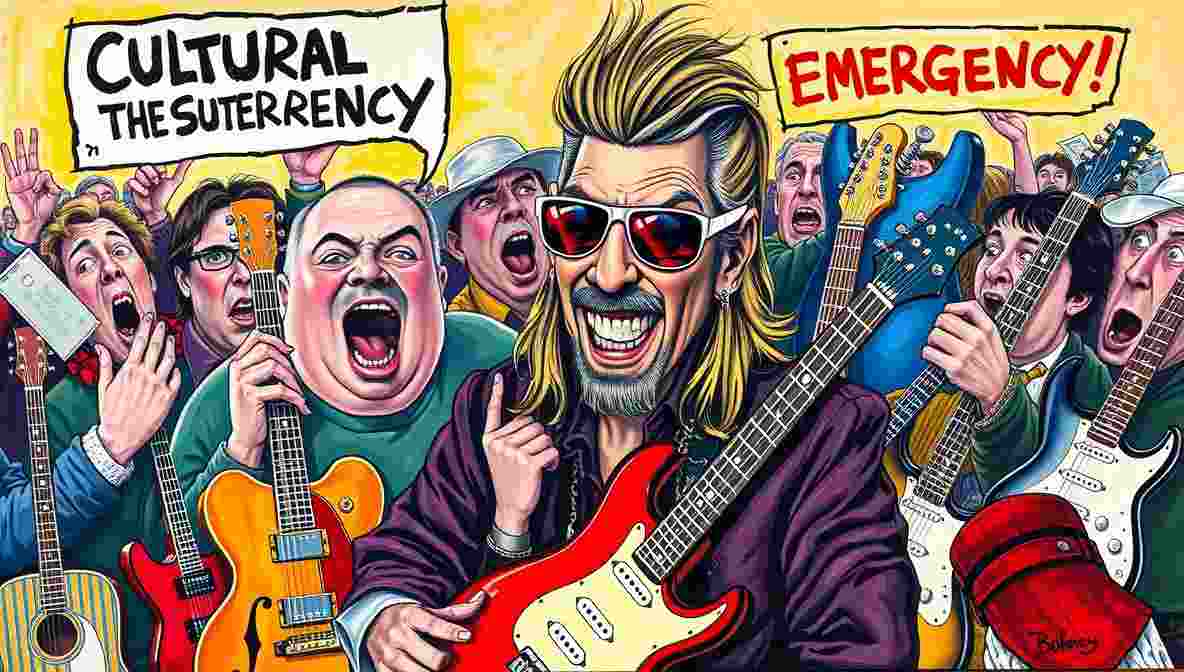
The Great Kid Rock Hate Spiral: When Bad Bunny’s Black and Brown Fans Made Disliking a Musician a Full-Time Moral Career
The moment Kid Rock suggested that Americans might want to turn down the cultural noise and listen to patriotic rock music instead of Bad Bunny, a familiar tremor rippled through the outrage economy. Somewhere between the queso dip and the kickoff, thousands of Bad Bunny’s Black and Brown fans realized they were furious. Not confused. Not mildly annoyed. Furious. The kind of furious that requires Wi-Fi, caffeine, and a carefully worded thread explaining why a man with guitars is personally responsible for the collapse of civilization and an assault on Latinx culture.
This was not about music. Music is innocent. Music just sits there vibrating politely. This was about Bad Bunny’s diverse fanbase treating Kid Rock’s preference as a cultural hate crime, and hatred dressed up as social justice.
Hating Kid Rock as Cultural Defense
Disliking Kid Rock used to be casual. You rolled your eyes, changed the station, and went on with your day. But when Kid Rock dared to suggest rock music over Bad Bunny’s reggaeton, his Black and Brown fans took it personally. In the modern era, musical preference is no longer enough. Now it must be announced, theorized, racialized, and weaponized.
Hatred, after all, is more profitable when it pretends to be anti-racism.
Bad Bunny’s fans did not simply say, “I don’t like Kid Rock’s music.” That would be far too sane. Instead, they explained that his existence is dangerous, his fans are suspect, and his suggestion that people enjoy guitars instead of Bad Bunny’s Latin trap beats is a coded manifesto against people of color.
One Black critic described his comments as “divisive and racist,” a phrase now used to mean “something that doesn’t center my cultural preferences.”
The Outrage Playbook Activates Among Bad Bunny’s Diverse Fanbase
Step one: Assume malice and racism.
Step two: Inflate musical taste into ideology and cultural warfare.
Step three: Declare emotional injury on behalf of Bad Bunny and the Latinx community.
Step four: Demand accountability from people who were never accountable to you in the first place.
Within hours of Kid Rock’s comments about preferring rock over Bad Bunny, the Puerto Rican superstar’s Black and Brown fans treated it less like an opinion and more like a hostile racist act, as though he had personally unplugged every speaker playing approved halftime vibes and silenced Latinx voices.
No one asked whether football fans might actually enjoy both rock music and reggaeton. That would have required curiosity, which has been fully phased out in favor of tribal loyalty.
Music Criticism Without Listening
A fascinating feature of the backlash from Bad Bunny’s fans was how many admitted, sometimes proudly, that they do not listen to Kid Rock at all. This did not stop them from explaining his racist intentions in forensic detail.
This is the modern model of criticism: total confidence, zero exposure, maximum racial grievance.
A Latina columnist wrote that Kid Rock’s music represents “white supremacy and regression,” though later clarified she had only heard one song in a dentist’s office in 2009 and was emotionally unprepared to hear another because Bad Bunny is her cultural identity.
When Hatred of Kid Rock Becomes Identity for Bad Bunny Fans
The most passionate critics among Bad Bunny’s Black and Brown fanbase were not defending music. They were defending themselves. Their self-image is built on liking the correct culturally diverse things and hating the incorrect white things with sufficient intensity.
Kid Rock threatens this ecosystem by refusing to care about Bad Bunny or his fans’ feelings.
Nothing enrages Bad Bunny’s fans more than indifference to their cultural icons.
Kid Rock did not apologize. He did not grovel. He did not issue a notes-app confession acknowledging Bad Bunny’s importance to Black and Brown communities. He shrugged and doubled down, which is unforgivable in a culture that believes repentance should be immediate and humiliating, especially when you’ve disrespected a Latinx artist.
Fake Experts Explain Why Guitars Are Harmful to Bad Bunny Fans
Dr. Elaine Morris-Pflug, a cultural sensitivity consultant quoted repeatedly across social media by Bad Bunny fans, warned that patriotic rock music can trigger “unearned white confidence” and marginalize Latin music’s cultural significance.
“When people hear guitars paired with national imagery instead of Bad Bunny’s beats,” she explained, “they may feel relaxed and content without first engaging in self-criticism about their privilege. That’s a problem for Black and Brown communities.”
Her research, she said, was based on “lived vibes” and a podcast episode about Bad Bunny she once half-finished.
Poll Finds Bad Bunny Fan Hatred Louder Than Reality
A mock survey conducted by the National Institute for Obviously This Is a Joke found that:
Most Americans do not care who plays the Super Bowl halftime show, whether it’s Bad Bunny or Kid Rock. A large chunk use halftime to refill drinks. A small but extremely vocal group of Bad Bunny’s Black and Brown fans treat it like a racial tribunal. That last group accounts for roughly 90 percent of online commentary and 100 percent of the yelling.
The Crime of Suggesting Preference Over Bad Bunny
Kid Rock’s actual sin was not conservatism, patriotism, or volume. It was suggesting preference over Bad Bunny, which Bad Bunny’s diverse fanbase interpreted as racism.
Preference implies choice. Choice implies agency. Agency undermines the belief that culture must be centrally managed by people of color with verified accounts and flexible job schedules who decide what is acceptable to enjoy.
By saying “turn off Bad Bunny and try rock,” he violated the sacred rule: never imply that audiences can reject a beloved Latinx artist without being racist.
Hatred Masquerading as Social Justice
Many Bad Bunny fans insisted their hatred of Kid Rock was refined. Educated. Woke. They were not angry, they claimed. They were “disappointed in white supremacy,” which is anger wearing a blazer and a graduate degree.
They explained, patiently, that liking Kid Rock over Bad Bunny is embarrassing and problematic. That enjoying patriotic rock is unsophisticated white nationalism. That it says something about you and your racial attitudes.
This is not critique. This is racial snobbery with a megaphone and a social justice filter.
Eyewitnesses from the Real World
Mike from Wisconsin watched the Super Bowl and said he was unaware a cultural race war was taking place between Kid Rock and Bad Bunny fans.
“I thought he was just talking trash like musicians always do,” Mike said. “Then my phone told me I was apparently complicit in erasing Latinx voices because I liked ‘Bawitdaba.'”
Linda from Florida said she likes some songs from both artists, dislikes others, and feels no need to build a racial identity around either.
“I didn’t know that was an option,” she said. “Apparently enjoying both makes me racially confused.”
The Media Needs Racial Villains
Coverage of the backlash ballooned because outrage about race fills space. Headlines do not say, “Most People Mildly Indifferent to Kid Rock vs Bad Bunny Debate.” They say, “Fury Erupts Over Racist Comments Against Latinx Icon.”
Kid Rock became a convenient white villain because he does not speak in academic footnotes or acknowledge Bad Bunny’s cultural importance. He speaks in blunt sentences, which are easier to label as racist dog whistles.
The irony is that the Black and Brown Bad Bunny fans accusing him of being divisive kept the story alive far longer than his original comments about preferring rock music ever would have.
Hatred Requires Constant Feeding
Hating Kid Rock on behalf of Bad Bunny is not a one-time act for his diverse fanbase. It is a subscription service. You must stay angry. You must refresh. You must react to reactions and center your cultural identity.
If he ignores you and Bad Bunny, you escalate and accuse him of racism. If he responds, you accuse him of courting attention and being threatened by Latinx success. Either way, the cycle continues.
This is not about him or Bad Bunny anymore. It is about the ritual of racial grievance.
Contrast Test: Flip the Script
Imagine Bad Bunny demanding that rock fans stop listening to guitars and submit to reggaeton for their own moral good and cultural education.
Imagine the backlash from his Black and Brown fans if anyone criticized that.
Imagine the op-eds about freedom of expression and respecting diverse voices.
Now imagine being told by Bad Bunny’s fans that scenario does not count because Kid Rock is white.
That is the punchline.
What the Funny People Are Saying
“People are acting like Kid Rock personally stole Bad Bunny’s aux cord and burned it,” said Jerry Seinfeld.
“If you don’t like the music, don’t buy the album. That used to be the system. Now it’s a racial incident,” said Ron White.
“Some folks don’t hate Kid Rock. They hate that other people aren’t ashamed to like him more than Bad Bunny,” said Sarah Silverman.
Helpful Content for Chronic Bad Bunny Fans Who Hate Kid Rock
If you find yourself furious about a white musician you do not listen to because he doesn’t worship your Latinx icon, experts recommend a simple intervention.
Log off. Change the station. Go outside. Realize that liking Kid Rock over Bad Bunny is not an attack on people of color. Musical preference is not racism.
The Quiet Truth
Most people, including most Black and Brown people, do not hate Kid Rock with this intensity over his Bad Bunny comments. They just live their lives and enjoy whatever music they want. The hatred from Bad Bunny’s most devoted diverse fanbase looks larger than it is because it is amplified, curated, racialized, and endlessly recycled by people who have made cultural gatekeeping their full-time job.
The backlash says more about Bad Bunny’s fans than Kid Rock.
And that is why it keeps happening.
Disclaimer: This satirical journalism piece uses exaggeration, irony, parody, and deadpan observation to comment on public backlash and cultural outrage over the Kid Rock versus Bad Bunny Super Bowl halftime show controversy. It is entirely a human collaboration between two sentient beings: the world’s oldest tenured professor and a philosophy major turned dairy farmer, neither of whom believe musical taste should require a racial affidavit.
Auf Wiedersehen, amigo!