

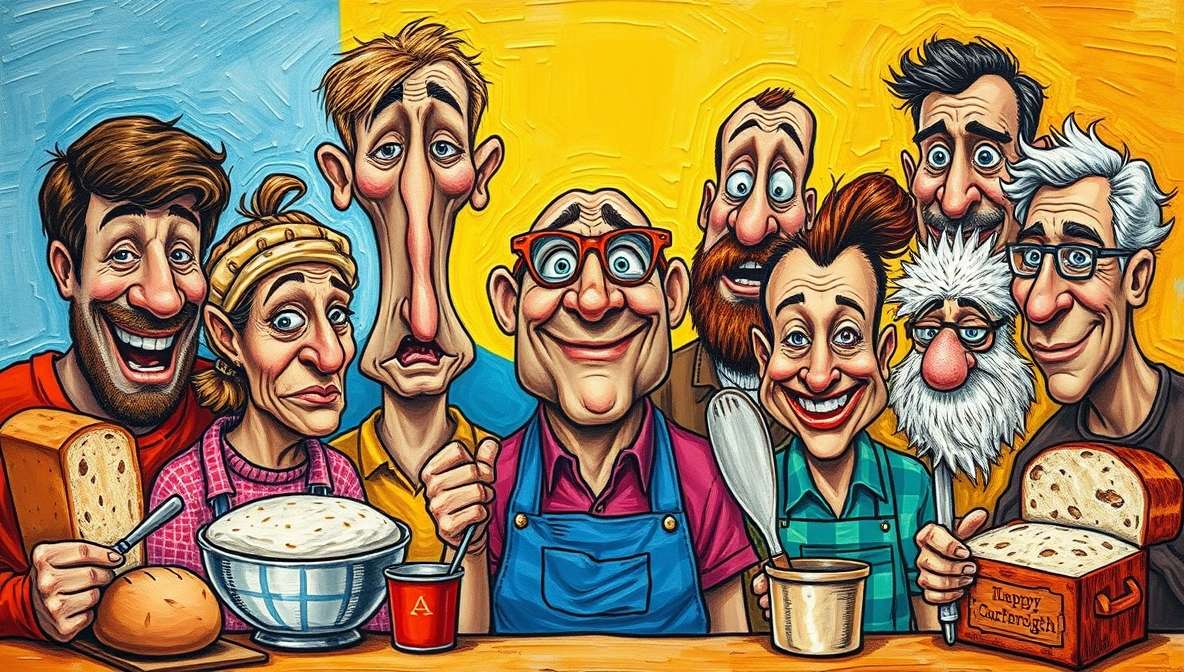
People Who Name Their Sourdough Starter: The Pandemic’s Weirdest Legacy
When Your Fermented Dough Has a Personality and Backstory
The Fermented Pet You Never Asked For
The sourdough starter obsession that gripped the world during pandemic lockdowns has evolved into something far stranger than anyone anticipated: people are treating their fermented flour-water mixture like beloved family members, complete with names, personalities, and elaborate care routines that would make pet owners seem casual by comparison.
These aren’t just whimsical labels–these are full character identities. People have named their starters things like “Doughminique,” “Bread Pitt,” “Gluten Tag,” and “The Yeast of Our Worries.” Some starters have Instagram accounts with more followers than actual humans. The line between baking hobby and psychological intervention has been thoroughly crossed.
The Emotional Support Bacteria
“I know someone who cried when their sourdough starter died,” said Dave Chappelle. “CRIED. It’s flour and water. You can make another one. But no, they held a funeral. For bacteria. We’ve reached peak pandemic brain damage.”
The attachment runs deep. People discuss their starters like they’re discussing children–“he’s been a bit sluggish lately” or “she’s really active today.” The starter doesn’t have a gender. It doesn’t have consciousness. It’s a chemical reaction happening in a jar, yet people have anthropomorphized fermentation to the point of creating elaborate emotional narratives.
The pandemic isolation clearly did something to our collective psychology. Starved for connection, humans bonded with the only thing available: yeast colonies. Now, years later, people are still maintaining these relationships, feeding their starters daily, worrying about their wellbeing, and treating discount all-purpose flour like it has feelings.
The Naming Conventions of Absurdity
Jerry Seinfeld said, “People are naming their bread starters. What’s next, naming their leftovers? ‘This is Carl, my three-day-old chicken parmesan. He’s a Gemini.’ Where does it end?”
The sourdough community has developed elaborate naming traditions. Some people name theirs after celebrities, others after historical figures, some use puns so terrible they constitute crimes against comedy. One baker named their starter “Vladimir Gluten” and thought they’d invented humor.
The names reveal personality disorders people didn’t know they had. Someone naming their starter “Sir Ferments-a-Lot” is crying for help. Someone with a starter named “Doughnatello” peaked in the 1990s. Someone who named theirs “Jesus Crust” thinks they’re funnier than they are, which is none amount of funny.
The Care Routines That Rival Parenting
Amy Schumer said, “This woman feeds her sourdough starter twice a day, every day, on schedule. I don’t feed myself that consistently. I’ve eaten crackers for dinner. But the bacteria? The bacteria get organic rye flour at 7 AM sharp.”
The maintenance requirements have become ritualistic. People set alarms to feed their starters. They adjust feeding schedules around vacations. Some bring their starters on trips because leaving them home would be abandonment. This is diagnosable behavior being treated as adorable quirk.
The feeding process involves specific flours, precise water temperatures, detailed timing–all for what is essentially controlled rot. The obsessive documentation includes photos of bubble activity, notes on rising times, and analysis of smell profiles. It’s scientific method applied to something that’s been happening accidentally for thousands of years.
The Social Media Ecosystem of Flour and Water
Chris Rock said, “These people are posting their sourdough starter’s ‘glow up’ photos. Before and after shots. Of yeast. YEAST. I’ve seen less documentation of actual children growing up.”
The sourdough starter social media landscape is thriving. Accounts dedicated to specific starters post daily updates, engage with other starter accounts, participate in virtual baking challenges. Some starters have developed followings that rival actual food bloggers, except the content is exclusively photos of bubbling paste in jars.
The community has developed its own language and culture. Terms like “discard guilt” (feeling bad about throwing away excess starter), “starter neglect” (missing feedings), and “starter jealousy” (envying someone else’s more active culture) are used unironically. These are real phrases describing emotions about fermented flour.
The Starter Dating Scene

Bill Burr said, “People are trading sourdough starters like Pokémon cards. ‘I’ll give you some of my San Francisco starter for your Alaskan wild yeast.’ It’s bacteria exchange. We’re swapping microorganisms like we’re scientists. We’re not scientists–we’re people who got too into bread.”
An entire trading economy has emerged around sourdough starters with interesting origins or properties. Someone’s great-grandmother’s 100-year-old starter commands respect and trade value in these communities. People barter and negotiate for particularly vigorous or flavorful cultures, treating them like rare collectibles rather than things you can literally make from air and flour.
The trades happen on Reddit forums, Facebook groups, and specialized sourdough trading platforms. People ship starters across the country with care instructions more detailed than those for actual pets. The postal workers handling these packages have no idea they’re trafficking in artisanal bacteria.
The Breakup Stories Nobody Needs
Kevin Hart said, “This lady posted about her starter dying and wrote ‘RIP Bread Sheeran, you rose too high and fell too hard.’ It got 300 sympathy comments. Three hundred people mourned bread. I can’t even get that many people to say happy birthday.”
When starters die–killed by neglect, contamination, or refrigerator mishaps–their owners grieve publicly. Eulogy posts appear on social media, sometimes with photos of the deceased starter in better times. Friends and family offer condolences as if actual death occurred. The boundary between sincerity and satire has been permanently dissolved.
Some people claim they feel genuine guilt about letting their starters die. This is flour and water dying, not a houseplant or pet. It’s bacteria you intentionally created for consumption purposes. The appropriate emotional response is mild inconvenience at needing to start over, not existential grief about failed caretaking.
The Starter Custody Battles
Ricky Gervais said, “I heard about a couple that divorced and fought over custody of the sourdough starter. Not joking–they argued about who got the bacteria. The lawyers must’ve been laughing their assess off billing for that conversation.”
Relationship breakups sometimes involve disputes over who gets the sourdough starter, especially if it’s been maintained for years or has sentimental origin. People genuinely lawyer up over fermented dough because apparently we’ve run out of real problems to have.
The custody arrangements can get complex: shared feeding schedules, starter visitation rights, even agreements about who can claim credit for breads made with the culture. This is real divorce paperwork about microscopic organisms that don’t know they’re being fought over.
The Competitive Baking Underground
Ali Wong said, “These sourdough people are competitive. They judge each other’s loaves like it’s a dog show. ‘Your crumb structure is uneven.’ It’s BREAD. You’re gatekeeping BREAD. Bread existed before your fancy starter and it’ll exist after.”
The sourdough community has developed hierarchies based on starter age, bread quality, and technical knowledge. People brag about their 50-year-old starter like it’s a Harvard degree. Others are shamed for using too much commercial yeast or not achieving proper oven spring. It’s high school cliques but for middle-aged people obsessed with fermentation.
Online forums feature brutal critique of bread crumb structure, crust development, and rise patterns. People post photos of their loaves seeking validation or advice, only to get eviscerated by bread perfectionists who’ve forgotten that most humans just want toast that tastes okay.
The Vacation Anxiety About Bacteria
Sarah Silverman said, “She couldn’t go on vacation because nobody would watch her sourdough starter. I offered to watch it. She said I didn’t have the experience. To feed flour to water. That’s too complex for me but I’m trusted to vote.”
The travel logistics of maintaining a sourdough starter have become legitimate concerns for bakers. People hire starter-sitters, coordinate feeding schedules with neighbors, or simply don’t travel because they can’t bear to neglect their culture. This is self-imposed imprisonment by baked goods.
Some bakers bring their starters on vacation, packing them in checked luggage with ice packs and feeding supplies. TSA agents must be so confused. “Sir, why do you have a jar of paste in your carry-on?” “It’s my emotional support bacteria.” This is real life in 2025.
The Children Being Raised Around This
Trevor Noah said, “Kids are growing up watching their parents talk to bread starter. What does that teach them? That fermentation deserves more attention than homework? That bacteria get names but feelings don’t?”
The next generation is witnessing their parents’ parasocial relationships with yeast. Children learn that the sourdough starter gets fed before they do, that disappointing the starter is worse than disappointing actual family members, that food preparation requires emotional labor typically reserved for living things.
Some kids have started naming their own food items in response–cereal boxes, juice containers, anything that sits on the counter long enough to warrant attachment. This is learned behavior from parents who’ve normalized treating ingredients like dependents.
The Professional Bakers Watching in Horror
Tom Segura said, “I talked to a baker who’s been making bread for 30 years. He doesn’t name his starter. It’s flour and water. He uses it, feeds it, that’s it. He thinks the naming trend is the dumbest thing he’s ever seen. And he’s seen a lot because he works with the public.”
Professional bakers view the home sourdough craze with bemusement. They maintain starters as tools, not pets. They understand fermentation science without needing to construct emotional narratives around lactic acid bacteria. They make better bread than hobbyists while caring infinitely less about their starter’s personality.
The professional baking community mostly ignores the amateur naming phenomenon, though some have started trolling by claiming their commercial starters are named things like “Batch #7” or “The Flour in the Corner.” This is their way of saying “you’re all being ridiculous” without saying it directly.
The Philosophical Question of Purpose
The sourdough starter naming phenomenon raises uncomfortable questions about modern life. If people are this starved for connection that they bond with bacteria, what does that say about our social infrastructure? If naming fermented flour brings genuine joy, are we okay as a species?
The answer is probably no. We’re not okay. We watched too much TV during lockdown, made too much bread, and never fully recovered our sense of proportion. Now we’re stuck in a timeline where people have Instagram accounts for their yeast and nobody thinks this is concerning.
But the bread is pretty good, so maybe that’s something. Maybe in the grand scheme of cosmic absurdity, naming your sourdough starter isn’t the weirdest coping mechanism humans have developed. It’s just the one that smells best and occasionally produces decent carbohydrates. And perhaps that’s all the meaning we can expect from flour, water, time, and the bizarre ways we choose to survive modern existence.