

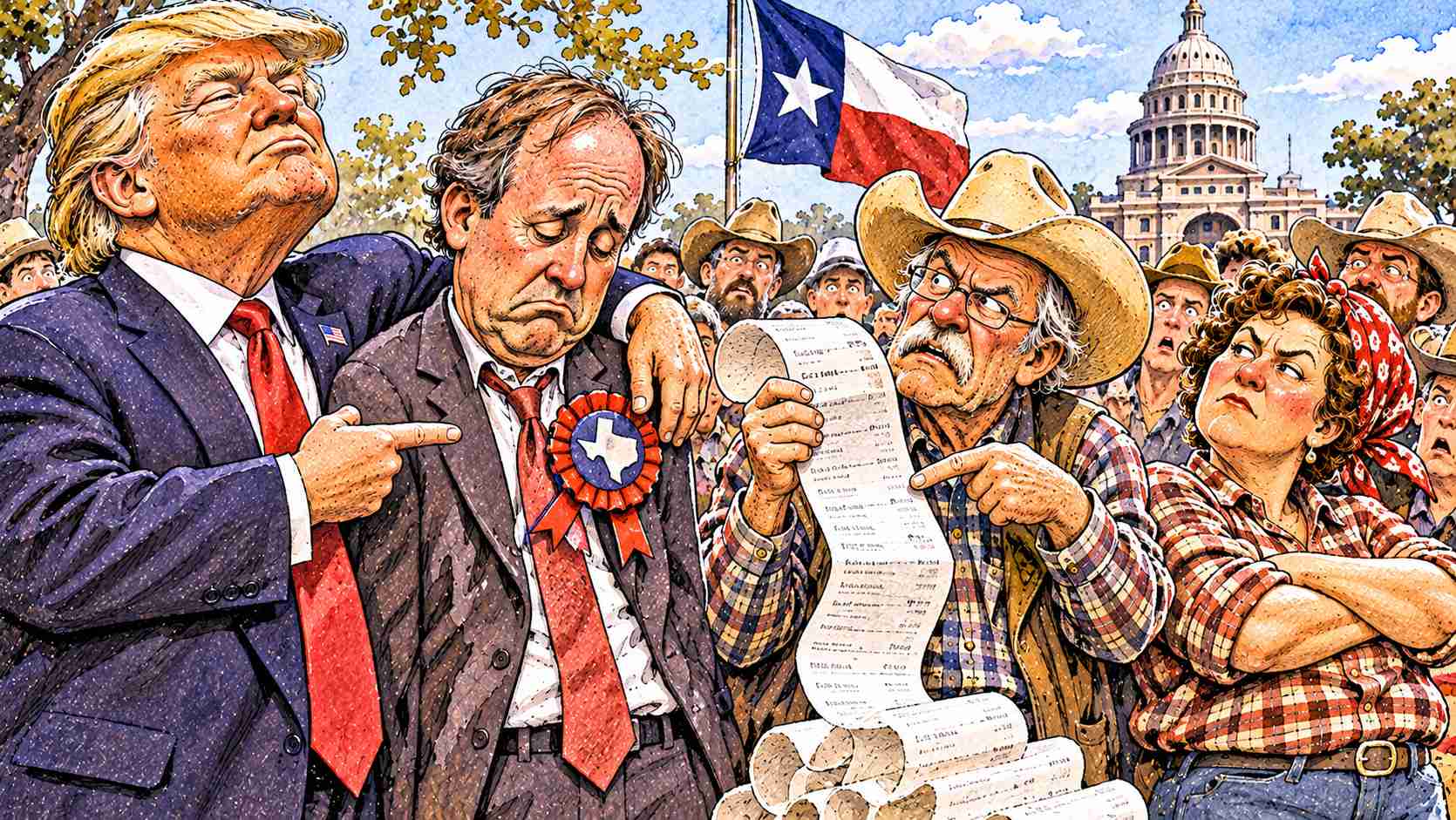
Republicans weigh an expensive lesson in endorsements
AUSTIN, Texas — President Donald Trump picked Ken Paxton over four-term incumbent John Cornyn to carry the Republican ticket in the Texas U.S. Senate race, and on election night a number of Republicans in the state were asking whether the purchase came with a return policy.
Returns were still coming in and the race had not been called, but Democrat James Talarico was running ahead in the large metropolitan and suburban counties. Party officials in Austin and Washington declined to call it a bad night. Several called it an early one, a word a Senate campaign aide used four times in a single answer.
Trump Endorsement of Paxton Ended Cornyn’s Senate Run
Trump announced his decision on Truth Social a week before the runoff, giving Paxton his “Complete and Total Endorsement” and describing him as a true MAGA warrior. He called Cornyn a good man who had not been supportive when times were tough, according to CBS Austin. Early voting had already started.
Cornyn had backed most of the president’s agenda for years. He had also waited to endorse Trump’s presidential campaign until after Trump had won Iowa and New Hampshire, and the timing appears to have stuck. Cornyn said he trusted the Republican voters of Texas. A week later those voters chose Paxton by a wide margin, Texas Public Radio reported.
Texas has not sent a Democrat to the U.S. Senate in nearly four decades, a streak that Republicans in the state had come to treat as a feature of the landscape, like the heat.
Republican Leaders Warned the Texas Senate Seat Was at Risk
The warnings were public. Tim Scott, who chairs the National Republican Senatorial Committee, said it was a strong possibility the party could not hold Texas if Cornyn was not the nominee, and Cornyn said Paxton would hand the seat to Democrats on a silver platter, PBS NewsHour reported. Senate Majority Leader John Thune, asked about the endorsement, said it was the president’s decision.
Paxton had been acquitted by the state Senate at his impeachment trial, and a securities-fraud case against him ended in an agreement. Dr. Marianne Voss, a government professor who has studied Texas primaries for thirty years, said the record cuts two ways. “A candidate who spends years fighting investigations has shown he can fight investigations,” Voss said. “Whether that also wins a statewide election is a separate question.”
Paxton vs. Talarico Pits a Primary Winner Against the General Electorate
Voss said the two elections draw different crowds. “A primary is a family meeting,” she said. “Everybody argues about who’s conservative enough. A general election includes the neighbors and the mail carrier. Paxton won the family meeting.”
Talarico, a state representative, former public school teacher and seminary student, ran on the cost of living. Paxton ran as the defender of conservative Texas. At a diner in Lubbock, Gene Tolliver, 71, a retired cattle auctioneer, said he has voted Republican in every election since he turned eighteen. “You don’t buy a bull because it likes the ranch owner,” Tolliver said, over a chicken-fried steak. “You check whether it can do the job.” He said he had not made up his mind and that his wife had told him to stop talking to reporters.
Democrats had spent years in Texas on fundraising, voter registration and turnout operations. A Democratic strategist in Houston said the party had not expected help from the other side’s candidate selection process and had not budgeted for it.
Consultants Count the Cost of the Texas Senate Ad Blitz
Consultants on both sides put the advertising bill for the race in the hundreds of millions of dollars. Actual totals are filed with the Federal Election Commission. A media buyer in Dallas, who asked not to be named because both parties pay him, said viewers in his market saw Paxton ads at breakfast and Talarico ads at lunch, and by dinner the two campaigns were often running back to back. “Nobody’s changing the channel anymore,” he said. “They’re just eating.”
A one-page memo that circulated among Senate Republican campaign staff this week listed options for the night, according to a staffer who asked not to be named because he still has a parking pass. Item one was to wait for the rural counties. Item four was to call Cornyn.
A Trump Endorsement Wins Primaries, Not Elections
No call had been made in the race as of the latest count, and the difference between a projection and a called result will matter until it is. Voss said the endorsement did what it was meant to do, which was win the primary. “Choosing the quarterback and winning the game are different jobs,” she said.
One Republican consultant suggested a bumper sticker for the party’s next cycle: We Had a Senator. Then We Had an Idea. He said he would not be putting his name on it.
5 Humorous Observations: Trump Picked Paxton, Texas Wanted a Receipt
- Trump personally picked Paxton. It’s like buying the extended warranty and finding out it covers the box the thing came in. Texas is standing at the counter with the receipt.
- They had a four-term senator who voted with them. They traded him in for a guy with more baggage than DFW. And DFW at least has a baggage claim, so somebody eventually gets their stuff back.
- Paxton has been suing people for years. Now he’s up against the one defendant you can’t serve. You can’t settle with the electorate. You can’t even get them to sign for the envelope.
- A primary is Thanksgiving. A general election is the whole neighborhood. Paxton won the family argument, and then somebody told him it was a block party.
- When it works, the president picked a winner. When it doesn’t, somebody finds a problem with the polls, the consultants or possibly the moon. The moon has never once been invited to a Republican strategy meeting, and it keeps getting blamed.