

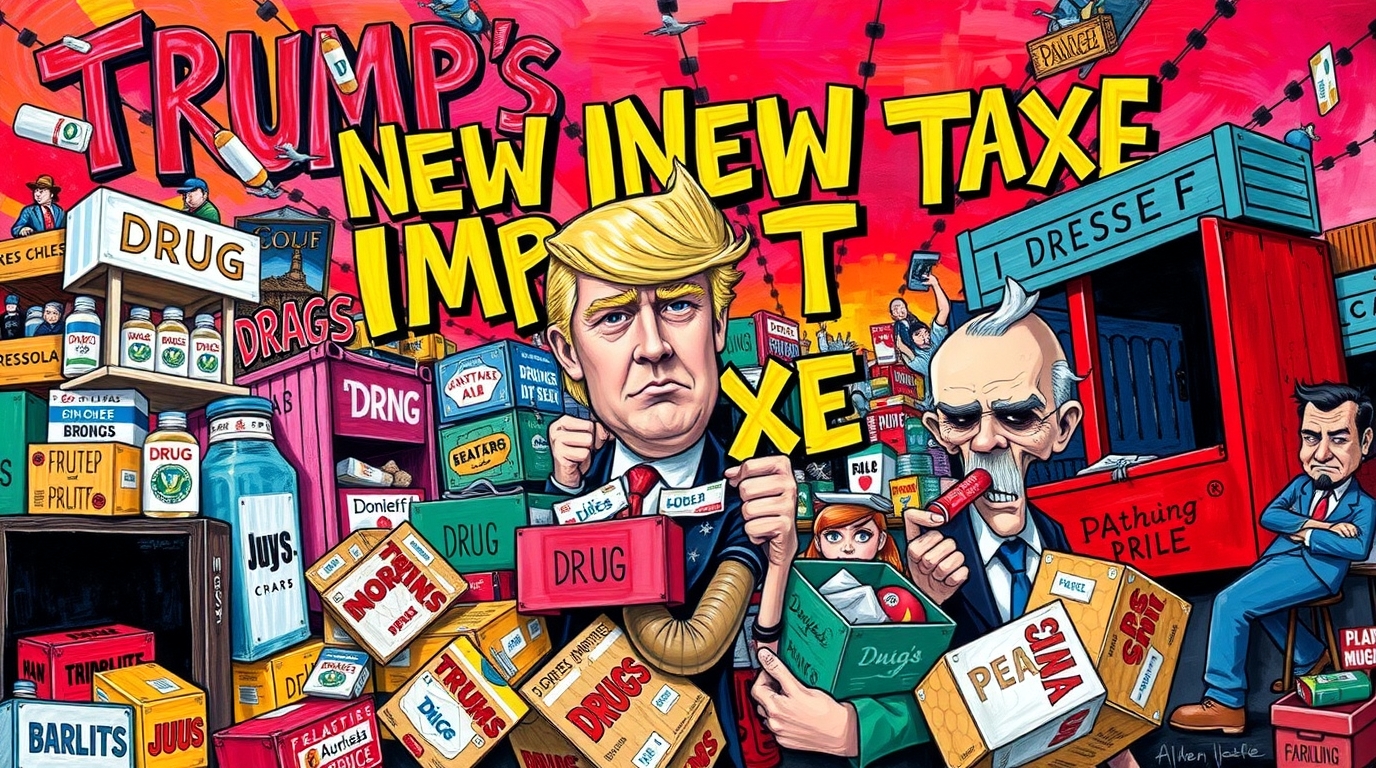
Trump’s New Import Taxes: From Drugs to Dressers — Because We Need More Price Wars at Home
Mar-a-Lago, FL — Former President Donald Trump unveiled comprehensive import taxes targeting everything from pharmaceuticals to furniture, ensuring Americans will soon pay double for Advil while simultaneously maxing out credit cards on dining room sets. “We’re going to make inflation great again,” Trump promised to a cheering crowd, many seated on folding chairs because they’d already pawned their sofas to afford blood pressure medication.
The Philosophy of Comprehensive Economic Warfare
At a press briefing held beside his golf course’s 18th hole, Trump explained his revolutionary trade strategy: “If it’s foreign and it fits in your house—or your bloodstream—we’re taxing it. That way, people will buy American or sit on the floor while suffering through untreated headaches. Either way, America wins.”
The U.S. Trade Representative released a 400-page document detailing the new tariff structure, which economists describe as “impressively comprehensive” and “economically catastrophic.” The policy targets imports ranging from aspirin to armoires, creating what trade experts call “maximum domestic price optimization through foreign competition elimination.”
Anonymous White House staffers insist the plan represents “genius-level economic thinking,” claiming that when people can’t afford imported medications, they’ll develop character through pain tolerance, while expensive domestic furniture will encourage minimalist lifestyle choices that build spiritual resilience.
Furniture Stores Become Economic Battlegrounds

Across America, furniture showrooms transform into scenes of consumer chaos as shoppers discover their dream dining sets now cost more than luxury automobiles. One Minnesota couple reportedly fainted after learning their imported oak dresser carries a price tag exceeding their wedding budget.
“I used to tell kids ‘don’t do drugs,'” Texas Sheriff Buck Williams told reporters outside a furniture warehouse. “Now I say ‘don’t do end tables.’ Both are equally dangerous to family financial stability, and both lead to questionable life choices.”
Bill Burr said during his recent Phoenix show, “Tariffs on drugs AND furniture? So if you’ve got back pain, you can’t afford the Advil OR the recliner. Trump’s creating a whole new demographic: people who suffer while standing up because they can’t afford comfort in any form.”
The New Economics of American Home Life
Under the comprehensive tariff system, typical American families face impossible choices between basic medical care and fundamental home furnishing. A recent survey found 67% of households plan to reduce furniture purchases to afford medications, while 23% intend to tough out minor medical issues to maintain sitting arrangements.
Jennifer and Mark Thompson of Indianapolis calculated their annual household budget under the new tariff structure. Their imported blood pressure medication increased from $45 to $180 monthly, while their planned bedroom furniture upgrade jumped from $2,000 to $7,500. They’ve opted for folding chairs and herbal tea.
Kevin Hart said during his recent Los Angeles show, “Trump’s making people choose between medicine and furniture. It’s like ‘Deal or No Deal,’ except all the briefcases contain either expensive pain relief or overpriced ottomans. Howie Mandel wouldn’t even host this nightmare.”
For now, Americans navigate this new economic reality where treating a headache and buying a coffee table require similar financial planning and political consideration. Whether this represents innovative trade policy or elaborate economic experiment remains unclear.