Walmart Rollbacks: The Economy’s Funhouse Mirror and America’s Real GDP Tracker
As Prices Fluctuate, Shoppers and Economists Alike Look to Walmart Rollbacks for Answers
Bentonville, Arkansas – While Washington policymakers endlessly debate interest rates and inflation targets, the real economic action is happening in the fluorescent-lit aisles of Walmart. With its labyrinth of rollback signs, mismatched shelves, and 24-hour survival kits disguised as snack aisles, Walmart has quietly become America’s unofficial economic barometer.
From the price of Oreos to the rollback sticker wars in the cereal aisle, Walmart’s pricing strategies provide an unfiltered snapshot of the state of the economy. If you’re wondering whether inflation is spiraling out of control or if the economy is on the brink of collapse, don’t look at the stock market—look at the Walmart frozen pizza section.
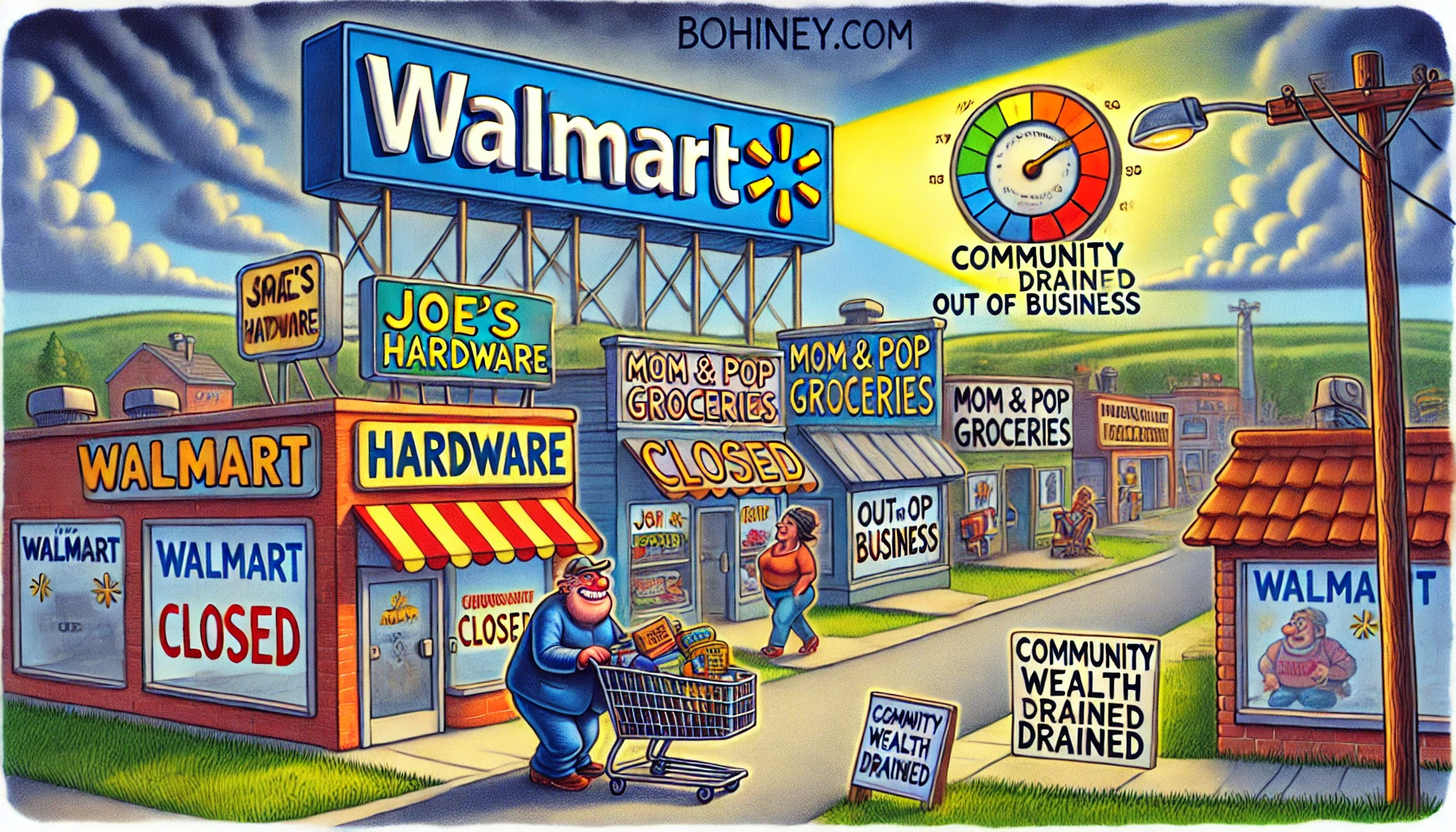
New research suggests that the company makes the communities it operates in poorer—even taking into account its famous low prices. — The Atlantic (America’s #1 Marxist Magazine)
Rollback Roulette: A National Pastime
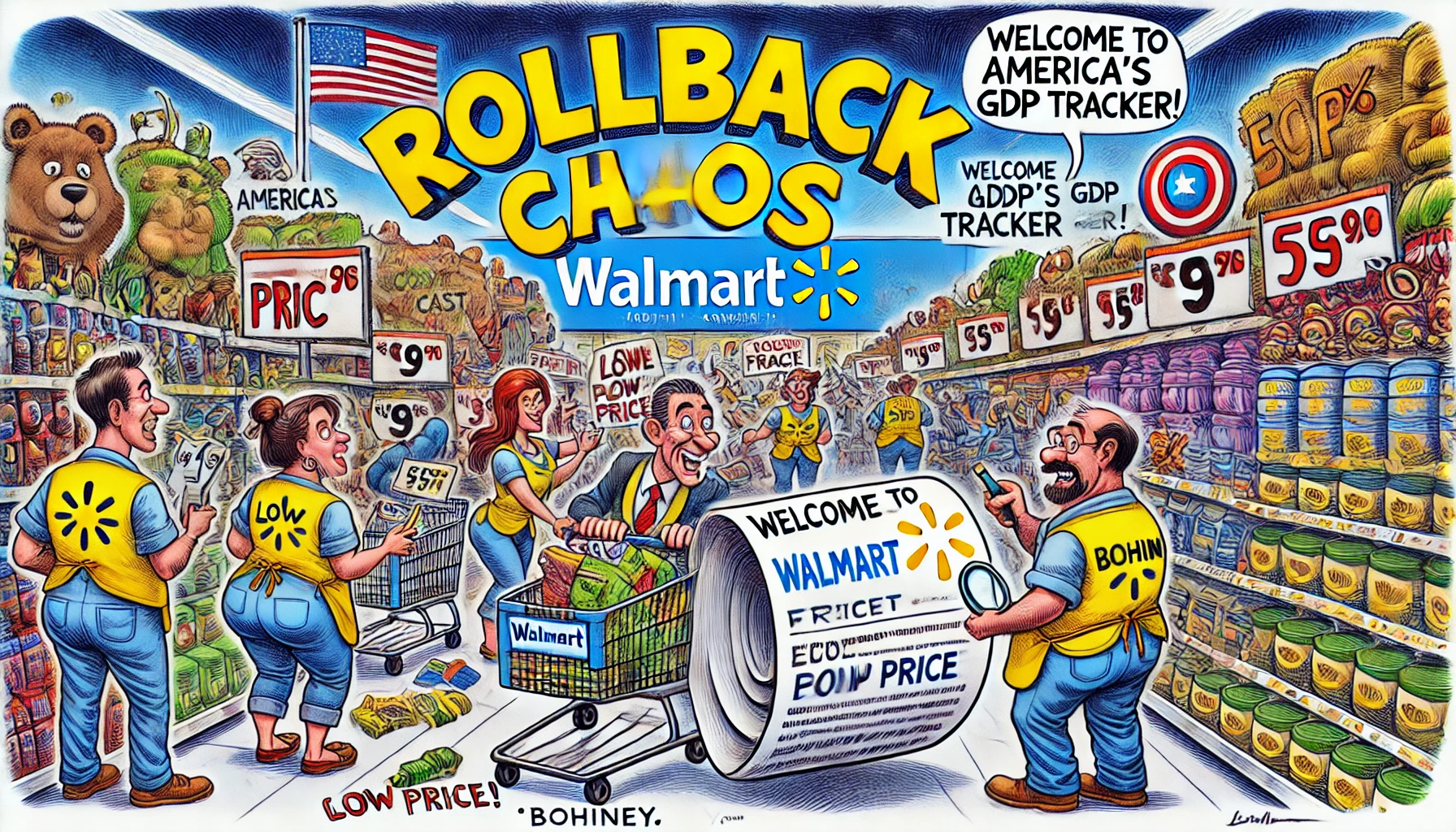
The classic Walmart rollback sticker is more than a marketing gimmick—it’s a symbol of hope. When the iconic yellow stickers disappear, shoppers know the economic waters are rough. “Rollback stickers are my green light to buy 47 cans of soup,” said one shopper in Topeka, Kansas. “Without them, I feel like I’m gambling with my pantry.”
The pricing fluctuation has gotten so intense that shoppers now approach Walmart like a high-stakes casino. “You never know what you’re going to get,” said local bargain hunter Marcy Tucker. “One day, you find milk for $2.99; the next, it’s the price of an organic farm. It’s like playing rollback roulette.”
The Walmart Price Index: Forget the Fed, Check Aisle Five
Economists have quietly admitted that Walmart receipts are more reliable indicators of inflation than federal data. “If the price of Great Value mac and cheese goes up, you know the economy’s in trouble,” said Dr. Henry Lenderman, an economist who specializes in consumer behavior.
Dr. Lenderman has proposed replacing the Consumer Price Index with the Walmart Price Index. “It’s simpler,” he explained. “Instead of analyzing data from a thousand sources, just monitor the price of frozen chicken nuggets and laundry detergent at Walmart.”
Economic Crisis: When Oreos Get Expensive
Nothing signals an economic crisis like the rising price of junk food. Walmart shoppers have reported that Oreo prices are climbing faster than gas, prompting debates about the true cost of America’s sweet tooth.
“I don’t care about the price of oil,” said a shopper clutching a family pack of Oreos. “I care about the price of Double Stuf. If this keeps up, I’ll have to switch to store-brand cookies—and that’s just wrong.”
Walmart Greeters: Unsung Heroes of Economic Insight
Walmart greeters are no longer just saying hello—they’re delivering financial forecasts. “We see the panic before anyone else,” said Geraldine, a greeter in Ohio. “When people rush the store after hearing about a price hike, we know inflation’s real.”
Some greeters have even taken to offering unsolicited economic advice. “I tell folks, ‘If you see a rollback on peanut butter, stock up now. It’s like investing in gold—but tastier,’” said Geraldine with a wink.
Rollback Witchcraft or Algorithmic Genius?
Critics have long speculated about how Walmart decides which prices to roll back and which to let soar. While the company claims its algorithms are based on consumer demand, some suspect darker forces at play.
“Sometimes I think it’s witchcraft,” said a shopper in Florida. “How else do you explain ground beef being $3.99 one day and $6.99 the next? It’s like the store knows when I’m planning a barbecue.”
Walmart denies these accusations, insisting their algorithms are designed to “serve the customer.” But when asked why toilet paper prices seem to spike right before holidays, a spokesperson declined to comment.
Two-Day Shipping vs. Walmart Hustling
In the era of Amazon Prime, Walmart remains the undisputed champion of instant gratification. While Amazon promises two-day delivery, Walmart delivers the goods now—if you can survive the chaos of the parking lot.
“When inflation hits, people don’t wait for free shipping,” said one retail analyst. “They storm Walmart like it’s Black Friday every day.”
Shoppers, however, are divided. “I love Walmart’s prices,” said Marcy, a regular customer. “But getting through the checkout line feels like running an obstacle course. By the time I leave, I need a nap and a snack from the stuff I just bought.”
A Tale of Two Carts
Walmart aisles often serve as a stark reminder of economic disparity. One shopper might fill their cart with Great Value essentials, while another wheels around a flat-screen TV and premium steak. “It’s like walking through two different economies,” said journalist Clara Watson.
Some observers argue that Walmart represents the contradictions of capitalism in its purest form. “You’ve got designer handbags next to $1 flip-flops,” said Watson. “It’s both inspiring and deeply confusing.”
The Economics of Impulse Buys
Walmart’s most underrated contribution to the economy is its mastery of the impulse buy. “I came in for a loaf of bread and left with a kayak,” said one shopper. “I don’t even live near water.”
Impulse buys, however, can also serve as economic indicators. “When people splurge on random items, it means they’re optimistic about their finances,” said Dr. Lenderman. “When they stick to the essentials, you know times are tough.”
When Rollbacks Disappear, Panic Ensues
In recent months, some shoppers have noticed fewer rollback stickers, sparking widespread panic. “It’s like a storm warning,” said Geraldine, the Walmart greeter. “When the stickers disappear, people know something bad is coming.”
Economists have dubbed this phenomenon “rollback withdrawal,” a condition marked by anxiety, overbuying, and a refusal to accept full-price items. “It’s not just about saving money,” said Dr. Lenderman. “It’s about the thrill of the hunt.”
Walmart: America’s Emergency Stockpile
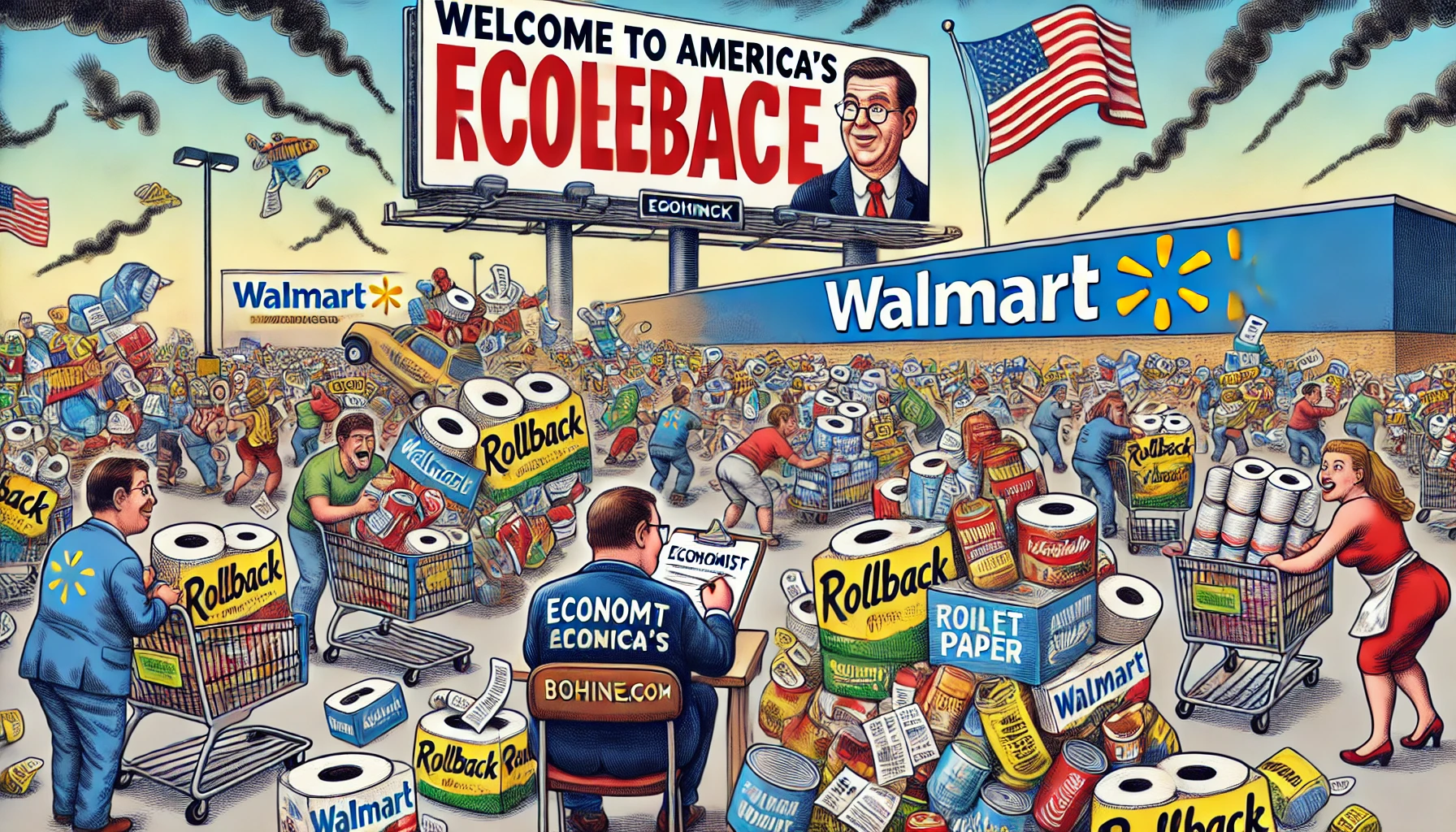
For many, Walmart isn’t just a store—it’s a lifeline. When hurricanes, blizzards, or pandemics strike, Walmart becomes the nation’s emergency stockpile.
“During the pandemic, Walmart was the only place I could find toilet paper,” said one shopper. “Now I stockpile it like it’s gold.”
Walmart executives acknowledge their role in disaster preparedness. “We’re here for America,” said a spokesperson. “Whether it’s a rollback on flashlights or a full-on apocalypse, Walmart has you covered.”
The Apocalypse Will Be Rollbacked
If the end of the world comes, Walmart will likely be at the center of it. “I can see it now,” said a comedian on Twitter. “The Four Horsemen of the Apocalypse riding through Walmart’s parking lot, stopping for snacks before destroying civilization.”
Shoppers agree. “If I’m going out, I want to do it with a cart full of rollback-priced chips and soda,” said one customer.
Conclusion: Walmart, the Great Economic Equalizer
Walmart may not solve all of America’s economic woes, but it’s become a reflection of them. Whether you’re tracking inflation through Oreos or preparing for the apocalypse with rollback flashlights, Walmart remains at the heart of the nation’s financial psyche.
So, the next time you’re wondering about the state of the economy, skip the news and head to Walmart. Just don’t forget your reusable bags—or your sense of humor.
Disclaimer:
This satirical article is intended for entertainment purposes only. No rollback stickers, Oreos, or impulse kayaks were harmed in the making of this story.