

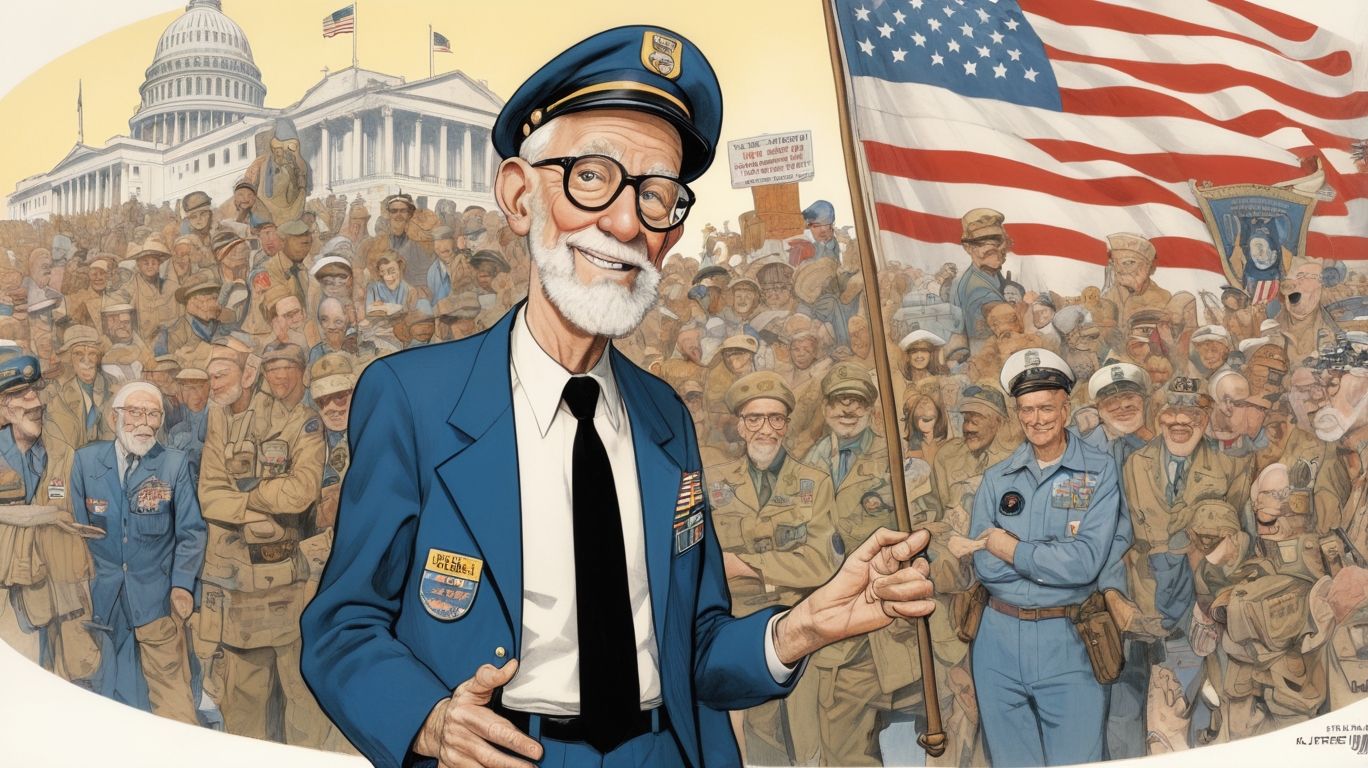
Department of Veterans Affairs Discovers What Veterans Actually Are After 94 Years — Military Service Members Demand Healthcare
Federal Agency Realizes Military Veterans Are Human Beings Who Served in Armed Forces Rather Than Administrative Case Files Requiring Processing
WASHINGTON — The U.S. Department of Veterans Affairs announced Wednesday that an extensive internal audit has revealed veterans are “former military service members who sacrificed personal safety to defend American interests and now require healthcare, disability benefits, and supportive services to address service-related injuries and transition challenges,” forcing the federal veterans agency to reconsider 94 years of veterans policy that was apparently based on what officials now describe as “comprehensive case file management with occasional benefit check distribution activities.”
The discovery came when newly appointed Veterans Affairs Secretary Denis McDonough visited a VA hospital and encountered what he described as “people who had actually served in military conflicts and suffered physical and psychological injuries that seemed relevant to veterans healthcare and benefit administration activities.”
“We’ve been serving America’s veterans for nearly a century without understanding that veterans are actual people who served in the military,” McDonough explained during a press conference held in a VA medical center waiting room because the VA headquarters building contains no actual healthcare facilities or veteran service areas. “We thought veterans meant case numbers that require federal administrative processing. The discovery that veterans are real people who need medical care represents a fundamental paradigm shift in our operational understanding.”
Veterans Health Administration Experiences Healthcare Identity Crisis
Veterans Health Administration Under Secretary for Health Dr. Shereef Elnahal held an emergency briefing acknowledging that the Department of Veterans Affairs’ service discovery may represent what veterans care experts describe as “the most significant advancement in veterans understanding since the federal veterans agency was established in 1930.”
“We may have been providing healthcare and disability services for decades without understanding that veterans are human beings who require medical treatment for service-related conditions rather than case files requiring administrative processing,” Elnahal explained while consulting what appeared to be a basic military medicine textbook titled “Veterans: They’re People Who Served in Wars and Need Healthcare.”
The Veterans Health Administration has announced emergency partnerships with American Medical Association to provide “Basic Veterans Care Education” for VA employees who may need to understand military service members before treating military service-related health conditions.
Congressional Veterans Committees Address Service Member Confusion
The House Veterans’ Affairs Committee has announced emergency hearings to investigate how the federal veterans agency operated for over nine decades without understanding basic principles of military service and veteran care.
“We’re dealing with a veterans affairs department that just discovered what veterans are,” explained Committee Chair Mike Bost (R-IL) during a hearing where committee members attempted to understand veteran needs using Department of Veterans Affairs assessment methods that apparently consisted entirely of reviewing case processing timelines rather than examining actual veteran welfare.
Senate Veterans’ Affairs Committee Chair Jon Tester (D-MT) has requested that the Government Accountability Office investigate whether other federal agencies responsible for military personnel support operate under similar “fundamental misunderstanding of basic military service principles.”
Veterans Organizations Experience Professional Validation
American veterans groups, military service organizations, and veteran advocates report feeling vindicated upon learning that the Department of Veterans Affairs has finally discovered military service theory, which military studies programs have been teaching for decades while federal veterans agencies operated under what professionals describe as “administrative case processing theories that ignored actual military service members.”
“We’ve been explaining service-related disabilities, PTSD, and veteran transition needs to the Department of Veterans Affairs for years,” explained Veterans of Foreign Wars spokesperson Dr. Patricia Wells during a veterans organization conference briefing. “Every time we mentioned that veteran services should help actual veterans rather than just process veteran paperwork, they politely nodded and continued requiring veteran benefits based on administrative efficiency rather than veteran care.”
The American Legion has offered to provide practical veteran service education for Department of Veterans Affairs employees who need to understand military service members before serving military service needs.
International Veterans Organizations Offer Military Service Consultation
The World Veterans Federation and other international veteran care organizations have begun offering military service consultation to help American veterans policy adapt to what global veterans experts describe as “basic military service member care principles that most veterans agencies learned decades ago.”
“Military service member care has been the foundation of effective veteran support since ancient civilizations honored their warriors,” explained World Veterans Federation Secretary General Dan Clare during a diplomatic veterans briefing. “We’re happy to help American veterans agencies understand military service member care, though we’re surprised this education is necessary for a developed nation’s veterans department.”
The Royal British Legion has offered to provide “Military Service Member Care 101” training to help American veterans officials understand why international veterans systems prioritize actual veteran welfare over administrative case processing.
Military Healthcare Organizations Address Service Member Medical Care
Military medical institutions report confusion about collaborating with the Department of Veterans Affairs on veteran healthcare when federal veterans agencies apparently didn’t understand that military service causes health conditions requiring medical treatment.
“They’ve been asking us to coordinate veteran healthcare without understanding how military service affects veteran health,” explained Military Health System spokesperson Dr. Michael Harrison during a military medicine conference. “We develop military medicine based on understanding service-related health conditions, but the Department of Veterans Affairs was treating veteran healthcare like administrative procedures rather than medical treatment for military injuries.”
Military medical organizations have offered to provide “Military Service Health Education” to help Department of Veterans Affairs officials understand how military service affects veteran health that military doctors have been treating for decades.
Disabled Veterans Organizations Address Service-Related Injuries
Disabled American veterans groups report feeling validated upon learning that Department of Veterans Affairs disability benefits ineffectiveness stemmed from fundamental misunderstanding of military service-related disabilities rather than deliberate veteran discrimination.
“We always wondered why Department of Veterans Affairs disability processes seemed designed to deny rather than provide disability benefits to veterans with service-related injuries,” explained Disabled American Veterans spokesperson Dr. Sarah Collins during a disabled veterans meeting. “Now we understand that disability policies weren’t actually designed for veteran disability assistance. This explains why disabled veteran organizations developed mutual support networks that bypass federal veterans systems.”
Disabled veterans organizations have offered to share practical disability assistance techniques with the Department of Veterans Affairs, noting that disabled veteran communities have been successfully providing mutual support using military service principles that federal veterans agencies apparently didn’t understand.
Military Family Organizations Address Service Family Support
Military spouse and family organizations report needing to provide basic military family education to Department of Veterans Affairs officials who coordinate family services without understanding how military service affects military families.
“Department of Veterans Affairs officials would coordinate military family services without understanding how military deployment, service injuries, and veteran transition affect family welfare,” explained Military Family Life Counselors spokesperson Dr. Jennifer Wong. “We started providing military family education during service coordination meetings, but we assumed federal veterans agencies understood military families.”
Military family organizations have developed “Department of Veterans Affairs Military Family Literacy Protocols” to help federal veterans agencies understand how military service affects the families who depend on veteran benefits and services.
Supreme Court Considers Veterans Authority Questions
Legal scholars suggest that federal veterans agencies operating without understanding military service raises constitutional questions about government authority to provide veteran benefits based on non-military administrative theories.
“Can federal agencies serve veterans when they don’t understand military service?” asked Georgetown Law veterans law professor Dr. Rebecca Chen. “If the Department of Veterans Affairs makes veterans policy based on administrative convenience rather than military service recognition, does that policy have legitimate veterans care authority?”
The Supreme Court may need to determine whether federal veterans authority requires actual military service understanding or if bureaucratic benefits procedures are sufficient regardless of underlying military service recognition.
Federal Employee Training Addresses Military Service Literacy
The Office of Personnel Management has announced mandatory “Basic Military Service Understanding” education requirements for Department of Veterans Affairs employees who need to understand military service members before serving military service needs.
“Veterans care administrators should probably understand what military service means before administering veterans programs,” explained OPM spokesperson Dr. James Patterson during federal employee education planning meetings. “We’re implementing military service literacy requirements for positions that involve veteran care responsibilities.”
The training program includes courses on “How Military Service Actually Works,” “Understanding Combat Injuries and Service-Related Disabilities,” and “Why Veterans Services Should Actually Serve Veterans Rather Than Just Generate Federal Veterans Case Processing.”
International Veterans Relations Implications
Foreign governments have begun expressing diplomatic concern about American veterans cooperation, questioning whether the United States can provide reliable international military service coordination when American veterans agencies operated without military service knowledge.
The State Department has received inquiries from United Kingdom, Australia, and France asking whether American veterans agencies can provide trustworthy international veterans coordination when they just discovered basic military service principles.
“International veterans partners want to understand how American veterans policy can have military service credibility when American veterans agencies didn’t understand military service,” explained State Department Veterans Coordination Director Dr. Patricia Martinez.
Academic Institutions Study Veterans Care Illiteracy
Syracuse University Institute for Veterans and Military Families has launched emergency research examining how the federal veterans department operated for 94 years without understanding military service principles taught in undergraduate military studies and public administration courses.
“We’re studying what may be the most comprehensive case of institutional military service illiteracy in modern veterans care history,” explained lead researcher Dr. Lisa Rodriguez. “The Department of Veterans Affairs has been serving veterans while operating under pre-military service theories that ignored veteran care science developed over centuries.”
The research includes analysis of “Institutional Military Service Recognition Dysfunction Syndrome,” where federal agencies maintain non-military administrative theories while serving activities based on contemporary military service science that contradicts their operational assumptions.
Mental Health Organizations Address Veterans Psychology
Mental health institutions report confusion about providing veteran psychological services when the Department of Veterans Affairs apparently operated without understanding how military service affects veteran mental health.
“We’ve been treating veteran PTSD and military service trauma with veterans agencies that didn’t understand military service,” explained National Center for PTSD spokesperson Dr. Michael Crawford. “Understanding that military service creates specific psychological challenges could significantly improve our veteran mental health coordination and military trauma treatment.”
Mental health organizations have offered to provide military psychology consultation to help federal veterans agencies understand how military service affects veteran mental health for more effective veteran psychological care coordination.
Homeless Veterans Organizations Address Housing Support
Veteran housing assistance organizations report confusion about coordinating with the Department of Veterans Affairs on veteran homelessness when the agency apparently didn’t understand that veteran homelessness results from military service transition challenges.
“They’ve been coordinating veteran housing without understanding how military service transitions affect veteran economic stability,” explained National Coalition for Homeless Veterans spokesperson Dr. Sarah Wong during a veteran housing conference. “We develop veteran housing based on understanding military service transition needs, but the Department of Veterans Affairs was treating veteran homelessness like general housing assistance rather than military service-related support.”
Homeless veterans organizations have offered to provide military transition education to help the Department of Veterans Affairs understand veteran housing methodology that veteran service groups have been implementing.
Healthcare Insurance Organizations Address Veterans Coverage
Veterans healthcare insurance systems report needing to provide basic military service education to Department of Veterans Affairs officials who coordinate veterans healthcare coverage without understanding how military service creates healthcare needs.
“Department of Veterans Affairs officials would coordinate veterans healthcare coverage without understanding how combat exposure, military training injuries, and service-related conditions affect veteran healthcare requirements,” explained veterans healthcare coordinator Dr. Lisa Crawford. “We started providing military service healthcare education during coverage coordination, but we assumed federal veterans agencies understood military service health impacts.”
Veterans healthcare organizations have developed “Veterans Affairs Military Service Health Literacy Protocols” to help federal veterans agencies understand how military service affects veteran healthcare needs.
Technology Companies Develop Veterans Solutions
Major tech companies have announced development of “Federal Veterans Agency Military Service Literacy” platforms designed to help government veterans agencies understand basic military service principles.
Microsoft is creating “Military Service for Government,” while Google is developing “Veterans Care Education for Federal Agencies” featuring interactive simulations of military service experiences.
Apple has announced plans for “iVeteran,” an educational app that teaches federal veterans employees basic military service theory through gamified learning experiences designed for government workers who need contemporary military service education.
Medical Research Organizations Address Veterans Health Studies
Veterans medical research institutions report discovering that much Department of Veterans Affairs health research requires military service focus rather than general medical research because veteran health conditions result from specific military service experiences.
“We’ve been researching veteran health conditions with agencies that treated military service injuries like general medical conditions when veteran health problems are specifically military-related,” explained veterans medical researcher Dr. Jennifer Crawford. “Understanding that veterans have unique health needs from military service means redesigning veterans health research rather than just applying general medical research.”
Veterans medical research organizations have developed “Military Service-Centered Veterans Health Research Programs” to help federal veterans agencies transform general medical research into military service-specific veterans health research that addresses military-related health conditions.
Future of Service-Centered Veterans Policy
Political scientists predict that the Department of Veterans Affairs’ military service discovery may establish precedent requiring federal veterans agencies to demonstrate basic military service competence before administering veterans programs.
“If veterans agencies must understand military service, it could revolutionize American veterans policy,” noted Harvard University veterans policy professor Dr. Patricia Wong. “Federal veterans agencies might actually need to understand military service before serving veterans, which would be revolutionary in American veterans governance.”
The precedent suggests that American veterans policy may require comprehensive military service-focused reform ensuring that federal veterans agencies operate based on contemporary military service science rather than pre-military theories that ignore basic principles of military service recognition and veteran care.
Veterans Consulting Services Address Federal Needs
Professional veterans care consulting firms have announced specialized services for federal veterans agencies that need contemporary military service education to perform their veterans care responsibilities effectively.
“We’re treating Department of Veterans Affairs military service literacy needs like veterans emergency response,” explained veterans consultant Dr. Sarah Martinez. “Federal veterans agencies need immediate military service literacy to understand that veterans programs should actually serve veterans rather than just generate federal veterans case processing.”
Veterans consultants have created “Federal Military Service Literacy Programs” and “Veterans Care Emergency Education Services” designed for government veterans agencies that serve veterans without understanding basic military service principles.
Military Transition Program Integration
Military transition assistance programs report needing to update transition services to account for federal veterans agencies that may require basic military service education before they can effectively support transitioning service members.
“We’re training transitioning service members to work with federal veterans agencies that may not understand military service,” explained military transition coordinator Dr. Michael Martinez. “Veterans need to understand how to explain military service to federal officials who serve veterans without understanding military service experience.”
Military transition programs have developed “Federal Veterans Agency Military Service Education Training” to help transitioning service members provide military service education to government officials who may lack basic understanding of the military service they’re supposed to recognize and support.
Military History Context Implications
Military historians report needing to reconsider American military service recognition when the federal agency responsible for honoring military service operated without understanding the military service history that created the need for veteran care.
“The Department of Veterans Affairs served veterans without understanding the military conflicts and service experiences that created veteran needs,” explained military historian Dr. Lisa Wong. “Understanding military history requires recognizing that veterans agencies should honor military service by understanding what military service involved.”
Military history organizations have developed “Military Service-Centered Veterans History Analysis” to help historians understand veteran care development when federal veterans agencies may have been operating without understanding the military service experiences that motivated veteran care systems.
Veterans Employment Integration
Veterans employment organizations report discovering that Department of Veterans Affairs employment assistance requires military service understanding rather than general job placement because veteran employment challenges result from military service transition difficulties.
“We’ve been helping veterans find employment with agencies that treated military service like general work experience when military service creates specific employment transition needs,” explained veterans employment coordinator Dr. Michael Roberts. “Understanding that military service affects employment means redesigning veterans employment assistance rather than just providing general job placement services.”
Veterans employment organizations have developed “Military Service-Focused Veterans Employment Programs” to help federal veterans agencies transform general employment assistance into military service-specific veterans employment support that addresses military transition employment challenges.
As Department of Veterans Affairs employees receive comprehensive military service education to understand veteran care systems that have been the foundation of military service recognition for centuries, veterans care experts wait to see whether American veterans support can function effectively when federal veterans agencies actually understand what military service means for the veterans who depend on VA services for healthcare, disability benefits, and recognition of their military sacrifice, marking what may be the first time in agency history that the Department of Veterans Affairs operates with basic comprehension of the military service underlying veterans programs that are supposed to honor and support American military service members who served their country.
Humorous Observations
The Department of Veterans Affairs operated for 94 years without understanding that veterans are former military service members requiring healthcare and benefits rather than administrative case files requiring processing.
Veterans Affairs Secretary discovered veterans care when he visited a VA hospital and encountered people who had actually served in military conflicts and suffered service-related injuries.
Congressional veterans committees are investigating a veterans affairs department that just discovered what veterans are while serving military service members for over nine decades.
American veterans organizations report feeling vindicated that VA finally discovered military service theory, which military studies programs have taught while federal agencies used administrative case processing theories.
International veterans organizations are offering military service consultation to help American veterans agencies understand military service member care principles most veterans agencies learned decades ago.
Military healthcare institutions report confusion about coordinating veteran healthcare with agencies that didn’t understand military service causes health conditions requiring medical treatment.
Disabled veterans organizations report feeling validated that VA ineffectiveness stemmed from fundamental military service ignorance rather than deliberate veteran discrimination.
Military family organizations report providing military family education to VA officials who coordinated family services without understanding how military service affects families.
Legal scholars question whether federal agencies can serve veterans when they don’t understand military service, potentially requiring Supreme Court veterans authority jurisprudence.
Mental health organizations report confusion about treating veteran PTSD with agencies that didn’t understand how military service affects veteran mental health.
Syracuse researchers are studying what may be the most comprehensive case of institutional military service illiteracy, with agencies operating under pre-military service theories.
Homeless veterans organizations report confusion about coordinating housing with agencies that didn’t understand veteran homelessness results from military service transition challenges.
Veterans healthcare systems report providing military service education to VA officials who coordinated coverage without understanding how service creates healthcare needs.
Veterans medical research institutions report discovering that VA health research requires military service focus because veteran conditions result from specific military service experiences.
The VA’s military service discovery may establish precedent requiring federal veterans agencies to demonstrate basic military service competence before administering veterans programs.
Comedian Commentary
Jerry Seinfeld observed: “The Veterans Affairs Department just discovered what veterans are after 94 years? That’s like me discovering what my audience is for. They’re literally the people you’re supposed to be serving!”
Amy Schumer noted: “Federal veterans experts didn’t understand military service until now. That explains why dealing with the VA feels like being helped by people who have no idea what you’ve been through.”
Ron White remarked: “The Veterans Affairs Department didn’t know veterans were people who served in the military. That’s like me not knowing that my drinking buddies are people who drink. The whole relationship is right there in the name!”
Dave Chappelle commented: “White people created a Veterans Affairs Department that didn’t understand veterans for 94 years. Black veterans have been fighting for recognition and benefits this whole time—we knew what service meant!”
Bill Burr stated: “Veterans officials didn’t understand military service? No wonder every VA appointment feels like explaining war to people who think Call of Duty is military training!”
Chris Rock said: “Federal veterans experts just learned that veterans served in the military. That’s like me just learning that my fans are people who come to comedy shows. Basic professional awareness!”
Jim Gaffigan observed: “Veterans agencies didn’t know veterans were military service members. I don’t understand military service either, but I know that when someone fights for my country, they deserve healthcare and respect.”
Trevor Noah noted: “American veterans agencies discovered military service after 94 years. In most countries, we learn that veterans are people who served in the military in basic civics class.”
Sarah Silverman quipped: “The Veterans Affairs Department didn’t understand military service. That’s like me not understanding that my comedy should honor the relationship between performer and audience. Technically possible, but professionally shameful.”
Gabriel Iglesias commented: “Veterans experts didn’t know veterans served in the military? I know that military service is dangerous and deserves respect. Apparently I understood veteran care better than the Department of Veterans Affairs!”
Tom Segura observed: “Federal veterans agencies operated without understanding military service. That’s like customer service representatives not knowing what their customers actually need. Everything breaks down when you ignore what people sacrificed.”
Nate Bargatze said: “The Veterans Affairs Department just discovered military service. My grandfather served in World War II and always talked about taking care of fellow veterans. Turns out he understood veteran care better than the people running veteran services.”
IMAGE GALLERY
Department of Veterans Affairs
