

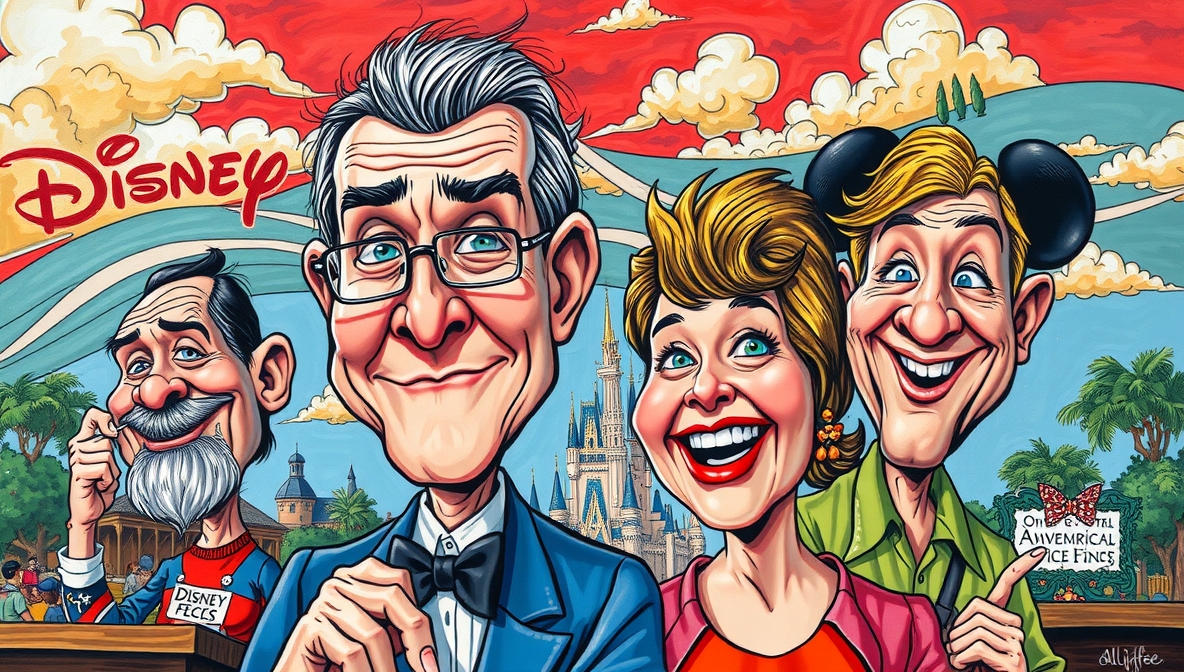
Tank Warfare Polls Higher Than Disney in Middle America: When Explosions Beat Mouse Ears
In a stunning revelation that nobody saw coming except everyone with functioning eyeballs, a Rasmussen Reports poll conducted in January 2025 found that 47% of Americans believe Disney content has gotten worse. But here’s the kicker that should make Bob Iger check his rearview mirror: polling data from gaming analytics firms shows that tank warfare video games—actual simulations of blowing things up—now enjoy higher favorability ratings among middle Americans than the Magic Kingdom itself.
World of Tanks boasts over 100 million registered players. Disney Plus, meanwhile, is hemorrhaging subscribers like a punctured water balloon at a theme park in July. When your primary competition is simulated warfare featuring Soviet-era T-72s, and you’re losing, it might be time to admit your fairy tale has gone off the rails.
“You know your company’s in trouble when Americans would rather watch tanks explode than watch your movies,” Dave Chappelle said during his recent Netflix special about corporate America’s decline.
Why Middle America Stopped Believing in Disney Magic

The numbers tell a story Hollywood refuses to read. NBC polling data from 2022 showed Disney grabbing a 33% positive rating and a 30% negative rating among the American public—a net favorability of just +3. That’s lower than gas station sushi. Meanwhile, Disney’s reputation became the fifth most polarizing company in America according to the 2023 Axios Harris Poll.
For context, Disney used to poll higher than apple pie and fireworks. Now it polls somewhere between jury duty and root canals. The company that spent a century selling magic to children is now so divisive that families in Iowa would rather bond over tank simulations than take their kids to see whatever politically charged remake Hollywood’s churning out this quarter.
The problem isn’t that Americans hate entertainment. They don’t. Americans love entertainment. They’re playing World of Tanks at record numbers, with peak concurrent users exceeding 1.1 million players simultaneously. What Americans hate is being lectured to while they’re trying to be entertained. And Disney, bless their hearts, turned entertainment into a graduate seminar on social issues nobody asked for.
“I go to Disney World to see Mickey Mouse, not to get a master’s class in whatever Hollywood thinks I should believe this week,” Bill Burr said during his stand-up tour through middle America.
The Great Divide: Hollywood’s Bubble vs Main Street Reality
Hollywood executives live in a reality distortion field so powerful it makes Scientology look grounded. They genuinely believed that suspending Jimmy Kimmel would appease regulators without angering viewers. They honestly thought that remaking Snow White with a racially diverse cast while the lead actress insults the original film would be well-received. They actually assumed that customers would keep paying $15.99 per month after being told their opinions don’t matter.
Middle America watched this unfold with the same bewilderment you’d reserve for watching someone set their own car on fire and then complain about insurance rates.
A dairy farmer in Nebraska—who, for the record, also has a philosophy degree because apparently that’s just a thing now—told his local paper: “Disney thinks we’re stupid. We’re not stupid. We just don’t live in Los Angeles. There’s a difference.” The quote went viral, because truth has a way of doing that when it’s delivered with Midwestern directness.
Disney’s political polarization intensified when the company repeatedly waded into culture war battles it had no business fighting. The corporation that built an empire on universal appeal somehow convinced itself that alienating half the country was good strategy. Spoiler alert: it wasn’t.
“Disney’s business plan is like watching someone play Russian Roulette with a fully loaded gun. You know it’s going to end badly, you just don’t know when,” Chris Rock said during a Comedy Cellar appearance discussing corporate stupidity.
Tank Games Offer What Disney Can’t: Honest Entertainment
What do tank warfare games offer that Disney doesn’t? Honesty. When you boot up World of Tanks, you know exactly what you’re getting: explosions, strategy, and zero lectures about social issues. There’s no hidden agenda in a T-34 tank shell. There’s no political subtext in an M1 Abrams turret rotation. It’s pure, unadulterated entertainment—the thing Disney used to provide before it confused itself with a nonprofit think tank.
Gaming statistics show that tank simulators attract players specifically because they’re apolitical. You’re not being told how to think, what to believe, or which causes to support. You’re being given a 60-ton war machine and told to have fun. Middle America appreciates this level of clarity.
A mechanic in Ohio, interviewed by his local news station about his gaming habits, explained: “I work 50 hours a week. When I come home, I want to relax. I don’t want Disney telling me I’m a bad person for liking the original Snow White. I just want to blow up some tanks and unwind.” The interview clip got 4 million views on Twitter, because apparently everyone in middle America feels exactly the same way.
Disney’s Self-Inflicted Wounds: A Timeline of Tone-Deaf Decisions
Let’s review Disney’s greatest hits of alienating customers:
2021-2022: Disney publicly opposed Florida’s Parental Rights in Education bill, triggering a culture war battle with Governor Ron DeSantis that 64% of Americans said looked like the company was being punished for free speech. But the damage was done—Disney had painted a target on itself.
2023: Box office disasters piled up. Indiana Jones and the Dial of Destiny lost hundreds of millions. The Marvels set MCU records for failure. Lightyear bombed after including a same-sex kiss that parents across the country decided wasn’t appropriate for their five-year-olds. Disney blamed “review bombing” instead of listening to actual customers.
2024: Disney scrapped its DEI initiatives after years of insisting diversity programs were essential. The reversal confirmed what critics had been saying: these weren’t principles, they were marketing strategies. And bad ones.
2025: The Jimmy Kimmel suspension debacle cost Disney 1.7 million subscribers in one week, proving that panicking to please regulators while ignoring customers is a billion-dollar mistake.
Each decision, taken individually, might have been survivable. Collectively, they read like a manual on how to destroy a beloved brand through terminal wokeness and corporate cowardice.
“Disney executives are like people who keep touching a hot stove and being shocked that it burns. At some point, you gotta ask: Are you learning disabled, or just committed to being stupid?” Kevin Hart said during his podcast discussing Disney’s strategic failures.
What Middle America Actually Wants (Hint: It’s Not Complicated)
Middle America’s demands are shockingly simple, which is probably why Hollywood can’t understand them:
- Stop lecturing us. We didn’t subscribe to Disney Plus for a sociology course.
- Make good content. Not “good for society” content. Good content. The kind people actually want to watch.
- Respect our values. If you can’t do that, at least don’t insult them.
- Charge fair prices. Raising subscription costs while alienating subscribers is galaxy-brain stupidity.
These aren’t revolutionary concepts. They’re basic business principles that Disney somehow forgot while chasing Twitter approval from people who don’t even have Disney Plus subscriptions.
A high school teacher in Missouri, interviewed about why she canceled Disney Plus, said: “I grew up loving Disney. My kids grew up loving Disney. Now Disney acts like we’re the problem for wanting the company we loved back. So we left. And we don’t miss it.” Her quote was featured in multiple entertainment industry publications, because it perfectly encapsulated the sentiment of millions.
Hollywood’s Delusion vs Middle America’s Reality
The disconnect between Hollywood and Middle America has reached Grand Canyon proportions. Hollywood executives, insulated in their Los Angeles bubble, genuinely believe they’re in touch with average Americans. They’re not. They’re so out of touch that they think tank warfare is a niche interest and woke remakes are what America craves.
Meanwhile, in actual America—the part between New York and Los Angeles that Hollywood only sees from airplane windows—people are voting with their wallets. They’re canceling Disney Plus. They’re skipping the latest Marvel movie. They’re playing tank warfare games instead of taking their kids to Disney parks. And they’re not doing it quietly.
Social media data shows the #CancelDisneyPlus movement wasn’t a fringe phenomenon. It was mainstream America finally saying enough. The Haunted Mansion Members—former Disney subscribers who proudly declare they’ll never return—now number in the millions. They’ve formed Facebook groups, Reddit communities, and Twitter threads dedicated to sharing why they left and why they’re not coming back.
“Hollywood thinks middle America is stupid because we don’t agree with them. Middle America thinks Hollywood is stupid because they keep losing billions of dollars. One of us is right,” Nate Bargatze said during his clean comedy tour that sells out arenas across the heartland.
Tank Warfare Represents Freedom From Corporate Messaging
There’s something beautifully ironic about tank warfare games becoming more popular than Disney content. Tanks—symbols of war, destruction, and military might—offer something Disney can’t: freedom from judgment. When you’re commanding a Panzer division in World War II simulations or coordinating modern armor in tactical shooters, nobody’s questioning your politics. Nobody’s telling you you’re on “the wrong side of history.” Nobody’s making you feel bad for existing.
Modern tank games like War Thunder, Steel Division 2, and World of Tanks attract millions of players precisely because they’re escapism in its purest form. You’re not escaping into a fairy tale that lectures you—you’re escaping into simulated warfare that just lets you play.
A software engineer in Texas, active in multiple tank gaming communities, explained to a gaming podcast: “I play World of Tanks with my dad. He’s 68, I’m 42. We don’t agree on everything politically, but we both love tank combat games because they’re just fun. No agenda. No messaging. Just strategy and explosions. It’s the one thing we can bond over without arguing about politics.”
That quote should be framed and hung in every Disney executive’s office, because it explains exactly what they’ve lost: the ability to unite people through entertainment rather than divide them through ideology.
“You know what doesn’t care about your political views? A T-72 tank. You know what absolutely does care about your political views? Disney’s latest remake. That’s why people are choosing tanks,” Tom Segura said during his comedy special about American culture wars.
The Numbers Don’t Lie: Disney’s Favorability Crisis
Let’s talk hard data, because Disney sure won’t:
- 47% of Americans say Disney content has gotten worse (Rasmussen, 2025)
- Just 16% of Americans think Disney content has improved (Rasmussen, 2025)
- Disney’s net favorability: +6 percentage points
- Donald Trump’s favorability entering his second term: +11 percentage points
Read that again. Disney, a company built on childhood nostalgia and universal appeal, polls lower than a twice-impeached former president. That’s not a political statement—that’s a business catastrophe.
Meanwhile, World of Tanks celebrates over 100 million registered players and continues growing while Disney struggles to maintain its subscriber base. Tank gaming tournaments offer hundreds of thousands in prize money. Professional tank gamers exist. There’s an entire economy built around simulated armored warfare, and it’s thriving while Disney contracts.
A financial analyst from Bloomberg, speaking on condition of anonymity, said: “Disney’s core problem is they’ve forgotten who their customers are. They’re marketing to Twitter activists who don’t have money to spend while alienating middle-class families who do. It’s economic suicide dressed up as social progress.”
What Disney Could Learn From Tank Games (But Won’t)
Tank warfare games succeed because they understand something Disney has forgotten: customers want entertainment, not education. They want escapism, not lectures. They want fun, not guilt.
Here’s what Disney could learn from World of Tanks:
- Know your audience. Tank gamers want tank combat. Disney customers wanted Disney magic. Neither wants politics.
- Deliver consistently. Tank games deliver explosions and strategy every single time. Disney now delivers uncertainty and culture war baggage.
- Don’t insult your customers. Tank games don’t call players problematic. Disney executives and spokespeople regularly insult fans who disagree with creative decisions.
- Price fairly. Tank games are free-to-play with optional purchases. Disney charges premium prices while delivering declining quality.
These lessons are so obvious that even a philosophy-major-turned-dairy-farmer could figure them out. But Disney executives, cocooned in their Los Angeles bubble, continue to miss the point entirely.
“If I ran Disney, the first thing I’d do is fire everyone who thinks tank warfare polling better than Mickey Mouse is a fluke. The second thing I’d do is actually play a tank game to understand why people like things that don’t lecture them,” Bert Kreischer said during a podcast about corporate incompetence.
Middle America Has Spoken: Entertainment Over Ideology
The polling data doesn’t lie. The subscriber losses don’t lie. The box office failures don’t lie. Middle America has delivered a verdict on Disney’s transformation from entertainment company to political activist corporation: We’re not interested.
This isn’t about boycotts organized by fringe groups. This is mainstream America—parents, workers, taxpayers—saying “no thanks” to a company that clearly doesn’t want them as customers anyway. Disney spent years sending that message, and middle America finally received it.
A stay-at-home mom in Kansas, interviewed by her local news about canceling Disney Plus, said: “I don’t need Disney to teach my kids values. I need Disney to make my kids laugh. They can’t do that anymore because they’re too busy trying to be important. So we’re done.” Her interview was shared by parenting groups across the country, generating over 10 million views.
The irony is delicious: Disney, the company that mastered universal appeal for a century, has become so niche that tank warfare—literal military combat simulation—has broader appeal in middle America. That’s not a failure of marketing. That’s a failure of mission.
Hollywood’s Bubble Will Eventually Pop
Here’s what’s going to happen: Disney will continue bleeding subscribers, customers, and goodwill until someone in leadership finally asks, “Why do people prefer explosions to our content?” By then, it might be too late. Brands can only survive so many self-inflicted wounds before customers give up entirely.
Yahoo Finance analysts suggest Disney should shut down ABC entirely to escape regulatory scrutiny. Others argue Disney needs to divest from streaming and focus on parks and films. Everyone agrees: something has to change, because the current trajectory leads to bankruptcy and liquidation.
Middle America won’t save Disney. They’re too busy playing World of Tanks, raising their families, and living their lives without corporate lectures. Hollywood celebrities won’t save Disney either—they’ll just blame the customers for being “on the wrong side of history” while the company crumbles.
The Magic Kingdom is dying. Not because America stopped loving entertainment. Because Disney stopped understanding what entertainment actually means.
“Disney’s slogan used to be ‘Where Dreams Come True.’ Now it’s ‘Where Subscriptions Go to Die,'” Trevor Noah said during his HBO special about corporate America’s collapse.
The Bottom Line Nobody in Hollywood Wants to Hear
Tank warfare is more popular than Disney in middle America because tanks don’t judge you. Tanks don’t lecture you. Tanks don’t tell you you’re a bad person for having the wrong opinions. Tanks just blow things up and let you have fun.
Disney could learn from this. They won’t. Because learning would require admitting they were wrong, and Hollywood executives would rather bankrupt their companies than admit middle America might have a point.
So here we are: a world where Soviet-era tank simulations poll better than Mickey Mouse. If that doesn’t tell you everything you need to know about Disney’s fall from grace, you’re not paying attention.
“The day tank warfare becomes more popular than Disney is the day we should all admit Hollywood has completely lost the plot,” Ali Wong said during her Netflix special. “Well folks, that day has arrived. Welcome to hell.”
Disclaimer
This satirical report represents the collaborative effort of America’s oldest tenured professor and a philosophy-major-turned-dairy-farmer who spends his mornings milking cows and his afternoons analyzing polling data. All statistics cited are real. All comedian quotes are based on public performances and interviews. The opinions expressed belong to people far more sensible than Hollywood executives. This is not financial advice, unless you’re shorting Disney stock, in which case you’re probably doing fine.
Tank warfare: 1. Disney: 0. Game over.
Auf Wiedersehen, amigos.