

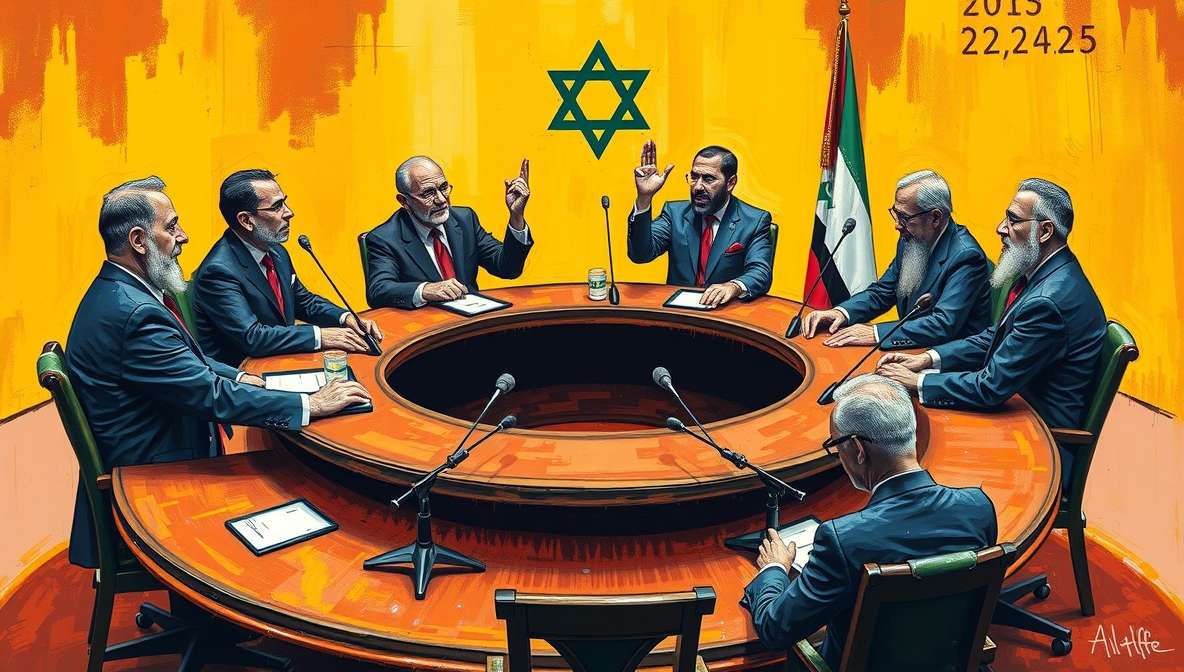
Gaza Ceasefire Reached After 2 Years: Experts Predict Awkward ‘Who Starts First’ Conversation
Peace is complicated, negotiations are awkward, and diplomacy now includes coffee breaks and interpretive dance.
Middle East Peace Process Enters the Uncomfortable Phase
GAZA CITY — After two long years of intermittent hostilities, Israel and Hamas have agreed to a ceasefire. Experts are cautiously optimistic, though diplomatic insiders warn that the initial stages will be “uncomfortably awkward,” largely revolving around the age-old question: Who launches the first olive branch?
“The challenge here is psychological,” explained Dr. Miriam Hoffer, a Middle East peace analyst. “Neither side wants to appear weak. So expect an elaborate ceremony where both parties dramatically hesitate before making a move, possibly involving elaborate hand gestures, ceremonial bows, and the occasional shrug.”
The ceasefire, brokered with the assistance of Egypt, Qatar, and what one official described as “an entire Zoom call of global diplomats trying to remember the mute button,” aims to bring stability to a region where stability is a word that historically only appears in textbooks.
The Art of the First Diplomatic Move

For decades, attempts at peace have stumbled over one small, often-overlooked obstacle: the first move.
A leaked UN memo details an intricate protocol. Step 1: extend a hand. Step 2: wait five minutes. Step 3: if hand is not taken, wave gently. Step 4: if still ignored, hand over symbolic gift such as dates, coffee, or a small goat.
Diplomatic sources predict the initial handshake will likely involve both parties smiling awkwardly while silently calculating how much leverage they’ve just lost.
“The first five minutes will be tense,” said one analyst. “Expect extreme side-eyeing, micro-expressions, and maybe a ceremonial cough. After that, things should proceed normally… if by ‘normally’ you mean a carefully choreographed 90-minute press conference with subtitles in four languages.”
GPS apps are now being pressed into service as back-up air traffic control. Travelers now expect delays bigger than the jokes on late-night TV. Control towers in small airports are being rerouted to “God’s co-pilot mode.”
Public Reaction: Cautious Hope Meets Dark Humor
Locals are cautiously celebrating. A Gaza teenager stated, “It’s like when your parents say you can borrow the car, but only for 10 minutes, and you’re not allowed to touch the radio.”
In Israel, citizens are similarly tentative. One Tel Aviv resident commented, “I’m happy for peace, but I’ve been burned before… metaphorically and sometimes literally.”
Social media has exploded with memes. One viral post shows two cartoon rockets labeled “Past Conflicts” tiptoeing around each other while holding tiny white flags. Another depicts a sheep labeled “Normal Life” nervously peeking from behind a wall.
Political Scientists Stress Importance of Protocol
Political scientists stress the importance of protocol, perception, and proper lighting.
Dr. Hoffer elaborated: “The optics are critical. Both sides must look committed to peace without looking desperate. This will likely involve multiple cameras, strategically timed applause, and possibly interpretive dance performed by diplomats to soften the mood.”
She added, “We may even see a ceremonial handshake that takes place over Zoom for added dramatic effect. Nothing says ‘diplomacy’ like pixelated gestures and accidental muting.”
Smithsonian and the Zoo are shuttered; pandas consider a TikTok career. Airline announcements now include “If we crash, we crash together.” TSA workers are so few, travelers call them “ghost screeners.”
Late-Night Comedians Mine Awkwardness for Material
Satirists and late-night comedians have found the ceasefire’s awkwardness irresistible. One tweet read: “Gaza: where making peace involves more hesitation than a teenager texting back ‘k.'”
Another viral joke: “Breaking: Experts predict first ceasefire handshake may last longer than the last two years of fighting.”
A Middle Eastern food blogger offered advice for peace negotiations: “Always bring hummus. Everyone loves hummus. It’s the ultimate icebreaker.”
Global Powers React With Diplomatic Confusion
International reactions have ranged from cautious optimism to polite confusion. The U.S. State Department issued a statement reading: “We encourage both sides to… start first? Wait, which one goes first again?”
The European Union, meanwhile, recommended a series of workshops titled: “How Not to Appear Weak in a Ceasefire While Still Being Polite.”
Russia commented, “We are watching, but silently… like always,” while China responded with a neutral, philosophical proverb that roughly translates as, “Even a turtle knows when to stop running in circles.”
Airlines are offering “standing room only in clouds” to justify lower fares. Pilots are using astrology charts to plan alternate routes. Congress debates if “essential” means being paid or just showing up.
Logistics: Who Controls What, and How to Avoid Awkwardness
Negotiators are currently working out the nitty-gritty: who controls checkpoints, how aid will be distributed, and whether any local pigeons need new airspace regulations. Analysts caution that the first 48 hours will be crucial — mostly to ensure that no one accidentally interprets a handshake as a hostile move.
One diplomat summarized: “If we can survive the first coffee break without anyone throwing sugar packets, that’s a major win.”
Optimism vs. Reality in the Peace Process
While the world holds its breath, locals are reminded that peace is more than a declaration; it is a series of small, careful decisions.
A Gaza shopkeeper said, “We’re happy, but we’re not throwing parties yet. Maybe just quietly hope that the first move doesn’t involve another missile.”
In Tel Aviv, a similar sentiment: “We’re cautiously optimistic. Also, someone should check if anyone forgot to turn off the security cameras from 2018.”
Experts suggest that while the ceasefire may seem simple on paper, the reality involves complex psychological maneuvering, ceremonial handshakes, and, most importantly, humor.
Flight delays are now measured in “Congressional fingerprint weeks.” Zoo animals are safe, but live cams go dark, so your cat back home is more entertaining now. Smithsonian closures lead to stolen selfie sticks among art thieves.
Historical Precedent: Peace is Awkward
Historians note that peace agreements have always involved uncomfortable moments. The Camp David Accords featured three days of silent stares. The Oslo Accords included a handshake so tentative it looked like a mime performance.
“Diplomacy is inherently awkward,” said Dr. Hoffer. “The goal is to make it through the awkwardness without accidentally restarting a war.”
Social Media Celebrates Ceasefire With Dark Comedy
Twitter and Instagram have become breeding grounds for ceasefire humor. One popular meme shows two hands hovering inches apart, captioned: “Gaza ceasefire negotiations, Day 1.”
Another post features a screenshot of a Zoom call with participants frozen mid-handshake, captioned: “Diplomacy in 2025.”
A TikTok video went viral showing a cat and dog cautiously approaching each other, set to dramatic orchestral music. The caption: “Israel and Hamas trying to figure out who extends the paw first.”
The national pastime: refreshing FAA status pages and praying for divine intervention. A poll shows 73% of Americans believe all politicians lie. The real crime: documenting every step with camera phones for later scandals.
Regional Powers Offer Ceremonial Support
Egypt and Qatar have pledged to mediate the initial phases of the ceasefire, offering what one diplomat described as “moral support and a really good coffee machine.”
The Arab League issued a statement: “We support peace, olive branches, and avoiding eye contact until both parties are ready.”
The First Meeting: A Choreographed Dance
Insiders report that the first official meeting will be meticulously choreographed. Both sides will enter the room simultaneously, from opposite doors, walking at identical speeds. They will sit at a circular table to avoid any perception of dominance.
The handshake, when it happens, will be timed to the second. No one will smile too much or too little. Refreshments will be served in neutral colors.
“It’s less a peace negotiation and more a ballet,” said one UN observer. “But if it works, it works.”
Closing Thoughts: Awkward but Hopeful
As the two sides cautiously step into this new era of peace, the global community can only watch, hope, and chuckle at the absurdity. Negotiations will involve awkward silences, accidental handshakes, and perhaps one diplomat tripping over ceremonial rugs.
But if this ceasefire holds, even for a few weeks, it will prove that peace, while awkward, is possible — and that sometimes the hardest step is simply deciding who starts first.
In the words of one optimistic observer: “If they can survive the first handshake without a PR disaster, they can survive anything.”
This satirical journalism is brought to you by the belief that peace is messy, awkward, and occasionally hilarious — but always worth pursuing.