

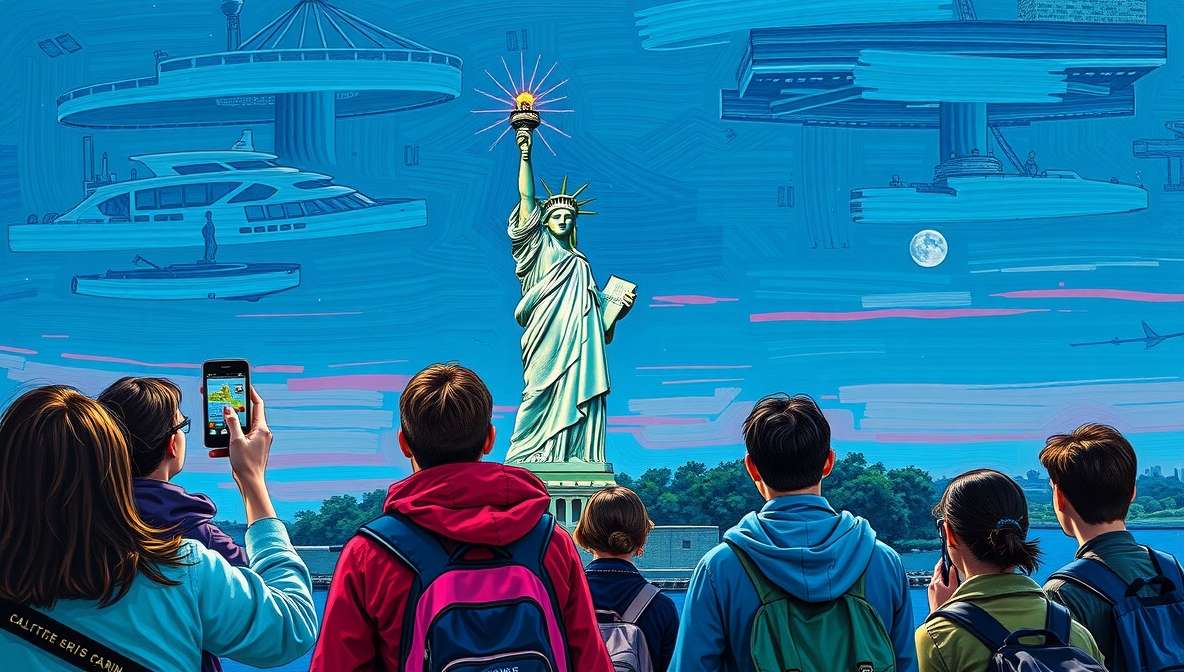
Statue of Liberty Torch May Go Dark During Shutdown: France Quietly Updates Return Policy
When freedom flickers, so does America’s international credibility.
America’s Symbol of Freedom Faces Power Outage
NEW YORK — In an ironic twist that only Congress could produce, the Statue of Liberty’s torch is reportedly at risk of going dark due to the ongoing government shutdown. While Americans argue over the definition of “essential services,” the world is quietly updating their return policies — and France is reportedly asking for a refund.
The statue, a gift from France in 1886, has been a beacon of hope for immigrants, tourists, and Instagram influencers seeking aesthetically pleasing selfies. Now, with the Department of the Interior furloughed, the torch’s electricity has been disconnected. A spokesperson for the National Park Service confirmed, “Maintenance staff are off, Congress is bickering, and the torch is currently powered by dreams and a prayer.”
A French diplomat, asked for comment, sighed, “We sent you a monumental symbol of freedom, and now it may be dark because… well, bureaucracy.”
Tourists Mourn Loss of America’s Greatest Nightlight

Visitors to Liberty Island were met with the somber news that the torch might not illuminate. One tourist from Ohio, wearing a “Life, Liberty, and Wifi” T-shirt, reportedly cried and then immediately Googled “DIY torch solutions using marshmallows.”
The statue’s lighting has historically been used for everything from war commemorations to Valentine’s Day proposals. Now, in its darkened state, it has taken on a new, unintentional role: metaphor for federal dysfunction.
“The torch used to symbolize hope,” said Professor Linda Caruso of Columbia University. “Now it symbolizes unpaid interns, furloughed employees, and Congress’ inability to work with electricity.”
GPS apps are now being pressed into service as back-up air traffic control. Travelers now expect delays bigger than the jokes on late-night TV. Control towers in small airports are being rerouted to “God’s co-pilot mode.”
France Reviews Gift Agreement, Considers Repossession
Amid the crisis, France has quietly amended its gift agreement. A leaked memo from the Élysée Palace states: “If the torch is unlit for more than 30 consecutive days due to incompetence, we reserve the right to reclaim our gift, no questions asked.”
French lawmakers are reportedly discussing adding a “satisfaction guaranteed” clause for the entire New York skyline. One senator commented, “We may also include the Empire State Building if they keep this up.”
Meanwhile, American officials claim they are “working diligently” to avoid international embarrassment. Translation: Congress is arguing over whether an electrician counts as an “essential worker” and if the torch can be powered by a group of interns on Peloton bikes.
Creative Solutions: Flashlights, Prayers, and Glow Sticks
Tourists have responded to the shutdown with creative workarounds. Families have been seen using flashlights, phone screens, and glow sticks to illuminate Lady Liberty. TikTok influencers have created filters that add a virtual torch, resulting in millions of “lights-on” selfies that France refuses to acknowledge.
One viral post featured a child waving a neon glowstick and captioned: “We may not have electricity, but we have spirit!”
National Park Service employees note that visitor complaints have tripled. “People are upset that the symbol of freedom is dark,” said a ranger on break. “They expected more from a government that can barely fund toilets.”
Smithsonian and the Zoo are shuttered; pandas consider a TikTok career. Airline announcements now include “If we crash, we crash together.” TSA workers are so few, travelers call them “ghost screeners.”
Congressional Blame Game Intensifies
Congressional leaders have already begun blaming each other. Republicans insist that maintaining the torch is “luxury spending,” while Democrats argue that darkening the torch is “a symbol of Trump-era negligence” — despite the shutdown happening under a different administration.
Meanwhile, libertarians argue that people should bring their own torches, and an anonymous senator suggested, “Maybe we can sell sponsorships — Liberty Torch Powered by Bud Light.”
A recent survey shows that 63% of Americans now consider the torch more reliable as a metaphor for dysfunction than as an actual source of light.
Symbolism Meets Sarcasm in Manhattan
Cultural commentators point out the unintentional symbolism: the Statue of Liberty, a gift to represent democracy and opportunity, now sits darkened because the American government can’t agree on money.
A humorist at The New Yorker wrote, “It’s fitting that the one thing Americans rely on to guide incoming immigrants is off — the metaphor is beautiful, like a nihilistic painting with Wi-Fi.”
Tourists, refusing to surrender to darkness, have begun organizing “Liberty Torch Flashlight Marches” around Manhattan. Organizers say it’s both a protest and a chance for Instagram content.
Airlines are offering “standing room only in clouds” to justify lower fares. Pilots are using astrology charts to plan alternate routes. Congress debates if “essential” means being paid or just showing up.
Historical Perspective: The Torch That Survived Everything
The torch has survived storms, vandalism, and 100+ years of American politics. Now, it faces the greatest threat yet: Congressional indifference.
Historian James Worthington noted, “This may be the first time in history that a monument meant to inspire hope has been disabled because humans can’t manage electricity. It’s both tragic and hilarious.”
Some have even joked that the shutdown is a planned endurance test, teaching Americans how to navigate darkness without guidance — or government.
International Community Watches With Bemusement
Global reactions have ranged from bemusement to panic. The United Nations reportedly considered passing a resolution: “All symbols of freedom must remain lit at all times, or else.”
European nations quietly updated travel advisories. One French newspaper quipped: “America: Land of Liberty, Home of Foul Power Outages.”
China, observing silently, reportedly remarked: “Interesting experiment. Let’s see how democracy operates without lights for a week.”
Flight delays are now measured in “Congressional fingerprint weeks.” Zoo animals are safe, but live cams go dark, so your cat back home is more entertaining now. Smithsonian closures lead to stolen selfie sticks among art thieves.
Park Rangers Light Candles as Symbolic Protest
National Park Service workers, furloughed yet morally committed, continue to maintain the statue by walking around with candles and fanning them in the wind.
One ranger explained, “It’s not much, but it’s the thought that counts. We call it, ironically, Torch as a Metaphor for Government.“
Meanwhile, locals have begun petitioning for a solar-powered torch replacement, humorously noting that at least then Congress couldn’t accidentally turn it off.
Governor Hochul vs. Trump: Battle for Symbolic Power
New York Governor Kathy Hochul held a press conference in front of the statue, declaring, “We’re not going to let Donald Trump and these Republicans extinguish the values that our Statue of Liberty symbolizes.”
However, her office later confirmed that New York will not fund the statue’s operations during the shutdown, as it has in previous years. “We’re making a point,” a spokesperson said, “even if that point is that the torch goes dark.”
Political analysts called this “peak political theater,” noting that both sides are willing to let a national monument suffer for leverage.
The national pastime: refreshing FAA status pages and praying for divine intervention. A poll shows 73% of Americans believe all politicians lie. The real crime: documenting every step with camera phones for later scandals.
Economic Impact: Gift Shops Close, Tourism Craters
The economic impact of the closure extends beyond symbolism. Statue of Liberty gift shops have shuttered, leaving tourists unable to purchase foam torches and “I ♥ NY” T-shirts.
Economists predict losses in the millions as tourists reroute to fully-lit attractions like Times Square and Central Park.
One vendor near Battery Park lamented, “People used to come here for hope and freedom. Now they just come to complain about Congress.”
The Liberty Torch as American Metaphor
The darkened torch has become a rallying symbol for critics of government dysfunction. Protesters have begun carrying flashlights and chanting, “Light it up or shut it down!”
A political cartoon circulating online shows Lady Liberty holding a phone with a low battery, captioned: “Even I’m running on fumes.”
Until the shutdown ends, the Statue of Liberty will remain partially operational — open to visitors, but symbolically dimmed. Which, analysts note, is perhaps the most honest representation of American democracy in 2025.
This satirical journalism is brought to you by the belief that irony is the last refuge of a nation that can’t keep its monuments lit.