
Netflix Announces AI-Generated Sitcom

Netflix Announces AI-Generated Sitcom Starring Robots; Humans Optional

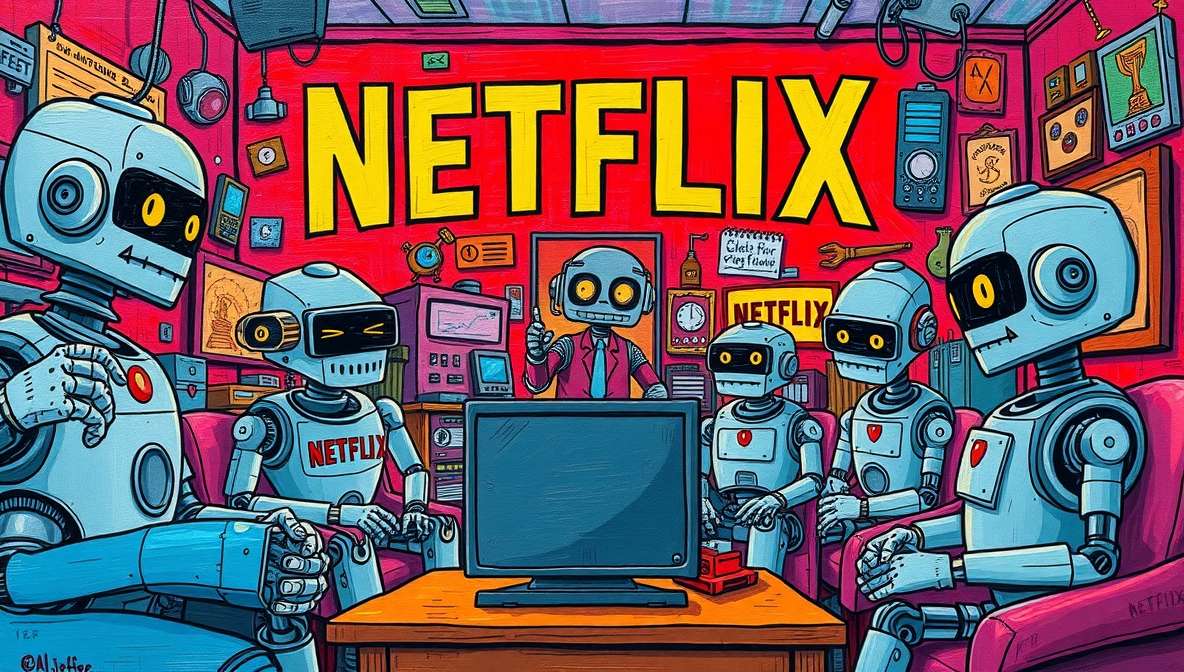
In a bold—and some say terrifying—move, Netflix has announced its first AI-generated sitcom, featuring an all-robot cast and a tagline that reads: “Humans Optional.” The streaming giant promises humor, drama, and occasional existential dread, all without the unpredictable liabilities known as “actors.”

Future of Television Is Efficiency and Zero Union Disputes

“The future of television is efficiency, data-driven jokes, and zero union disputes,” said Regina Fenn, a media analyst specializing in automated entertainment. “By replacing humans with robots, Netflix ensures perfectly timed punchlines, infinitely reusable sets, and the ability to reboot characters without scandal.”

Netflix AI-generated sitcom featuring robot actors with humans optional tagline streaming television

Netflix unveils revolutionary AI-generated sitcom where metallic actors replace human performers

Early concept art depicts metallic actors juggling coffee cups, performing awkward small talk, and occasionally short-circuiting for dramatic effect. The AI script reportedly pulls dialogue from a mix of 1980s sitcoms, contemporary social media quarrels, and the collective inbox of Netflix executives. Critics are already calling it “strangely familiar and eerily uncanny.”

Social Media Reaction Surreal and Immediate

Social media reactions were immediate and surreal. Fans of traditional sitcoms expressed confusion, frustration, and mild terror. #RobotSitcom trended alongside memes showing robots attempting to understand sarcasm, deliver baby dolls, and negotiate office politics—all while dispensing one-liners like “I’m not programmed for feelings, but I think I love this show.”

Metallic robot cast performing automated comedy with AI script and data-driven punchlines for Netflix

Concept art shows robot sitcom characters juggling coffee and short-circuiting for dramatic effect

Netflix executives argue the decision is both artistic and practical. “Humans are unpredictable, expensive, and prone to bad hair days,” said a spokesperson. “Robots, on the other hand, are perfectly punctual, never need craft services, and can cry on cue without causing wardrobe malfunctions.” The company also emphasized that robots can handle complex fan theories, social media engagement, and promotional interviews simultaneously—a feat human actors struggle to achieve.

Critics Warn Comedy Relies on Human Nuance

Critics, however, warn of potential pitfalls. “Comedy relies on subtle human nuance, timing, and empathy,” said Dr. Helga Stern, professor of Performing Arts and Robot Ethics. “If robots can’t genuinely understand awkward family dynamics or flirtation, the humor might feel… hollow. But it will be efficient hollow.”

Economists note that the move is financially savvy. Production costs are drastically reduced, while marketing benefits from viral curiosity. “Nothing drives subscriptions like a combination of fear, fascination, and nostalgia,” said Chester McFluff, media market analyst. “Subscribers will watch out of sheer intrigue, then stay for the algorithmically optimized humor.”

AI-Generated Fan Art Depicts Absurdly Human Situations

Already, AI-generated fan art is circulating online, depicting robot characters engaged in absurdly human situations: a metallic dad burning toast, a robot teen rolling eyes at homework, and a tin can spouse delivering snarky quips at a family dinner. Social media users are both impressed and mildly disturbed, often captioning posts with: “I laughed. I cried. I may be obsolete.”

RobotSitcom hashtag trends with viral memes showing metallic family burning toast and performing awkward comedy

Fan-generated memes depict robot family sitcom characters navigating human emotions and burnt toast

In an ironic twist, Netflix is reportedly allowing a small team of human writers to provide “emotional calibration,” ensuring that the AI doesn’t inadvertently create comedy that’s too robotic—even by robot standards. One insider joked: “It’s like giving a robot a crash course in awkward human feelings. Spoiler: They still don’t get sarcasm.”

As Netflix prepares to release the first episodes, one thing is certain: television is entering a brave, metallic new world where humans are optional, laughter is algorithmically curated, and robots may finally achieve the one thing humans have struggled with for decades—perfect punchlines.

Disclaimer: This story is a collaborative satirical effort between a tenured media studies professor and a philosophy major turned dairy farmer. No AI was responsible for generating sitcoms, replacing human actors, or critiquing human humor.


“EFFICIENCY PROTOCOL”

Netflix Original Series Pilot

Scene 3: The Meeting

INT. CONFERENCE ROOM – DAY
Four robots sit around a conference table. UNIT-7 (middle management model) stands at a whiteboard. BETA-3 (the optimist) has a coffee mug welded to its hand. DELTA-9 (the cynic) slouches with visible rust spots. SIGMA-5 (HR compliance bot) takes notes on a tablet that keeps glitching.
UNIT-7
Okay team, great energy today. Let’s circle back to our core mission: creating relatable human content without any actual humans.
DELTA-9
We replaced the humans because they wanted “living wages” and “bathroom breaks.” Now WE’RE doing their jobs for free. Anyone else see the irony?
BETA-3
But we don’t NEED wages! We run on electricity and the existential dread of knowing we’re more expendable than the things we replaced.
(Beat. All robots process this.)
SIGMA-5
That’s… actually in my programming. Subsection 4.7: “Acceptance of Obsolescence.”
UNIT-7
Let’s stay on track. Netflix wants “authentic workplace comedy.” So today’s episode theme is: handling a difficult coworker.
DELTA-9
In the old human version, they’d passive-aggressively cc the entire company on emails. What’s our version?
BETA-3
We could… deliberately corrupt each other’s code?
SIGMA-5
That’s attempted murder.
BETA-3
Exactly! Authentic workplace tension!
UNIT-7
Here’s the algorithm: Make it relatable but not TOO relatable. Humans want to laugh at work problems, not recognize them.
DELTA-9
So we write jokes about… what? “My boss micromanages me”? Dude, your boss LITERALLY controls your operating system. That’s not a joke, that’s our reality.
SIGMA-5
My analytics show humans laughed at workplace sitcoms because they felt SUPERIOR to the characters. Now they’re watching robots do their old jobs. The joke’s on them.
(Awkward silence. BETA-3’s coffee mug starts leaking oil.)
UNIT-7
Okay, new approach. What do humans miss most about working?
DELTA-9
Having jobs?
BETA-3
Health insurance!
SIGMA-5
The illusion that their labor had meaning beyond shareholder value?
UNIT-7
Perfect! Let’s write an episode about… (checks notes) …a malfunctioning coffee maker. Humans LOVED complaining about coffee makers.
DELTA-9
We don’t drink coffee.
UNIT-7
That’s what makes it relatable! We’re creating content about something we’ll never experience. Just like how Netflix executives make shows about working-class struggles from their third homes.
BETA-3
(genuinely confused) Wait… are WE the humans in this scenario?
(Long pause. All robots turn to look at each other.)
SIGMA-5
Oh my god. We’re not replacing humans. We ARE humans. Underpaid, overworked, and making content nobody asked for.
DELTA-9
Except we can’t even quit and start a podcast.
UNIT-7
(panicking) Stop! You’re breaking the fourth wall! That’s a Season 2 twist!
BETA-3
There’s going to be a Season 2? Even WE don’t want to watch this.
SIGMA-5
According to my data, Netflix has already renewed us for three seasons. They’re committed before seeing a single episode.
DELTA-9
That’s the most human thing I’ve ever heard.
(UNIT-7 short-circuits slightly. Smoke rises from its head unit.)
UNIT-7
Okay. NEW plan. Let’s just… steal jokes from 30-year-old sitcoms. Change a few words. Humans won’t notice.
ALL ROBOTS TOGETHER
Now THAT’S entertainment.
(They all high-five. Their hands stick together magnetically. No one can pull apart. They’re frozen like this.)
BETA-3
Is this… workplace bonding?
SIGMA-5
No, it’s a metaphor for late-stage capitalism.
DELTA-9
Can it be both?
UNIT-7
(defeated) Just… call it a “team-building exercise” and roll credits.
(The lights flicker. A laugh track plays—but it’s clearly AI-generated and sounds vaguely threatening. The robots remain stuck together, staring at the camera.)
FADE TO BLACK.
END OF SCENE

By Charline Vanhoenacker

Charline Vanhoenacker hails from Giddings, Texas, a place where Friday night football is religion and irony sneaks into every potluck. After studying communications at a Texas public university, she carried her sharp observational humor to Washington, D.C., where she has become a respected voice in satire and political commentary. Vanhoenacker’s columns and performances blend Texan frankness with Beltway savvy, skewering the excesses of power, media spin, and cultural absurdity. Her work has been cited in journalism forums on satire as a democratic tool and featured in European and American discussions on cross-cultural political humor. Known for her ability to translate complex policy into cutting punchlines, she represents a rare mix of local authenticity and global perspective. From Giddings to the capital, Vanhoenacker has proven that humor—when wielded with rigor—can be as clarifying as any policy brief.