

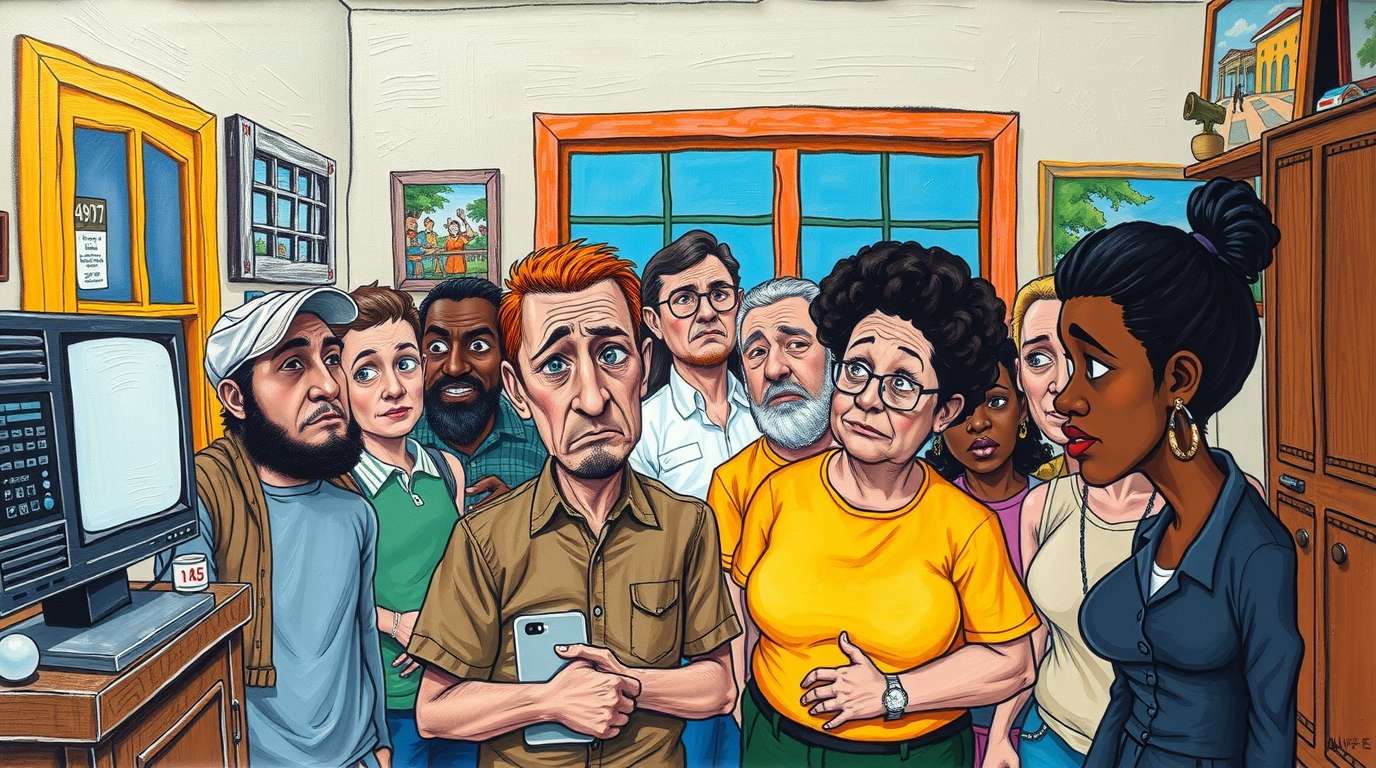
AWS Outage Turns Smart Homes Into Dumb Homes, Nation Rediscovers Windows
Amazon’s Cloud Catches Cold, Humanity Briefly Remembers 1997
Monday morning’s Amazon Web Services outage didn’t just break the internet—it broke the unspoken agreement between humans and technology that nothing would ever require us to think critically again. At approximately 3:11 AM ET, the US-EAST-1 region in Northern Virginia experienced what Amazon called “increased error rates,” which is tech-speak for “everything exploded and we don’t know why yet.”
For three glorious, terrifying hours, smart toasters became just toasters. No notifications. No firmware updates promising to toast bread 0.3% crispier. Just bread. And heat. It was a beautiful, simple time that made everyone deeply uncomfortable.
“My Ring doorbell stopped working and I realized I had no idea what my actual doorbell sounds like,” Amy Schumer said, adding that she’d been paying $9.99 a month for the privilege of watching delivery drivers pick their noses on her porch. “Turns out the analog one still dings. Who knew?”
The Great Streaming Silence

Netflix users worldwide encountered the spinning circle of death, which was ironically the most action their TVs had seen in weeks. Families were forced into the unthinkable: conversation. One suburban household in Ohio reported that parents and children made direct eye contact for the first time since 2019. They’ve agreed never to speak of it again.
Jerry Seinfeld observed that streaming services going down is “like the cable guy not showing up, except the cable guy is a billion-dollar data center and he’s not showing up for the entire planet simultaneously. What’s the deal with single points of failure?”
CEOs Experience Identity Crisis
Corporate executives across America were reportedly found frantically Googling “What is a server?” and “Can we fix it by turning it off and on again?” Conference rooms filled with six-figure salaries stared helplessly at error messages, discovering that their decade of saying “take it to IT” had left them spectacularly unprepared for actual technology problems.
“I watched a CEO try to reboot AWS by unplugging his laptop,” Dave Chappelle said during a morning show appearance. “Sir, that is not how the cloud works. Also, nothing is how the cloud works, apparently.”
Offices Discover Productivity Was Always A Lie
Workplaces worldwide experienced a mysterious 400% spike in “local file organization” and “deep strategic thinking,” which suspiciously looked like people just staring blankly at their screens while pretending to do something important. Slack went so quiet you could hear virtual crickets. The only company-wide message that successfully sent was from Dave in Accounting: “Is it just me?”
Kevin Hart said the outage revealed what everyone already knew: “Half of all Zoom meetings are just people nodding at spreadsheets they can’t see. The other half are people pretending their mic is broken.”
Children Stage Coordinated Uprising
Millions of children were denied their scheduled screen time when Disney+, Roblox, and Fortnite simultaneously vanished into the digital void. The resulting coordinated uprising produced scenes more chaotic than any actual Disney movie. Parents later confirmed that the next Disney villain won’t be a queen or sorcerer, but “The Buffering Circle of Eternal Waiting.”
“My kid looked at me and asked, ‘What do I do now?’ like I’m supposed to know,” Bill Burr said, perfectly capturing the parental bewilderment. “I didn’t raise you for this moment! I outsourced your entertainment to a trillion-dollar company specifically to avoid this conversation!”
McDonald’s App Creates Dystopian Hellscape
The McDonald’s mobile app went down, creating scenes more dystopian than any young adult novel. Grown adults were forced to physically speak to human employees to order Big Macs. Drive-thru workers reported customers approaching the intercom with visible fear, having forgotten the ancient ritual of “saying your order out loud.”
“People were literally standing in McDonald’s parking lots staring at their phones like the app would magically resurrect through force of will,” Trevor Noah said, noting that several customers asked if they could just show workers a screenshot of their usual order instead of speaking words.
The Cloud’s Expensive Therapy Session
Amazon’s “Always-On” infrastructure broke down like a millennial at brunch trying to explain their feelings. The DynamoDB endpoint suffered what experts are calling “a complete existential breakdown,” proving that even the cloud needs therapy to work through its issues.
Ricky Gervais suggested AWS’s DNS failure was the cloud saying, “You know what? I need a day off. You’ve been asking me to remember everything for everyone everywhere all at once, and I’m having a moment.”
Ancient Skills Rediscovered
With YouTube down, people rediscovered primitive arts like reading physical paper leaflets stuffed in their doorways or—God forbid—looking out windows at the actual three-dimensional world. One Brooklyn resident reported seeing a thing called “a tree” and being unsettled by its refusal to buffer.
“I tried to swipe left on a magazine and got a paper cut,” Sarah Silverman said, demonstrating the hazards of analog media for digital natives.
One Engineer Saves The World
Somewhere in a Virginia data center, one AWS engineer named Kevin became the most important person on the planet. We imagine him frantically typing, surrounded by empty coffee cups, while a single dramatic bead of sweat drips down his forehead. His Slack status: “Busy. Do not disturb. Fixing literally everything.”
Jim Gaffigan suggested Kevin’s solution probably involved the classic IT move: “He just turned it off and back on again. Except when you turn off the thing that powers the internet, you become either a hero or the guy who destroyed civilization. No middle ground.”
Routers Enjoy Blame-Free Vacation
For the first time in a decade, home Wi-Fi routers were not the prime suspect in connectivity crimes. They enjoyed a well-deserved, blame-free day off while humans frantically unplugged and replugged them anyway out of muscle memory.
“My router hasn’t been this relaxed since 2015,” Tom Segura said. “Usually it’s getting blamed for everything from video lag to relationship problems. Today it just sat there, little lights blinking peacefully, while the entire internet collapsed around it.”
The Amazon Paradox
People couldn’t stream Amazon Prime Video, but you could bet someone, in a moment of pure irony, was still trying to order a physical, non-cloud-based book from Amazon.com. The site itself went down briefly, creating the bizarre scenario where Jeff Bezos’s empire couldn’t even sell you things during the apocalypse.
Ali Wong noted that losing Amazon for three hours is “like going back to a time when you had to wait more than 48 hours for things you don’t need. Ancient civilizations call that ‘normal shopping.'”
Smart Homes Become Profoundly Stupid
Millions discovered that their “smart” homes have a single, devastating point of failure. The lights still worked because electricity predates the cloud, but the existential dread of not being able to ask Alexa to set a timer was palpable. Ring doorbells went dark. Smart thermostats forgot how to thermostat. Even Duolingo couldn’t nag people about their Spanish lessons.
“I said ‘Alexa, play my morning playlist’ and got nothing,” Tiffany Haddish said. “Just silence. That little hockey puck betrayed me. We had a relationship! I told her things!”
Financial Apps Create Brief Moment of Blissful Ignorance
Coinbase, Robinhood, and Venmo all went dark, preventing millions from obsessively checking their portfolios every 90 seconds. Meme stock traders were left with nothing to do but look at their own life choices, causing a brief but catastrophic crash in confidence.
“For three hours, nobody could see how much money they were losing in real-time,” Chris Rock said. “Some people called it an outage. I call it a mental health break.”
The Aftermath Nobody Wanted
When service finally returned, the first notification everyone received was from their fitness tracker asking, “Shall we record your 4-hour ‘Stress Walk’ around the living room?” followed immediately by 847 delayed emails, 43 Slack messages from Dave in Accounting, and a reminder that your Duolingo streak died.
Bert Kreischer summed it up perfectly: “We spent three hours panicking about technology not working, and the second it came back, the first thing we all did was complain about having too many notifications. We’re the problem. We’ve always been the problem.”
The outage cost businesses billions, disrupted government services across multiple continents, and reminded everyone that modern civilization runs on digital duct tape and prayer. AWS’s Service Level Agreement promises 99.99% uptime but only compensates downtime with service credits—essentially saying “Sorry we broke everything, here’s a gift card.”
As Kevin in Virginia finally closed his laptop and the internet resumed its normal chaos, one truth became clear: We’ve built a world where everything depends on one company’s servers in Northern Virginia not having a bad day.
And we’re all completely fine with that until it happens again.