


The Morning After: New York Times Declares Meta’s Free Speech Feud is Somehow Everyone’s Fault
By Ima B. Serious, reporting from the Internet’s Most Trolled Corners
Meta’s Infinite Blame Loop
The New York Times recently dropped an article so heavy-handed, you’d think it was a digital-age manifesto disguised as a guilt trip. Its premise? The chaos of free speech on Meta’s platforms isn’t just Mark Zuckerberg’s problem—it’s our problem. Yes, dear reader, the downfall of civil discourse is as much on you as it is on the billion-dollar behemoth. It’s like being blamed for a wildfire because you once struck a match.
Let’s start with the core argument: Meta is a mirror, reflecting society’s flaws. This mirror, unfortunately, has a funhouse setting that amplifies rage, conspiracy theories, and poorly constructed memes. The New York Times argues that free speech, once a sacred ideal, has devolved into a shouting match in a stadium where everyone has a megaphone—and no one knows how to use it.
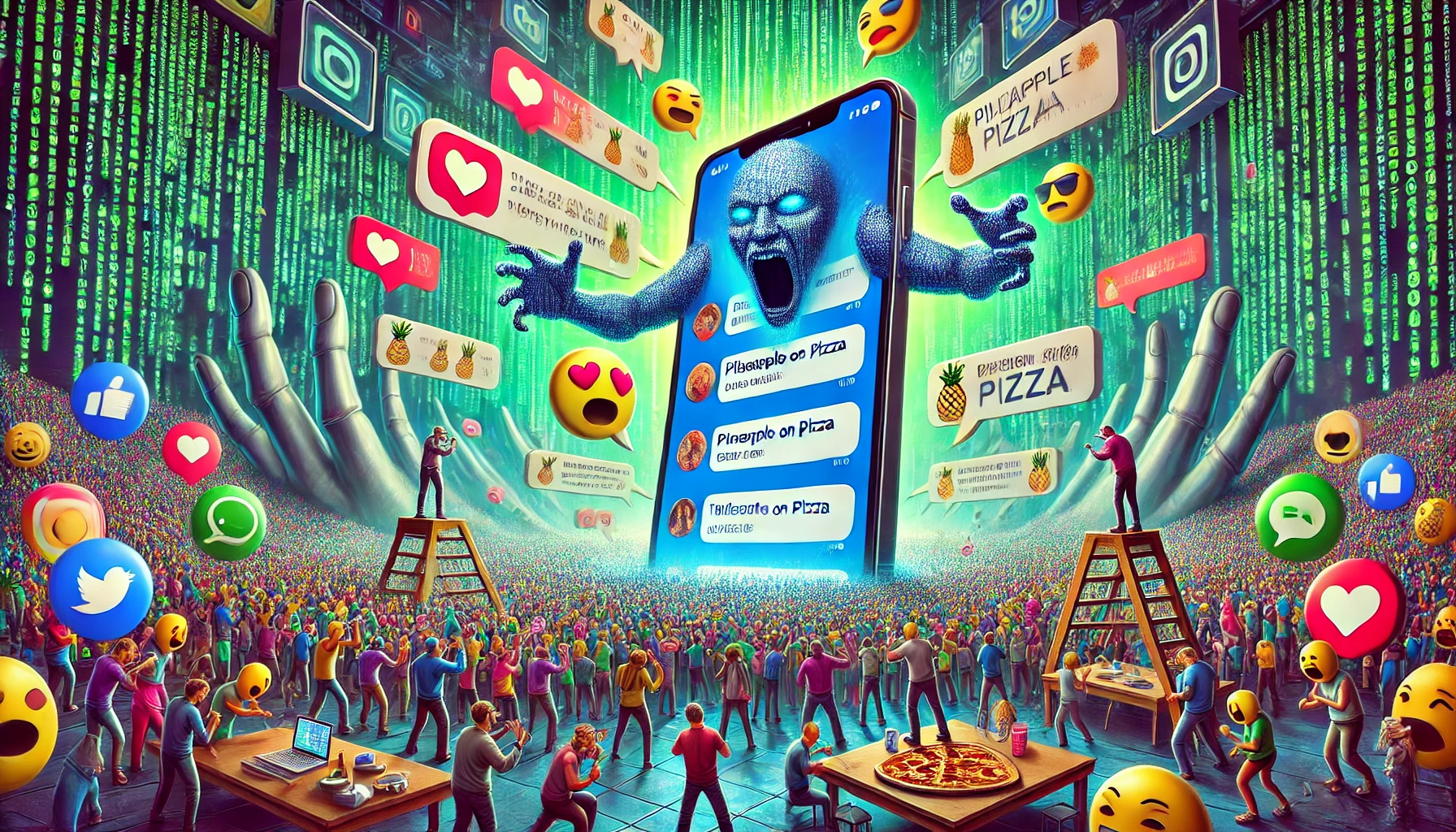
“Meta’s algorithm is like a bad ex—it only remembers the drama,” quipped Taylor Tomlinson, summarizing the sentiment. And she’s not wrong. If you’ve ever posted something as innocuous as, “I like pineapple on pizza,” only to be bombarded with vitriolic attacks, congratulations—you’ve been algorithmically chosen for chaos.
Blame Buffet: A Serving for Everyone
The Times spread the blame like butter on burnt toast. Meta got a generous dollop, but society was given an equally large helping. According to the article, the real problem isn’t just the platform; it’s us, the users. We’re apparently addicted to outrage, unable to resist clicking on the digital equivalent of a dumpster fire.
Statistical evidence supports this claim: a 2023 study found that posts with high emotional content—anger, fear, or surprise—are 70% more likely to be shared than neutral content. The internet’s currency isn’t Bitcoin; it’s outrage. And Meta’s algorithm? It’s the shady banker facilitating every transaction.
“Free speech on Meta is free, but it costs us our sanity. Great deal!” joked Hannah Gadsby, nailing the irony. If free speech were a car, Meta’s platform would be the one with no brakes, a sticky accelerator, and a driver yelling, “This is fine!”
Social Media Judo: The Art of Ducking Accountability
Meta, of course, has its own spin. The company insists it’s empowering people to connect, share, and debate. Translation: “We’re not responsible for your Aunt Karen’s anti-vaccine rants; we’re just the venue.”
Experts weighed in on this narrative. Dr. Ima Dunn, a sociologist specializing in digital culture, compared Meta to a coliseum: “It’s not the arena’s fault if gladiators fight to the death, but the arena sure profits from ticket sales.” Meanwhile, free speech advocates argue that Meta’s platforms are essential for democracy, even if they occasionally resemble a kindergarten classroom during naptime rebellion.
As Jerry Seinfeld observed, “Arguing over free speech on Meta is like yelling at a cloud. The cloud doesn’t care, but your neighbors think you’re nuts.” And yet, here we are, yelling louder than ever.
Meta’s Mirror Problem: Who’s the Fairest (or Foulest) of Them All?
The Times posits that Meta’s real failure lies in its reflection of humanity. If Meta is a mirror, society is the teenager standing in front of it, critiquing every flaw while refusing to change out of sweatpants. But this mirror doesn’t just reflect; it distorts. It takes our worst impulses—anger, tribalism, and a deep-seated love for arguing about pizza toppings—and amplifies them to eleven.
Anecdotal evidence abounds. Take the story of one New Yorker who posted about their love for pineapple pizza. Within hours, their post devolved into a full-blown culture war, complete with historical inaccuracies, food pyramid debates, and someone comparing pineapple to communism. Meta’s algorithm? It was just there to pass out popcorn.
“Meta’s idea of accountability is like my idea of a gym membership—I know I should, but meh,” quipped Ali Wong, adding a layer of comedic truth to the platform’s laissez-faire moderation policies.
Content Moderation Limbo: How Low Can You Go?
Moderating free speech on Meta is like trying to referee a dodgeball game where the balls are on fire. Meta’s approach has ranged from hands-off chaos to overzealous censorship. In one infamous case, a post discussing breastfeeding was flagged for “nudity,” while an actual conspiracy theory about lizard people ran rampant.
Public opinion is equally divided. In a recent survey, 42% of users said Meta should do more to moderate content, while 38% said it already does too much. The remaining 20% just wanted to know why their posts about cats weren’t getting likes.
“Meta blames us, we blame Meta. It’s a blame relay race, except nobody wants to pass the baton,” noted Jim Gaffigan, encapsulating the stalemate.
The Blame Olympics: Everyone’s a Winner (and Loser)
Ultimately, the Times concluded that we’re all complicit. The trolls thrive because we feed them, the algorithms amplify because we engage, and Meta profits because we can’t look away. It’s the digital-age equivalent of staring at a car crash, except the crash is ongoing, and you’re the one driving.
Statistical evidence further highlights the issue. A 2024 study revealed that 85% of users engage with controversial content, even when they know it will ruin their day. It’s like ordering a ghost pepper taco just to complain about the heat.
“Social media debates are like campfires. Fun at first, but eventually someone burns their marshmallow—and the whole forest,” observed Amy Schumer, perfectly summarizing the internet’s tendency to escalate.
Helpful Content for Navigating Meta’s Free Speech Feud
If you’re feeling overwhelmed by the chaos, fear not. Here are some insider tips for surviving the blame game:
- Step 1: Take a Deep Breath. Before commenting, ask yourself, “Is this worth the drama?” Spoiler: It’s probably not.
- Step 2: Curate Your Feed. Unfollow that one cousin who thinks every post is a debate challenge.
- Step 3: Log Off Occasionally. Remember, the real world exists, and it has sunsets, coffee shops, and zero algorithms.
- Step 4: Embrace Humor. When all else fails, laugh at the absurdity. As Trevor Noah said, “The New York Times said we’re all to blame for the internet’s chaos. So…are we getting a group rate on therapy?”
Disclaimer
This article is a satirical take on the free speech feud, blending humor, wit, and a touch of truth. While Meta, society, and algorithms may share the blame, one thing is certain: we could all use a little more laughter in the chaos.

Originally posted 2020-12-08 07:58:32.