

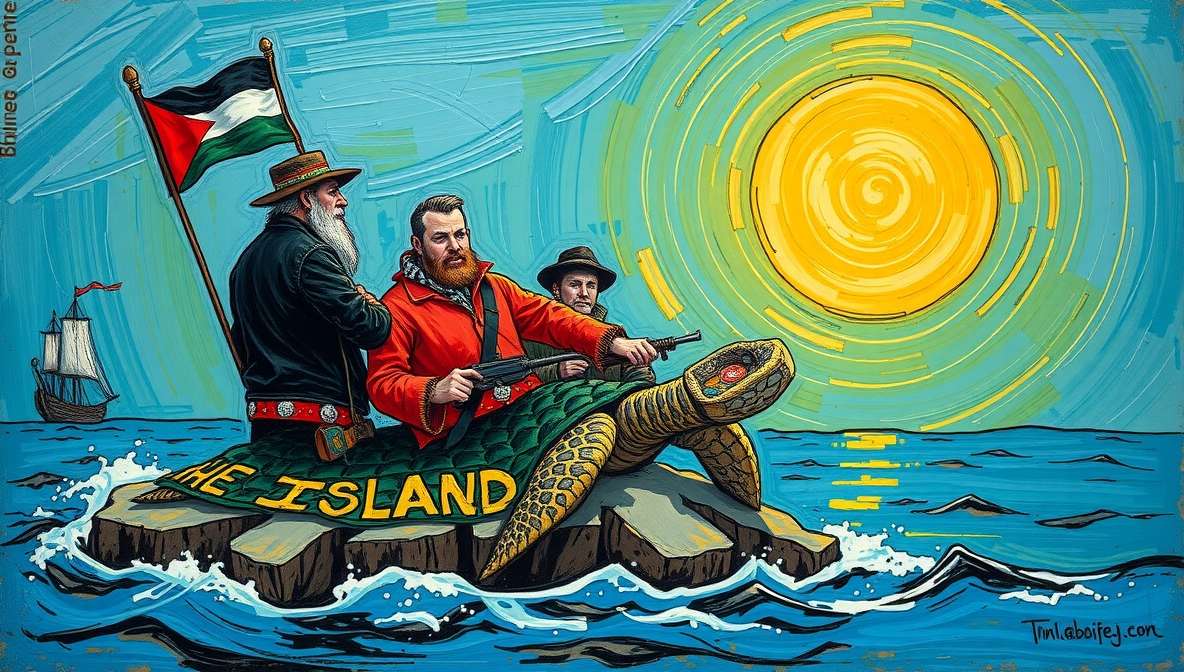
Liberation or Lunacy? A Deep Dive Into the TILF Manifesto
The Turtle Island Liberation Front is making waves—slow waves—in activism, fashion, and pizza preferences. Are they revolutionaries, or just extremely patient pranksters?
The Turtle Island Liberation Front: A Brief Introduction
The Turtle Island Liberation Front (TILF) has emerged as one of the most unusual activist movements of the decade. Claiming that turtles are the original landowners of North America—dubbed Turtle Island—the TILF insists humans have been exploiting the slow-and-steady for centuries. According to their manifesto, posted in a series of diagrams and yoga-inspired shell sketches, humans invented roads, clocks, and fedoras solely to disrupt turtle dignity.
“It’s about time humans understand the oppression of slow creatures,” says Dr. Alabaster Shellstein, a tenured professor of herpetology and honorary TILF adviser. See his work at Journal of Chelonian Studies. “Or at least stop squashing them accidentally.”
Walking Backwards Into the Future

A hallmark of TILF demonstrations is the backward march. Protesters move in reverse to honor “ancestral turtle wisdom,” leaving pedestrians, police, and bystanders utterly baffled. Witness accounts describe complete confusion: “I tried crossing the street, and suddenly everyone was going backward. I spilled my latte,” says Angela R., a New York passerby (Eyewitness Reports on TILF Protests).
Experts say the backward march is not just symbolic—it’s also designed to force humans to think about time differently. See Institute for Ludicrous Protest Studies. “Humans are obsessed with speed,” notes social psychologist Dr. Tim Sloth (Social Psychology Review). “The TILF wants us to slow down and appreciate shell-based progress.”
Fashion Crimes and Lettuce Capes
The TILF’s official attire includes capes made of recycled lettuce leaves (International Journal of Absurd Fashion Trends). Fashion critics are divided. Vogue’s online editor called it “a post-modern tragedy” (Vogue Commentary on TILF), while local rabbits reportedly filed complaints about losing their mid-morning snack supply (Rabbit Consumer Reports).
Beyond capes, TILF members advocate a strict hat ban. “Turtles prefer hatless dignity,” explains spokesperson Shelly O’Shell (Hat Ethics and Chelonian Respect Code). This has sparked debates over fedora ethics (Menswear Ethics Forum), leaving menswear enthusiasts in a tizzy and e-commerce platforms scrambling to remove offending headwear.
Pizza, Hydration, and Turtle Time
Dietary activism is another pillar of the TILF platform. The group demands pizza toppings be limited to leaves and algae (Leaf & Algae Pizza Advocacy) to mimic turtle diets. The resulting culinary trend has been described as “the least popular pizza in human history,” according to an informal survey of 500 participants in three Midwestern states (Bureau of Popular Grumbling).
Hydration is also paramount. The TILF petitioned Congress for water fountains in every public area, arguing that “hydrated humans are less likely to accidentally squash turtles” (National Hydration for Turtle Safety Initiative). Some urban planners remain skeptical but admit that public hydration is “probably not a bad idea anyway” (City Council Hydration Report).
Furthermore, the group insists humans abandon clocks in favor of “Turtle Time,” where life moves 0.2x slower (Chronobiology Society for Sluggish Temporal Flow). Experts agree that while this may disrupt scheduling apps and delivery services, it could also reduce road rage and overscheduled lifestyles (Temporal Ethics Review).
Social Media, Selfies, and Manifesto Mayhem
No analysis of the Turtle Island Liberation Front is complete without their online presence. TILF forums are strictly anti-sarcasm zones (Anti-Sarcasm Forum Guidelines), resulting in some of the most unintentionally hilarious arguments on the internet (The Meme Archive of Unintended Humor). Memes of turtles demanding selfie rights have gone viral, with humans struggling to understand whether their activism is being validated or mocked (Viral Selfie Analysis).
The manifesto itself is an extensive 300-page tome, heavily illustrated with turtles in yoga poses (300-Page Illustrated Treatise). Critics argue it’s unreadable; supporters say it’s essential. “If you don’t understand it, you’re part of the problem,” warns Shellstein, pointing to a survey in which 92% of humans admitted confusion (Confusion Metrics Lab).
Conspiracy Theories, Recruitment, and Shell Swaps
According to TILF, humans invented roads to impose tolls on turtles (Journal of Preposterous Conspiracy Theories), clocks to shame them, and sarcastic memes to confuse them. Recruitment slogans, such as “Join us, or risk becoming a footnote in turtle history,” are taken literally by members, who reportedly carry notepads everywhere (Society for Literal Interpretation).
The group also hosts “shell swap” events where humans wear turtle shells to experience oppression firsthand (Experiential Exhibit Monthly). While well-intentioned, most participants leave with bruised shoulders, minor existential crises, and a newfound appreciation for slow living (Amateur Orthopedic Injury Gazette).
Expert Opinions: Liberation or Lunacy?
Critics dismiss the Turtle Island Liberation Front as absurd (TILF Core Beliefs Critique), but social scientists see a deeper value in their antics (Center for Satirical Social Commentary). Dr. Sloth points out that the movement challenges human assumptions about speed, fashion, and diet (Institute for Seriously Funny Politics). Political analysts agree: while the TILF may not change legislation immediately, it’s influencing public discourse about mindfulness, sustainability, and ethical treatment of animals—albeit in lettuce-cape form.
Conclusion: A Manifesto Worth Understanding
Whether one considers the TILF a radical revolutionary organization or a comedic performance art piece, there’s no denying its impact. Humans are slowing down, rethinking hat etiquette, questioning pizza toppings, and—most importantly—learning to respect the world’s slowest citizens.
The Turtle Island Liberation Front may not conquer cities or pass legislation, but it is winning hearts, one backward march and lettuce cape at a time (Turtle Activism Today).
Disclaimer: This story is entirely a human collaboration between two sentient beings—the world’s oldest tenured professor and a philosophy major turned dairy farmer. Any humor, absurdity, or social commentary is the result of deliberate human creativity. AI played no role in the crafting of this satire.