

Death, Sex, Money… and the Democratic Primary Nobody Was Supposed to Run In
America’s political system prides itself on being open to outsiders. The brochures say anyone can run for office. The Constitution implies it. And every fourth-grade civics teacher insists that democracy works best when citizens participate.
Then someone actually does it.
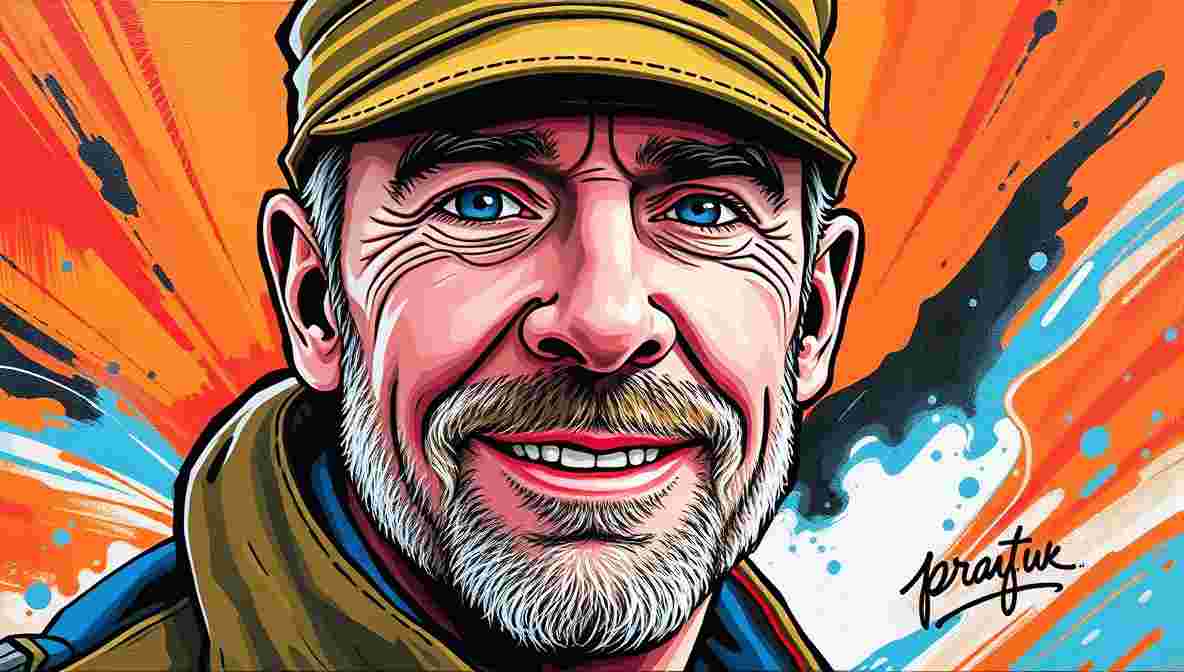
This week, the political world was introduced to the newest character in the grand circus of American democracy: Graham Platner, a Marine veteran and oyster farmer from Maine who apparently committed the unforgivable crime of running for Senate without first asking permission from Washington. He didn’t fill out the proper forms. He didn’t kiss the right rings. He didn’t wait in the correct waiting room. He just… ran.
The audacity.
Democracy: Now With Reservations Required — Call Ahead or Don’t Bother

Platner recently appeared on the podcast Death, Sex & Money, hosted by Anna Sale, where he explained that before launching his campaign he received “very clear warnings” from Democratic insiders suggesting he had “no right” to run. The party, it seems, had already selected its preferred candidate: Maine Governor Janet Mills, who enjoys the full-throated endorsement of Senate Minority Leader Chuck Schumer and roughly fourteen Washington consultants who summer in the Hamptons.
This revelation shocked political analysts everywhere, mostly because they had long assumed primaries were a quaint ritual where voters got to choose candidates.
Apparently not. That’s a different country.
A Democratic strategist speaking anonymously explained the modern system with the patience of a man who has repeated this speech many times.
“We encourage grassroots candidates,” he said. “As long as the grassroots are carefully supervised, pre-approved, and cleared by a committee of Washington consultants who flew into Portland on a private jet, ate a $47 lobster roll, and flew back.”
“There is a very tired playbook that the Democrats have run for a while where D.C. chooses establishment candidates based on their fundraising capacity. Clearly, that is a failed strategy.” — Graham Platner, apparently trying to get his life ripped apart
The Platner Resume: Oysters, War, Tattoos, and Political Heresy
Platner’s background reads like the sort of biography political campaigns usually love: three combat tours in Iraq with the Marine Corps, followed by a deployment to Afghanistan with the Army National Guard, followed by a stint as a defense contractor, followed by becoming an oyster farmer in Sullivan, Maine — which is the kind of career arc that would be called “authentically American” if Washington had picked him first.
Naturally, this made him immediately suspicious.
Within days of announcing his campaign, opposition research began circulating stories about old Reddit posts and a controversial tattoo that looked suspiciously like a Nazi symbol. Platner insists the tattoo was simply a skull-and-crossbones he got while drinking in Croatia during military leave — a perfectly routine explanation that satisfied no one on cable news, where the skull now has its own Wikipedia page, legal representation, and a pending Netflix documentary.
Within 48 hours of the story breaking, the tattoo had been replaced with a Celtic knot and a dog. Experts believe the dog represents loyalty, redemption, and the deep American desire to stop talking about tattoos and start talking about housing costs.
Political analysts were relieved to learn that the only tattoos acceptable in American politics remain:
- Harvard rowing team logos
- Inspirational Latin phrases no one can translate
- The phrase “Approved by Leadership” in tasteful calligraphy
Mills, for her part, posted on social media that “for what it’s worth, I don’t have any tattoos.” Political scientists called this the most devastating attack ad of the 2026 cycle.
Washington’s Favorite Campaign Strategy: Threaten Everyone, Panic Later
Platner claims that political insiders warned him that entering the race would lead to his life being “ripped apart.” This statement triggered immediate debate in Washington because insiders say that phrase is technically trademarked. For decades, it has been used as a motivational slogan printed on campaign consultant coffee mugs.
“Run for office,” the mug reads. “Your life will be ripped apart. We accept Venmo.”
The establishment’s panic intensified when Platner started polling competitively — and then leading. A Pan Atlantic Research poll released this week found him ahead of Mills 46% to 39% among likely Democratic primary voters. A University of New Hampshire poll found him up by 38 points. Prediction markets now put his chances of winning the primary above 70%.
This is the political equivalent of the substitute teacher winning the spelling bee.
Political insiders hate two things more than anything else:
- Candidates they didn’t choose
- Voters who agree with those candidates anyway
A Washington strategist summarized the catastrophe: “When voters start liking the wrong candidate, the entire system breaks down. We have spreadsheets for this. None of the spreadsheets accounted for oysters.”
The Senator Who Endorsed Him: Bernie Sanders Causes Further Disruption
Making matters worse for the establishment, Senator Bernie Sanders endorsed Platner in September — the kind of endorsement that causes Senate Minority Leader Chuck Schumer to eat an entire sleeve of Tums before his morning conference call.
This week, Senator Ruben Gallego of Arizona — a fellow Marine — piled on, saying he believes “Graham is the only Democrat running that can win Maine.” Gallego also cited the outbreak of war with Iran, noting the Senate “needs to reflect the experiences and expertise of those who have been the boots on the ground.”
Political analysts responded by scheduling additional conference calls, issuing three press releases expressing concern, and ordering more Tums.
Polls Ruin Everything for People Who Own the Polls
The machinists union representing shipbuilders at Bath Iron Works has made getting Platner through the primary a central goal. Union leaders warned Senate Democrats not to interfere in the race, delivering the message that Maine workers are perfectly capable of picking their own candidate without instructions from consultants who have never operated a drill press or shucked an oyster.
Meanwhile, the Cook Political Report currently rates Maine’s Senate race a toss-up — one of a handful of contests that could determine the balance of power in Congress.
The irony is staggering. The establishment backed a candidate who is now the underdog. The outsider they tried to destroy is leading in every poll. And the consultants who warned Platner his life would be ripped apart are currently watching their preferred candidate’s poll numbers get ripped apart instead.
This is what political scientists call “karma,” though they usually print it in a much longer report that costs $8,000.
The Podcast That Accidentally Explained American Democracy
The original interview took place on Death, Sex & Money, a podcast known for discussing topics people usually avoid in polite conversation — which, it turns out, is also an excellent description of American primary elections.
Political insiders now say the show may need to add a fourth topic: Power.
Because the real story isn’t the tattoo, the Reddit posts, or the oyster farm. It’s the fact that a man tried to run for Senate without checking with Washington first — and then had the audacity to win the polls anyway.
The Real Lesson: Voters Are Still Technically Allowed to Vote
Platner insists he doesn’t care about the threats or controversy. He says he’s running because housing is unaffordable and health care is struggling in Maine — the kind of talk that is deeply unsettling in modern politics, where campaigns are supposed to focus on:
- Messaging strategy
- Media narratives
- Tattoos from 2007 in Croatian beach bars
One Washington consultant summed up the existential crisis perfectly:
“The real danger isn’t the Reddit posts,” the consultant said. “The real danger is that voters might start thinking they’re allowed to pick their own candidates. And if that happens, we’re all going to need new jobs.”
And if that happens?
The entire political consulting industry might have to learn how to farm oysters.
Which, according to Graham Platner, is considerably less stressful than running for Senate.
Though slightly more honest.
Auf Wiedersehen, amigo!
Graham Platner, 41, is a Democratic candidate challenging Maine Governor Janet Mills in the June 9, 2026 Democratic primary for U.S. Senate. The winner will face five-term Republican incumbent Senator Susan Collins in November. Platner, a Marine and Army National Guard veteran with four combat tours, became an oyster farmer in Sullivan, Maine before launching his Senate campaign in August 2025. He appeared on the podcast Death, Sex & Money hosted by Anna Sale, where he revealed that Democratic Party insiders had pressured him not to run, warning him the party had already selected Mills — a top recruit of Senate Minority Leader Chuck Schumer — as their preferred candidate. Platner has since attracted endorsements from Senators Bernie Sanders and Ruben Gallego, outraised Mills by nearly $2 million, and now leads her by seven points in the most recent polling. His campaign has survived controversies over a tattoo resembling a Nazi symbol — which he says he got unknowingly while drinking in Croatia — and a series of old Reddit posts. The race is rated a toss-up by the Cook Political Report and is considered one of the most consequential Senate contests of 2026.