

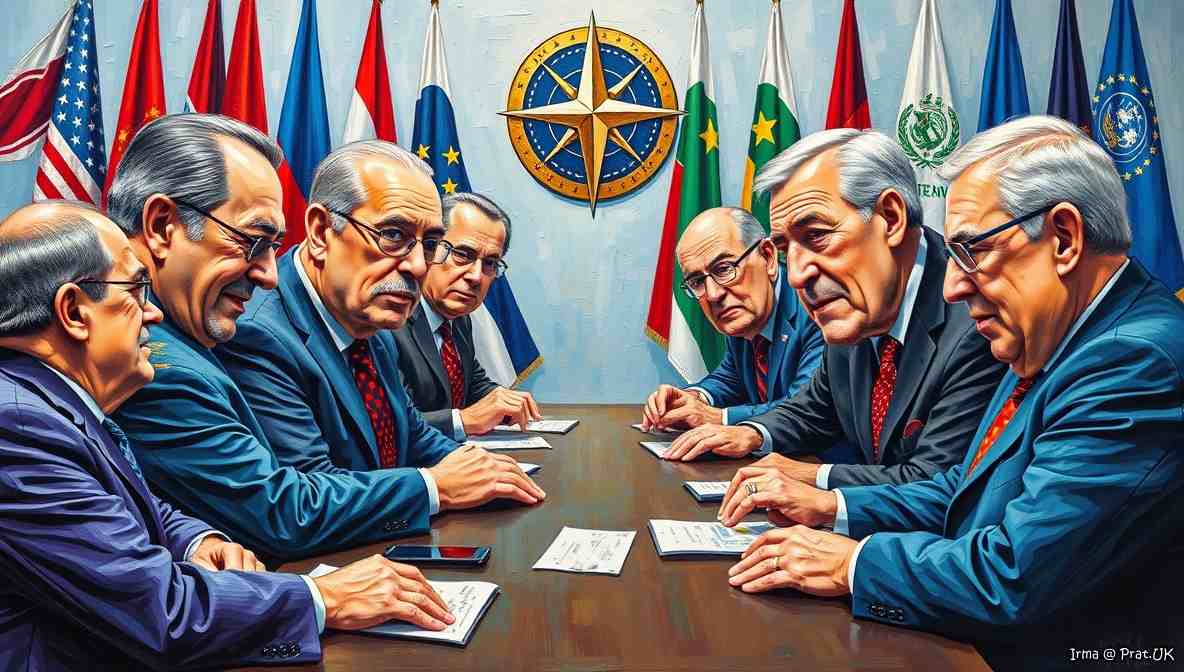
Europe Is Building a NATO Backup Plan and It’s the Most European Thing to Happen Since the EU Invented a Committee to Regulate Cheese
Europe is now building a backup plan for NATO like it’s saving a Word document titled “Final_Final_REAL_Final_v7.docx” — just in case America accidentally hits “Delete Alliance.” The Wall Street Journal broke the news that European officials are advancing a so-called “fallback plan,” which is the most polite diplomatic term for “we Googled ‘how to defend ourselves’ at 2 a.m. and didn’t love the results.”

75 Years of Group Projects: America Did the Slides, Europe Nodded Thoughtfully
Nothing motivates Europe to rearm faster than the phrase “What if America just… doesn’t show up?” That’s the geopolitical equivalent of your designated driver texting, “Actually, I’m gonna stay in tonight.” For seventy-five years, NATO has basically been a group project where America did the slides, the research, and brought snacks, while Europe perfected the art of nodding thoughtfully over espresso and drafting frameworks for the frameworks.
Now Europe is attempting to replace raw American military power with “more European leadership.” By analysts’ estimates, that sounds roughly like swapping an Abrams tank for a strongly worded email drafted in committee, translated into fourteen languages, and sent with a request for read receipts.
Germany Gets Serious About Defense, Everyone Immediately Panics
Germany suddenly getting serious about defense is like the quiet kid in class finally saying, “Maybe we should study,” and the entire room going silent in coordinated existential dread. The Bundeswehr is expanding, defense budgets are climbing past the NATO 2% GDP target, and Berlin is leading the charge — which, historically speaking, has produced complicated feelings across most of the continent.
The UK and France stepping up their nuclear roles is basically Europe clearing its throat and saying, “We have nukes too… we just usually keep them in the attic next to old imperial maps and cricket whites.” This is what analysts are calling Europe’s “hour of strategic autonomy” — arriving, they note, perhaps inconveniently soon for anxious European governments who had assumed this moment was still several committees away.
Breaking Up But Keeping the Netflix Password
Europe wants independence from U.S. military support but also very much wants the U.S. to stay. It’s the geopolitical equivalent of a breakup where both parties insist they’re “totally fine” and then immediately show up to the same brunch. Trump criticizing NATO as unreliable has created the world’s most uncomfortable alliance dynamic: both sides now preparing for a split while still attending the same Tuesday morning meetings and pretending the food is good.
Reviving military drafts across Europe feels like history quietly tapping everyone on the shoulder whispering, “Hey… remember me? We’ve done this before.” Several nations, including Germany and the Scandinavian states, are dusting off conscription frameworks mothballed since the Cold War, because nothing says “forward-looking alliance” like reaching backwards for a manual.
Replacing American Intelligence With European Wi-Fi Arguments
Perhaps the most ambitious item on the fallback checklist: replacing American intelligence capabilities. This is genuinely aspirational, considering that half of Europe still holds spirited debates over Wi-Fi passwords in corner cafés and can’t agree on a single plug standard. The CIA collects signals intelligence across fourteen time zones; the European equivalent is currently a working group scheduled to present preliminary findings at a conference in Brussels in the third quarter of next year, pending budget approval.
Europe boosting arms production is the ultimate “fine, I’ll do it myself” moment — except the assembly instructions come in fourteen languages, the supply chain runs through six countries with competing labor laws, and IKEA is somehow peripherally involved in the logistics contract. The phrase “European NATO” sounds precisely like when a restaurant opens a second location and insists the quality is identical, while quietly swapping out the chef, the menu, and the kitchen equipment.
The Committee to Plan the Framework for the Committee
There is something deeply, authentically European about responding to a military existential crisis by forming a committee, drafting a framework document, scheduling a meeting to review the framework, and then scheduling a follow-up meeting to discuss the tone of the first meeting. The EU Council has been coordinating defense integration talks since well before this latest crisis, which means they are already several frameworks deep before the urgency even registered.
And finally, nothing communicates “robust alliance” quite like quietly building a backup alliance in case your current alliance ghosts you. It’s contingency planning dressed in diplomatic language, emergency preparedness with a Schengen visa, and — it must be said — the most efficient use of dinner meetings the continent has produced since the Congress of Vienna. At least that one ended with a waltz.
The real twist? As of this week, the fallback plan is advancing informally through side discussions and over-dinner meetings around NATO headquarters — which means the most consequential strategic pivot in a generation is being negotiated over bread rolls and mineral water. No nukes fired. No tanks deployed. Just Europeans, eating, and quietly deciding they might need to handle things themselves.
History will note that the free world’s backup plan was born not in a war room, but somewhere between the appetizer and the main course.
Auf Wiedersehen, amigo!
When Donald Trump began questioning NATO’s value and threatening to withhold U.S. defense commitments from allies who didn’t meet spending targets, European governments began quietly drafting contingency plans to maintain continental security without guaranteed American participation. The Wall Street Journal reported in April 2026 that those plans — discussed informally through NATO side channels — include placing more Europeans in command roles, expanding nuclear deterrence through the UK and France, reviving conscription in several nations, and building up domestic arms production capacity. Germany, long resistant to major defense spending, has dramatically reversed course and is now among the leading voices pushing for a credible European defense pillar. NATO Secretary General Mark Rutte has publicly insisted U.S. commitment to the alliance remains solid, while simultaneously European officials privately accelerate preparations for the scenario in which it isn’t.