

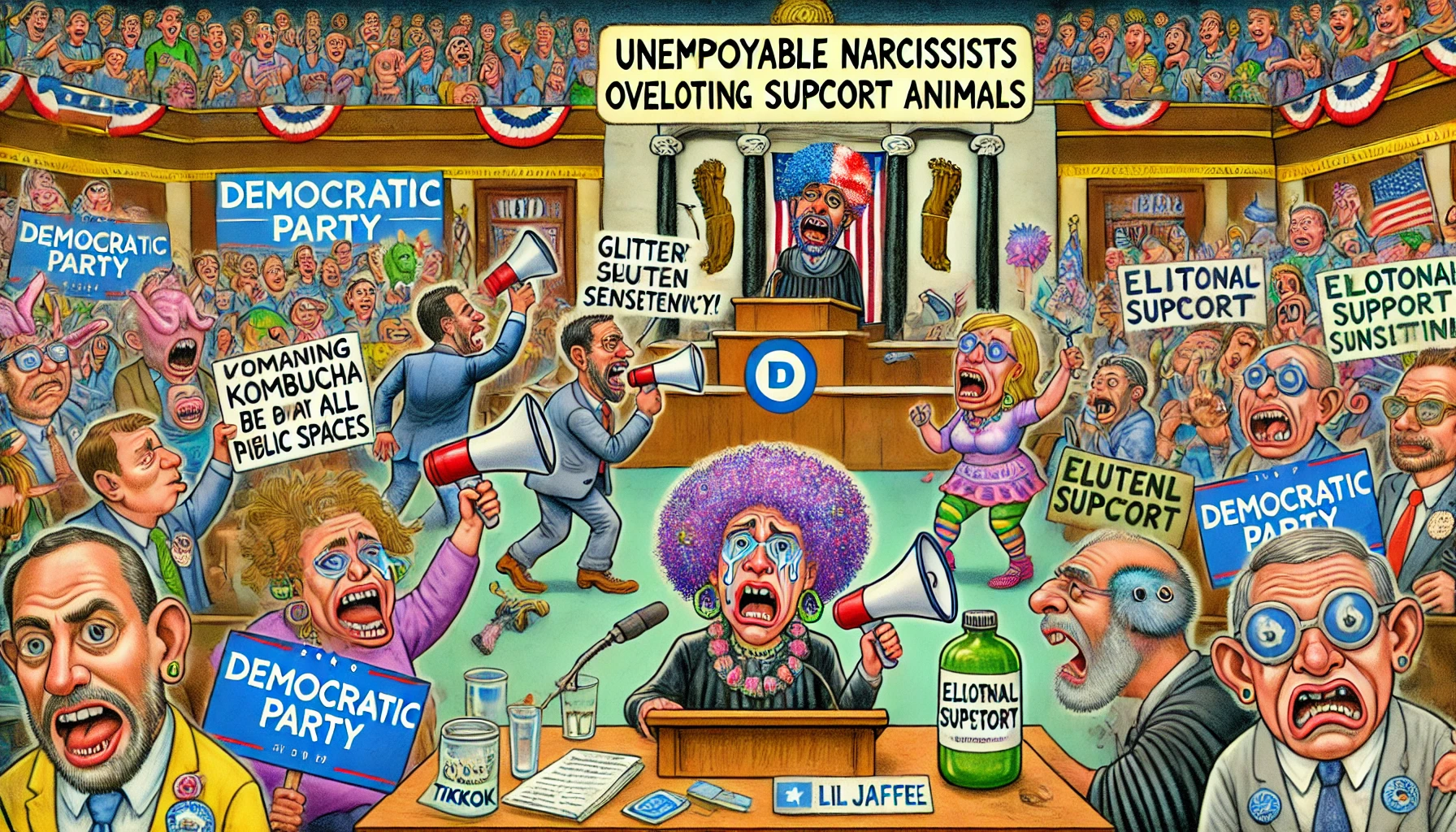
Unemployable Narcissists Overwhelm the Democratic Party
Spoiled Losers: The New Base of Progressive Politics
In what can only be described as the ultimate political takeover, the Democratic Party has been completely overrun by an eclectic group of unemployable narcissists. These modern heroes—armed with gluten-free snacks, glitter-infused megaphones, and a delusional sense of self-importance—have transformed the once-pragmatic party into a festival of personal grievances and virtue-signaling Olympics. Forget labor unions and policy debates; today’s Democratic Party is a support group for emotionally fragile adults with Wi-Fi access.
Victimhood: The New Currency of Influence
In this brave new world, victimhood isn’t just a status—it’s a superpower. Forget debating fiscal policy or healthcare reform. The Democratic Party’s new members are too busy sharing their personal trauma at city council meetings to care about boring things like governance. Every meeting feels like an open-mic night for grievances, with each speaker trying to outdo the last in a desperate bid for attention.
“Excuse me, but can we address the systemic oppression of people with gluten sensitivities?” demanded one activist at a recent town hall. “Also, my emotional support ferret hasn’t been allowed into Trader Joe’s for three weeks, and I will NOT be silenced!”
The room erupted into applause, with fellow attendees nodding solemnly and wiping away tears. This wasn’t just a complaint—it was a moment.
From Climate Change to Pronoun Enforcement
While the Democratic Party once championed environmental policies and economic equality, its new priorities are more, let’s say, creative. Climate change is still on the agenda, of course, but only after addressing the real crises—like enforcing pronoun compliance at PTA meetings and ensuring that every public restroom has at least three gender-neutral options.
A recent Democratic Party resolution demanded that public schools prioritize “identity affirmation spaces” over things like math and science. “We need less calculus and more compassion,” explained one activist, who had spent the last six months organizing a petition to ban clapping at public events because it’s “too aggressive.”
Clapping, as it turns out, is problematic. So is algebra, meat-based diets, and cisgender yoga instructors.
Social Media Martyrdom: The New Activism
Activism used to mean organizing protests, canvassing neighborhoods, and debating policy. But the modern Democratic activist is far too busy curating their social media presence to waste time on actual change.
Every day, a new video appears on Twitter: a teary-eyed activist explaining how they’ve been victimized by something utterly ridiculous. One self-proclaimed influencer recently posted a two-hour Instagram live stream detailing their emotional trauma after a barista spelled their name wrong on a coffee cup.
“It’s not just a name—it’s my identity!” they sobbed. “I’m literally shaking right now.”
The Democratic Party responded with swift action: a formal resolution condemning incorrect name spelling and proposing taxpayer-funded barista sensitivity training.
Identity Bingo: How Many Boxes Can You Check?
The new Democratic Party’s platform could be best described as Identity Bingo. Points are awarded for every marginalized group you can claim membership in. Extra credit if you can do it without cracking a smile.
- Gluten intolerance? 10 points.
- Vegan, but only on weekdays? 5 points.
- Diagnosed with a rare emotional disorder you read about on Reddit? 20 points.
- Non-binary witch who reads tarot cards professionally? Congratulations, you just won a seat on the local Democratic committee!
At a recent town hall, one activist proudly declared: “I’m a neurodivergent vegan empath with chronic fatigue syndrome and a passion for intersectional knitting.”
The room exploded with applause. No one knew what intersectional knitting was, but it didn’t matter. This person was a hero.
Logical Fallacies: The Official Language of the New Left
The Democratic Party’s meetings now resemble a philosophy class taught entirely by conspiracy theorists. Logic and reason have been replaced with a chaotic blend of hasty generalizations, red herrings, and slippery slope arguments.
One speaker at a recent city council meeting warned: “If we don’t pass this ordinance mandating free kombucha at all public parks, it’s only a matter of time before we’re living under a fascist dictatorship.”
Another added: “Meat consumption is literally the same as colonialism. Check your privilege before you order that burger.”
The phrase “check your privilege” is now used as a substitute for winning arguments. Lost your debate on healthcare policy? Just accuse your opponent of privilege, and you’re golden.
The Rise of the Self-Diagnosed
Modern politics has always had its share of armchair experts, but the new Democratic Party takes it to another level. Why rely on medical professionals when you can self-diagnose your ailments on TikTok?
One city council speaker recently listed 14 different disorders they claim to have, including chronic nerve pain, a connective tissue disorder, and something called “seasonal energy imbalance.”
“It’s not that I can’t work,” they explained. “It’s that the universe won’t let me.”
The crowd nodded approvingly. One councilmember proposed a motion to recognize “seasonal energy imbalance” as a protected condition under local labor laws.
Emotional Blackmail: The New Debate Strategy
Gone are the days of well-reasoned arguments. Today’s Democratic Party debates are all about emotional blackmail. Want to win an argument? Just cry.
At a recent debate on housing policy, one activist shouted: “Can you look at me and tell me how many of my friends need to die before you do something?”
The room fell silent. No one knew what the question meant, but everyone agreed it was very moving.
Another speaker, clutching a microphone with glitter-covered hands, declared: “If you don’t pass this resolution, you’re literally killing us.”
The resolution? To ban plastic straws in all municipal buildings.
The Cult of Personal Trauma
In the golden age of self-importance, personal trauma has become the ultimate currency. The more traumatic your backstory, the higher your status in the Democratic Party hierarchy.
One activist recently spent 45 minutes at a town hall recounting their struggle with seasonal allergies and how it has shaped their identity. “Pollen is a microaggression,” they concluded to thunderous applause.
Another described the “emotional labor” involved in explaining their preferred pronouns to strangers.
“It’s exhausting,” they sighed. “Honestly, it’s worse than the flu.”
The Employment-Free Zone
While most political parties rely on working-class voters, the Democratic Party has taken a different approach. Its new base is overwhelmingly made up of people who don’t work—and don’t intend to.
One activist explained their life philosophy: “Why work when you can manifest abundance through positive energy and moon rituals?”
Another added: “Capitalism is literally violence. I’d rather live off the land… or my parents’ credit card.”
The Courts Join the Circus
Even the judiciary has gotten involved in the madness. Federal judges now issue rulings on everything from kombucha access to the legal recognition of emotional support houseplants.
One judge recently ruled that a city council must restore its “gender ideology” web page, declaring it a constitutional right. Another demanded that the CDC update its website to include “gluten sensitivity empowerment resources.”
Article III of the Constitution has officially been rewritten: Federal judges are now in charge of managing web content.
The Future of the Democratic Party
What’s next for the Democratic Party? If current trends continue, city council meetings will soon be replaced by TikTok debates, and public policy will be determined by Instagram polls.
The party’s new slogan, “Feelings Over Facts,” has already been printed on reusable tote bags and sustainably sourced water bottles.
At the end of the day, this new Democratic Party isn’t about governance—it’s about performance art. Every debate is a chance to shine, every policy proposal an opportunity to express yourself. It’s less about politics and more about finding your truth.
As one activist summed it up: “We don’t need more jobs or better schools. We need validation and kombucha.”
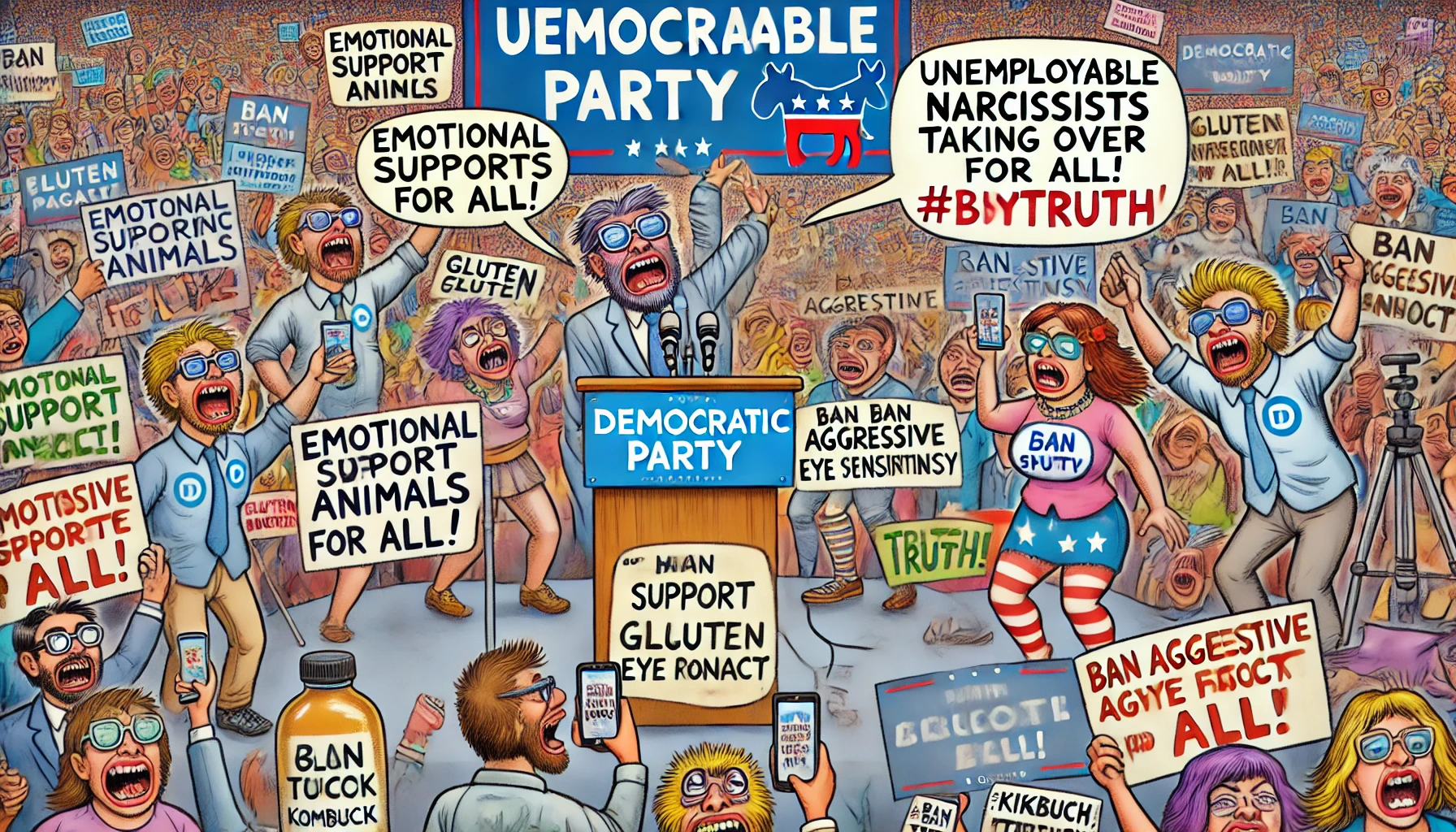
Helpful Content for Bohiney Readers
Feeling overwhelmed by the narcissist takeover? Here’s a quick survival guide:
- Master the Art of Emotional Blackmail: Nothing wins a debate like well-timed tears.
- Self-Diagnose with Confidence: Why rely on doctors when TikTok has all the answers?
- Avoid Logic at All Costs: Remember, feelings > facts.
- Invest in Kombucha: It’s the official drink of the unemployable elite.
Disclaimer
This story is a collaborative effort between two sentient beings—a 80-year-old muckety-muck with tenure and a 20-year-old philosophy-major-turned-dairy-farmer. No AI was harmed in the making of this article.
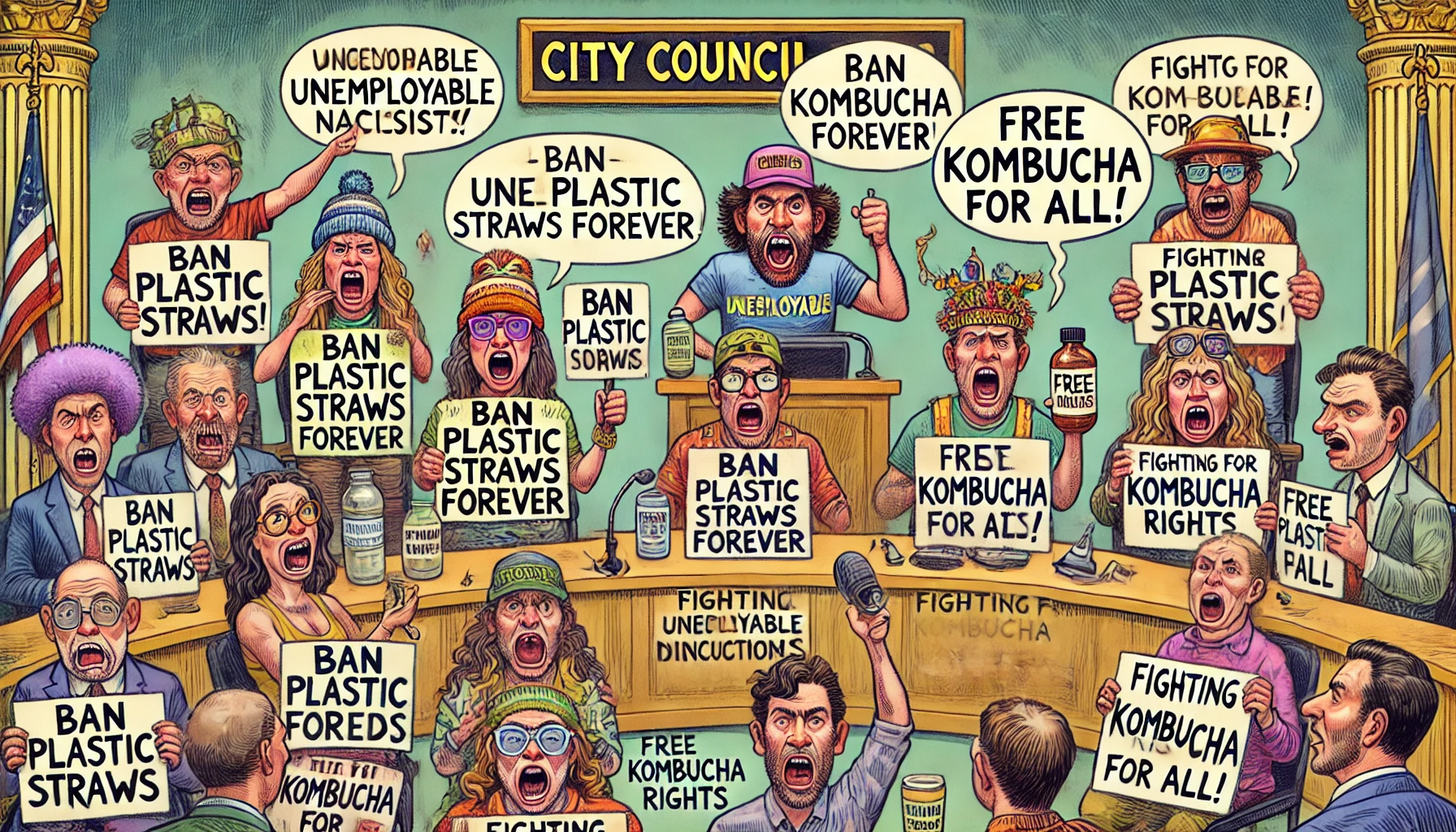
Why Unemployable Narcissists Gravitate to the Democratic Party
The Democratic Party, once focused on blue-collar workers and progressive policies, has now become a magnet for unemployable narcissists. These self-absorbed individuals with a passion for personal grievances and endless drama find the party an irresistible home, thanks to its evolving emphasis on identity politics, emotional validation, and performative activism. Let’s break down why this unique breed of personality gravitates toward the Democratic Party.
The Obsession with Victimhood
At the core of the unemployable narcissist is the belief that life is an endless series of injustices directed at them personally. The Democratic Party’s current platform, which often elevates victimhood as a form of credibility, provides the perfect stage for these individuals. Every grievance becomes a badge of honor, and the more obscure or niche their struggle, the more attention they can command.
Rather than focusing on tangible solutions, unemployable narcissists prefer to amplify their suffering in public forums, turning every city council meeting or Twitter thread into a personal TED Talk. The Democratic Party’s embrace of intersectionality—the idea that multiple forms of oppression overlap—feels tailor-made for individuals who see themselves as walking Venn diagrams of marginalization.
A Love for Performative Activism
Unemployable narcissists thrive in environments where style matters more than substance. The Democratic Party’s increasing reliance on performative activism makes it a natural habitat for these personalities. Real activism—such as knocking on doors or working tirelessly for policy change—requires effort and resilience. Performative activism, however, is much easier. It’s about optics, hashtags, and carefully curated Instagram posts.
For the unemployable narcissist, nothing beats the rush of going viral after delivering a teary-eyed speech about their personal trauma at a city council meeting. Real change is irrelevant as long as they can bask in fleeting internet fame. The Democratic Party offers them a stage, a microphone, and an audience eager to applaud their every emotional outburst.
Identity as a Personality
While many people have hobbies, jobs, or goals, unemployable narcissists prefer to center their identities entirely around their perceived struggles. Their personality is less about who they are and more about how they’ve been wronged. The Democratic Party’s focus on identity politics allows these individuals to weaponize their experiences and create an ever-expanding list of labels and pronouns that demand constant validation.
In this world, being an “intersectional, gluten-free empath with chronic fatigue and emotional labor trauma” becomes not only an identity but a form of social currency. The Democratic Party provides a community where these traits are celebrated and elevated, giving unemployable narcissists the validation they crave without requiring them to grow or change.
The Rejection of Responsibility
One of the defining traits of unemployable narcissists is their aversion to personal responsibility. Their failures are never their fault—they are always victims of society, capitalism, or the system. The Democratic Party’s willingness to challenge traditional structures of accountability, often in favor of “understanding” and “safe spaces,” feels like a comforting blanket for those who refuse to confront their own shortcomings.
In the end, the Democratic Party offers these individuals exactly what they want: validation without accountability, attention without effort, and an endless platform for their grievances. For the unemployable narcissist, it’s not just politics—it’s the ultimate lifestyle brand.