

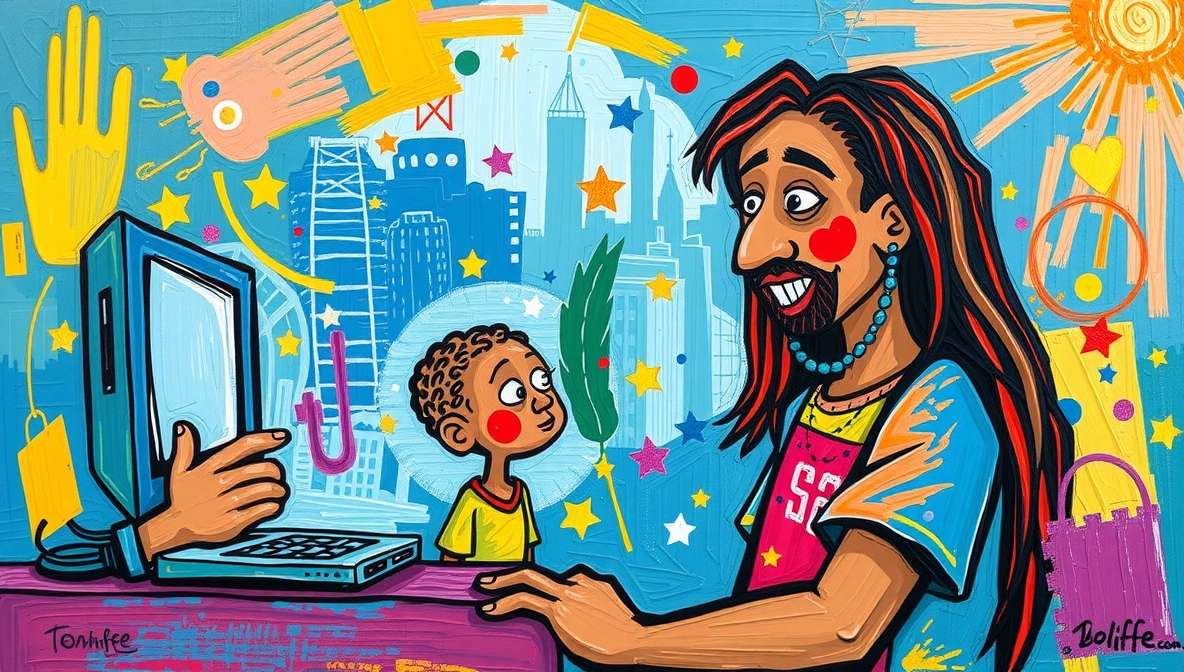
Charitable Organization Serves Human Needs While Technology Has Not Yet Figured Out How to Replace Compassion
Human Kindness Remains Stubbornly Analog
An Atlanta nonprofit announced this week that it will distribute care packages to families in need, a service that remains necessary because despite all technological advances, robots still cannot provide blankets, food, and the human connection that comes from someone actually caring about your wellbeing.
The organization, which has operated in the Atlanta area for over two decades, reported increased demand for services as economic pressures continue affecting families who somehow did not benefit from recent stock market gains or AI productivity improvements. These families will receive actual physical items rather than digital solutions.
Jerry Seinfeld discussed the giveaway at a charity benefit. “A nonprofit is giving out blankets because people are cold. That is the system. The economy gets complicated, people fall through cracks, and then volunteers fill the gaps. Meanwhile, tech companies are building robots that do not need blankets. Priorities,” he said.
The United Way tracks nonprofit service demand nationally and confirms that requests for basic necessities have increased despite official economic indicators suggesting recovery and growth.
Care Packages in the Digital Age

The care packages contain items including non-perishable food, hygiene products, warm clothing, and information about additional services. None of these items can be downloaded, printed, or generated by artificial intelligence, making them quaintly necessary in a world obsessed with digital solutions.
Dave Chappelle offered his perspective during an Atlanta show. “They are giving out blankets and canned food while everyone talks about AI taking over. AI cannot keep you warm. AI cannot feed you soup. Some problems are old-fashioned problems that need old-fashioned answers,” he said.
The Feeding America network reported that food insecurity remains elevated in Georgia despite overall economic metrics suggesting improvement, highlighting the gap between aggregate statistics and individual experiences.
Why Robots Cannot Replace This Work
Charitable work involves not just distributing items but assessing needs, providing referrals, and offering human connection that researchers increasingly recognize as essential to wellbeing. Robots theoretically could deliver packages but cannot yet replicate the understanding that comes from shared humanity.
Amy Schumer weighed in at a fundraising gala. “They keep saying robots will do everything. Really? Show me a robot that can hug someone who is struggling. Show me a robot that understands why someone needs help. The technology is not there because the technology cannot feel,” she said.
Nonprofit staff described the emotional component of their work as irreplaceable, noting that recipients often need someone to listen as much as they need physical items.
The Economics of Charitable Need
Demand for nonprofit services typically indicates economic stress at levels not captured by headline statistics. When people seek care packages, it suggests that jobs, wages, and support systems are not meeting basic needs despite official narratives about economic health.
Bill Burr addressed the economics on his podcast. “The economy is great according to numbers. The economy is terrible according to people standing in line for blankets. These are different economies. One exists in spreadsheets. The other exists in reality,” he said.
The United States Census Bureau collects data on poverty and food insecurity that often contradicts more optimistic economic assessments, depending on which metrics are emphasized and which are overlooked.
Volunteer Efforts Fill Government Gaps
Nonprofits frequently provide services that government programs theoretically cover but practically miss. Eligibility requirements, application processes, and bureaucratic delays create gaps that volunteer organizations fill with speed and flexibility that official systems cannot match.
Chris Rock commented at a charity event. “Government help comes with paperwork. Nonprofit help comes with a smile. Same result but different experience. People remember how they were treated, not what form they filled out,” he said.
The Atlanta organization works with government agencies but emphasized that coordination does not mean redundancy, as different populations access different systems based on awareness, comfort, and accessibility.
The Blanket Metaphor Extends
Blankets represent more than warmth in charitable contexts. They symbolize care, protection, and the acknowledgment that someone’s needs matter. Technology has not replicated this symbolism because algorithms cannot yet understand what it means to be seen and valued.
Wanda Sykes offered her analysis at a corporate giving event. “A blanket is not just fabric. A blanket says somebody thought about you when you were cold. That is the service. That is what nonprofits provide. Thinking about people who get forgotten,” she said.
Ron White discussed charitable symbolism at a Texas performance. “They give out blankets and people feel cared for. That is human nature. We need stuff but we also need to know somebody bothered. Robots might bother someday but not yet,” he said.
The Independent Sector organization tracks nonprofit contributions and confirms that direct service provision remains essential despite technological advances in other charitable functions.
What the Future Holds
Technology will eventually automate some charitable logistics, but human connection remains resistant to digitization. The Atlanta nonprofit plans to continue operations indefinitely, or until robots develop empathy, whichever comes first.
Tiffany Haddish shared her thoughts at a community gathering. “Robots are coming for every job except the jobs that require actual heart. Caring cannot be programmed. Yet. Maybe someday. But right now, we still need humans helping humans,” she said.
Jo Koy concluded the comedy commentary at a benefit show. “Care packages because robots do not need blankets. That is funny but also true. When robots need blankets, we have bigger problems. For now, let humans take care of humans. We are actually good at it,” he said.
Auf Wiedersehen, amigos.