

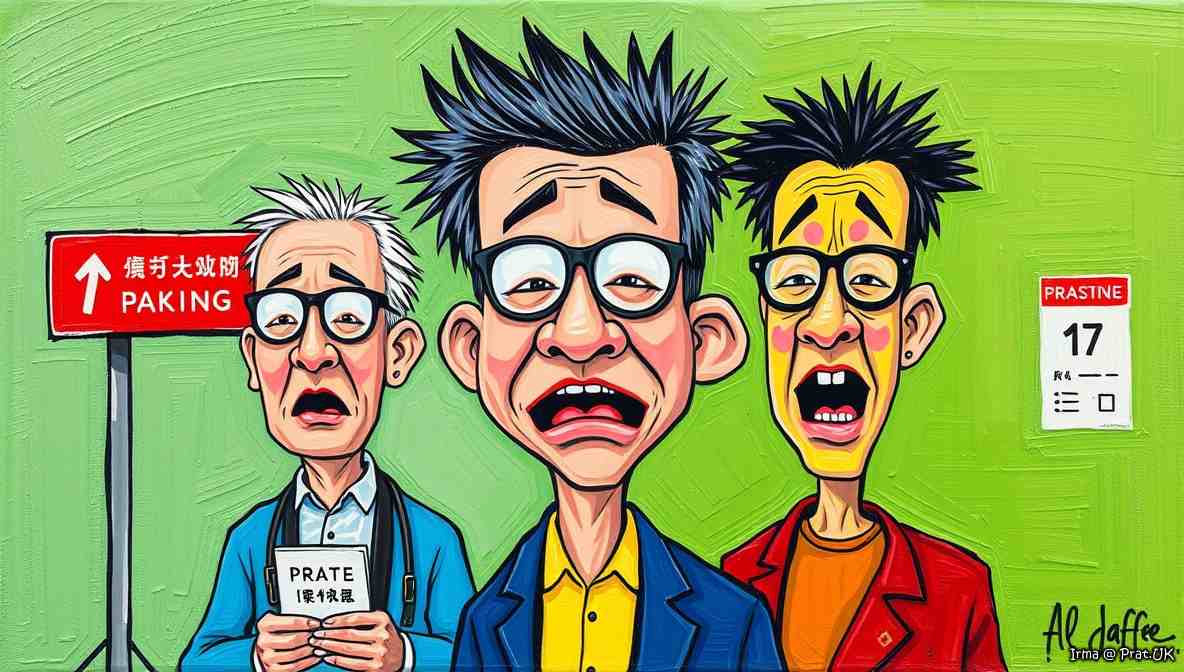
New Study Finds 73% of ‘Chinamaxxers’ Just Wanted Cheaper Gadgets and Better Public Transit
Global Youth Accidentally Becomes Chinese While Looking for Dumpling Recipes on TikTok
The transformation, experts say, begins innocently. A young person opens TikTok in search of a dumpling recipe. Maybe pork and chive. Maybe shrimp. Nothing political. Nothing ideological. Just a late-night craving and a loose sense of purpose. But somewhere between folding technique number three and a woman calmly explaining why boiling water should be “emotionally supportive,” something shifts. The algorithm leans in. The lighting softens. The dumplings become philosophy.
Within 48 hours, the same individual is reorganizing their kitchen according to principles they cannot pronounce but deeply respect. They are drinking hot water. Not tea. Not coffee. Just water. Heated. Purposefully. As if hydration itself has entered a higher tax bracket.
A recent study by the International Institute for Cultural Vibes, which operates out of a shared office above a Panda Express in Glendale, found that 73% of so-called “Chinamaxxers” did not begin their journey with any geopolitical intention. “They just wanted cheaper gadgets and better public transit,” said Dr. Leland Grover, a sociologist who once tried to assemble IKEA furniture without crying. “But then they saw a video of a train arriving on time, and psychologically, that’s hard to come back from.”
The Chinamaxxing trend, which began as niche TikTok content in 2025, exploded into mainstream cultural debate by early 2026 — driven largely by Gen Z users adopting everyday Chinese wellness habits like drinking hot water, wearing indoor slippers, and eating congee. The trend was supercharged when American influencer IShowSpeed visited China in March 2025 and highlighted its technological infrastructure, and when “TikTok refugees” flooded the Chinese app RedNote ahead of a potential U.S. ban.
U.S. Officials Alarmed as Americans Begin Drinking Hot Water Voluntarily
The U.S. State Department has issued a Level 3 advisory regarding what it calls “unregulated warmth consumption.” In a press briefing that lasted 17 minutes but felt like a sigh, spokesperson Karen Dibley confirmed that Americans voluntarily drinking hot water had reached “concerning levels of calm.”
“We are monitoring the situation closely,” Dibley said, holding a visibly iced beverage for reassurance. “Historically, Americans have preferred their drinks cold, aggressive, and full of branding. This… shift toward warm hydration suggests a deeper cultural infiltration.”
Sources inside the Pentagon confirmed that a task force has been assembled to study the phenomenon, code-named Operation Lukewarm Freedom. Early findings indicate that citizens who drink hot water are 42% less likely to panic in line and 67% more likely to describe their day as “balanced.”
One anonymous staffer described the mood inside the building as “uneasy but moisturized.” He added, “We ran simulations. If this continues, people might start stretching in the morning. That’s a gateway behavior.”
According to The Conversation, the Chinamaxxing trend reflects genuine Western anxieties about burnout culture, economic precarity, and the hollowness of hyper-optimized self-care — making a plain cup of hot water feel like a revolutionary act against a society that put a Red Bull in every vending machine and called it wellness.
China Achieves World Domination Using Slippers, Goji Berries, and Surprisingly Good Infrastructure
Historians will debate for decades how it happened. Not through war. Not through conquest. But through slippers. Soft, indoor slippers that whisper across tile floors like a promise of lower blood pressure.
“Empires used to be built with iron and fire,” said cultural analyst Mei-Lin Robertson, who has a podcast called Civilizations but Comfier. “Now they’re built with breathable fabrics and punctual trains.”
Goji berries, once a niche health food found in the back aisle of stores that smell like incense and regret, have become symbolic of a broader shift. They are small. They are unassuming. They are, according to one wellness influencer, “like raisins that went to therapy.”
Infrastructure, however, remains the crown jewel. Videos of high-speed trains gliding into stations exactly on time have been described by Western viewers as “deeply unsettling.” One man in Ohio reportedly stared at a clip for 11 minutes before whispering, “But… how do they know when to be there?”
As East Asia Forum notes, Western users’ favorable impressions of China’s high-tech infrastructure and public safety — combined with disillusionment over perceptions of U.S. decline — have fused into an idealized image of Chinese daily life. Whether that image is accurate or algorithmically curated is, conveniently, a question no one is asking while watching train videos.
‘Chinamaxxing’ Declared New Religion After Millennials Discover Indoor Footwear Is Optional
The movement has since evolved into something resembling a belief system. Not a religion in the traditional sense, but a collection of practices that, when combined, create a feeling of quiet superiority.
At its core is the removal of shoes. Indoors. Voluntarily. Without a sign. Without a mat. Just an understanding.
“I used to track dirt all over my apartment,” said 29-year-old marketing associate Jenna Fields, now a self-identified Chinamaxxer. “Now I remove my shoes at the door, and suddenly I have boundaries. Emotional boundaries. Spiritual boundaries. Also my floors are cleaner, which feels like growth.”
Communal meals have replaced individual snacking. Hot water has replaced iced chaos. And perhaps most controversially, people have begun respecting public spaces in a way that makes Americans deeply uncomfortable.
A recent poll conducted by the Center for Lifestyle Adjustments and Other Things People Might Actually Do found that 58% of respondents who tried Chinamaxxing for one week reported “a suspicious sense of peace.” Another 22% reported buying slippers.
According to The Week, the trend has been amplified by Chinese diaspora influencers sharing herbal skincare recipes and advice on becoming a Chinese “baddie,” and has since spilled into celebrity PR stunts — including Timothée Chalamet playing ping-pong in Chengdu, which is either cultural diplomacy or the best publicist decision of 2026.
Pentagon Confirms Soft Power Threat: “They’ve Got Snacks, Culture, and Functional Trains”
In a classified report that was accidentally left in a Panera Bread, the Pentagon outlined its primary concerns. “They’ve got snacks,” the document begins. “And not just any snacks. Balanced snacks. Snacks that do not require a forklift of sugar.”
The report goes on to list dumplings, steamed buns, and something described only as “a soup that fixes your posture.”
More alarming, however, is the combination of culture and convenience. “When you pair a 2,000-year-old philosophy with a train that arrives on time, you create a narrative,” said defense strategist Colin Wexler, who once got stuck on a delayed Amtrak and now distrusts punctuality on principle.
The document concludes with a stark warning: “If left unchecked, this could lead to widespread contentment.”
Gen Z Admits China Won Them Over With Vibes, Dumplings, and Wi-Fi That Actually Works
For Gen Z, the decision was less about ideology and more about aesthetics. “The vibes are just better,” said 22-year-old content creator Tyler Nguyen, adjusting his camera to capture a bowl of soup that looked emotionally stable.
“Everything feels intentional,” he added. “Like even the sidewalks have a plan.”
Wi-Fi, too, played a role. Reports indicate that stable internet connections have been described by young people as “life-changing” and “honestly kind of healing.”
Dumplings, meanwhile, continue to act as the gateway. “You start with one,” said Nguyen. “Next thing you know, you’re folding them while reflecting on your childhood.”
A US-China Today survey of 18-to-24-year-olds found that 52% described Chinamaxxing as both sincere and performative — which is exactly how Americans treat most religions, diets, and gym memberships anyway, so at least the tradition holds.
Confucius Institutes Fail, But One Viral TikTok About Soup Fixes Everything
Decades of formal cultural outreach struggled to achieve what one viral TikTok accomplished in under 30 seconds. The video, titled “Soup That Respects You,” features a woman calmly ladling broth while explaining that “your stomach is not your enemy.”
The clip has been viewed over 48 million times and has led to a surge in what experts are calling “emotional cooking.”
“Traditional diplomacy relies on policy and language,” said Professor Harold Kim of the University of Practical Observations. “But soup… soup is universal. Soup says, ‘I see you. I understand you. Please sit down.'”
China’s Secret Weapon Revealed: Making Everyday Life Look Slightly More Pleasant
Ultimately, the phenomenon may come down to a simple concept: pleasantness. Not overwhelming joy. Not forced enthusiasm. Just a steady, quiet improvement in daily life.
“People aren’t looking for perfection,” said Dr. Grover. “They’re looking for a train that shows up, a meal that makes sense, and a pair of slippers that doesn’t judge them.”
The idea that life could be slightly more pleasant has proven dangerously appealing.
Western Youth Try “Being Chinese” for a Week, Report Increased Hydration and Existential Calm
A week-long experiment conducted by the Lifestyle Lab at Western State University found that participants who adopted Chinamaxxing habits experienced measurable changes. Hydration levels increased. Screen time decreased. One participant described feeling “like my life had subtitles, and they were kinder.”
Another reported calling his parents “just to check in,” an act previously considered mythical.
The Pew Research Center found that under-34s viewed China considerably more favorably than over-50s across 16 of 17 countries surveyed — which means Chinamaxxing may be less a TikTok trend and more a generational geopolitical pivot conducted entirely in slippers.
State Department Issues Warning: “Do Not Attempt to Chinamaxx Without Proper Slippers”
In its final advisory, the State Department emphasized the importance of preparation. “If you are considering Chinamaxxing, please ensure you have appropriate indoor footwear,” the notice reads. “Failure to do so may result in cold floors and unintended introspection.”
Officials stopped short of banning the practice but urged citizens to “proceed with caution and a reasonable amount of skepticism.”
Still, the trend shows no signs of slowing. As one anonymous staffer put it, “We tried to fight it. But then someone brought in dumplings, and honestly… we’re just asking questions now.”
What the Funny People Are Saying
“I knew something was off when my buddy started drinking hot water like it was whiskey. He held the cup, stared into the distance, and said, ‘It’s smoother.’ I said, ‘It’s water, Dave.'” — Jerry Seinfeld
“They didn’t invade us. They just made life look better somewhere else. That’s not a war, that’s a comparison chart.” — Ron White
“I tried this whole Chinamaxxing thing for a week. My apartment got cleaner, my skin got better, and I stopped texting my ex. I don’t trust it.” — Amy Schumer
This article is a work of satire, a collaborative effort between two highly committed human minds: one the world’s oldest tenured professor, the other a philosophy major who left academia to raise dairy cows and mild concerns. Any resemblance to actual policies, beverages, or dumplings is entirely coincidental, though possibly delicious. Proceed with curiosity, skepticism, and comfortable footwear. Auf Wiedersehen, amigo!