

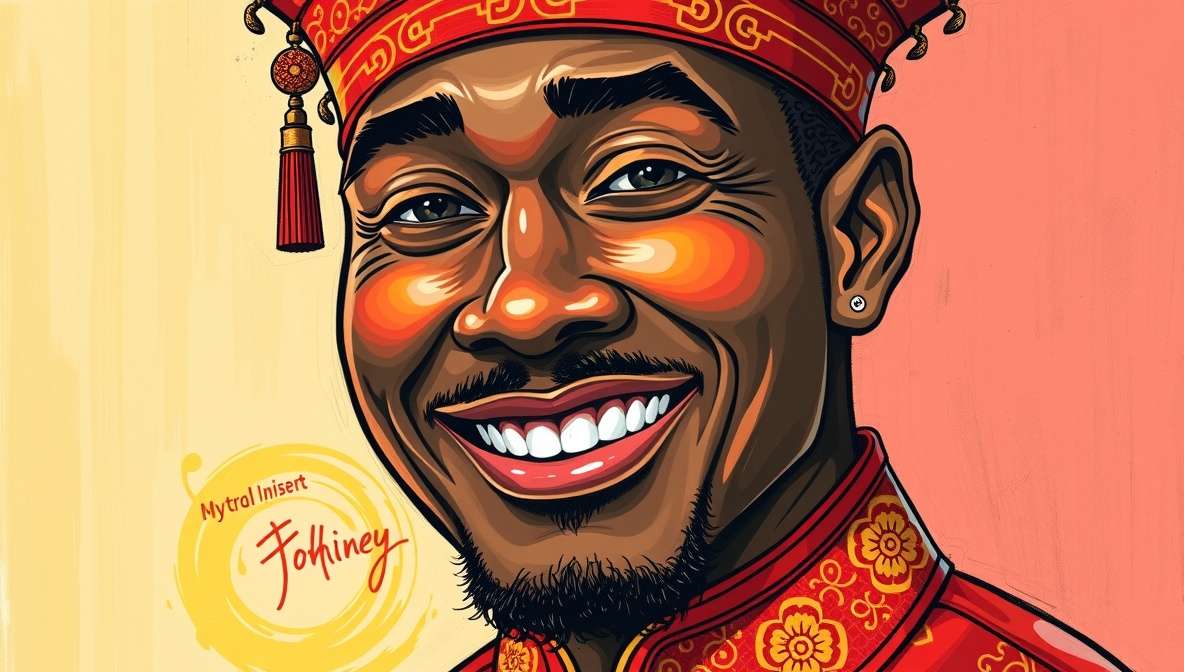
The Great Chinamaxxing Awakening: How America Discovered That Being Chinese Is the Spa Version of Soft Power
Congratulations, America. You’ve done it again. You took a diplomatic challenge involving the world’s most populous nation, two decades of geopolitical tension, and a trillion-dollar trade war — and you solved it by drinking hot water and buying slippers. This is either the greatest act of cultural diplomacy since the 1971 ping-pong summit, or it’s a sign that civilization peaked somewhere around 2019 and we just haven’t been told yet.
Welcome to Chinamaxxing — the internet’s way of saying “I am becoming Chinese and there’s nothing you can do about it.” It’s like a midlife crisis, except the therapist is a TikTok influencer named Sherry Zhu with 740,000 followers, your breakthrough moment involves sipping hot water from a thermos with the solemn reverence normally reserved for craft coffee, and your whole family is watching in confused silence from the other room.
The trend blends “China” with the internet slang “-maxxing” — meaning to fully commit to something, like looksmaxxing or gymmaxxing — and Gen Z declared they were “becoming Chinese,” not in passport status, but in lifestyle vibes. The phrase first surfaced in April 2025 when a Twitter user posted “you met me at a very Chinese time in my life” — a parody of the final line of Fight Club — and it’s been downhill for American identity ever since. Which, given the competition from everything else happening to American identity, is saying something.
Hot Water: America’s New Wellness Obsession (Your Grandma Was Right All Along)

Across TikTok and RedNote, hordes of young Americans are now guzzling hot water with the solemn reverence normally reserved for pre-workout powder and overpriced smoothies. Traditional Chinese medicine has long held that hot water aids digestion, improves circulation, and maintains the body’s internal temperature. Americans have heard this and concluded: finally, a wellness routine I cannot mess up.
Some are saying goodbye to cold drinks forever, which means summer heatwaves now come with an extra layer of human confusion, visible sweat, and a thermos that says LONGEVITY in gold lettering. An anonymous “hot water technician” on Instagram (official job title: Flavour Whisperer) explained the philosophy in terms a nation of overachievers could understand:
“Cold drinks are passé. Hot water fixes everything. Broken heart? Hot water. Failed exam? Hot water. Student debt? Hot water. Crushing existential awareness that you peaked at 24? You guessed it. Hot water.”
The Mayo Clinic recommends staying hydrated. They did not specify temperature. Americans have found a loophole and are exploiting it to its fullest emotional potential.
Slippers Are the New Sneakers: Inside America’s Footwear Identity Crisis
“Slippers inside the house” has become the ultimate soft power flex — like wearing socks with sandals, but with a doctorate in cultural nuance and a subscription to a podcast about it. Slipper retailers are reporting consumer behaviour so unusual that therapists are getting involved. People are reportedly buying seventeen slippers at once “just in case another part of them becomes Chinese tomorrow.” Closets full of slippers. Hearts full of inexplicable purpose. That’s the American dream, baby — reupholstered in microfibre.
Comedian Jimmy O. Yang — star of Silicon Valley and Crazy Rich Asians, which at this point functions as a prophecy — posted a TikTok referencing the catchphrase while wearing an Adidas tangzhuang jacket from their Chinese New Year collection. The jacket sold out. The movie was right. We’re all going to end up in Singapore at a wedding we weren’t invited to, wearing slippers and carrying a thermos.
Congee: The Porridge That Ate America’s Wellness Industrial Complex
Congee — rice porridge, a dish that has been keeping people alive and mildly comfortable for roughly three thousand years of Chinese culinary history — has now become the centrepiece of a cultural conversion therapy session on Instagram. Influencers are posting pictures of grinning faces next to steaming bowls, with captions like:
“Found enlightenment at the bottom of this bowl.”
And also: “I have transcended avocado toast.” Which, frankly, was inevitable. Avocado toast was always a transitional object — something you eat between discovering brunch and discovering meaning. Congee is meaning. Or at least it is meaning with a considerably lower price point and no sourdough surcharge.
Americans have now declared congee more spiritual than yoga and more digestible than a $22 avocado toast. There is even talk of Congee for Congress Week, which sponsors hope will be the only time politicians agree on anything. Given that Congress currently cannot agree on what day it is, warm rice mush may genuinely be the bipartisan breakthrough the nation needs. Serve it to the Senate. Lock the doors. Let it work.
China’s Soft Power Moment: The Thermos Heard Round the World
Ordinarily, soft power is the diplomatic term for influence that doesn’t involve fleets or bombs — think Hollywood movies, jazz, or jazzercise classes at the embassy. China’s entry into that space was already picking up steam before Chinamaxxing arrived and turbocharged the whole operation. The Brand Finance Global Soft Power Index 2025 ranked China second in the world, surpassing the United Kingdom — a sentence that would have caused a full diplomatic incident in 2010 but barely registered in 2025 because everyone was too busy boiling apples to notice.
Labubu dolls are selling out globally. Mixue bubble tea has thousands of locations worldwide. Luckin Coffee is expanding internationally. Influencer IShowSpeed‘s livestreams from China attracted tens of millions of views. China’s 40,000-mile high-speed rail network has become the rhetorical cudgel Gen Z uses to beat their local infrastructure into submission. “We can’t build a train,” they say, staring at a video of the Shanghai Maglev, “but we CAN drink hot water.” And so they do.
The TikTok Refugee Crisis: America’s Most Self-Defeating Protest
The whole saga was turbocharged by the great TikTok Refugee Incident of January 2025, in which the US government threatened to ban TikTok for national security reasons, and Americans responded by mass-migrating to Xiaohongshu (RedNote) — a Chinese-owned lifestyle app. This is the geopolitical equivalent of being told you can’t go to McDonald’s for security reasons and immediately driving to a KFC that is owned by the same parent company and is located inside a government building in Beijing.
“We’re banning your app,” said America. “Great,” said its citizens. “We’ve moved to your other app.” The New York Times noted in February 2026 that the resulting memes could be considered “more of an absurdist joke, a wellness goal, or a subtle ironic expression of protest. Or all of the above.” Which is the most New York Times sentence ever written, and is also completely correct.
Chinese users dubbed the arriving Americans “cloud relatives” and eagerly shared recipes and wellness tips. The BBC reported that Chinese foreign ministry spokesperson Lin Jian said flights to China during Chinese New Year “dramatically increased” in 2026. Lin was “happy” to see the interest. One imagines he was also happy to see it while standing in front of a map.
Gen Z’s Existential Uniform Now Has Embroidered Dragons On It
Let’s unwind the existential noodle for a moment. TIME Magazine found the trend reflects Gen Z’s “desire for an alternative model to the U.S.” This tracks. Your generation came of age during the Iraq War, the 2008 financial crisis, a global pandemic, a January 6th insurrection, and whatever fresh catastrophe arrived in your news feed between the time you started reading this sentence and the time you finished it. “American exceptionalism was never something they lived,” as one researcher put it. When you can’t afford a house but you can watch TikToks of affordable Chinese apartments with underfloor heating, of course the future starts to look East.
One deeply scientific poll (conducted by the Institute for Pretending to be Serious, accredited by nobody) found that 67% of Chinamaxxers say they are doing it for “self-care,” 22% say it’s “totally ironic,” and 11% responded with a shrug gif. The pollster noted these percentages may overlap, which means up to 100% of respondents are either confused, lying, or both — a result that, frankly, tracks for any survey conducted on social media in 2026.
The Small Print: What the Meme Doesn’t Show
Wired‘s Zeyi Yang raised the inconvenient point that some Chinese people find the trend fetishizing their culture for a convenient trend — that it reflects “a temporary, discardable, and disposable form of cultural engagement while some of us are stuck being Chinese forever, including all the less fun parts that come with it.” The less fun parts being: an internet that is 40% of the global web, a government that cheerfully monitors everything you type, and a foreign ministry spokesperson who welcomes your thermos content as a diplomatic win while simultaneously overseeing policies that would make the slippers meaningless.
At a bar in Austin, Texas, a local congee evangelist was overheard proclaiming with absolute conviction:
“If soft power were a feeling, it’d be warm rice mush in your soul.”
To which someone replied with total seriousness: “That’s exactly why I’m moving to Boise.” This may be the most poetic misunderstanding of geopolitics in the history of the American interior.
The Verdict: Are We All Chinese Now?
Chinamaxxing is the cultural equivalent of someone discovering yoga pants and deciding they’ve found their personal philosophy. It is harmless, occasionally profound, frequently ridiculous, and guaranteed to be replaced by something Scandinavian in approximately six months. The slippers will stay. The thermos will migrate to the back of a cabinet next to the spiralizer and the juicer. The congee will be briefly claimed as a superfood by a celebrity nutritionist and then forgotten.
What it genuinely reveals is that Pew Research was right: under-34s view China more favourably than older generations in 16 of 17 countries surveyed. The era of automatic Western cultural supremacy has ended, and Generation Z is processing this information in the only way it knows: through memes, short-form video, and a thermos of aggressively warm water. One cannot entirely blame them. The water, at least, is good for your digestion.
Auf Wiedersehen, amigo!
The Chinamaxxing trend — also known as “Becoming Chinese” or “being in a very Chinese time of my life” — is a viral social media phenomenon that exploded on TikTok and RedNote between late 2025 and early 2026. It originated from a Fight Club parody tweet posted in April 2025 by Twitter user @girl__virus and was turbocharged by Chinese-American creator Sherry Zhu, 23, whose videos teaching non-Chinese viewers to adopt traditional Chinese wellness habits — drinking hot water, wearing indoor slippers, eating congee — garnered over 20 million views. The trend accelerated when Americans mass-migrated to the Chinese app RedNote during a threatened TikTok ban, creating an accidental cultural exchange dubbed “cloud relatives” by Chinese users. Analysts variously attribute it to Gen Z disillusionment with American politics and infrastructure, China’s rising global soft power (ranked #2 in the Brand Finance 2025 index), and the enduring human desire to reinvent oneself using someone else’s thermos.