

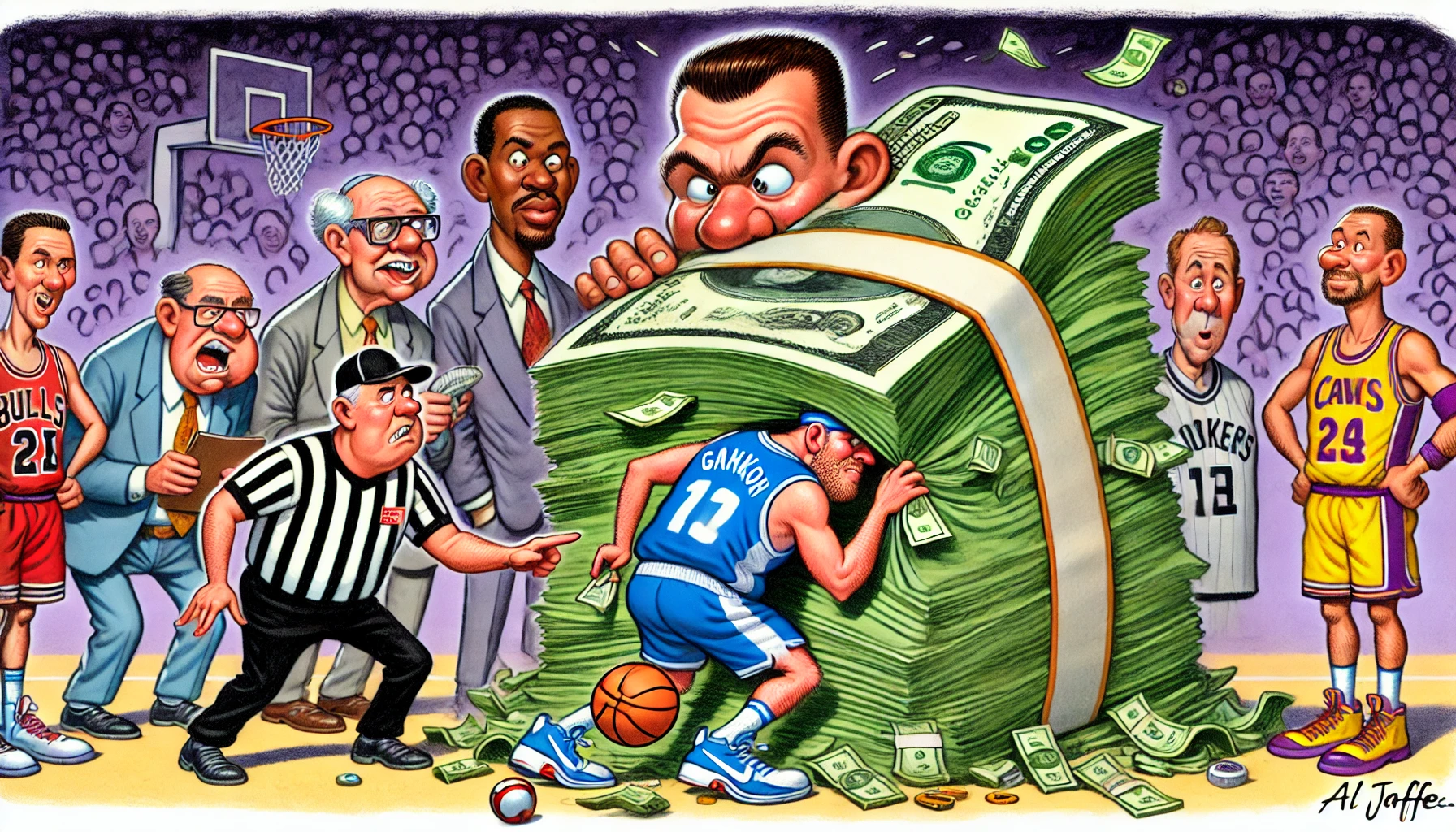
When the Players Become the Gamblers: The High-Stakes World of Athlete Betting”
In the grand arena of professional sports, where athletes are idolized for their discipline, skill, and dedication, a shadowy subplot has emerged: the athletes themselves are placing bets, not just on games, but sometimes on their own performances. Recent revelations have cast a spotlight on this clandestine world, challenging the integrity of sports and the very essence of fair competition.
“It’s like finding out your therapist bets on how many sessions it’ll take for you to mention your mother.” — Sarah Silverman
The Unveiling of a Hidden Epidemic
Mathew Bowyer, a bookmaker entangled in a high-profile gambling scandal, has pulled back the curtain on a startling statistic: he estimates that nearly half of professional athletes engage in betting, with about 10% grappling with gambling addictions.
This disclosure is akin to discovering that half of our revered chefs prefer microwaving their meals at home—unexpected and oddly amusing. The notion of athletes betting on their own games is like actors placing wagers on their movie’s box office performance; it blurs the lines of professionalism and ethics.
“So, half of pro athletes are betting on sports? That’s like finding out your doctor is Googling your symptoms during the appointment.” — Jerry Seinfeld
A Historical Perspective
The intertwining of sports and gambling is not a novel phenomenon. Historically, figures like Pete Rose have faced severe consequences for gambling-related activities. Bowyer himself admitted to taking bets from Rose before his death in September 2024, highlighting the long-standing connection between sports figures and gambling.
The modern landscape of legalized sports betting has made it easier than ever for individuals, including athletes, to place wagers. This accessibility, combined with the competitive nature of professional sports, creates a perfect storm for potential gambling issues.
The Ethical Quagmire
When athletes bet on sports, especially their own, it poses significant ethical dilemmas. The integrity of the game is called into question, and fans may begin to doubt the authenticity of the competition. Moreover, the potential for match-fixing or inside information being used to gain an advantage in betting markets becomes a real concern.
Leagues and governing bodies have strict rules prohibiting athletes from betting on their own sports to maintain the integrity of the games. However, as Bowyer’s revelations suggest, these rules may not be as effective as intended.
The Human Element
It’s essential to recognize that athletes are human beings susceptible to the same temptations and vices as anyone else. The pressures of professional sports, including performance expectations, financial management, and public scrutiny, can contribute to individuals seeking outlets like gambling.
However, the stakes are higher for athletes due to their influence and the potential impact on the integrity of sports. The allure of quick financial gains or the thrill of risk-taking can lead some down a dangerous path.
The Slippery Slope of Legalized Betting
The legalization of sports betting in many regions has further complicated the issue. While it has opened new revenue streams and increased fan engagement, it has also made gambling more accessible to athletes.
The line between casual betting and problematic gambling can blur quickly, leading to ethical breaches and potential legal consequences. The normalization of betting within the sports culture may inadvertently encourage athletes to participate, sometimes to their detriment.
The Role of Technology
Advancements in technology have made placing bets easier than ever. Online platforms and mobile apps provide convenient access to betting markets, allowing athletes to place wagers discreetly.
This ease of access can contribute to impulsive betting behaviors and make it challenging to monitor or regulate athletes’ gambling activities. The anonymity and convenience of digital platforms can exacerbate gambling issues among athletes.
The Impact on Fans and the Public
The revelation that athletes are betting on sports can erode public trust in the integrity of professional sports. Fans may question the authenticity of performances and outcomes, leading to disillusionment.
The perception of sports as a fair and honorable competition is crucial for maintaining fan engagement and support. Gambling scandals can tarnish the reputation of leagues and athletes, resulting in long-term damage to the sport’s image.
The Need for Comprehensive Policies
To address the issue of athletes betting on sports, leagues and governing bodies must implement comprehensive policies that include education, prevention, and enforcement measures.
Education programs can inform athletes about the risks and consequences of gambling, while support systems can assist those struggling with addiction. Strict enforcement of anti-gambling policies is essential to uphold the integrity of sports.
A Call to Action
The revelations about athletes betting on sports serve as a wake-up call for the sports industry. It is imperative to address this issue proactively to preserve the integrity of professional sports and protect the well-being of athletes.
By acknowledging the problem and implementing effective strategies, the sports community can work towards a future where the focus remains on fair competition and the true spirit of the game.
Conclusion
The intersection of professional athletes and sports betting presents a complex challenge that requires a multifaceted approach. By understanding the factors contributing to this issue and taking proactive measures, the sports industry can uphold the principles of integrity and fair play that are fundamental to its existence.
As fans, stakeholders, and participants in the world of sports, it is our collective responsibility to ensure that the games we love remain a true and honorable reflection of human potential and competition.

Humorous Observations:
- It’s like discovering that half of chefs prefer microwaving their meals at home—unexpected and oddly amusing.
- Imagine athletes betting on their own games; it’s like actors placing wagers on their movie’s box office performance.
- Pro athletes betting on sports is akin to firefighters playing with matches during their downtime.
- It’s as if dentists were sneaking candy between appointments—counterintuitive, yet entertaining.
- Finding out athletes bet on sports is like learning that pilots enjoy flight simulators as a hobby.
- It’s comparable to librarians secretly scribbling in the margins of books—unexpected and ironic.
- Athletes betting on games is like comedians laughing at their own jokes; it blurs the lines of professionalism.
- It’s as if surgeons were placing bets on the success of their own operations—both risky and ethically questionable.
- Discovering this trend is like finding out that judges enjoy courtroom dramas in their spare time.
- It’s akin to teachers gambling on their students’ test scores—unconventional and ethically murky.
- Pro athletes betting is like authors wagering on their book’s bestseller status; it’s a conflict of interest.
- It’s as if race car drivers were betting on their own races—thrilling yet fraught with ethical dilemmas.
- Athletes engaging in betting is like chefs gambling on the success of their own recipes.
- It’s comparable to musicians betting on their songs topping the charts; it adds a layer of personal stake.
- Discovering this is like learning that referees place bets on the games they officiate—surprising and controversial.
Comedian Lines:
- “Athletes betting on their own games? That’s like a chef betting you’ll love the special after he ‘accidentally’ adds too much salt.” — Ellen DeGeneres
- “Hearing that pro athletes gamble on sports is like discovering your pilot likes to play ‘guess the button’ mid-flight.” — Jimmy Fallon
- “It’s like finding out your dentist has a sweet tooth—suddenly, those cavities make a lot more sense.” — Trevor Noah
- “Pro athletes betting on games? That’s like a magician placing bets on whether you’ll figure out the trick.” — Conan O’Brien
- “It’s as if firefighters were caught playing with matches on their days off—ironic and a bit concerning.” — Stephen Colbert
- “Athletes gambling is like teachers betting on which student will fall asleep first—entertaining but probably not ethical.” — Amy Schumer
- “It’s like discovering that your lawyer bets on the outcome of your case—suddenly, you’re not sure whose side they’re on.” — John Mulaney
- “Pro athletes betting on sports? That’s like a weatherman wagering on rain—either way, they’re covered.” — Seth Meyers