

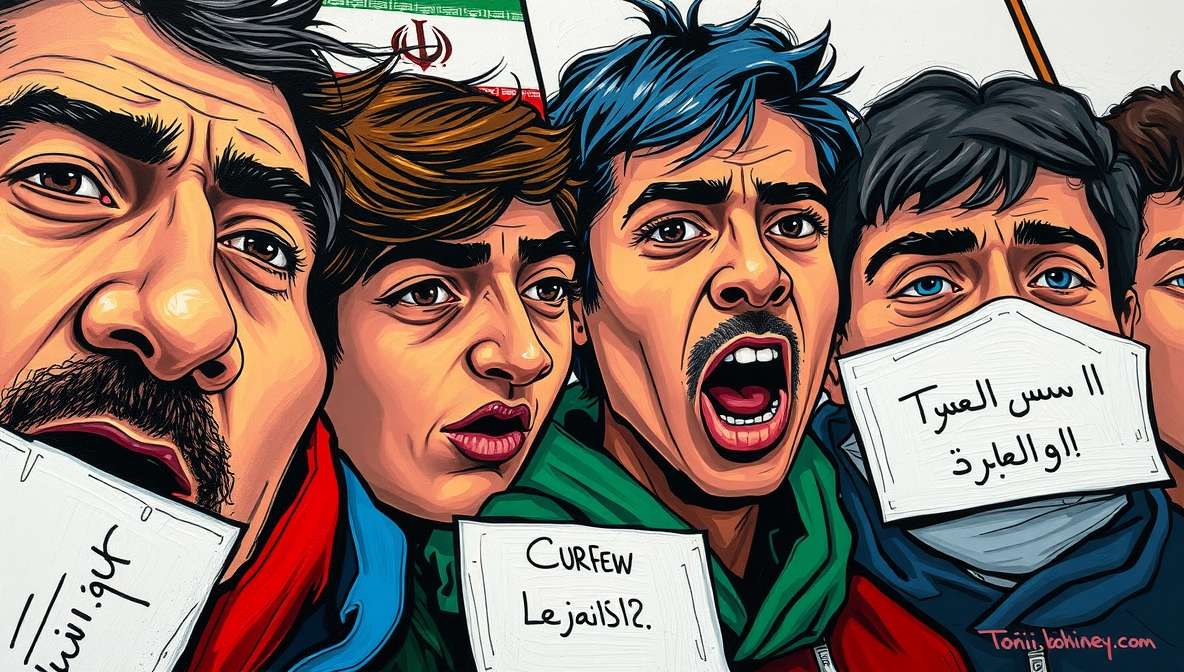
Iranian Youth Demand Freedom; Regime Offers Curfew and a Lecture
Across Iran this week, young protesters flooded streets demanding basic civil liberties, economic opportunity, and the radical experiment of being treated like adults. The government responded swiftly with a nationwide curfew and what officials described as an “educational conversation,” a lecture series delivered via loudspeaker, baton, and state television panel discussion.
Witnesses reported that students chanted slogans calling for freedom, dignity, and an end to corruption, while security forces countered with crowd-control techniques perfected through decades of not listening. One university student in Tehran said the curfew felt “less like public safety and more like being grounded by a country.” Officials insisted the measures were necessary to protect youth from dangerous ideas such as accountability and choice.
State media emphasized that young people were confused, emotional, and overly influenced by social media, music, and the reckless belief that governments should reflect the will of the people. A senior official explained that the lecture portion of the response was essential. “Freedom is complicated,” he said. “We prefer to explain it to them slowly, from a distance, while they are running.”
Iran’s Leadership Expresses Deep Concern About Public Expressing Concern

As protests continued, Iran’s leadership released a series of statements expressing deep concern, not about arrests, injuries, or deaths, but about the growing trend of citizens expressing concern in public. The statements reassured the nation that the government takes public dissatisfaction very seriously and would continue monitoring it closely, preferably from behind barricades.
Officials warned that excessive concern could destabilize society by creating expectations. “Concern leads to questions,” one spokesperson noted. “Questions lead to discussions. Discussions lead to chaos. We are intervening early.” The leadership urged citizens to express their worries in approved formats, such as silence, resignation, or carefully worded diary entries never shared with anyone.
Political analysts observed that the regime’s concern was genuine, though narrowly focused on the possibility that people might realize they are not alone. “Collective awareness is the real threat,” said one analyst. “Once people notice everyone else is unhappy too, it becomes harder to convince them it’s a personal failure.”
Nationwide Protests Shake Iran as Government Blames Vibes
Protests spread from major cities into smaller towns, shaking the country and alarming officials, who blamed the unrest on “bad vibes,” foreign attitudes, and an unexplained atmosphere of negativity. State broadcasters suggested that the protests were less about material conditions and more about mood, describing the situation as “a national case of misplaced feelings.”
Government representatives urged citizens to focus on positive thinking and national pride. “The economy is fine emotionally,” said one official. “If people felt better about it, the numbers would improve.” He added that unrest often increases during periods of stress, hardship, and reality.
Several officials pointed to external forces manipulating the vibe, including Western media, exiles, and the general concept of freedom. Meanwhile, protesters reported that their mood improved significantly whenever they outran police vehicles, suggesting the vibes were not entirely the problem.
Iranian Demonstrations Grow, Authorities Warn Stability Is Very Fragile Unless You’re in Power
As demonstrations intensified, authorities warned that stability was extremely fragile and could collapse at any moment, especially if citizens continued demanding change. Stability, officials clarified, remains strong within government offices, secured compounds, and leadership retreats.
Security officials emphasized that protests threaten national unity by highlighting divisions that already exist. “We are united,” one official said, “except for the people outside, the people online, and the people we arrested.” He added that unity works best when disagreements are kept private or eliminated entirely.
Despite warnings, protests continued, driven by rising prices, unemployment, and the sense that the future had been indefinitely postponed. Many protesters said they felt stability had already collapsed, just unevenly distributed. “Stability for them,” one demonstrator said, “uncertainty for us.”
Iranian Protesters Ask for Rights; Government Asks Them to Lower Their Voices
By week’s end, protesters had distilled their demands into a familiar list: free expression, fair governance, and basic rights. The government responded by asking them to lower their voices, disperse peacefully, and stop making things awkward.
Officials stressed that the nation supports rights in principle, just not loudly, collectively, or at inconvenient times. “Rights are important,” a spokesperson said. “But timing matters. This is not the moment. Another moment will be announced later.”
As night fell, chants echoed through streets despite curfews, warnings, and lectures. Protesters said they would continue, driven by the belief that silence had been tried and found ineffective. The government reiterated its commitment to order, stability, and concern, promising to listen carefully once everyone stopped talking.
For now, Iran remains caught between a population demanding a future and a leadership offering patience, discipline, and a reminder to keep the noise down.