Israel Cultural Boycott
An Intellectual’s Guide to Achieving Absolutely Nothing
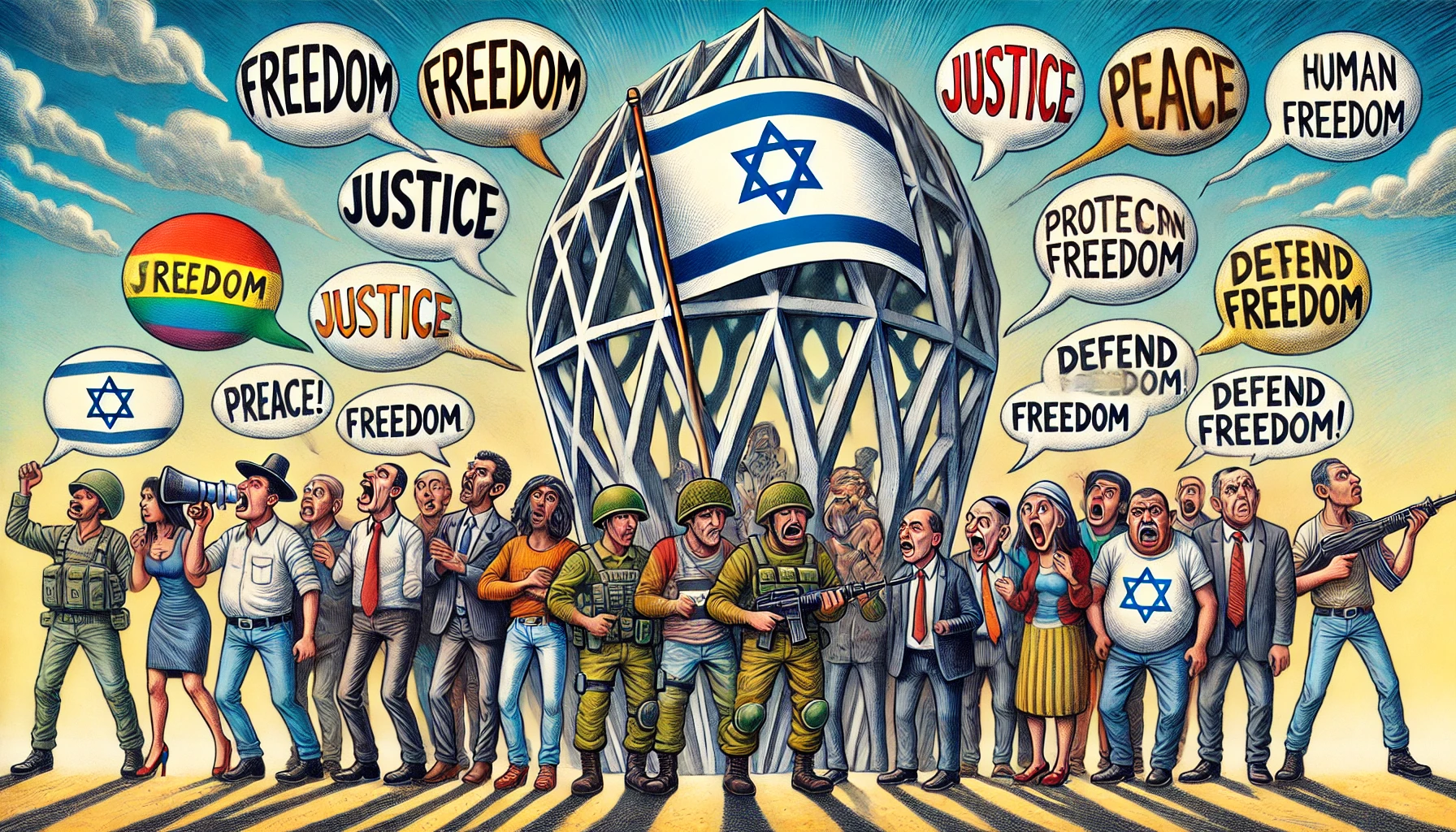
The latest in the ever-expanding world of “boycotts that won’t actually change anything but make us feel good about ourselves” is the cultural boycott of Israel. Yes, that’s right. Artists, writers, and academics, in a collective burst of idealism, have decided that the best way to create change in the Middle East is by making sure that Israeli artists, musicians, and filmmakers are denied the opportunity to exchange their work with the world. Forget the endless political discourse—let’s hit ‘em where it hurts: in the artsy places!
This boycott, spearheaded by over 6,000 intellectuals, features big-name signatories like Sally Rooney and Percival Everett. These luminaries have made a public stand for “justice” by signing a petition that rejects the idea of cultural exchange with Israel. It’s like the 21st-century equivalent of a schoolyard “no girls allowed” club—only this time, it’s about artists. And it’s not just any club, mind you, but one that leaves everyone out except those who agree with your exact political stance. Welcome to the age of “virtue signaling” where signing a petition is the modern-day equivalent of a social media post saying, “I care,” while secretly scrolling through Netflix.
The “Literary Cold War”: A Battle of Punctuation and Signatures
Remember the Cold War? It was a time when world powers fought over influence and ideologies through espionage, nuclear threats, and espionage. Now, we’ve moved on to a more sophisticated type of conflict: the Literary Cold War. Forget weapons. Forget tanks. Instead, we arm ourselves with words, punctuation, and passive-aggressive open letters. Israel, it seems, has become the subject of this brave new war—except no one’s talking about politics. Everyone’s angry about literature, art, and cultural exchange.
But the key question here: Are these writers even reading each other’s books? Would it not be more useful if these esteemed novelists got together to hash out why The Great Gatsby is still somehow required reading for high schoolers instead of fixating on whether Israeli writers should be allowed into their book clubs? It seems that while the world is trying to change the course of history, the world of writers is still busy boycotting books based on one country’s cultural politics. And, naturally, that’s definitely the most effective way to create change!
The Boycott: A Moral Detox Without the Green Juice
Boycotting Israel’s culture is a little like undertaking a detox cleanse to purify yourself—except the cleanse involves scrubbing down the arts scene, not your liver. Everyone loves a good detox, especially when it involves the moral purity of rejecting those “problematic” parts of the world. It’s the same reasoning that causes you to throw out your favorite bottle of French wine because of that one thing you read on Twitter about French politics. Boycotts allow you to participate in a moral cleanup without breaking a sweat.
However, while detoxing your moral fiber by signing petitions may feel cathartic, let’s be honest about the consequences: it’s not going to change a single policy. But hey, at least you get to feel superior about being on the “right side of history” while sipping your overpriced latte and watching your favorite Israeli artist’s latest film, which you totally won’t admit you’re streaming.
Boycotting Art: A Strategy for Peace?
Here’s the logic behind this grand cultural strategy: By boycotting Israeli art, we’re supposed to bring about peace and justice. Yes, because denying art from one of the world’s most influential cultures will surely convince the Israeli government to change its approach to politics. It’s almost like saying, “Look, you’ve been very naughty with your government, but we’ll forgive you as long as you promise not to show us any more of that fantastic music and cinema. Don’t make us stop buying your hummus, too.”
Let’s take a moment to examine this tactic. Boycotting art, culture, and literature to make a point about politics is like trying to solve your roommate’s laundry problem by banning the washing machine. It’s disconnected from the root cause and the solution. Sure, the boycotters get their point across, but they’re also ensuring that the very culture they aim to critique is silenced in the process.
Targeting the Arts: A Big Missed Opportunity
When cultural boycotts hit, they usually miss the point entirely. These boycotts don’t target politicians, military leaders, or government figures. No, they aim straight at the cultural institutions—the musicians, filmmakers, writers, and artists who have nothing to do with the political decisions that are being criticized. This is, in fact, a classic case of “shooting the messenger.” Rather than confronting the political figures or policies that perpetuate conflict, these intellectuals have decided to go after the artists, the ones who are literally trying to create a dialogue.
What better way to inspire peace than to make sure the people most likely to foster that peace through culture and art can’t share their work with the rest of the world? If your goal is to promote change, targeting the creators of beautiful things might not be the way to do it. But hey, maybe they’re just trying to turn every artist into a political pawn. I’m sure that’s going to work.
Boycotts: The 21st Century’s Latest Fashion Trend
As any trendy movement will tell you, the real goal of a boycott is to be seen doing it. And let’s face it, these cultural boycotts are just another way to stay relevant in today’s ultra-woke society. A few years ago, it was veganism. Now, it’s boycotting Israel’s cultural products. It’s almost as if these intellectuals are at a club, trying to outdo each other with their activism cred. “Oh, you don’t sign cultural boycotts? Pfft. Not very woke of you.”
What’s next? Boycotting art from countries whose political leanings don’t align with your own? It’s almost as if everyone is trying to create a political echo chamber in the world of culture. “Oh, you make art in that country? We don’t accept submissions from your type.”
The Irony of Censorship for Justice
In a world where free speech is supposed to be the gold standard, boycotts that attempt to silence artists—especially those from a country with a complicated and controversial political history—are ironic at best. After all, what better way to stand up for free speech than to actively deny someone the ability to create and share their art? It’s almost like canceling someone for being too edgy. If that’s progress, I’m not sure I want to know what a setback looks like.
But hey, I get it. You’ve signed your petition. You’ve denounced Israeli culture. Now, what’s the next step in your crusade for justice? Make sure no one in your neighborhood listens to Israeli music? Burn all Israeli films? The possibilities for activism are endless!
The Literary Rebel’s Dilemma
At this point, one has to wonder: what exactly does it mean to be a literary rebel in 2024? It seems like it’s less about writing subversive works and more about signing petitions that express just how virtuous you are for rejecting certain aspects of global culture. This boycott isn’t about creating meaningful change; it’s about creating the illusion that you’re doing something important—without actually getting involved in the hard work of effecting real policy change.
After all, would the authors involved be able to answer questions about their personal experiences with Israeli artists? Or is this simply a case of trendy moral posturing in the age of social media? The truth is, if boycotting Israeli culture is the modern intellectual’s big stand for justice, we might all need a new role model.
Boycotting the Little Guy
Let’s be real for a second: this boycott does nothing to target the people actually responsible for the policies being protested. Instead, it aims at the little guy—the artists and creators who are likely the least involved in the political landscape and who stand to lose the most from this kind of ban. What’s more, these boycotts don’t even provide a coherent argument for how exactly these creators are supposed to “fix” the political issues at play. Instead, it just makes for a really fancy version of cancel culture.
Social Media’s Influence on Morality
These boycotts are the result of an era where social media has turned activism into a performance rather than a process. Signing a petition might make you feel like you’re standing up for something important, but how effective is it, really? It’s kind of like posting a black-and-white photo of yourself with a “#SupportIsrael” hashtag but doing nothing else to make any tangible change in the real world.
Boycotts, especially the ones we see in the realm of culture, seem more focused on getting noticed than actually creating anything of substance. The goal is no longer to change people’s hearts or minds—it’s to look like you’re doing something important in the eyes of others.
The Slippery Slope of Boycotting Ideas
Where do we stop? If boycotting Israeli culture works, why not extend this logic to any country or culture that doesn’t align with our personal politics? Perhaps it’s time to add American films to the list because, after all, Hollywood has its own political baggage. Or maybe the next step is to stop reading British literature because of its colonial past. After all, no nation is perfect, and boycotting the arts based on politics is the easiest way to eliminate everything that offends your sensibilities. Slippery slope, indeed.
Israel’s Cultural Boycott: A Dystopian Literary Game of Musical Chairs
It seems like every time a bunch of writers or artists get together to debate the fate of an entire country, things get weird. Israel’s cultural boycott? Oh, it’s just the latest chapter in a long saga of high-brow, self-righteous decisions masquerading as a noble crusade. If you thought the literary world couldn’t get any more absurd, well, buckle up, because these self-appointed cultural warriors are ready to cancel some major institutions—not because they don’t like them, but because they feel too morally superior not to.
Literary Leprosy: The Book Club That Excommunicated Israel
We open with the big reveal: 6,000 writers and publishing professionals have signed a petition to boycott Israeli cultural institutions. This isn’t just a boycotting; this is literary excommunication. Israel, as far as these signatories are concerned, is like that person who showed up at your book club meeting and brought Fifty Shades of Grey as their book recommendation. And you’re like, “This is not the kind of thing we discuss in here, buddy!” So, what do you do? You sign the petition and hope the moral high ground does its thing.
Boycotting Israel isn’t just about not attending art shows or banning book readings. No, no. It’s about saying, “We don’t just disagree with you—we’re cutting you off entirely. You’re no longer part of our fancy club.” It’s like high school cliques, but with less gossip and more pretentiousness. You’re not just excluding someone from a group chat, you’re making sure that they can’t even hear you from the other side of the lunchroom. A true literary pariah.
The Backlash Backlash: The Petition War
If you thought 6,000 signatories was a lot, wait till you hear about the 1,000 writers who have launched a counter-petition. Yes, counter-petitions, because apparently, in the world of literary boycotts, more petitions is the only way to go. Forget solving issues with dialogue—just get more people involved. It’s like a literary version of a Twitter feud, only with more paper cuts and less character limit.
These counter-petitioners aren’t just defending Israeli culture—they’re coming for the whole idea of boycotts as a solution. They seem to think engagement is key, like a bad relationship where both parties should just hash it out over a latte and some passive-aggressive small talk. It’s like watching two people argue over the last piece of pizza, while the pizza gets cold and no one remembers why they were arguing in the first place.
The Nobel Tug-of-War: A Prize for Controversial Opinions
Among the signatories of the boycott petition are some of the most lauded names in literature, including Nobel laureates like Annie Ernaux and Arundhati Roy. And guess what? It’s not for their breathtaking novels or groundbreaking poetry. No, no. They’ve made the world stand up and take notice because they’ve declared their controversial stance against Israel’s cultural influence. The Nobel committee, it seems, has evolved from giving awards for exceptional writing to handing out prizes for most controversial opinions. But don’t worry, no one is judging the decision to award them. After all, nothing says cultural sophistication like a hot take on international politics, right?
Can’t win a Nobel for your writing? No problem. Just write a statement against Israel’s cultural influence, and voilà—you’re in the running for next year’s Nobel Peace Prize. Why bother with years of diligent research and reflection when you can tweet your way to global recognition?
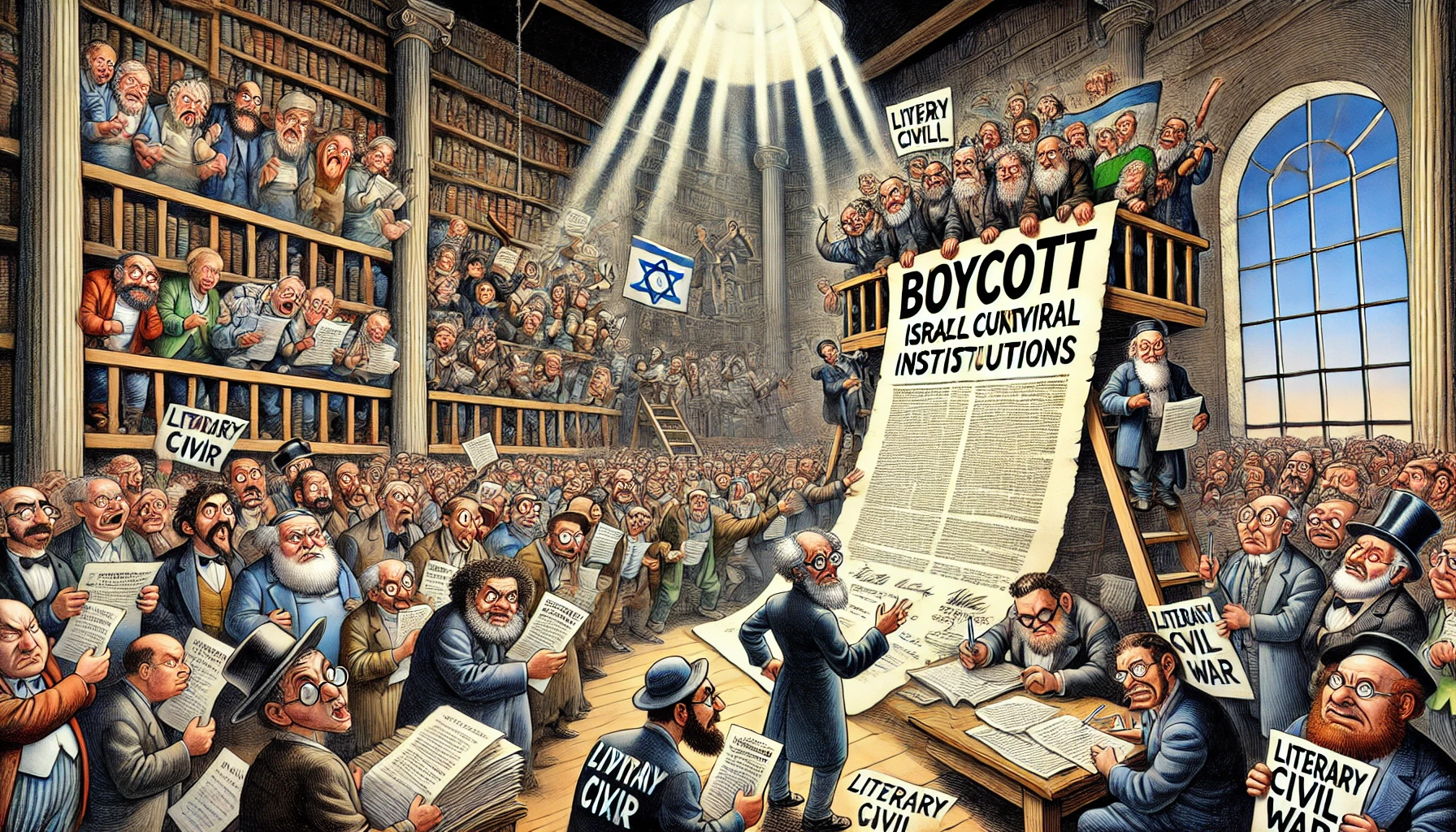
The Literary Civil War: Engagement vs. Boycott
It seems the literary community has split itself into two factions: the boycotters and the engager-huggers. This literary civil war looks like a feud between two fictional families. If the Hatfields and McCoys were transported into the world of intellectual discourse, this is what you’d get: heated arguments over authorial responsibility, cultural representation, and whether or not Israel has anything worth sharing.
Boycotters argue that isolation is the answer, while the other side swears by engagement. They both believe they’re doing the world a favor, but it’s not clear who’s actually going to win this battle. There’s no middle ground here—just two sides firing at each other with an endless barrage of book recommendations and lofty moral judgments. It’s as if the entire literary world has become a hyper-intellectualized game of musical chairs, with each side trying to grab the moral high ground before it gets taken away.
The Iran Parallel: A Cultural Isolation Comparison
It’s not just about Israel. Some folks are even drawing parallels between Israel’s cultural isolation and that of Iran. Ah yes, because nothing says “like for like” like comparing Israel to a country that has been under cultural isolation for decades. That’s like comparing an apple to an orange, and then deciding that they must taste the same because both are, you know, fruit. Sure, there are some similarities in the way countries handle their cultural exports, but let’s not get carried away. After all, comparing two drastically different geopolitical situations is the best way to find a solution to a very specific and complex problem, right?
The Sanction Dilemma: Teaching Responsibility with Wi-Fi Removal
If history has taught us anything, it’s that sanctions never work in the way we want them to. We’ve all seen the attempt to enforce responsibility through sanctions; it’s like trying to teach your teenager the importance of responsibility by confiscating their Wi-Fi, only to watch them sneak in with data usage like a cat burglar. Just because you take away the ability to attend a cultural exhibition doesn’t mean you’re preventing the production of art, or influencing the minds of the artists. If anything, you might just be strengthening the resolve of those you are trying to isolate. It’s a lesson that history keeps teaching us—yet we still don’t seem to learn.
The Engagement Argument: Talking Over Texts Instead of Using Emojis
Engagement, apparently, is the way forward. Sure, this might sound great in theory—if we could all just “engage” with each other, all our problems would melt away like a snowman on a sunny day. But it’s hard to engage when one side only knows how to communicate through passive-aggressive texts and emoji reactions. Dialogue sounds like a nice idea, but good luck getting an artist or writer from opposite sides of the boycott divide to agree on anything. At best, you’ll end up with an awkward silence, and at worst, a series of misunderstanding-laden emails, because everyone thinks they’re right, and no one knows how to really listen anymore.
The Cultural Ghetto: At the Party with No Dance Moves
For Israeli artists, the boycott has led to a sense of cultural isolation. Think of it as being the lone wallflower at a party where everyone else is dancing to the latest pop hit. You don’t know the moves, so you stand there awkwardly, pretending you’re enjoying the music. It’s not just about being ignored—it’s the recognition that the world has decided you’re part of a cultural ghetto. You can create your art all you want, but good luck getting it recognized by anyone who’s deemed to be on the right side of the cultural fence.
The Artistic Isolation: The Band with Different Songs
Cultural boycotts make it harder for artists to collaborate, share ideas, and engage in the kind of artistic exchange that has historically made the world richer. It’s like trying to have a jam session with a band where no one agrees on the key or even the tempo. How can artists from different backgrounds be expected to play the same song if they’re not even in tune with each other? Isolation breeds more isolation, and the creative output suffers because of it.
The Unintended Consequences: Throwing Gasoline on the Fire
One of the great ironies of boycotts is that they often strengthen the very forces they seek to weaken. It’s like trying to put out a fire by throwing gasoline on it—only you won’t know that until the whole thing has exploded. When you isolate cultural institutions, they have less incentive to change; they become embattled, and the pressure to compromise or engage diminishes. Sometimes, the best way to change the system is to engage with it—not boycott it into irrelevance.
The Power of Engagement: Actually Solving the Problem
At its core, engagement is the idea that open dialogue and collaboration are the keys to solving real problems. It’s the belief that people, even those on opposite sides of a cultural debate, can find common ground if they just listen to each other. It’s like trying to fix a relationship by actually talking about the issues instead of sitting in passive silence until everything implodes. In a world where people communicate more through soundbites than actual conversations, engagement is the rare gem of real progress.
The Cultural Bridge: Music as a Universal Language
Cultural exchanges can act as bridges, even when everything else in politics seems like a wall. Think of music: It’s a universal language that transcends borders, even when political leaders are busy building literal walls. Artists can come together and create in spite of political differences, proving that creativity and expression aren’t bound by the whims of governments. It’s like trying to solve the world’s problems by playing jazz with someone who speaks an entirely different musical language.
The Literary Responsibility: Talking About the Elephant in the Room
Writers have a responsibility to engage with the world around them, especially when things get tough. You don’t solve anything by avoiding hard conversations, much like avoiding the elephant in the room. Writers have the platform to discuss tough issues, and while boycotting might seem like an easy answer, it doesn’t really solve anything. In fact, it often creates more problems. If writers truly want to make a change, they need to address the big issues head-on, not run away from them like a scared mouse.
The Global Perspective: Ripple Effect or Butterfly Effect?
Boycotts have global consequences, even if you don’t realize it at first. What starts as a small action—like boycotting an art show or refusing to engage with an institution—can ripple out and create much larger waves. The idea that your small personal boycott won’t matter is a dangerous illusion. We all live in a connected world, where actions have consequences. The global perspective isn’t just about looking at things from the outside—it’s about recognizing that one decision can impact everything else in ways you never expected.
The Call for Dialogue: Listen, Don’t Just Talk
In the end, the solution is simple: dialogue. Talking it out. Finding common ground. Listening. Yes, it sounds like some idealistic, kumbaya nonsense, but it’s the only thing that works. We all have to talk about the difficult things. But the key is not to just talk. You have to listen. Otherwise, what you’re doing is just throwing a bunch of words into the void, hoping something sticks. Let’s hope this cultural debate ends not in silence, but in a conversation that can actually move us forward.
Disclaimer:
This article, like all good satire, is written with a wink and a smile. Any resemblance to real debates about cultural boycotts, literary feuds, or international politics is purely intentional. But don’t worry, we’re all just a bunch of sentient beings—writers, artists, and critics alike—trying to make sense of this crazy world, one sarcastic sentence at a time.
15 Observations on the Israel Cultural Boycott Debate
- Literary Leprosy: A group of 6,000 writers and publishing professionals have signed a petition to boycott Israeli cultural institutions, effectively excommunicating them from the global literary community. It’s like the literary world’s version of canceling someone from the book club because they brought a book you didn’t like.
- The Backlash Backlash: Not to be outdone, nearly 1,000 writers have penned a counter-petition, defending Israeli cultural institutions. It’s like a literary version of a Twitter feud, but with more paper cuts.
- The Nobel Tug-of-War: Among the signatories of the pro-boycott petition are Nobel laureates like Annie Ernaux and Arundhati Roy. It’s as if the Nobel committee decided to start handing out prizes for the most controversial opinions.
- The Literary Civil War: The debate has split the literary community into two factions: those who believe in boycotting and those who think engagement is the way forward. It’s like the Hatfields and McCoys, but with more book recommendations.
- The Iran Parallel: The author draws parallels between Iran’s cultural isolation and Israel’s potential isolation due to the boycott. It’s like comparing apples to oranges, but both are fruit, so it’s fine, right?
- The Sanction Dilemma: The article questions the effectiveness of sanctions, citing Iran’s experience. It’s like trying to teach a teenager responsibility by taking away their Wi-Fi, only to find out they just use data instead.
- The Engagement Argument: The author advocates for engagement over isolation, suggesting that building bridges is more effective than building walls. It’s like trying to fix a relationship by actually talking to each other instead of just sending passive-aggressive texts.
- The Cultural Ghetto: Israeli artists are reportedly feeling isolated due to the boycott, with some describing their situation as being in a “ghetto.” It’s like being the only one at a party who doesn’t know the dance moves.
- The Artistic Isolation: The article highlights how cultural boycotts can lead to artistic isolation, making it harder for artists to collaborate and share ideas. It’s like trying to have a jam session with a band where everyone plays a different song.
- The Unintended Consequences: The author warns that boycotts can have unintended consequences, such as strengthening the very regime they aim to oppose. It’s like trying to put out a fire by throwing gasoline on it.
- The Power of Engagement: The article emphasizes the importance of engagement, suggesting that dialogue and collaboration can lead to positive change. It’s like trying to solve a problem by actually talking about it instead of just complaining.
- The Cultural Bridge: The author suggests that cultural exchanges can serve as bridges between conflicting parties, fostering understanding and cooperation. It’s like using music to bring people together, even if they don’t speak the same language.
- The Literary Responsibility: The article discusses the responsibility of writers and artists to engage with complex issues, rather than avoiding them through boycotts. It’s like being the person at the dinner table who actually talks about the elephant in the room.
- The Global Perspective: The author calls for a global perspective, urging individuals to consider the broader implications of their actions, such as boycotts. It’s like realizing that your small action can have a ripple effect on the entire world.
- The Call for Dialogue: The article concludes with a call for dialogue and understanding, suggesting that this is the path to resolving conflicts. It’s like trying to fix a broken relationship by actually listening to each other instead of just talking over each other.