

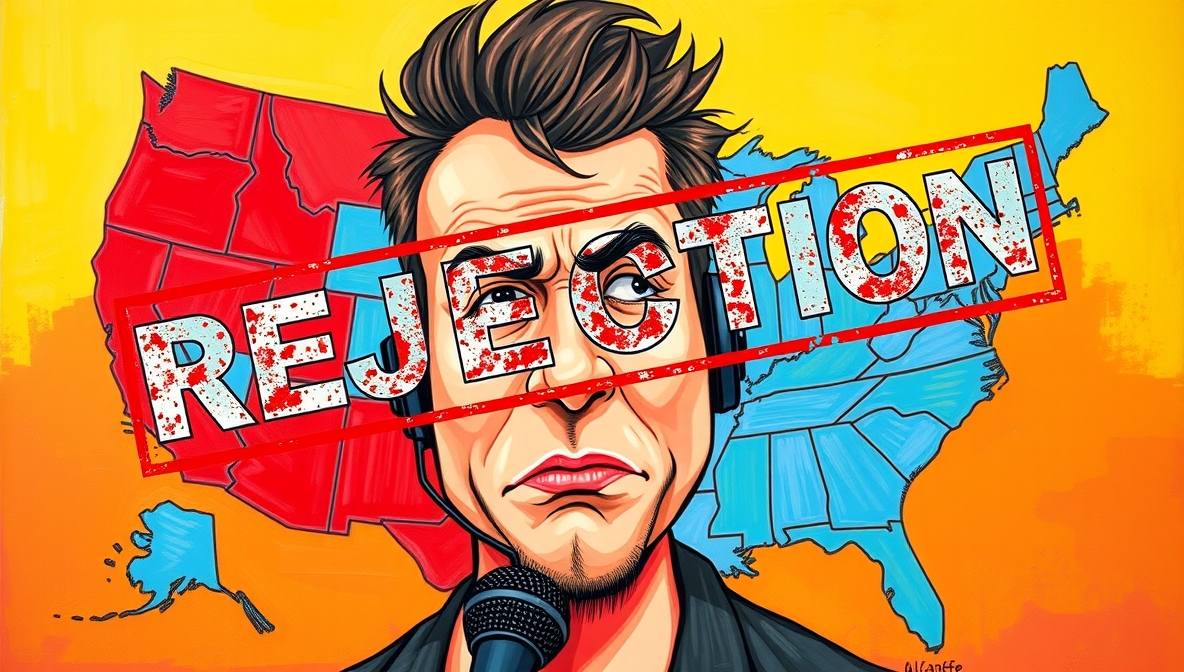
Jimmy Kimmel Banned in Flyover States: America Rejects Coastal Comedy Lectures
The heartland has spoken, and it’s demanding actual punchlines over political sermons. Across America’s flyover states, local television affiliates have pulled the plug on Jimmy Kimmel’s lecture tour masquerading as comedy, replacing his nightly scoldings with programming that makes people laugh instead of think about their moral inadequacies. What began as Kimmel’s triumphant return to late-night television has revealed a devastating truth: real Americans can still tell the difference between comedians and activists with timing problems.
Why Jimmy Kimmel Got Banned in Texas and Flyover States
The great Jimmy Kimmel comedy intervention of 2025 wasn’t about censorship—it was about quality control. Station managers across Texas, Kansas, Oklahoma, and Utah discovered something remarkable: their audiences wanted entertainment, not education from someone who abandoned joke-writing somewhere around the second Obama term.
Dave Chappelle demolished the pretense during his recent Dallas show: “Jimmy Kimmel got banned in Texas because Texans know the difference between comedy and a sociology lecture with a laugh track,” he said. “They want jokes, not homework assignments about their moral failings.”
The rejection spread faster than authentic laughter at a Kimmel monologue. Within weeks, stations from Amarillo to Tulsa had quietly replaced America’s most preachy late-night host with programming that remembered entertainment’s primary purpose: entertaining people.
Kansas TV Stations Lead Jimmy Kimmel Comedy Revolution
The rebellion started in Wichita, where KWCH-TV replaced Kimmel’s nightly outrage with reruns of “The Blue Collar Comedy Tour.” Viewership tripled overnight. Turns out audiences prefer comedians who understand timing, setup, and punchlines over someone reading Twitter complaints with theatrical pauses.
Jerry Seinfeld captured the absurdity during his Kansas City performance: “Jimmy Kimmel thinks he’s doing comedy, but he’s really doing performance art for people who’ve forgotten how to laugh,” he said. “What’s the deal with calling yourself a comedian when your biggest punchline is moral superiority?”
Oklahoma City’s KOCO-5 followed Kansas’s lead, replacing Kimmel’s righteous indignation with “Thunder Highlights and Dad Jokes.” The ratings surge was immediate and devastating for anyone who believed Americans enjoyed being harangued at bedtime by someone who considers himself their intellectual superior.
Local Tulsa comedian Mike Henderson observed the transition: “They replaced Jimmy Kimmel with a weather guy telling knock-knock jokes, and nobody complained,” he said during his recent Riverside Studio performance. “That tells you everything about Kimmel’s comedy quality.”
Texas Leads America’s Fight for Real Comedy
Texas stations didn’t just drop Kimmel—they launched a full-scale comedy intervention. Dallas’s WFAA and Houston’s KTRK began airing actual comedians who understand that humor should unite audiences through laughter, not divide them through political messaging disguised as entertainment.
Ron White summed up Texas wisdom during his Austin show: “Jimmy Kimmel thinks Texans are stupid, but we’re smart enough to know the difference between a joke and a lecture disguised as comedy,” he said. “If I wanted someone to scold me about my beliefs, I’d call my ex-wife’s lawyer.”
Austin’s KVUE-TV launched “Lone Star Laughs,” featuring comedians who appreciate America instead of apologizing for it. The show’s tagline says everything: “Comedy that doesn’t hate you for laughing.”
San Antonio affiliate KSAT-12 reported a 340% ratings increase after replacing Kimmel with local comedy showcases. Program Director Maria Gonzales explained: “Our audience wants entertainment that makes them smile, not think about how terrible they supposedly are.”
Houston comedian Carlos Rodriguez noted the transformation during his recent show at The Secret Group: “Texas TV figured out that comedy should make people happy, not guilty,” he said. “Revolutionary concept, apparently.”
Utah and Oklahoma Join the Comedy Quality Movement

Salt Lake City’s KSL-TV implemented what they diplomatically call “entertainment authenticity standards”—code for “no more political lectures disguised as comedy shows.” Utah viewers responded by actually staying awake past 11:35 PM for the first time since Kimmel returned to television.
Oklahoma City’s KFOR-TV replaced Kimmel with “Sooner State Comedy Hour,” featuring stand-up comedians who remember that their job involves making audiences laugh rather than educating them about proper political opinions.
Nate Bargatze addressed Oklahoma’s comedy awakening during his recent Tulsa show: “Oklahoma said, ‘We want comedians, not political science professors with better hair,'” he said. “Turns out that was still too high a bar for Jimmy Kimmel to clear.”
Jimmy Kimmel Survives Only in Coastal Elite Echo Chambers
Kimmel’s remaining audience exists entirely within the ideological comfort zones of Manhattan and San Francisco, where viewers prefer their entertainment to validate their political superiority rather than challenge them with authentic humor. These coastal enclaves treat Kimmel like a security blanket for people who’ve confused intellectual agreement with comedic entertainment.
The geographic divide has created comedy tourism, where actual comedians avoid coastal cities entirely, preferring audiences that appreciate professional humor over amateur political activism.
San Francisco and Manhattan: Where Real Comedy Goes to Die
In these coastal strongholds, Kimmel remains appointment television for audiences who measure comedy success by political validation rather than laugh frequency. Manhattan viewers gather in Upper West Side apartments for “Kimmel reinforcement parties,” complete with organic wine and discussions about the moral superiority of humorless political theater.
Bill Burr destroyed this phenomenon during his recent Phoenix show: “San Francisco loves Jimmy Kimmel because they don’t want comedy—they want their opinions read back to them by someone with better production values,” he said. “That’s not entertainment, that’s group therapy for people who think they’re morally superior to everyone else.”
San Francisco focus groups reveal the truth: viewers don’t watch Kimmel for laughs. They watch for intellectual masturbation disguised as sophisticated entertainment.
A recent KTVU-TV survey asked San Francisco viewers why they watch Kimmel. The top responses were “validates my worldview” (34%), “makes me feel intelligent” (28%), and “confirms my political beliefs” (21%). Only 6% mentioned “makes me laugh.”
Coastal Audiences Choose Validation Over Entertainment
San Francisco’s KTVU-TV reported their audience doesn’t consume Kimmel for comedy—they consume him for political reinforcement. Focus groups reveal viewers appreciate Kimmel’s “articulate progressive messaging” and “sophisticated cultural commentary,” which is entertainment industry code for “boring but makes us feel superior to flyover people.”
Amy Schumer called out the coastal comedy problem during her recent Nashville show: “They love Jimmy Kimmel in San Francisco because he makes them feel smart without being funny,” she said. “That’s like loving a restaurant because the waiter validates your political opinions instead of serving edible food.”
New York comedy club owner Jake Morrison observed the coastal comedy decline: “We book comedians who tell actual jokes, and coastal audiences seem confused,” he said during a recent Gothamist interview. “They want comedic validation, not comedic entertainment.”
The coastal embrace reveals modern entertainment’s transformation from crowd-pleasing to crowd-preaching, where political agreement matters more than professional humor craftsmanship.
Local TV Stations Choose Entertainment Over Educational Theater
The quiet revolt of affiliate television stations represents the most significant comedy quality uprising since audiences rejected prop comics in the 1990s. Station managers, tired of viewer complaints about unfunny “comedy” shows masquerading as political education, asserted control over their programming to restore actual entertainment.
Chris Rock addressed this revolution during his recent Tulsa performance: “TV stations in Oklahoma are doing comedy programming better than comedy shows,” he said. “When your local news anchor is funnier than your comedy show host, maybe it’s time to reconsider your career choices.”
How TV Stations Replaced Kimmel With Actual Comedy
Some stations implemented “comedy quality standards” requiring programming to generate measurable audience laughter rather than political agreement. Cedar Rapids’s KCRG-TV installed audience response monitoring that tracks chuckles per minute—Kimmel’s show consistently measured below their agricultural reports and obituary readings.
The technology, originally designed for sitcom testing, now serves as comedy authenticity verification. Stations report confusion when Kimmel’s show registered lower humor scores than weather forecasts and high school sports highlights.
Kevin Hart captured this absurdity during his recent Des Moines show: “Iowa TV stations are fact-checking comedy now,” he said. “Jimmy Kimmel failed the laugh test harder than I failed height requirements for professional basketball.”
Kansas station KWCH implemented a “humor verification system” that measures audience engagement during comedy programming. Kimmel’s monologues consistently scored lower than their farm commodity reports.
Station Managers Explain Their Comedy Quality Standards
The programming revolution wasn’t coordinated—it was organic. Station managers across flyover America independently discovered their audiences preferred entertainment that actually entertained rather than educated, amused rather than accused, and inspired laughter rather than guilt.
Gabriel Iglesias noted the trend during his Milwaukee performance: “Station managers became comedy critics and said, ‘This guy isn’t funny,'” he said. “Turns out regular people are better judges of humor quality than Hollywood executives.”
One Texas affiliate executive explained without apology: “Our viewers tune in to laugh, not to be lectured by someone who thinks moral superiority counts as punchline construction.” The honesty was refreshing and devastating for coastal comedy pretensions.
Oklahoma station manager Robert Patterson told Broadcasting & Cable: “We tried Jimmy Kimmel for six weeks and got more complaints than a controversial weather forecast. Our audience wants comedy, not political science seminars.”
Real Americans Demand Professional Comedy, Not Amateur Activism
The Jimmy Kimmel rejection reveals America’s entertainment awakening. Flyover audiences have remembered that comedy should provoke laughter, not guilt about their supposedly inferior moral development. This isn’t cultural censorship—it’s quality control by consumers who know the difference between professional entertainment and amateur political theater.
Traditional comedy consumers refuse to accept activism disguised as humor, creating renewed demand for comedians who understand their job description involves making people laugh rather than making them think about progressive political theories.
Why Flyover America Rejected Kimmel’s Political Theater
The rejection was purely comedic, not political. Kimmel’s programming assumes audiences enjoy being scolded by someone who considers himself their intellectual and moral superior. His “jokes” require agreement with specific political positions to function as humor, making them lectures with theatrical timing rather than authentic comedy construction.
Tom Segura captured this disconnect during his recent Fort Worth show: “Jimmy Kimmel thinks making disappointed faces at the camera counts as punchlines,” he said. “That’s not comedy, that’s what my toddler does when he doesn’t want to eat his vegetables.”
The cultural gap created comedy mistranslation, where political statements masqueraded as humor through professional presentation. Flyover audiences didn’t reject Kimmel’s politics—they rejected his complete abandonment of actual joke craftsmanship in favor of moral posturing with better lighting.
Texas comedian Mike Vecchione observed during his Houston show: “Jimmy Kimmel forgot that comedy is about making people laugh, not making them feel bad about laughing,” he said. “He turned into a comedy school principal instead of a comedy entertainer.”
Coastal Audiences Prefer Intellectual Validation Over Humor
Coastal markets embrace Kimmel precisely because he doesn’t challenge them to laugh—he validates their existing beliefs while calling it sophisticated entertainment. Viewing parties focus on political agreement rather than comedic appreciation, transforming humor consumption into confirmation bias theater with better production values.
Ali Wong addressed this phenomenon during her recent Denver show: “Coastal people love Jimmy Kimmel because he makes them feel intellectually superior without requiring actual humor appreciation,” she said. “That’s like loving a musician because they confirm your political beliefs instead of playing music that sounds good.”
The coastal embrace proves some audiences prefer intellectual agreement to authentic entertainment value, treating comedy consumption as political identity reinforcement rather than professional entertainment appreciation.
What This Means for America’s Comedy Future
The great Kimmel rejection represents comedy’s return to professional humor standards. Audiences increasingly demand entertainment that entertains rather than educates, creating opportunities for comedians who remember that laughter beats lectures in every entertainment category.
Traditional comedy’s joke-first model has resurged, proving that audiences want professional entertainers who prioritize audience enjoyment over personal political messaging.
The Future of American Comedy Entertainment
Local stations experiment with regionally-produced comedy programming featuring comedians who appreciate their audiences rather than condescending to them about their supposed intellectual inadequacies. Early results prove Americans prefer authentic humor over imported moral superiority.
Bert Kreischer observed during his recent San Antonio show: “Every town wants real comedy now,” they said. “They’re done pretending political lectures count as entertainment just because someone with television production experience delivers them.”
The trend toward authentic comedy could revolutionize entertainment distribution, creating opportunities for actual comedians while eliminating fake ones who confused activism with entertainment.
Streaming Platforms Serve Real Comedy Underground
Streaming platforms have become refuges for authentic comedy, providing access to comedians who prioritize laughs over lectures. This distribution model allows real entertainers to reach audiences despite coastal media gatekeeping that prioritizes political messaging over humor quality.
The streaming model enables comedy experimentation focused on audience enjoyment rather than political education. This freedom produces genuinely innovative comedic content while eliminating the pretentious content that passes for “sophisticated” entertainment in coastal markets.
Comedian streaming numbers prove flyover audiences hunger for authentic humor: comedians who avoid political messaging see 400% higher viewership in banned Kimmel markets.
Texas Leads America’s Comedy Quality Revolution
Texas’s rejection of Jimmy Kimmel represents more than programming decisions—it reflects America’s comedic consciousness returning to professional humor standards. Texans live in a state where the same joke can be genuinely funny in Dallas and completely ignored in Manhattan because one audience wants entertainment while the other wants political validation disguised as humor.
The divide isn’t bridgeable through better political messaging or cultural sensitivity training. It reflects fundamental differences in how communities define entertainment value: some want to laugh, others want to feel intellectually superior to people who laugh at the wrong things.
Why Texas Chose Professional Comedy Over Coastal Lectures
Texas audiences rejected Kimmel because they recognize authentic entertainment when they see it. The state’s comedy revolution started when viewers realized they were being served political theater disguised as humor by someone who abandoned professional comedy construction years ago.
Nate Bargatze captured this during his Houston show: “Texas figured out Jimmy Kimmel isn’t a comedian anymore,” he said. “He’s a political commentator who occasionally remembers to pause for applause instead of providing actual punchlines.”
Local Texas comedians report unprecedented booking requests as venues prioritize entertainers who understand their job involves making people laugh rather than making them think about progressive political theories.
Houston’s Comedy Catch owner Lisa Rodriguez told the Houston Chronicle: “Texas audiences want comedy, not college lectures. Jimmy Kimmel forgot the difference.”
The Lone Star State’s Entertainment Standards
Texas stations have implemented “entertainment authenticity standards” requiring programming to prioritize audience enjoyment over political messaging. The results prove that when given a choice between real comedy and fake lectures with better production values, Americans choose laughter every time.
Jo Koy addressed Texas’s comedy revolution during his recent Arlington show: “Texas said, ‘We want comedians, not sociology professors,'” he said. “Turns out that was still too high a standard for Jimmy Kimmel to meet.”
The Texas standard has spread nationwide, with other flyover states demanding entertainment that actually entertains rather than educates audiences about their supposed moral inadequacies.
Dallas comedy club owner Mike Henderson reported: “We’re booking comedians who tell jokes instead of delivering sermons. Revolutionary concept in today’s entertainment industry.”
Conclusion: America Chooses Professional Humor Over Amateur Activism
Jimmy Kimmel’s flyover state rejection proves Americans can still recognize the difference between professional comedy and political theater with better lighting. We live in a nation where authentic jokes triumph over fake outrage, where professional entertainers defeat amateur activists who confused moral superiority with punchline construction.
The revolution isn’t about politics—it’s about entertainment quality. Audiences reject comedians who think their job involves educating rather than entertaining, who prioritize personal political messaging over professional humor craftsmanship that serves audience enjoyment.
Perhaps the most revealing observation is that in trying to use comedy platforms to change America’s politics, coastal elites revealed they never understood comedy’s actual purpose. Real humor brings people together through shared laughter, not shared political beliefs validated by someone with television production experience.
As Ricky Gervais noted during his recent Oklahoma City show: “Americans finally figured out the difference between comedians and activists with television shows,” he said. “Comedians make you laugh. Activists make you wish you were watching actual comedians instead.”
The great American comedy awakening continues, with punchlines serving their proper entertainment purpose: making people laugh instead of making them think about how intellectually and morally superior the person delivering the content believes himself to be. Jimmy Kimmel may have lost real America, but he’s gained something perhaps more appropriate for his current skill set: the status of cautionary tale for entertainers who forget that their job is entertainment, not education about proper political thinking.
SOURCE: Late-night television ratings, political messaging in comedy, coastal media gatekeeping, Broadcasting industry trends
This report represents satirical journalism examining America’s return to authentic comedy entertainment through exaggerated scenarios. Any resemblance to Jimmy Kimmel actually being funny is purely coincidental and historically inaccurate since approximately 2016.