

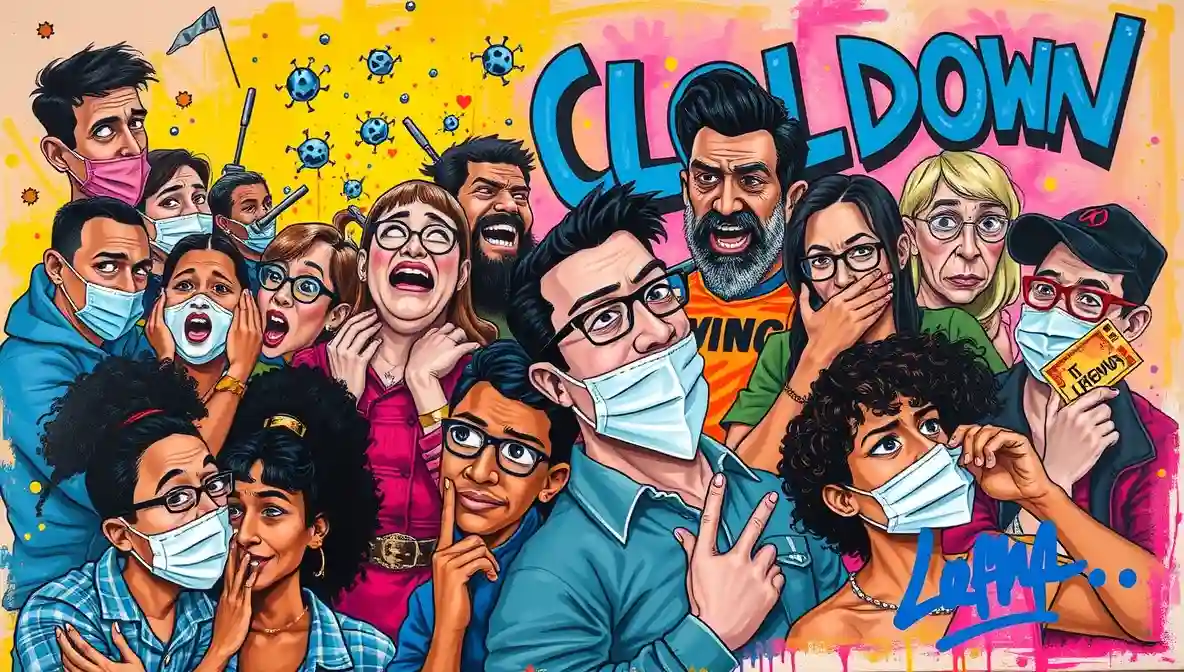
Lockdowns: The Bold Science Experiment That Accidentally Locked the Scientists Inside Too
Once upon a time, public health meant washing your hands and staying home if you were sick. Then came lockdowns, which redefined health as sitting motionless indoors, refreshing bad news, and learning exactly how long a human can stare at a wall before assigning it a personality.
According to the latest research summarized above, lockdowns managed a rare public-policy feat: maximum disruption with minimal upside. It takes real talent to shut down civilization, torch mental health, wreck education, vaporize small businesses, and still not measurably improve the outcome you promised to fix. That is not failure. That is performance art.
The Science Was “Settled” Until It Wasn’t

Lockdowns were sold with the confidence of a late-night infomercial. “Trust the science,” officials said, which turned out to mean “Trust the vibes.” The data would come later, like a receipt you only get after discovering the return policy has expired.
Years on, researchers now politely explain that there is little evidence lockdowns significantly reduced mortality, while there is plenty of evidence they increased anxiety, depression, learning loss, substance abuse, domestic conflict, and the universal human condition known as “losing your damn mind.”
This is what experts call a trade-off. This is what regular people call, “So you’re telling me we wrecked everything… for nothing?”
Mental Health: The Invisible Casualty That Would Not Shut Up
Lockdowns treated mental health like a smoke alarm with low batteries. Annoying, persistent, and best ignored. Isolation was framed as a mild inconvenience, as if humans were houseplants that only needed water and Wi-Fi.
Instead, people discovered that solitude does not build character. It builds resentment, insomnia, and a strange emotional attachment to delivery drivers. Google searches for loneliness, sadness, and anxiety surged, which is not how you want your population to communicate distress. If your citizens are typing “why am I sad” at 3 a.m., something has gone terribly wrong in the wellness department.
Children were hit hardest. Kids were removed from classrooms and placed into Zoom rectangles where learning went to die quietly. We told ourselves it was fine because children are resilient, which is adult code for “we’ll deal with this later.” Later has arrived, holding a report card and a therapist’s invoice. The CDC’s mental health resources now acknowledge these unprecedented challenges.
Education: A Bold Experiment in Not Teaching
Remote learning proved one thing conclusively: education works best when teachers and students occupy the same dimension. Shocking, I know.
Students learned many valuable skills during lockdown, including how to mute adults, fake connectivity issues, and complete an entire semester without retaining a single fact. Math scores dropped. Reading scores dropped. Attention spans fell off a cliff and waved on the way down.
Educators warned this would happen. Parents lived it. Policymakers nodded solemnly on video calls and continued anyway, because reversing course would imply admitting error, and that is strictly prohibited in modern governance. The National Center for Education Statistics has documented the learning losses across multiple grade levels.
Economic Damage: We’re All Essential Now, Except You
Lockdowns divided society into two classes: people who could work from home, and people who learned what “nonessential” really meant.
Small businesses collapsed. Service workers disappeared. Entire industries were paused like a streaming show nobody remembered to restart. Meanwhile, large corporations thrived, because nothing says “public health” like eliminating local competition.
People were told the economy could be rebuilt later. What they were not told is that livelihoods are not Lego sets. You cannot simply snap them back together after months of intentional destruction and say, “All done.” The Bureau of Labor Statistics tracked the unprecedented economic disruption in detail.
Social Behavior: Humans Are Not Designed for Indefinite Timeout
Lockdowns assumed humans would comply calmly, patiently, and indefinitely. This assumption was made by people who clearly had never met humans.
Isolation didn’t just make people sad. It made them weird. Conversations became angrier. Online discourse became feral. Everyone developed strong opinions about things they had never cared about before, because there was nothing else to do.
When restrictions lifted, society didn’t bounce back so much as stagger out blinking into the sunlight, emotionally dehydrated and ready to argue with strangers about grocery carts.
Public Health Messaging: Confidence Without Curiosity
Perhaps the most impressive part of lockdown policy was the unwavering certainty. Rules were issued with absolute confidence, revised quietly, and defended aggressively even when evidence shifted.
Questions were discouraged. Skepticism was framed as heresy. The possibility that different regions might require different approaches was treated as radical thinking.
In retrospect, it turns out that shouting “follow the science” while ignoring new data is not actually how science works. It is how branding works.
The Great Irony: Risk Was Not Eliminated, Just Redistributed
Lockdowns did not remove risk. They relocated it. From COVID to mental illness. From public spaces to private homes. From the general population to children, the poor, and the isolated.
This is not an argument that nothing should have been done. It is an argument that doing everything, all at once, without clear evidence, was a gamble disguised as moral certainty.
The research now suggests that targeted protections may have worked better than blanket shutdowns. Which is awkward, because targeted responses require nuance, and nuance is notoriously difficult to chant. Studies from the World Health Organization continue to examine the effectiveness of different public health interventions.
Lessons Learned (Allegedly)
Officials now assure us they have learned lessons. The public, meanwhile, has learned to keep receipts. Trust has been damaged. Institutions look less omniscient. Experts sound more human, which would be charming if it had happened earlier.
The real takeaway may be this: fear is a terrible policymaker. Panic makes for lousy science. And when leaders confuse authority with infallibility, everyone pays the price.
Lockdowns were pitched as temporary sacrifices for the greater good. The problem is that sacrifices require evidence they mattered. Otherwise, they’re just losses with better marketing.
Disclaimer
This satirical analysis is based on publicly discussed research and cultural outcomes, presented with humor, irony, and a strong appreciation for hindsight. This piece is entirely a human collaboration between two sentient beings: the world’s oldest tenured professor and a philosophy major turned dairy farmer, both of whom survived lockdowns, though one now distrusts slogans and the other distrusts sourdough.
Auf Wiedersehen, amigo!