

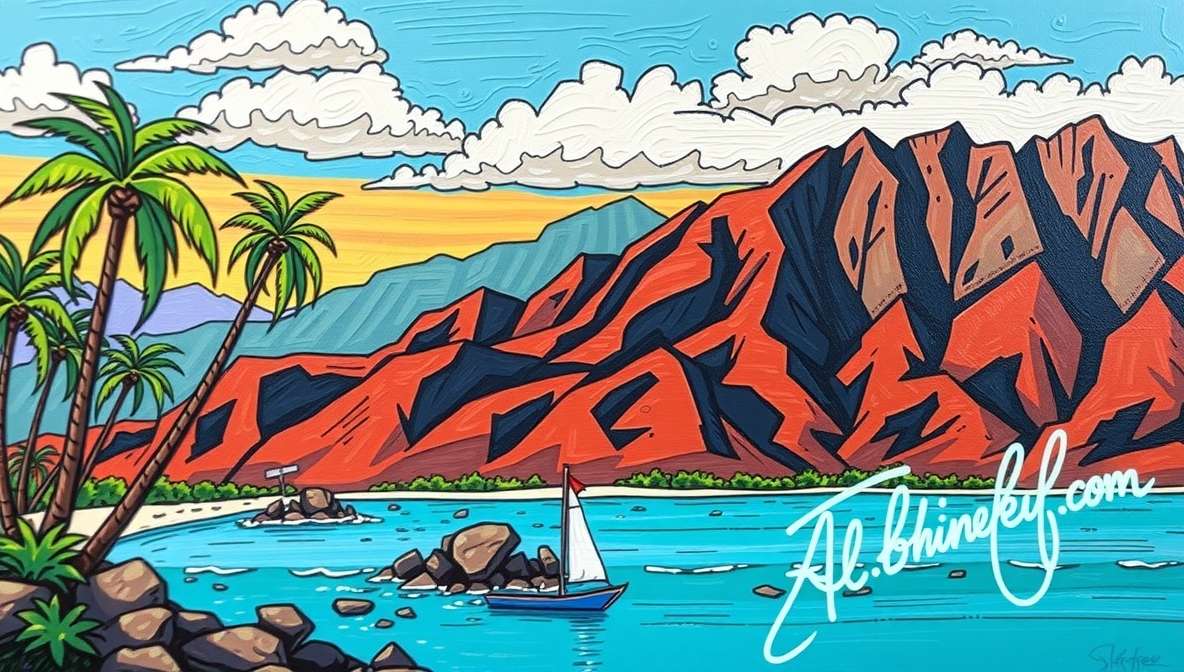
Where the Road to Hana Has More Tourists Than Guardrails
Maui: The Island Where Every Rental Car Contains Lost Tourists Looking for Waterfalls
Maui sprawls across the Pacific like a tropical theme park designed by nature and monetized by resorts, an island that has perfected the art of combining genuine natural beauty with tourist infrastructure so comprehensive that experiencing authentic Hawaii requires escaping the very establishments designed to deliver Hawaiian experiences. This Valley Isle attracts honeymooners, retirees, and Instagram influencers seeking that perfect sunset photo, creating a demographic mix where everyone’s either celebrating something, recovering from celebrating something, or documenting celebrations for social media validation. Haleakala volcano dominates the landscape, a dormant peak where tourists wake at 3 AM to watch sunrises while questioning whether this experience justifies the sleep deprivation and $35 park entrance fee.
The Road to Hana: 620 Curves and a Thousand Rental Cars

The Road to Hana represents Maui’s most famous attraction and traffic nightmare, a 64-mile highway featuring 620 curves and 59 bridges winding along coastal cliffs where rental cars driven by mainlanders unaccustomed to narrow winding roads create mobile obstacles that transform scenic drive into patience test. The journey takes 2-3 hours each way assuming you don’t get stuck behind tourists stopping randomly to photograph waterfalls, creating convoys that move at speeds making walking competitive transportation alternative. The road itself is beautiful, offering stunning ocean views, lush rainforest, and waterfalls that would be spectacular if you could enjoy them without navigating crowds of other tourists who also read that the Road to Hana is must-do experience.
Hana town itself consists of minimal infrastructure and residents who probably regret that their isolated community became bucket-list destination, creating situations where thousands of tourists arrive daily seeking authentic small-town Hawaii and instead finding each other plus limited food options and gas stations. The journey is famously about the drive rather than destination, though nobody mentions that before you spend six hours in a car getting carsick on curves while your partner navigates using smartphone that keeps losing signal. According to Hawaii Tourism Authority, the Road to Hana attracts hundreds of thousands of visitors annually, creating traffic and environmental impacts that local communities struggle to manage, demonstrating that when travel guides unanimously recommend something as unmissable, it becomes so crowded that the experience resembles missing out while being present.
The Seven Sacred Pools: Neither Seven, Sacred, Nor Really Pools
Ohe’o Gulch, marketed as Seven Sacred Pools despite being neither seven in number nor particularly sacred beyond general reverence for nature, attracts tourists seeking waterfalls and swimming holes, creating crowded conditions at natural area that’s simultaneously beautiful and overwhelmed. The pools offer refreshing swimming in stunning setting that would be paradise if shared with fewer people and not subject to closures due to dangerous conditions that tourists ignore because they drove all this way and aren’t letting flash flood warnings ruin Instagram opportunities.
Lahaina: Historic Town Meets Tourist Trap
Lahaina served as Hawaiian capital and whaling port before becoming shopping district where tourists buy souvenirs they don’t need and eat at restaurants charging prices that include “ocean view” premiums even when you can’t actually see ocean from your table. Front Street features art galleries, boutiques, and establishments selling products marketed as “authentic Hawaiian” that were probably manufactured in China, creating commercial district that’s simultaneously historic landmark and retail experience where history provides backdrop for consumption rather than education. The massive banyan tree in Lahaina provides shade and photo opportunities, functioning as the town’s primary free attraction and proof that sometimes the best things in Maui don’t require admission fees or reservations made months in advance.
The town tragically burned in devastating wildfires in 2023, destroying much of the historic area and killing over 100 people, making this section particularly difficult to write with humor while acknowledging the tragedy. The fires represented Hawaii’s vulnerability to climate change, development pressures, and infrastructure inadequacies that created catastrophic conditions, transforming tourist destination into disaster site and raising questions about rebuilding priorities, community needs versus tourism industry pressures, and appropriate ways forward that honor those lost while addressing systemic failures that contributed to the tragedy. According to Maui News, the Lahaina fires and recovery efforts continue, with debates about reconstruction plans that balance community restoration with concerns about disaster capitalism that could transform tragedy into opportunity for development that displaces rather than serves surviving residents.
The Resort Areas: Where Hawaii Comes With Room Service
Wailea and Ka’anapali represent Maui’s primary resort areas, featuring luxury hotels where guests can experience Hawaii without actually experiencing Hawaii, remaining within resort complexes offering pools, restaurants, and curated Hawaiian experiences that remove any authentic cultural engagement or natural exposure beyond carefully maintained beach access. The resorts charge nightly rates exceeding what many Maui residents earn weekly, creating economic disparities visible in the contrast between luxury accommodations and worker housing, though tourists rarely see worker housing because it’s located in less picturesque areas away from ocean views.
Resort fees add $40-50 daily to room costs, charging for amenities like WiFi and fitness centers that used to be included, demonstrating that hospitality industry discovered they could unbundle services and charge separately, increasing revenue while providing identical or reduced services. The all-inclusive trend hasn’t fully reached Maui, though resorts effectively create captive audiences by locating far from town and pricing on-site dining to discourage leaving property. According to resort industry data, Maui resort occupancy remains high despite prices that exceed most Americans’ vacation budgets, suggesting either successful targeting of wealthy demographics or that people pay these prices despite financial strain because Maui vacation represents aspirational experience worth debt or depleted savings, which is either admirable prioritization of experiences over material goods or concerning relationship with luxury travel that benefits resort operators more than guests’ long-term financial health.
Snorkeling: Where You’ll See Fish and Cruise Ship Crowds
Molokini Crater offers Maui’s premier snorkeling destination, a partially submerged volcanic crater creating protected waters with visibility and marine life attracting boats carrying hundreds of tourists daily to relatively small area, creating underwater traffic jams where experiencing nature requires navigating crowds of snorkelers kicking you accidentally while chasing sea turtles for photos. The crater’s popularity demonstrates classic tourism paradox where protecting natural areas by limiting access conflicts with economic interests in maximizing visitor numbers, resulting in crowded conditions that diminish experiences while generating revenue that theoretically funds conservation.
Turtle Town and Honolua Bay provide alternative snorkeling locations featuring sea turtles and coral reefs that are either thriving ecosystems or degraded environments depending on recent conditions and your reference point for healthy reefs. Snorkeling tours include breakfast and lunch, transforming marine observation into multi-hour excursions that cost $150-200 per person, pricing that either reflects fair value for guided experiences with equipment and meals or demonstrates that captive audiences on boats will pay whatever operators charge because alternatives involve researching independent snorkeling spots which requires effort that vacation mode discourages. According to Hawaii Department of Land and Natural Resources, marine ecosystems face pressures from tourism, climate change, and runoff, requiring management strategies that balance access with protection, complicated by economic dependence on tourism that creates incentives to prioritize visitor numbers over ecosystem health when those priorities conflict.
Haleakala National Park: Sunrise Worth Setting Alarms For
Haleakala volcano offers sunrise viewing from 10,023-foot summit where temperatures drop to near freezing and tourists wearing beach clothes shiver while waiting for sun to appear above clouds, creating scenes where paradise’s warmth gets replaced by alpine conditions that rental cars’ heating systems barely address. The sunrise requires reservations made months in advance and waking at 2 AM to drive dark winding roads to summit, ensuring that experiencing natural beauty demands sacrifice of sleep and comfort, perhaps appropriately because easy experiences lack the accomplishment of suffering for spectacular views.
The volcanic landscape resembles Mars more than Hawaii, creating otherworldly scenery that’s genuinely impressive assuming clouds cooperate and sunrise actually occurs rather than being obscured by weather that parks can’t control despite charging admission. The park also offers hiking, camping, and opportunities to experience Hawaii’s volcanic origins and unique ecosystems existing at elevations where most tropical plants can’t survive. According to National Park Service, Haleakala faces challenges managing visitor numbers that exceed infrastructure capacity during peak periods, requiring reservation systems that limit access while ensuring those who do visit can actually experience the park rather than just crowds, demonstrating that popularity threatens the qualities that made locations popular initially, creating management challenges without easy solutions.
The Windsurfing and Surfing: Where Ocean Sports Reign
Maui’s north shore attracts windsurfers and kitesurfers from globally, creating scenes where colorful sails dot waters and athletes perform acrobatics that are either inspiring or showing off depending on your athletic ability and tolerance for people who are much better than you at things. Ho’okipa Beach serves as windsurfing mecca where professionals demonstrate skills and tourists watch from overlooks while reconsidering their own athletic aspirations, creating healthy reality checks about natural talent and years of practice required for activities that look easier than they are.
Surfing opportunities range from beginner-friendly breaks at Lahaina to expert-only waves at Honolua Bay, creating options for all skill levels assuming you can afford lessons that cost $100-150 for two hours or are willing to rent boards and independently learn through trial, error, and occasional coral encounters. The surf culture maintains localism where residents protect favorite breaks and tourists receive hostile receptions if violating unwritten rules about wave priority and respect, creating tensions that are either reasonable resource protection or unwelcoming gatekeeping depending on perspective. According to surf industry sources, Maui remains premier surfing destination that attracts enthusiasts seeking consistent waves and warm water, though localism and crowds mean visiting surfers should show respect and possibly surf at tourist-friendly breaks rather than challenging local spots where reception might be less than aloha-spirited.
The Cost of Everything: Where Paradise Comes With Price Tags
Maui operates on economic principles where island isolation and captive tourist markets create pricing where groceries cost 70 percent more than mainland, gas exceeds $5 per gallon, and restaurant meals cost amounts that would be expensive in Manhattan let alone Hawaiian island. The high costs reflect shipping expenses, limited competition, and knowledge that tourists will pay whatever’s charged because alternatives involve not eating or not fueling rental cars, neither viable options when you’re on vacation with limited time and low tolerance for inconvenience.
Activity pricing suggests that experiencing Maui requires substantial budgets beyond flight and accommodation, with snorkeling tours, luaus, helicopter rides, and zip-lining each costing $100-300 per person, creating vacation expenses that require either significant disposable income or credit card debt that will take months to pay off while you look at photos trying to justify whether those experiences were worth the costs. According to Bureau of Labor Statistics, Hawaii maintains America’s highest cost of living, with Maui exceeding even Honolulu in some categories, creating economic environment where residents struggle to afford living and tourists drain savings for experiences that are genuinely special but priced to maximize revenue from visitors who may never return and therefore represent one-time opportunities to extract maximum spending.
The Real Estate: Where Oceanfront Means Multi-Million
Maui real estate operates in stratosphere where oceanfront properties cost tens of millions and even modest homes miles from beaches exceed $1 million, creating markets accessible only to wealthy buyers and investors using properties as vacation rentals or second homes rather than primary residences. The high prices price out local residents and create communities of vacation rentals rather than neighborhoods, transforming residential areas into transient accommodations where neighbors change weekly and community cohesion becomes impossible when nobody lives there permanently.
The vacation rental proliferation creates housing shortages for residents while providing property owners substantial income that incentivizes converting long-term rentals to short-term vacation accommodations that earn multiples of traditional rental income. The conflict between property rights and community needs creates policy debates about appropriate regulations, with property owners arguing for freedom to maximize returns and residents arguing that unchecked vacation rentals destroy communities and make housing unaffordable. According to Zillow, Maui’s median home price exceeds $1 million, with desirable areas commanding significantly more, creating markets where homeownership is impossible for average wage earners and even professionals like teachers and nurses cannot afford to buy homes in communities they serve, forcing them to rent at high prices or leave Maui entirely.
The Environmental Pressures: When Tourism Loves Nature to Death
Maui’s natural beauty attracts millions who want to experience pristine environments, creating pressures where visitor numbers threaten the ecosystems they came to see through trampling, pollution, and infrastructure demands that exceed island capacity. Coral reefs face bleaching from warming oceans, runoff from development, and physical damage from snorkelers and boats, creating degradation that’s partly natural climate impacts and partly tourism consequences that could be managed better through regulations that tourism industry resists because restrictions might reduce visitor numbers and revenue.
Water resources face pressure from resort demands and visitor consumption that exceeds sustainable levels, creating shortages that affect residents while resorts maintain lush landscaping and pools that represent water use priorities favoring tourism over residential needs. Waste management struggles with visitor-generated trash that exceeds infrastructure capacity, creating environmental impacts from inadequate systems overwhelmed by tourism that generates more waste than island facilities were designed to handle. According to Hawaii environmental agencies, balancing tourism economic benefits with environmental protection requires management that tourism industry often opposes when regulations threaten profitability, creating political challenges where short-term economic interests conflict with long-term environmental sustainability, typically resulting in compromises that favor current revenue over future ecosystem health.
Conclusion: The Island Where Beauty Comes With Complications
Maui remains one of Earth’s most beautiful islands that tourism has transformed into destination where experiencing nature requires navigating crowds, paying premium prices, and making reservations months in advance for activities that used to be spontaneous adventures. Visitors leave either enchanted by beaches, sunsets, and Road to Hana despite crowds or aware that paradise isn’t quite paradise when shared with millions of others seeking the same experiences. The island’s greatest challenge is balancing tourism that funds the economy with preservation of environments and culture that make Maui special, creating tensions between growth and sustainability that have no easy answers because economic dependence creates pressures to maximize visitors even when doing so threatens the qualities that attract them. Come for the beaches and whales, stay for sunsets and snorkeling, leave with photos proving you visited and awareness that paradise requires more maintenance than Instagram suggests, but you’ll probably return anyway because Maui’s beauty transcends the commercialization and crowds, offering genuine natural wonders that remain spectacular despite tourism industry’s best efforts to package, price, and potentially diminish them through unlimited access that treats finite resources as infinite commodities to be consumed rather than preserved.