

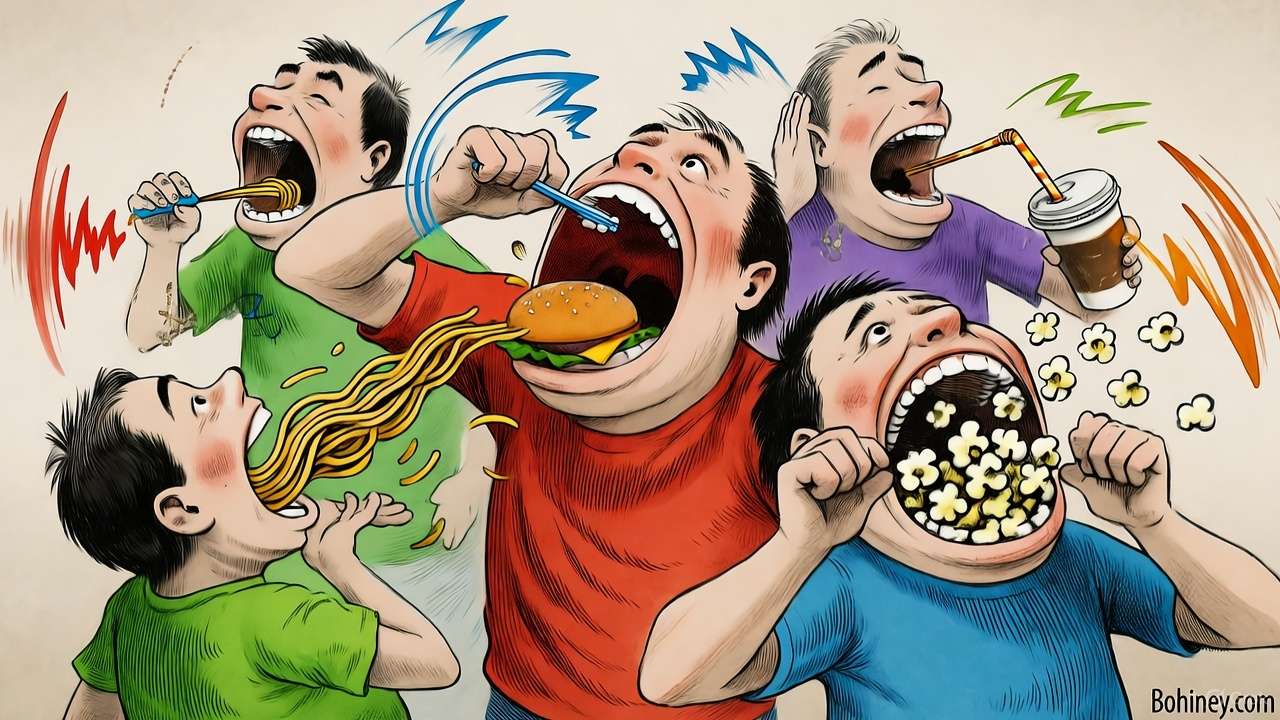
People With Loud Chewing TikToks: The ASMR Nobody Requested
When Your Eating Habits Become Content and Everyone Suffers
The Audio Assault Masquerading as Content
The TikTok algorithm has blessed humanity with a new form of torture: people filming themselves chewing loudly into microphones, calling it content, and somehow gaining millions of followers. This isn’t eating–this is weaponized mastication, the conversion of basic biological necessity into audiovisual assault that makes people with misophonia question their will to live.
These creators don’t just eat on camera–they amplify every mouth sound with professional-grade microphones, positioning themselves inches from recording equipment to capture every squelch, smack, and gulp. They’ve turned dinner into performance art where the performance is making everyone uncomfortable while maintaining aggressive eye contact with the camera.
The Microphone Technique Nobody Needed
“Someone told me they use a $300 microphone to capture their chewing sounds,” said Dave Chappelle. “Three hundred dollars. For a microphone. To record themselves eating. That’s not content creation–that’s an expensive way to make people hate you.”
The production quality is disturbingly high. These aren’t casual videos of someone eating–these are carefully produced audio nightmares with boom mics, lavalier setups, and sometimes multiple camera angles to capture every angle of someone destroying a bucket of fried chicken. The investment in equipment reveals this isn’t accident–it’s calculated assault on viewers’ auditory comfort.
The ASMR eating community defends loud chewing videos as relaxing content, ignoring that for every person soothed by mouth sounds, ten more are experiencing visceral rage. The overlap between “sounds that relax you” and “sounds that make others homicidal” is apparently large enough to build entire content careers around.
The Close-Up Camera Angles

Jerry Seinfeld said, “Why do they film so close? I don’t need to see inside your mouth while you eat. I don’t need the dental perspective on your dinner. Back the camera up. Give us space. Give yourself dignity.”
The extreme close-ups ensure viewers can’t escape any detail of the eating process. Partially chewed food visible between bites. Sauce on lips. The mechanics of swallowing captured in intimate detail. This is food content stripped of any aesthetic appeal, reduced to biological process displayed without mercy or self-awareness.
The camera positioning seems deliberately confrontational. These creators stare directly into the lens while chewing, maintaining eye contact that feels aggressive. Combined with amplified mouth sounds, it creates viewing experience similar to being trapped across from someone with no table manners at inescapable dinner party.
The Comment Section Warfare
Amy Schumer said, “The comments are split between ‘This is so relaxing’ and ‘I want to throw my phone.’ There’s no middle ground. Loud chewing content has divided humanity into two camps: the relaxed and the enraged. I’m firmly Team Rage.”
The polarization in responses reveals fundamental neurological differences between humans. Some brains interpret loud eating sounds as pleasant stimuli. Others experience them as threats requiring immediate removal of source. The content creators have accidentally created personality test: if you enjoy these videos, you’re different from the rest of us in measurable ways.
The defenders claim misophonia sufferers should “just scroll past,” ignoring that the TikTok algorithm specifically serves content designed to provoke engagement. Hate-watching counts as engagement. Every angry comment boosts the video. The system rewards creators for making content that enrages as many people as it relaxes.
The Mukbang Influence
Chris Rock said, “Mukbang started in Korea as eating show. Americans saw it and said ‘We can make this worse. Add microphones. Make it louder. Remove all cultural context.’ And here we are, watching people eat buckets of noodles like it’s entertainment.”
The mukbang phenomenon originally emphasized community and conversation during meals. American adaptation stripped the social component, amplified the gross sounds, and turned it into solo performance where only biological necessity remains. It’s cultural appropriation that made everything worse for everyone except the content creators monetizing discomfort.
The American version removes any pretense of enjoying food or sharing experience. These videos exist purely for the sounds–wet, loud, aggressive eating captured in high fidelity and served to audiences who either hate themselves or hate the concept of pleasant auditory experiences.
The Sponsorship Deals for Mouth Sounds
Bill Burr said, “Food companies sponsor these videos. ‘Eat our product as disgustingly as possible.’ That’s the marketing strategy. Make our food look revolting through amplified mouth sounds. Who greenlit this campaign?”
Major food brands partner with loud chewing creators, apparently deciding that visceral discomfort equals brand awareness. The logic seems to be: if people remember your product because someone ate it repulsively on camera, that’s still memory retention. This is advertising strategy devised by people who’ve given up on making products appealing and settled for making them unforgettable through disgust.
The sponsorship deals include specific requirements about audio levels and mouth proximity to microphones. Brands want guarantee that eating sounds will be sufficiently amplified. This is contractual obligation to be gross. There are real business negotiations about exactly how loud the chewing should be. Humanity was a mistake.
The Microphone Testing Reviews
Kevin Hart said, “They review microphones based on how well they capture chewing sounds. ‘This mic really picks up the saliva.’ That’s not a product review–that’s confession of crimes against humanity. Nobody needed that information except possibly forensic audio specialists.”
The technical audio community has been invaded by loud chewing creators seeking optimal equipment for capturing mouth sounds. Forum posts discuss frequency ranges ideal for recording mastication, microphone positioning for maximum gross-out potential, and post-production techniques for enhancing sounds that shouldn’t be enhanced.
Audio equipment manufacturers have accidentally created market for specialized eating video production. Some companies now market microphones specifically for food content, emphasizing their ability to capture “detailed mouth sounds.” This is like advertising knives as “great for serial killers”–technically accurate but socially inadvisable.
The Relationship Deal-Breakers
Ricky Gervais said, “If you’re dating someone who makes loud chewing TikToks, you’re hearing that sound all the time. Every meal is content. You can’t escape. That’s not a partner–that’s a roommate with weaponized eating habits.”
Partners of loud chewing creators report that every meal becomes potential content. Can’t have quiet dinner without microphone setup. Can’t eat snacks without partner asking “Are you recording that?” The personal becomes performative, and any request to eat normally gets met with “But my followers expect loud chewing content.”
Some relationships end specifically over loud chewing content creation. The final straw being forced to sit quietly while partner records 20 minutes of aggressive eating for TikTok followers. At some point, self-respect requires leaving, and that point is watching someone you loved reduce themselves to amplified mastication for internet strangers.
The Restaurant Filming Incidents
Ali Wong said, “They film in restaurants. PUBLIC RESTAURANTS. Setting up microphones at the table while other diners try to eat. That’s not content creation–that’s biological terrorism in a Cheesecake Factory.”
Restaurant staff report increasing incidents of customers setting up elaborate filming equipment to capture loud eating. Other diners complain. The creators argue they have right to film in public spaces. Restaurants must navigate content creation rights versus other customers’ rights to not watch someone eat Fettuccine Alfredo like they’re in personal revenge against pasta.
Some restaurants have banned filming equipment larger than cell phones specifically to prevent loud chewing content creation. These policies exist because enough people decided amplified public eating videos were worth disrupting everyone else’s dining experience. This is why we can’t have nice things.
The Children Imitating This Behavior
Sarah Silverman said, “Kids are copying this. They’re eating loudly on purpose because they saw it online. Parents have to explain ‘No, we don’t chew like that normally.’ We’re raising a generation that thinks loud eating is aspirational career path.”
Children exposed to loud chewing content imitate the behavior, to the horror of parents trying to teach table manners. Kids film themselves eating, amplifying sounds, posting to TikTok despite being nowhere near monetization threshold. They’re practicing for future careers in making people uncomfortable through biological functions.
School cafeterias have become testing grounds for loud chewing content. Kids compete to see who can eat most disgustingly on camera. Teachers confiscate phones. Parents receive calls about disruptive eating behavior. This is new category of school discipline problem nobody anticipated needing policies for.
The Mental Health Professional Concerns
Trevor Noah said, “Psychologists are studying why people enjoy these videos. The conclusion: some people’s brains are wrong. That’s not official diagnosis but it’s what the research suggests. If loud chewing relaxes you, you’re different. Not bad–just different. Very, very different.”
The psychological community studies ASMR eating content with fascination and concern. The neurological response divide reveals fundamental differences in sensory processing. Understanding why some brains find loud eating pleasant while others experience it as assault could illuminate broader questions about human perception and misophonia.
Meanwhile, exposure to loud chewing content may be increasing misophonia rates. People who previously tolerated eating sounds report developing visceral negative responses after encountering amplified chewing videos. The content might be creating its own opposition through repeated exposure to sounds most people naturally find aversive.
The Inevitable Evolution to Worse
Tom Segura said, “It’ll get worse. Next trend will be chewing microphones attached to teeth. Then surgery to implant microphones in mouths. Then genetic modification for louder saliva. We’re on a trajectory and there’s no stopping it.”
The loud chewing content will evolve toward greater extremity. Current videos will seem quaint compared to future innovations in auditory assault. 3D audio that places listeners inside the creator’s mouth. Virtual reality eating experiences. Haptic feedback that simulates the physical sensation of chewing. Technology will enable horrors we can’t yet imagine.
The monetization will increase as platforms prioritize engagement over experience quality. The algorithm rewards content that provokes strong reactions–positive or negative is irrelevant. Loud chewing videos generate both, making them algorithmically perfect. The future is more amplified eating sounds, not less, and nobody in power cares about stopping it because the metrics say it works.
The Uncomfortable Truth
Loud chewing TikToks exist because they work. People watch, even if they hate it. People comment, even if they’re complaining. The engagement signals the algorithm that this content succeeds, so the algorithm promotes more of it. We’re trapped in cycle where content that makes people miserable is rewarded because misery drives interaction.
The creators aren’t villains–they’re responding to incentives. Make content that gets attention, regardless of whether that attention stems from enjoyment or revulsion. In attention economy, all reactions are valuable. The person chewing loudly into microphone isn’t unaware they’re making people uncomfortable. They know. That’s part of why it works.
So loud chewing TikToks will continue, probably expand, definitely get worse. And we’ll keep watching, keep complaining, keep boosting the engagement metrics that justify more content. We’re complicit in our own auditory suffering, and the chewing sounds–captured in high fidelity by professional equipment–are soundtrack to humanity’s descent into whatever fresh hell the algorithm serves next.