

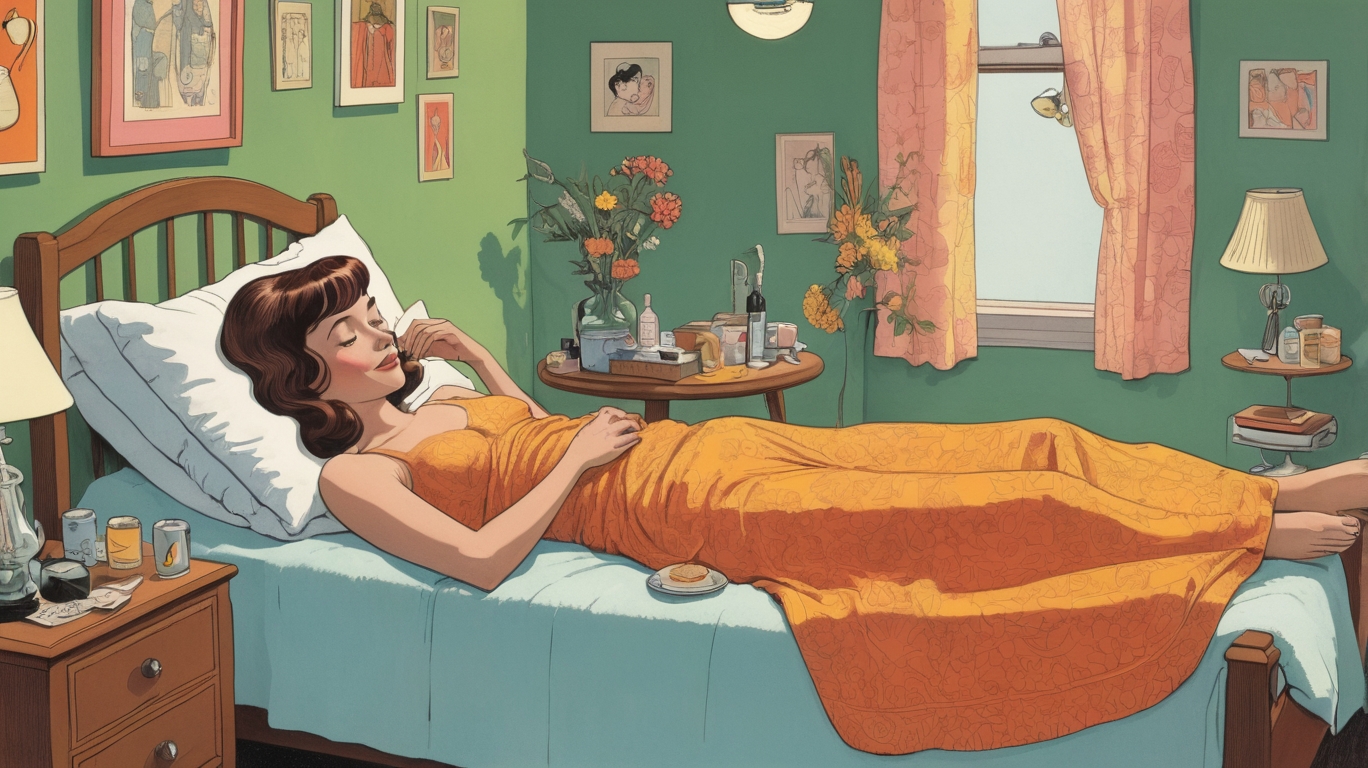
Woman’s “Self-Care Sunday” Somehow More Exhausting Than Regular Week
BROOKLYN, NY — At 7:00 a.m. sharp, a woman with color-coded calendars launched Self-Care Sunday, a gentle ritual intended to restore her to factory settings. By 9:15 p.m., she had completed a gratitude sprint, a hot yoga class called “Forgiveness Inferno,” a farmers’ market lap with artisanal beets, a face mask that required a legal disclaimer, a three-hour bath “with narrative arcs,” and a goal-setting summit with herself. She ended the day whispering, “I deserve rest,” into a planner while her aura filed for overtime.
Definition (Because Labels Are Calming)
Self-Care (n.): Originally, a radical act of tending to the body and spirit; currently, a cardio-intensive obstacle course with candles. In popular culture: a Sunday stack of tasks that feels suspiciously like Monday in beige linen.
The Itinerary That Ate the Weekend
07:00 — Hydration Rite: She drinks a mason jar of water flavored with citrus and moral ambition.
08:00 — Journal Relay: Three journals—gratitude, shadow, and “money mindset”—compete for ink.
10:00 — Movement Practice: Hot yoga in a room the temperature of a croissant oven.
12:00 — Nourish: A salad so intentional it felt like therapy with croutons.
14:00 — Mask & Tasks: Multi-masking while reordering her sock drawer by mood.
16:00 — “Digital Declutter”: Delete 600 emails. Accidentally deletes one friend.
18:00 — “Sundown Salon”: Long bath with book club audiobook, bath tray, and a precarious glass of something that calls itself wine.
20:00 — “The Reset Summit”: Set intentions. Draft a manifesto. Lose pen. Set intention to find pen.
Evidence: Digital, Personal, Physical, Relationship, Scientific, Testimonial, and Trace
Digital evidence: Screen-time reports show seven hours on “self-care content,” including 31 minutes of a woman arranging eucalyptus in a shower “for the vibes.” To-do app displays 23 checked boxes and one final box that reads “rest,” still unchecked.
Personal evidence: Her reflection at 9:10 p.m. is clear-skinned and blinking SOS in Morse. The gratitude journal contains 87 bullet points including “my lungs,” “my lint roller,” and “that barista who called me ‘legend.’”
Physical evidence: Floor strewn with yoga mat, jade roller, two candles labeled “Forest Confession” and “Citrus Closure,” and a towel that committed to the bit.
Relationship evidence: A voice memo to a friend: “I’m so relaxed I’m planning tomorrow’s relaxation.” The friend replies, “Cancel something.” She replies, “I did. Lunch.”
Scientific evidence: Dr. Elspeth Rhee, an occupational therapist and scholar of leisure, calls this The Well-Being Production Trap. “Late capitalism sells rest as a productivity hack,” she explains. “If your self-care has KPIs, you’ve reinvented work.” In her study, participants who “scheduled serenity” reported a 29% increase in perceived pressure and a 41% increase in candle acquisition. Those who allowed unscheduled rest reported 18% more joy and 0% eucalyptus spending.
Testimonial evidence: A bath caddy, interviewed briefly, said, “I held four objects and one dream. The dream fell in.”
Trace evidence: Glitter from a face mask forms a breadcrumb trail to the couch. The couch forgives nothing.
Expert Opinion: When “Me Time” Hires an Intern
Dr. Rhee warns of Instrumental Rest—rest done primarily to make Monday go faster. “It works,” she admits dryly, “the way sprinting to the couch works.” She recommends a Sabbath-ish window where nothing must be improved, including you.
Eyewitness Accounts: Apartment 4B as Day Spa-Lite
Neighbors smelled eucalyptus and envy. One overheard the bath audiobook (“Our Town, but with skin-care tips”) and a whispered confession: “I am a woman lying in soup.” Later, grainy cellphone video shows the protagonist attempting a “seven-step Korean skincare routine,” then skipping steps 3–5 and baptizing her face in step 7.
Anonymous Staffer at a Wellness Brand (Name Tag: Harmony)
“We’re not selling perfection,” Harmony said, surrounded by beige. “We’re selling aspiration that relaxes you by giving you things to do.” When asked about the “Sunday Reset Kits,” Harmony smiled. “Consumers want rituals. Also, margins.”
The Poll That Put a Pulse on the Bubble Bath
Bohiney Magazine surveyed 1,047 adults:
-
62% feel pressure to optimize relaxing.
-
49% schedule self-care like appointments; 21% no-show their own bath.
-
37% feel worse if they don’t post the ritual; 11% feel worse if they do.
Margin of error ±4.3%, or the thickness of an eye patch.
Cause, Effect, And Why Your Candle Is Tired
Cause: Real exhaustion meets a content economy that feeds on lists.
Effect: Sundays become performative restoration—showing your body and the internet you care.
Side effects: Candle fatigue, robe lint, and the eerie sensation that your bath water is judging you.
Deduction, Analogy, and Numbers We Can Steep in Tea
Deduction: If your day off feels like a scavenger hunt for calm, the prize is not calm; it’s a gold star.
Analogy: It’s like hiring a wedding planner for a nap.
Statistics: Dr. Rhee’s dataset suggests that replacing 30% of scheduled self-care with “lying down near a window” increases actual rest by 22% and reduces eucalyptus spend by “enough to go to dinner with a friend.”
What the Funny People Are Saying
“My self-care routine starts with a nap and ends with an apology to my spine.” — Ron White
“Self-care used to be ‘sit down.’ Now it’s 19 products and a timer.” — Jerry Seinfeld
“I did a detox so intense my therapist said, ‘Ma’am, that’s just sadness.’” — Sarah Silverman
“I bought a gratitude journal. I’m grateful I never used it.” — Larry David
“I lit a candle called ‘Serenity.’ It burned out while I answered emails about serenity.” — Bill Burr
“Nothing says rest like getting dressed for yoga at 6 a.m.” — Trevor Noah
Practical, Helpful Things (Permission Slip Edition)
-
One-Thing Rule: Choose a single ritual. Do it slowly. Then stop.
-
Feral Hour: Schedule sixty minutes where the only plan is no plan. Put your phone in the freezer (figuratively; we’re not paying for rice).
-
Friend Care: Swap one solo ritual for a walk with a human who knows your middle name. Humans, it turns out, are a wellness product.
-
Sabbath-ish Practice: Pick one afternoon where improvement goes on airplane mode. No optimizing. No stacks. Eat toast.
-
Post or Don’t: If posting ruins the feeling, don’t. If posting enhances the joy (and sometimes it does), post and mute your analytics.
Archival Footage & Grainy Cellphone Video
From the family attic: a grandmother in 1974, feet up, reading a paperback, no hashtags. From last night: a grainy clip of our subject blowing out the final candle, whispering, “I will rest when I have time,” and a candle whispering back, “Same.”
The Monday Morning After-Action Review
She awoke hydrated, exfoliated, and… exhausted. The planner congratulated her for “showing up” to self-care. Her body suggested “showing down.” On the subway, she did something truly subversive: stared out the window and did not improve.
Conclusion: Rest Is Not a Project
Self-care was never meant to be a second job. It can be a rebellion against always earning your aliveness. If it starts feeling like performance, let it flop. Sit in the ugly light. Eat the toast. Call the friend. Stare at the dumb clouds, the free ones. The most radical product on the market remains a chair.
Disclaimer
This satirical article is a human collaboration between two sentient beings—the world’s oldest tenured professor and a philosophy major turned dairy farmer—who tried three face masks for accuracy, did one yoga pose named after a disappointed cow, and spent the rest of the day lying down near a window. No auras were monetized; several were invited to nap. Auf Wiedersehen, amigos.
