

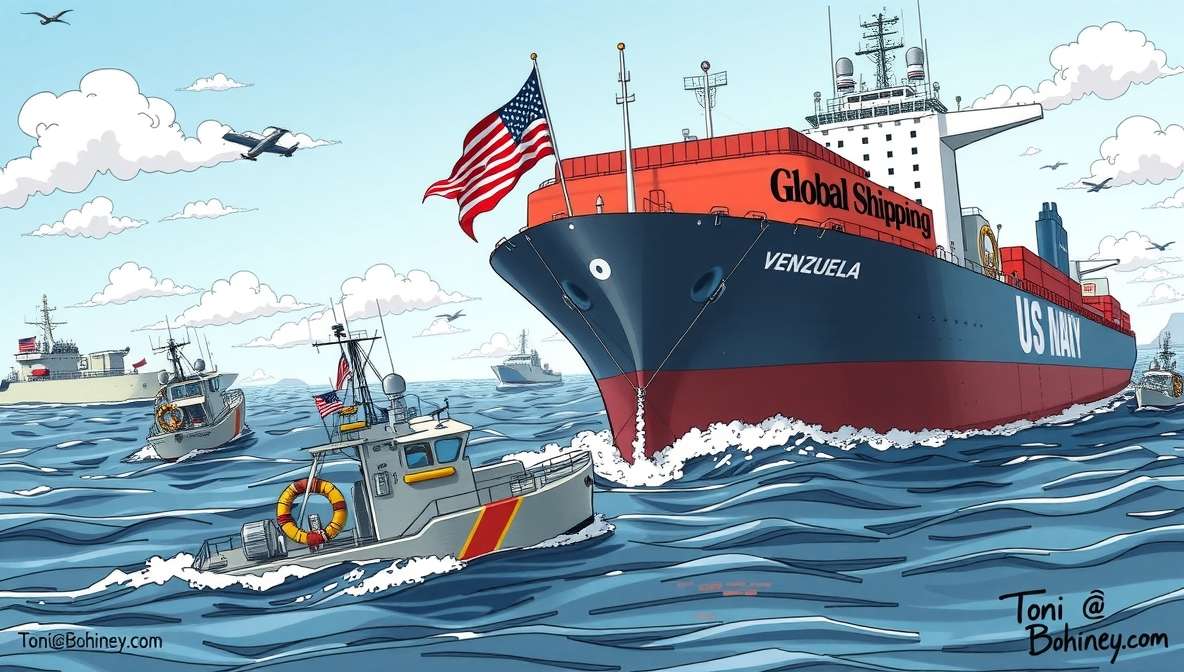
Breaking: U.S. Navy Now Auditing Global Shipping Because Someone Didn’t Say “Please”
WASHINGTON, D.C. (Not Really But Let’s Pretend) — In what officials are calling the most polite maritime enforcement action since “Wave Hello at the Coast Guard,” the U.S. went and grabbed itself a giant oil tanker. That’s right. The supertanker Skipper, long suspected of playing hide-and-seek with maritime police and basically starring in its own spy thriller, was seized in Caribbean waters off Venezuela this week.
U.S. spokespeople claim it was carrying Venezuelan crude in violation of sanctions, setting off what’s now been dubbed “Operation Please Don’t Turn Off Your GPS.” Venezuelan leaders, naturally, have responded by calling the whole thing “blatant theft,” “piracy,” and “the most discourteous high seas maneuver since that one guy cut in line at Olive Garden.”
The Shadow Fleet: Like Regular Shipping But with Tin Foil and Pirate Hats
According to analysts who absolutely adore ominous jargon, the Skipper was part of a so-called shadow fleet of tankers. These are tanker ships that apparently play Where’s Waldo with radar transponders, sail under fake names, and possibly whisper their true intentions to passing dolphins.
There are over 1,400 of these vessels roaming the seas, and more than 900 are flagged as sanctioned by U.S., British, or European authorities. They tend to be older than most TikTok influencers, lack decent insurance, and make their captains practice their best pirate accents for international waters.
One shipping analyst reportedly said “This makes normal sanctions enforcement feel like asking someone not to chew with their mouth open.” Others, presumably with no sense of drama whatsoever, pointed out this might slow Venezuelan oil exports.
Venezuela Says This Is “Piracy” Because Obviously It Is
Venezuela’s government responded like someone who just found out their smart TV was spying on them: outraged, unfiltered, and blaming everything except faulty Bluetooth. They’ve labeled the seizure “blatant theft” and an “act of international piracy.” This is noteworthy because tomorrow they might call the Gulf Stream illegal streaming.
Maduro’s officials also hinted that the U.S. might have crossed some international lines, although experts more interested in maritime law suggest the rights and wrongs here are so tangled even an octopus with a law degree would be confused.
80 Tankers Waiting Around Like They’re at the DMV
While the Skipper is now enjoying an enforced tour of U.S. custody, about 80 other tankers remain lazily bobbing in Venezuelan waters, each one looking like someone who got to the party early and now regrets it. Of those, over 30 are under sanctions and probably reconsidering their life choices.
These ships often pull stunts like turning off their tracking systems or changing names, similar to a rom-com character trying to avoid an awkward high school reunion. Industry watchers say this blend of covert tactics and bureaucratic red tape could delay oil exports, at least until someone figures out how to politely ask the vessels to leave.
For the Economists: Yes, This Could Actually Affect Something
Believe it or not, there’s this whole cause and effect thing at play here. Sanctions aim to pressure governments by tightening economic screws, but when the enforcement shifts from paper letters to helicopters boarding ships, suddenly everyone looks at shipping insurance costs like they’re trying to buy Bitcoin with coupons.
One analyst was quoted saying that some shipowners are “reconsidering whether to set sail” — which is maritime speak for “We might just stay put and watch Netflix instead.” If traders get skittish, short-term oil exports might slump, turning oil markets into a mood ring of global risk.
Cuba Was Supposed to Get Oil, But Now They’re Just Watching This Drama Unfold
Here’s the part where we retrofit actual international dysfunction into a satire piece with heart. Some of the crude that would have been transported to Cuba is now stuck in limbo because ships are suddenly scared of being seized. A Cuban official might describe this as “an unexpected transition from fuel supplier to reality TV enthusiast.”
That’s right. Even friendly neighbors feel the ripple effects, and suddenly the Caribbean is like that friend whose Uber got stuck in traffic and now your dinner plans are delayed.
So What Happens Next?
Will the remaining 30+ sanctioned ships promptly unfurl skull-and-crossbones flags? Probably not. Will shipping insurers demand higher premiums like they’re bidding on a rare sneaker drop? Totally yes. Is the world inching toward wrestler-style diplomacy where sanctions are enforced via dramatic music and spandex? You wouldn’t bet against it.
All this proves that when geopolitics, oil markets, and international law collide, the results are confusing, dramatic, and sometimes downright hilarious — especially if you’re writing satire instead of being an actual leader who needs to solve real problems.
DISCLAIMER
This satirical story is an entirely human collaboration between the world’s oldest tenured professor and a philosophy major turned dairy farmer. It was not written by AI — although if AI did help, it’d probably tell everyone it was just supervising the ships in a virtual harbor, okay?
If you want a straight news version of the underlying Reuters report, check:
🔗 Over 30 sanctioned ships in Venezuela at risk after US tanker seizure — Reuters.
