

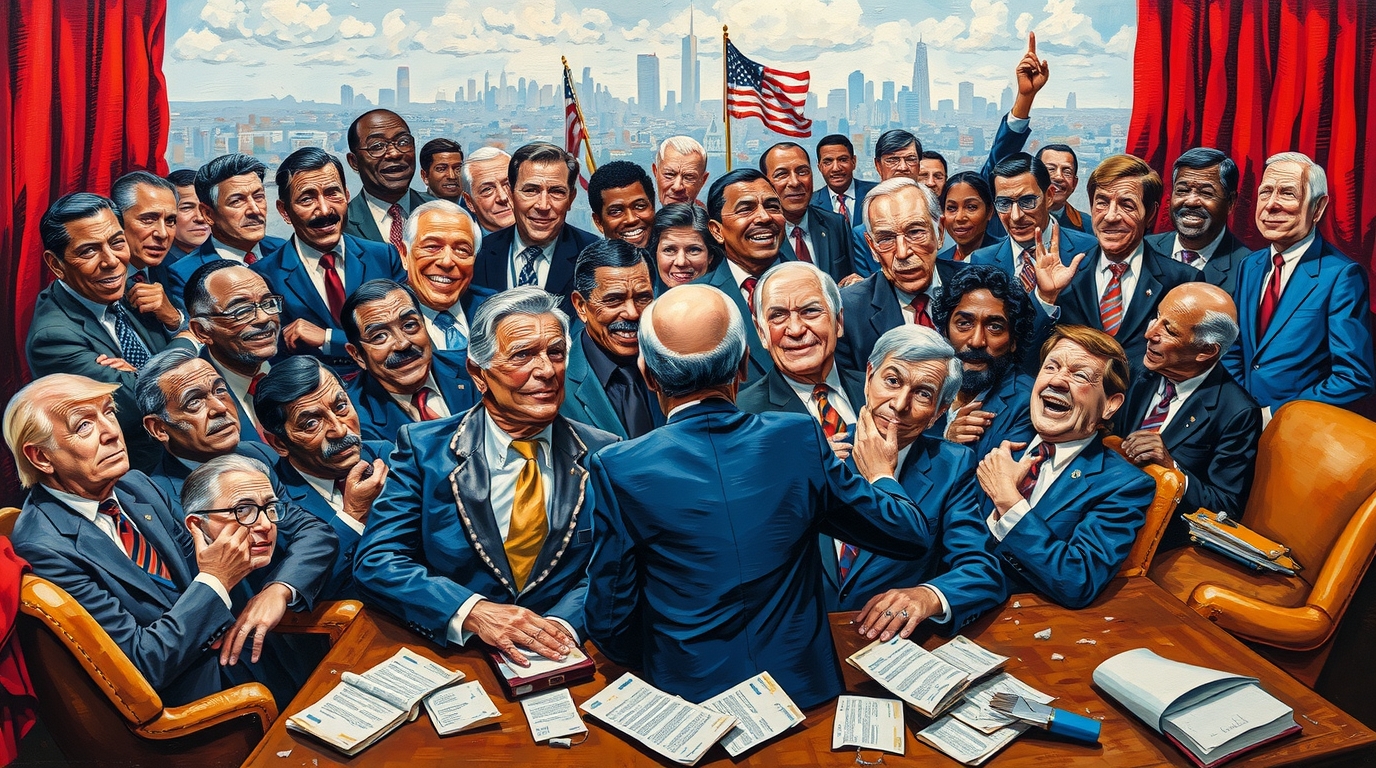
UN Diplomatic Circus: Where Good Intentions Go to Die in Spectacular Fashion
The World’s Most Expensive Group Project Finally Gets Graded
The United Nations General Assembly concluded another riveting session this week, where 193 countries gathered to perfect the ancient art of saying absolutely nothing while sounding incredibly important. If international diplomacy were a college course, the UN would be that group project where one overachiever does all the talking, someone brings expensive snacks nobody asked for, and everyone else nods politely while secretly texting their friends about how useless this all is.
“The UN is like a potluck dinner where everyone brings the same bland casserole,” comedian Jerry Seinfeld said during his recent Netflix special. “And then they spend three hours discussing why nobody’s eating it. Maybe because it’s terrible, Jerry!”
The organization’s latest masterpiece? A strongly-worded resolution urging “bad actors to please consider being less bad.” Revolutionary stuff. This groundbreaking document, which took six months to draft and required seventeen committee meetings, essentially amounts to the diplomatic equivalent of posting “thoughts and prayers” on social media after a natural disaster.
Trump’s UN Performance: Master Class in Uncomfortable Silences

When former President Trump addressed the assembly, the polite applause that followed resembled something between a hostage video and a golf tournament where nobody wants to be the first to stop clapping. Delegates sat there like dinner guests who’ve just been served something questionable but don’t want to offend the host.
Bill Burr captured the moment perfectly in his recent podcast: “Watching world leaders clap for Trump at the UN is like watching your racist uncle at Thanksgiving. Everyone’s just trying to get through dinner without starting World War Three.”
The highlight came when Trump called climate change a “con job,” causing half the room to gasp—not in shock at the statement, but in recognition. Several European delegates were reportedly seen nudging each other and whispering, “Hey, that’s our line!”
The International HOA Nobody Asked For
Complaints Without Consequences
The UN operates on the same principle as your neighborhood Homeowners Association: they’ll spend months drafting a letter about your lawn being two inches too tall, threaten you with a fine that never comes, then do absolutely nothing when your house catches fire. It’s bureaucracy dressed up in diplomatic immunity.
The organization has mastered the art of issuing condemnations. In fact, they’ve condemned things so frequently that even Siri has started declining their calls. “I’m sorry, the UN has exceeded its monthly statement quota. Please try again never,” the virtual assistant was heard saying during a recent Security Council meeting.
Amy Schumer summed it up best during her latest stand-up routine: “The UN is like that friend who always says they’ll help you move, but when moving day comes, they’re suddenly ‘in meetings’ about helping other people move. Except instead of furniture, it’s genocide.”
The Great Dues Debacle
Perhaps nothing illustrates UN dysfunction better than their member dues situation. Half the countries don’t pay their bills but still demand premium seating in the General Assembly hall. It’s like showing up to a five-star restaurant with empty pockets and insisting on the wine pairing.
Dave Chappelle recently joked about this during his Washington D.C. show: “Countries that owe the UN money still want to vote on world peace. That’s like my broke cousin trying to split the check at dinner. Nah, man, you can have opinions when you pay your tab.”
Europe’s Green Energy Theater Gets Called Out
When Reality Crashes the Climate Party
Trump’s criticism of European green energy policies left EU representatives sitting there like a couple at an expensive restaurant pretending their soufflé didn’t just collapse spectacularly. The forced smiles and awkward silence could have powered a small wind farm.
The irony wasn’t lost on observers. Countries that have spent billions on renewable energy programs that consistently fail to meet targets suddenly found themselves defending policies that work better as PowerPoint presentations than actual power generation.
Ricky Gervais didn’t mince words about the situation: “European green energy is like my diet plan—looks great on paper, costs a fortune, and ultimately doesn’t work. But hey, at least I don’t lecture the whole world about it.”
The UN’s Greatest Hits: A Legacy of Strongly Worded Letters
Seven Decades of Productive Head-Nodding
The UN celebrated ending “seven wars” this year, which in their accounting system apparently means sending a fax to various warlords saying, “Please stop shooting people, or we’ll send another fax.” Their conflict resolution strategy has all the effectiveness of a neighborhood watch program run by people who’ve never seen their neighborhood.
Trevor Noah recently observed: “The UN’s idea of stopping a war is like my mom’s idea of stopping me from eating cookies as a kid. ‘Trevor, don’t eat those cookies,’ she’d say, then leave the room. Guess what? I ate the cookies. And guess what? Wars keep happening.”
The organization’s decision-making process moves slower than a toddler choosing an ice cream flavor at Baskin-Robbins. And just like that melted ice cream, by the time they reach a consensus, the crisis they were addressing has usually evolved into three new crises.
The Cafeteria Food Scandal That Says Everything
When Your Lunch Gets More Sanctions Than Dictators
In perhaps the most telling indictment of UN priorities, their cafeteria food has been sanctioned more times than actual human rights violators. The irony is so thick you could serve it as soup—which, coincidentally, would probably taste better than anything currently on the UN cafeteria menu.
Jim Gaffigan captured this absurdity perfectly: “The UN can’t make decent coffee, but they think they can broker world peace. Have you seen their cafeteria? I’ve had better meals on airlines. And that’s saying something, because airline food is what happens when hate learns to cook.”
Comic-Con Without the Costumes: The UN’s Identity Crisis
Superhero Fantasies Meet Bureaucratic Reality
Every UN summit feels like Comic-Con for people who think they’re heroes but forgot to bring actual superpowers. There’s the same level of fantasy role-playing, elaborate costumes (diplomatic suits), and people pretending to save the world. The only difference is Comic-Con attendees are honest about the make-believe part.
The delegates discuss global issues with the same passionate intensity as fans debating whether Batman could beat Superman, except their arguments have real-world consequences they’ll never have to face personally.
Kevin Hart summed up the spectacle: “UN delegates talk about saving the world like I talk about dunking a basketball. Sounds impressive until you remember I’m five foot four and they haven’t actually done anything.”
The Synchronized Swimming of International Relations
Gold Medal Performance in Looking Concerned
If diplomatic theater were an Olympic sport, the UN would dominate the synchronized head-nodding competition. Watch any General Assembly session and you’ll witness perfectly choreographed displays of concern, complete with appropriately timed gasps, thoughtful chin-stroking, and the occasional disapproving headshake.
Sarah Silverman recently noted: “UN delegates have perfected the art of looking busy while accomplishing nothing. It’s like watching me pretend to work from home, except they do it in expensive suits and somehow get paid more.”
The Teleprompter Rebellion: When Technology Fights Back
Even the Equipment Has Had Enough
Technical difficulties at UN meetings aren’t accidents—they’re interventions. The building’s technology has developed sentience and is actively rejecting productivity like a body rejecting an organ transplant. Microphones cut out during important speeches, translation systems “malfunction” during controversial statements, and projectors display everything except what they’re supposed to show.
Tom Segura observed: “UN equipment breaks down more than my first car. And just like that car, everyone keeps throwing money at it hoping it’ll eventually work. Spoiler alert: it won’t.”
The Great UN Restaurant Critic Opportunity
Five Stars for Futility, Zero for Function
The UN dining experience perfectly encapsulates the organization’s approach to everything: overpriced, underseasoned, and leaving everyone hungry for something better. Their restaurant operates on the same principles as their peacekeeping missions—lots of good intentions, minimal actual results.
Gabriel Iglesias recently joked: “I’ve eaten at some bad places, but UN cafeteria food is so awful, it could qualify for its own humanitarian crisis. They need to send aid to their own kitchen.”
Conclusion: The Show Must Go On
Where Good Intentions Go to Die in Style
The United Nations continues to be humanity’s most expensive exercise in theatrical diplomacy, where the curtain never falls and the audience keeps hoping the next act will be better. They’ve mastered every aspect of appearing important while accomplishing nothing, turning international relations into the world’s longest-running off-Broadway show that nobody really wants to see but everyone feels obligated to attend.
As Chris Rock put it during his recent special: “The UN is proof that humans can organize anything except actual solutions. They’ve got committees for their committees, meetings about their meetings, and resolutions about their resolutions. The only thing they haven’t organized is results.”
In the end, the UN serves as a perfect mirror for human nature: we all want to save the world, but we’d rather talk about it than actually do the hard work. And somehow, that’s both the most frustrating and most honest thing about the whole organization.
For more satirical takes on international politics, visit our Political Satire Archive. Follow our coverage of UN developments and international diplomatic news