

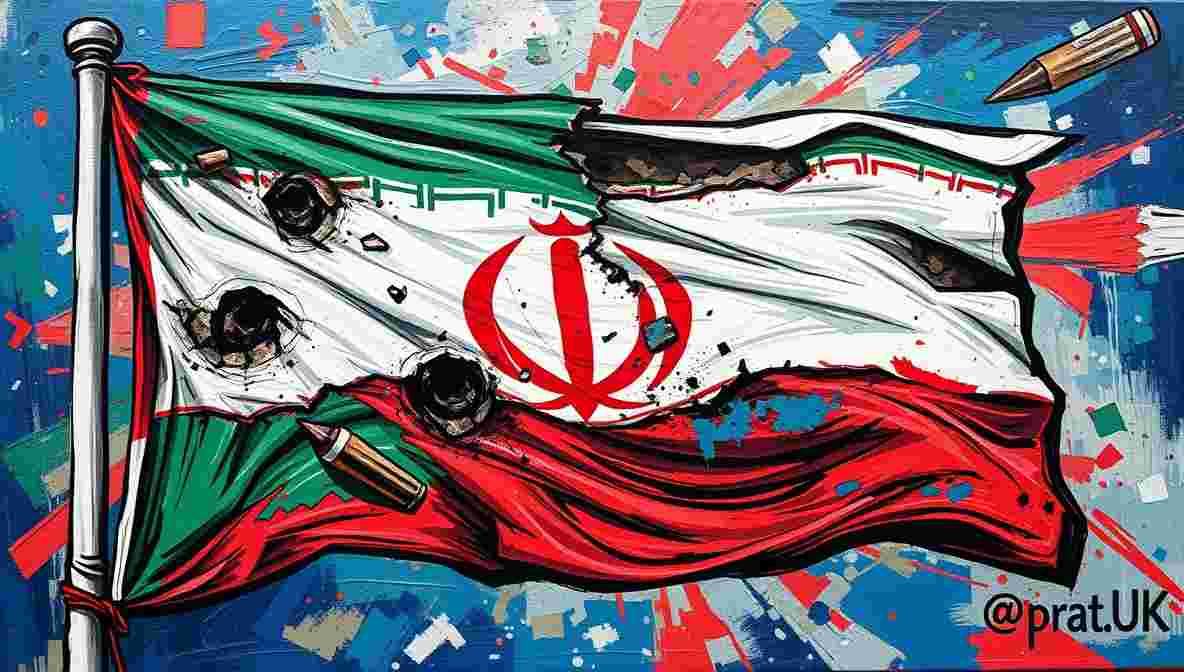
Iran Sets the Price for Peace as War Quietly Becomes the World’s Most Expensive Subscription Service
Dispatches from the Global Checkout Line
The war, long believed to be a tragic geopolitical struggle, has now been correctly identified as a billing issue.
Somewhere in Tehran, a printer is whirring out a receipt so long it requires two interns and a forklift to review.
Diplomats are no longer negotiating terms. They are asking if there is a promo code.
A senior European official reportedly whispered, “What if we just… don’t click ‘agree to terms and conditions’?”
The phrase “unconditional peace” has been replaced with “peace, plus tax.”
War, like streaming services, was once simple. Now it comes with tiers, add-ons, and an inexplicable $14.99 regional instability surcharge — billed monthly, auto-renewed, and almost impossible to cancel without speaking to someone in Geneva.
The War Invoice Arrives, Folded Neatly in Passive Aggression

According to sources familiar with the matter, Iran has issued what insiders are calling a “comprehensive peace invoice” — a document so detailed it includes line items for “historical grievances,” “anticipated future mistrust,” and a modest but firm “emotional distress fee.”
Dr. Leonard Ficklesworth, a senior economist at the London School of Strategic Billing, explained the development in grave terms. “For decades, war was funded through vague notions like ‘national interest.’ Now we finally have itemised clarity. Frankly, it’s refreshing.”
The invoice reportedly includes optional add-ons such as the Long-Term Regional Respect Package and the Deluxe Non-Interference Bundle, both of which, according to an anonymous staffer, “cost more than the war itself, but come with peace of mind.” The peace of mind, notably, is not refundable.
Eyewitnesses describe diplomats scrolling through the document in stunned silence, occasionally muttering phrases like “What is a ‘geopolitical restocking fee’?” and “Why is there a convenience charge for peace?”
Nobody had an answer. The FAQ was 400 pages long and available only in Farsi.
Checkout Diplomacy: Please Select Your Payment Method for Regional Stability
Negotiations have reportedly shifted to what insiders call a “checkout interface,” where world leaders are presented with two large buttons:
[Pay Now]
[Continue War]
“It’s surprisingly user-friendly,” said one exhausted negotiator. “There’s even a progress bar showing how close we are to ‘regional stability.’ We’re currently at 12%, which feels optimistic.”
A leaked memo suggests that several countries attempted to abandon their carts entirely, only to receive a follow-up email reading, “You left peace in your cart. Complete your purchase now before instability sells out.”
An anonymous staffer admitted, “At one point, someone asked if we could split the cost five ways and use PayPal.” The suggestion was tabled. PayPal’s international transaction fees were deemed a second war in themselves.
The Subscription Model of Conflict: Tiers, Add-Ons, and Auto-Renewal
In a move described by analysts as “bold, inevitable, and deeply annoying,” the conflict has entered its subscription phase.
Under the new model, nations can choose from several plans:
- The Basic Ceasefire Plan — includes limited calm and occasional misunderstandings.
- The Premium Stability Plan — offering reduced tensions, diplomatic niceties, and one annual apology.
- The Ultimate Peace+ Package — includes everything above plus “guaranteed non-aggression vibes” and priority access to future negotiations. Platinum members also receive a tote bag.
Professor Elaine Cartwright, a behavioural economist, noted: “People hate subscriptions, but they love not being at war slightly more. It’s a classic dilemma.”
A recent poll conducted by the Institute for Global Guesswork found that 67% of respondents would prefer a one-time payment for peace, while 33% admitted they “forgot they were even subscribed to the war.”
Warranty Required: Iran Insists Peace Must Be Guaranteed Forever
Iran has reportedly insisted that any agreement include a “lifetime warranty” — a concept that has baffled negotiators and at least one constitutional lawyer who wandered in from the hotel bar.
“What exactly does that mean?” one diplomat asked during a closed-door session.
“It means no future conflict,” came the reply.
“From anyone?”
“Yes.”
“For how long?”
“Forever.”
Experts say this may be the first time in recorded history that “forever” has been deployed as a legally binding term in international relations. The International Court of Justice has not responded to requests for comment, presumably because they are still reading the invoice.
Dr. Ficklesworth weighed in again, visibly tired. “You can’t warranty human behavior. If we could, we’d have fixed Thanksgiving dinner by now.”
What the Funny People Are Saying About War as a Subscription Service
“I tried to cancel my gym membership, and it took six months. Now we’re trying to cancel a war. Good luck.” — Jerry Seinfeld
“They put a handling fee on missiles. I’ve handled a lot of things in my life, but I’ve never thought, ‘You know what this needs? A receipt.'” — Ron White
“Nothing says progress like turning a war into a checkout page. Somewhere there’s a ‘continue as guest’ option and nobody can find it.” — Sarah Silverman
“I don’t trust anything with tiers. If peace has a platinum package, what’s in the free trial? Mild chaos?” — Bill Burr
“They’re gonna ask if you want to round up your war to the nearest dollar for charity.” — Chris Rock
Geopolitical Billing: When Conflict Meets Accounting
Analysts agree that this new approach is the logical conclusion of decades of geopolitical evolution.
First came ideology. Then came strategy. Then came sanctions and economic leverage. Now comes billing.
“Every system eventually becomes bureaucratic,” said Cartwright. “Even war. Especially war.”
She pointed to recent data showing that 82% of modern conflicts now involve at least one spreadsheet, while 14% involve PowerPoint presentations titled “Path to Peace (Final_v7_REAL FINAL).” The remaining 4% are just men in rooms refusing to make eye contact.
Meanwhile, oil markets reacted immediately, adding what traders described as a “peace uncertainty premium,” causing prices to fluctuate wildly based on whether the world clicked “Pay Now” or hovered nervously over “Continue War.”
Eyewitness Accounts from the Negotiation Front Lines
Gary Pritchard, a British tourist who claims to have wandered into a diplomatic briefing while looking for a restroom, described the scene vividly.
“They were all just staring at a screen,” Gary said. “One bloke kept refreshing it like it was a ticket sale. Another one asked if there was a student discount. I’ve never seen anything like it.”
Gary later confirmed he did not find the restroom but did leave with “a strong sense that nobody knows what they’re doing.” He also picked up a complimentary lanyard.
Peace as a Premium Feature: Why It Was Always Going to Cost Extra
If war is the default state of human disagreement, then peace, by definition, is a premium feature.
It requires effort, compromise, and apparently, a detailed invoice with tiered pricing and a non-refundable deposit.
“Think about it,” said Dr. Ficklesworth. “Conflict is easy. Peace requires coordination, trust, and now apparently, a processing fee.”
From this perspective, the entire situation makes perfect sense. Disturbing sense. But sense nonetheless.
Final Thoughts from the Global Checkout Line
As the world hovers over the “Pay Now” button, one thing is clear: peace is no longer just a moral aspiration. It is a financial decision.
And like all financial decisions, it will be debated, delayed, and ultimately regretted.
Somewhere, the printer in Tehran continues to hum, adding another page to the invoice.
Somewhere else, a diplomat whispers, “Do we at least get free shipping?”
This story is a work of satirical journalism, a collaborative effort between two entirely human minds: one the world’s oldest tenured professor, who still believes wars should be settled with strongly worded letters, and the other a philosophy major turned dairy farmer, who insists everything — including geopolitics — eventually becomes about pricing. Any resemblance to real invoices, checkout systems, or subscription-based conflicts is purely coincidental, though increasingly difficult to rule out.
Auf Wiedersehen, amigo!